Semi-hard cheeses
Cheddar, Edam, Manchego and the tommes: pressed, firm and aged for months.
Semi-hard cheeses are the firm, pressed cheeses that fill most of the world's cheese counters: cheddar, Edam, Manchego, Cantal, Red Leicester, the tommes of the French mountains and the many farm cheeses made in their image. The curd is cut small, sometimes warmed, drained and pressed into wheels or blocks that ripen for two months to a year or more, turning from mild and springy to firm, flaky and deep.
Pressing and ripening
After the milk is set and cut, the curd is stirred and sometimes warmed to drive off whey. It is packed into moulds and pressed, which closes the texture and lowers the moisture so the cheese can age. Rinds may be natural, rubbed with oil, bound in cloth, coated in wax or sealed in plastic for rindless blocks. Gouda and Edam are made by washing the curd, which keeps them sweet, while cheddar has a step of its own. Edam is shaped into balls and, for export, often coated in red wax.
Cheddaring
Cheddar is named after the Somerset village of Cheddar, near the caves of the Mendip Hills. Its signature is cheddaring: slabs of curd are stacked and turned on the floor of the vat until they become smooth and fibrous, then milled into chips, salted and pressed. Traditional farmhouse cheddars are bound in muslin, rubbed with lard and aged for a year or more. The method travelled with British settlers to North America, Australia, New Zealand and South Africa, and cheddar is now made almost everywhere.
Southern and mountain styles
Spain's Manchego, made from the milk of Manchega sheep in La Mancha, is pressed in moulds that print a zigzag on the rind, a pattern once left by plaited esparto grass. France's Cantal and Salers are among the oldest cheeses of the Auvergne. The tommes of Savoie and the Pyrenees are smaller mountain cheeses with grey, dusty rinds. In Mexico, queso Chihuahua, first made by Mennonite farmers, follows the same broad method and melts well in queso fundido.
Worth knowing
- Cheddar: Somerset-born cheese now made around the world
- Edam: Dutch ball cheese, often in red wax
- Manchego: Sheep's milk cheese of La Mancha with a zigzag rind
- Cantal: Ancient pressed cheese of the Auvergne
- Tomme de Savoie: Grey-rinded mountain cheese of the Savoie
- Red Leicester: English cheese coloured with annatto
- Chihuahua cheese: Mennonite cheese of northern Mexico
Good to know
- Keep cut semi-hard cheese wrapped in paper inside a loose bag in the vegetable drawer of the fridge.
- Cut from a block with a wire or a long, thin knife for clean slices.
- Grate it cold, but serve it at room temperature.
- Waxed cheeses keep for months unopened.
Sources and further reading
Original text by the EveryCheese desk, written with AI assistance and checked against the sources above. Customs are described as tradition, not as advice. If we have something wrong, tell us.
Semi-hard on EveryCheese
The cheeses written up so far, best known first.
 🇹🇷 TurkeyGolot cheese
A granular, pressed Turkish whey cheese from the Eastern Black Sea region.Mixed · Semi-hard · Salty
🇹🇷 TurkeyGolot cheese
A granular, pressed Turkish whey cheese from the Eastern Black Sea region.Mixed · Semi-hard · Salty
 🇬🇪 GeorgiaGuda cheeseგუდის ყველი
A salted sheep's-milk cheese ripened inside a leather wineskin in the Georgian mountains.Sheep · Semi-hard · Salty
🇳🇴 NorwayFløtemysost
A mild brown cheese from Norway made with cow's milk and cream.Cow · Semi-hard · Sweet and caramel
🇦🇹 AustriaLüneberg
A saffron-tinted cow's-milk cheese from the Austrian Alps, bridging Swiss and German styles.Cow · Semi-hard · Nutty
🇮🇪 IrelandBay Lough Cheese
A self-taught Irish cheddar-style cheese aged in waxed wheels.Cow · Semi-hard · Savoury and brothy
🇸🇪 Sweden and 1 moreBondostbond-ost
A firm Swedish cow's-milk cheese aged in brine for six to eight weeks.Cow · Semi-hard · Salty
🇺🇸 United StatesBig Woods Blue
A firm, creamy sheep's-milk blue cheese aged six to eight months in Minnesota.Sheep · Semi-hard · Savoury and brothy
🇳🇴 NorwayNøkkelost
A Norwegian cow's-milk cheese flavoured with cumin and cloves, aged for three months.Cow · Semi-hard · Savoury and brothy
🇮🇪 IrelandWicklow Farmhouse Cheese
A range of handmade cow's milk cheeses from Arklow, Ireland, spanning soft bries to hard cheddars.Cow · Bloomy rind · Nutty
🇬🇧 United KingdomHereford Hop
A firm cow's-milk cheese with a rind coated in toasted hops, made in Herefordshire.Cow · Semi-hard · Savoury and brothy
🇦🇹 AustriaChorherrenkäse
A mild, semi-hard Austrian cow's milk cheese with a buttery taste and white rind.Cow · Semi-hard · Buttery and creamy
🇬🇪 GeorgiaGuda cheeseგუდის ყველი
A salted sheep's-milk cheese ripened inside a leather wineskin in the Georgian mountains.Sheep · Semi-hard · Salty
🇳🇴 NorwayFløtemysost
A mild brown cheese from Norway made with cow's milk and cream.Cow · Semi-hard · Sweet and caramel
🇦🇹 AustriaLüneberg
A saffron-tinted cow's-milk cheese from the Austrian Alps, bridging Swiss and German styles.Cow · Semi-hard · Nutty
🇮🇪 IrelandBay Lough Cheese
A self-taught Irish cheddar-style cheese aged in waxed wheels.Cow · Semi-hard · Savoury and brothy
🇸🇪 Sweden and 1 moreBondostbond-ost
A firm Swedish cow's-milk cheese aged in brine for six to eight weeks.Cow · Semi-hard · Salty
🇺🇸 United StatesBig Woods Blue
A firm, creamy sheep's-milk blue cheese aged six to eight months in Minnesota.Sheep · Semi-hard · Savoury and brothy
🇳🇴 NorwayNøkkelost
A Norwegian cow's-milk cheese flavoured with cumin and cloves, aged for three months.Cow · Semi-hard · Savoury and brothy
🇮🇪 IrelandWicklow Farmhouse Cheese
A range of handmade cow's milk cheeses from Arklow, Ireland, spanning soft bries to hard cheddars.Cow · Bloomy rind · Nutty
🇬🇧 United KingdomHereford Hop
A firm cow's-milk cheese with a rind coated in toasted hops, made in Herefordshire.Cow · Semi-hard · Savoury and brothy
🇦🇹 AustriaChorherrenkäse
A mild, semi-hard Austrian cow's milk cheese with a buttery taste and white rind.Cow · Semi-hard · Buttery and creamy
 🇫🇷 France and 4 moreTrappista cheeseTrapist sir
A semi-hard cow's-milk cheese with a mild flavor and pale yellow paste.Cow · Semi-hard
🇮🇹 ItalyCastelrosso
A rare semi-hard cow's milk cheese from Piedmont with a gray rind and mild lactic flavor.Cow · Semi-hard · Buttery and creamy
🇫🇷 France and 4 moreTrappista cheeseTrapist sir
A semi-hard cow's-milk cheese with a mild flavor and pale yellow paste.Cow · Semi-hard
🇮🇹 ItalyCastelrosso
A rare semi-hard cow's milk cheese from Piedmont with a gray rind and mild lactic flavor.Cow · Semi-hard · Buttery and creamy
 🇲🇹 MaltaĠbejna
A small Maltese sheep's-milk cheese shaped in reed hurdles and sold fresh, dried, or peppered.Sheep · Fresh · Milky and fresh
🇲🇹 MaltaĠbejna
A small Maltese sheep's-milk cheese shaped in reed hurdles and sold fresh, dried, or peppered.Sheep · Fresh · Milky and fresh
 🇮🇳 IndiaKalimpong cheese
A mild, crumbly cow's-milk cheese from a West Bengal hill station, started by a Jesuit priest.Cow · Semi-hard · Tangy and lactic
🇦🇺 AustraliaCheer
A mature cheddar cheese made in Australia by Warrnambool Cheese and Butter.Cow · Semi-hard · Sharp and tangy-aged
🇮🇳 IndiaKalimpong cheese
A mild, crumbly cow's-milk cheese from a West Bengal hill station, started by a Jesuit priest.Cow · Semi-hard · Tangy and lactic
🇦🇺 AustraliaCheer
A mature cheddar cheese made in Australia by Warrnambool Cheese and Butter.Cow · Semi-hard · Sharp and tangy-aged
 🇨🇾 Cyprus and 3 moreHalloumiχαλούμι
A squeaky, brined cheese from Cyprus that holds its shape when fried.Mixed · Brined · Salty
🇨🇾 Cyprus and 3 moreHalloumiχαλούμι
A squeaky, brined cheese from Cyprus that holds its shape when fried.Mixed · Brined · Salty
 🇨🇭 Switzerland and 5 moreEmmentalEmmentaler
A yellow, medium-hard Swiss cheese with natural holes, aged for several months.Cow · Semi-hard · Savoury and brothy
🇨🇭 Switzerland and 5 moreEmmentalEmmentaler
A yellow, medium-hard Swiss cheese with natural holes, aged for several months.Cow · Semi-hard · Savoury and brothy
 🇫🇷 FranceRoquefortRòcafòrt
A raw sheep's milk blue cheese aged in the Combalou caves of southern France.Sheep · Semi-hard · Tangy and lactic
🇫🇷 FranceRoquefortRòcafòrt
A raw sheep's milk blue cheese aged in the Combalou caves of southern France.Sheep · Semi-hard · Tangy and lactic
 🇳🇱 Netherlands and 5 moreEdamEdammer
A semi-hard Dutch cow's-milk cheese aged in distinctive red wax spheres.Cow · Semi-hard · Nutty
🇳🇱 Netherlands and 5 moreEdamEdammer
A semi-hard Dutch cow's-milk cheese aged in distinctive red wax spheres.Cow · Semi-hard · Nutty
 🇩🇪 Germany and 2 moreTilsitTilsiter
A semi-hard smear-ripened cow's milk cheese from East Prussia with a dark yellow rind.Cow · Semi-hard · Savoury and brothy
🇩🇪 Germany and 2 moreTilsitTilsiter
A semi-hard smear-ripened cow's milk cheese from East Prussia with a dark yellow rind.Cow · Semi-hard · Savoury and brothy
 🇧🇬 Bulgaria and 5 moreKashkavalkaşkaval
A semi-hard yellow cheese from cow, sheep, or goat milk, popular across the Balkans and Turkey.Cow · Semi-hard · Milky and fresh
🇧🇬 Bulgaria and 5 moreKashkavalkaşkaval
A semi-hard yellow cheese from cow, sheep, or goat milk, popular across the Balkans and Turkey.Cow · Semi-hard · Milky and fresh
 🇮🇹 Italy and 4 moreProvolone
A semi-hard Italian stretched-curd cheese aged for at least four months.Cow · Semi-hard · Sharp and tangy-aged
🇮🇹 Italy and 4 moreProvolone
A semi-hard Italian stretched-curd cheese aged for at least four months.Cow · Semi-hard · Sharp and tangy-aged
 🇫🇷 FranceComté
A hard, cooked-pressed cow's milk cheese from eastern France, aged up to three years.Cow · Semi-hard · Nutty
🇫🇷 FranceComté
A hard, cooked-pressed cow's milk cheese from eastern France, aged up to three years.Cow · Semi-hard · Nutty
 🇫🇷 FranceBeaufort
A firm, hole-free Alpine cow's milk cheese from the French Savoie region.Cow · Alpine · Buttery and creamy
🇫🇷 FranceBeaufort
A firm, hole-free Alpine cow's milk cheese from the French Savoie region.Cow · Alpine · Buttery and creamy
 🇮🇹 Italy and 4 moreCaciocavallo
A stretched-curd cheese from southern Italy shaped like a teardrop and aged to develop a hard rind.Cow · Stretched curd · Nutty
🇮🇹 Italy and 4 moreCaciocavallo
A stretched-curd cheese from southern Italy shaped like a teardrop and aged to develop a hard rind.Cow · Stretched curd · Nutty
 🇳🇱 NetherlandsMaasdam
A semi-hard Dutch cow's milk cheese with holes, aged for one to three months.Cow · Semi-hard · Nutty
🇳🇱 NetherlandsMaasdam
A semi-hard Dutch cow's milk cheese with holes, aged for one to three months.Cow · Semi-hard · Nutty
 🇫🇷 FranceAbondance
A semi-hard raw cow's milk cheese from Haute-Savoie aged on spruce boards.Cow · Semi-hard · Savoury and brothy
🇫🇷 FranceAbondance
A semi-hard raw cow's milk cheese from Haute-Savoie aged on spruce boards.Cow · Semi-hard · Savoury and brothy
 🇪🇸 SpainCabralesqueso de Cabrales
A pungent blue cheese from the Picos de Europa mountains of Asturias, Spain.Mixed · Blue · Sharp and tangy-aged
🇪🇸 SpainCabralesqueso de Cabrales
A pungent blue cheese from the Picos de Europa mountains of Asturias, Spain.Mixed · Blue · Sharp and tangy-aged
 🇨🇭 Switzerland and 1 moreTête de Moine
A semi-hard Swiss cow's milk cheese shaved into rosettes with a special tool.Cow · Semi-hard · Savoury and brothy
🇨🇭 Switzerland and 1 moreTête de Moine
A semi-hard Swiss cow's milk cheese shaved into rosettes with a special tool.Cow · Semi-hard · Savoury and brothy
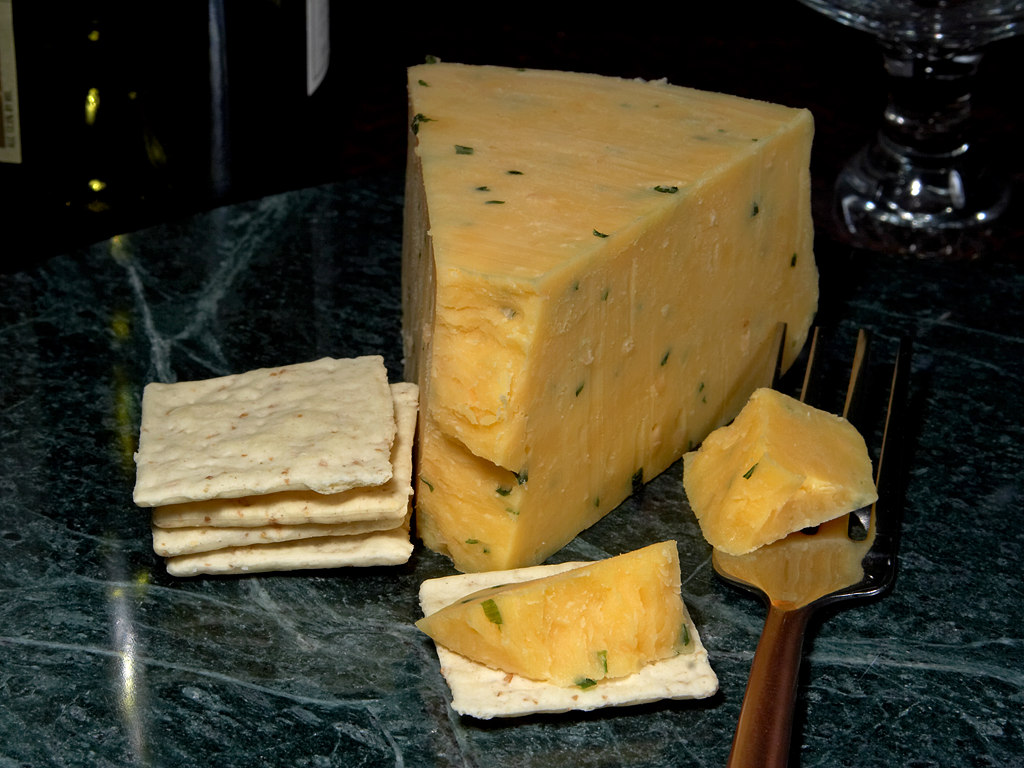 🇬🇧 United KingdomDouble Gloucester
A semi-hard cow's-milk cheese from England with a savoury flavour and natural rind.Cow · Semi-hard · Savoury and brothy
🇬🇧 United KingdomDouble Gloucester
A semi-hard cow's-milk cheese from England with a savoury flavour and natural rind.Cow · Semi-hard · Savoury and brothy
 🇫🇷 FranceFourme d'AmbertForma d'Embèrt
A narrow cylindrical blue cheese from the Auvergne region of France.Cow · Semi-hard · Savoury and brothy
🇫🇷 FranceFourme d'AmbertForma d'Embèrt
A narrow cylindrical blue cheese from the Auvergne region of France.Cow · Semi-hard · Savoury and brothy
 🇫🇷 FranceLaguioleLa Guiòla
A semi-hard pressed cow's milk cheese from the Aubrac plateau in southern France.Cow · Semi-hard · Nutty
🇫🇷 FranceLaguioleLa Guiòla
A semi-hard pressed cow's milk cheese from the Aubrac plateau in southern France.Cow · Semi-hard · Nutty
 🇳🇴 NorwayGamalostgammelost
A firm, sour Norwegian cheese made from skimmed cow's milk and aged for several weeks.Cow · Semi-hard · Tangy and lactic
🇳🇴 NorwayGamalostgammelost
A firm, sour Norwegian cheese made from skimmed cow's milk and aged for several weeks.Cow · Semi-hard · Tangy and lactic
 🇵🇹 PortugalSão Jorge CheeseQueijo São Jorge
A hard cow's-milk cheese from the Azores with a spicy aroma and protected origin status.Cow · Semi-hard · Savoury and brothy
🇵🇹 PortugalSão Jorge CheeseQueijo São Jorge
A hard cow's-milk cheese from the Azores with a spicy aroma and protected origin status.Cow · Semi-hard · Savoury and brothy
 🇬🇷 Greece and 2 moreKasseriκασέρι
A pasta filata sheep's milk cheese aged for at least three months in Greece and Turkey.Sheep · Semi-hard · Savoury and brothy
🇬🇷 Greece and 2 moreKasseriκασέρι
A pasta filata sheep's milk cheese aged for at least three months in Greece and Turkey.Sheep · Semi-hard · Savoury and brothy
 🇸🇾 Syria and 5 moreAkkawiجبنة عكاوي
A white brined cow's milk cheese from the Levant named after Acre.Cow · Brined · Salty
🇸🇾 Syria and 5 moreAkkawiجبنة عكاوي
A white brined cow's milk cheese from the Levant named after Acre.Cow · Brined · Salty
 🇫🇷 FranceSalersSalèrn
A semi-hard cow's-milk cheese from the Auvergne, aged in caves for up to four years.Cow · Semi-hard · Savoury and brothy
🇫🇷 FranceSalersSalèrn
A semi-hard cow's-milk cheese from the Auvergne, aged in caves for up to four years.Cow · Semi-hard · Savoury and brothy
 🇺🇸 United States and 1 moreMonterey Jack
A mild, semi-hard cow's-milk cheese from California with a creamy texture and slight sweetness.Cow · Semi-hard · Sweet and caramel
🇺🇸 United States and 1 moreMonterey Jack
A mild, semi-hard cow's-milk cheese from California with a creamy texture and slight sweetness.Cow · Semi-hard · Sweet and caramel
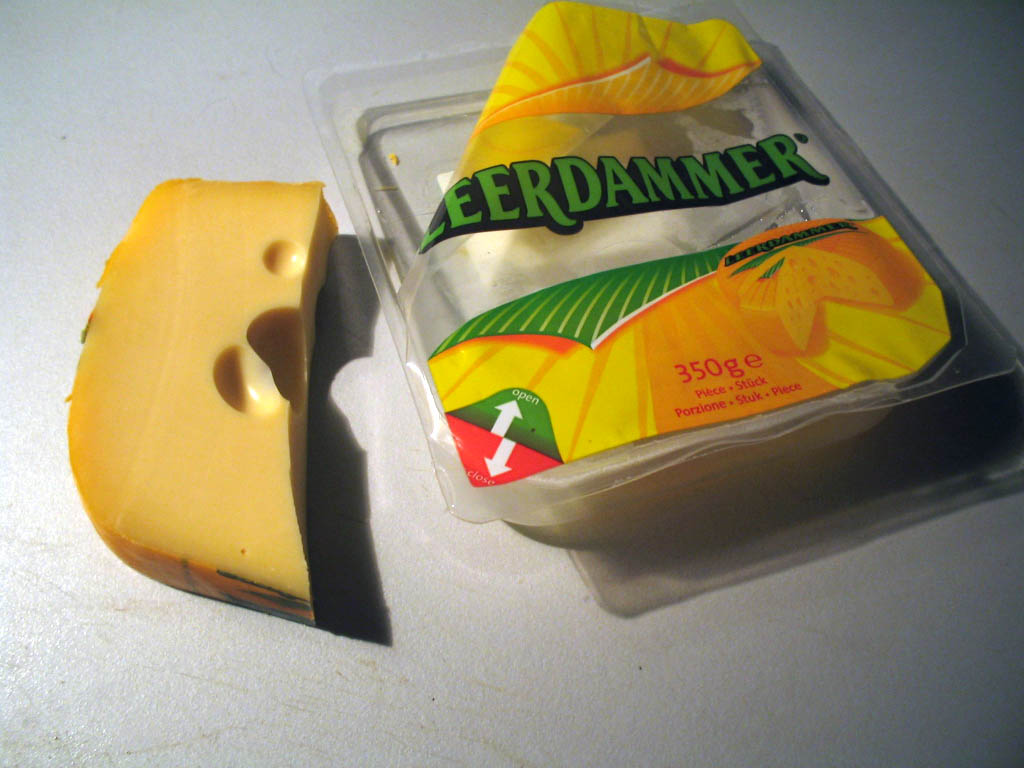 🇳🇱 Netherlands and 1 moreLeerdammer
A Dutch semihard cow's-milk cheese with holes and a sweet nutty taste.Cow · Semi-hard · Sweet and caramel
🇳🇱 Netherlands and 1 moreLeerdammer
A Dutch semihard cow's-milk cheese with holes and a sweet nutty taste.Cow · Semi-hard · Sweet and caramel
 🇫🇷 FrancePicodon
A small, spicy goat cheese from southern France with a rind that turns golden as it ages.Goat · Bloomy rind · Tangy and lactic
🇫🇷 FrancePicodon
A small, spicy goat cheese from southern France with a rind that turns golden as it ages.Goat · Bloomy rind · Tangy and lactic
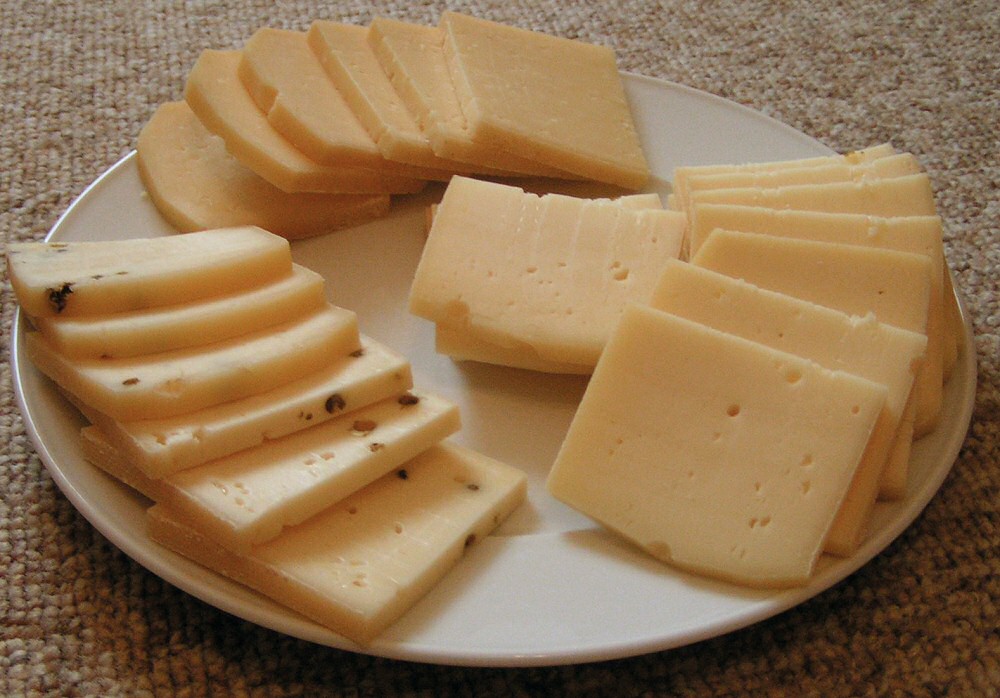 🇨🇭 SwitzerlandRaclette du ValaisWalliser Raclette
A semi-hard Swiss cow's-milk cheese from Valais, aged for melting or eating.Cow · Semi-hard
🇨🇭 SwitzerlandRaclette du ValaisWalliser Raclette
A semi-hard Swiss cow's-milk cheese from Valais, aged for melting or eating.Cow · Semi-hard
 🇳🇱 NetherlandsLeyden cheeseLeidse kaas
A semi-hard Dutch cow's-milk cheese flavoured with cumin and caraway seeds.Cow · Semi-hard · Savoury and brothy
🇳🇱 NetherlandsLeyden cheeseLeidse kaas
A semi-hard Dutch cow's-milk cheese flavoured with cumin and caraway seeds.Cow · Semi-hard · Savoury and brothy
 🇸🇰 SlovakiaParenica
A semi-firm Slovak cheese made from steamed curds, often smoked and woven into spirals.Sheep · Semi-hard · Savoury and brothy
🇸🇰 SlovakiaParenica
A semi-firm Slovak cheese made from steamed curds, often smoked and woven into spirals.Sheep · Semi-hard · Savoury and brothy
 🇺🇸 United States and 5 moreSwiss cheese
A yellow, medium-hard cheese with characteristic holes, produced globally in various styles.Cow · Semi-hard · Nutty
🇺🇸 United States and 5 moreSwiss cheese
A yellow, medium-hard cheese with characteristic holes, produced globally in various styles.Cow · Semi-hard · Nutty
 🇬🇧 United KingdomLancashire cheese
A cow's-milk cheese from England with creamy, nutty, or crumbly varieties.Cow · Semi-hard · Nutty
🇬🇧 United KingdomLancashire cheese
A cow's-milk cheese from England with creamy, nutty, or crumbly varieties.Cow · Semi-hard · Nutty
 🇮🇹 ItalyRaschera
A semi-hard cow's-milk cheese from Piedmont with a savory taste and ivory paste.Cow · Semi-hard · Salty
🇮🇹 ItalyRaschera
A semi-hard cow's-milk cheese from Piedmont with a savory taste and ivory paste.Cow · Semi-hard · Salty
 🇸🇪 SwedenHerrgårdsost
A semi-hard Swedish cow's milk cheese with a waxed rind and nutty flavor.Cow · Semi-hard · Nutty
🇸🇪 SwedenHerrgårdsost
A semi-hard Swedish cow's milk cheese with a waxed rind and nutty flavor.Cow · Semi-hard · Nutty
Photo credits on this page
The small pictures above come from Wikimedia Commons under free licences. Some are cropped to fit.
- Cabrales: PDPhoto.org, Public domain, source
- Havarti: Unknown author, CC BY-SA 3.0, source
- Guda cheese: Jonathan Cardy, CC BY-SA 3.0, source
- Salers: Coyau, CC BY-SA 3.0, source
- Beaufort: Coyau, CC BY-SA 3.0, source
- Monterey Jack: Frank Schulenburg, CC BY-SA 3.0, source
- Akkawi: Paul Joseph, CC BY 2.0, source
- Lancashire cheese: Jon Sullivan, Public domain, source
- Emmental: Coyau, CC BY-SA 3.0, source
- Double Gloucester: Jon Sullivan, Public domain, source
- Gamalost: Quick fix, CC BY 2.0, source
- Laguiole: Myrabella, CC BY-SA 3.0, source
- Leerdammer: M.Minderhoud, CC BY-SA 3.0, source
- Herrgårdsost: -- Holger.Ellgaard ( talk ) 16:26, 29 October 2008 (UTC), CC BY 3.0, source
- São Jorge Cheese: VulcaoAtlantico, CC BY 4.0, source
- Comté: Myrabella, CC BY-SA 3.0, source
- Edam: Yvwv, CC BY-SA 3.0, source
- Tête de Moine: The original uploader was Stucki at French Wikipedia ., CC BY-SA 1.0, source
- Halloumi: Rainer Zenz, CC BY-SA 3.0, source
- Kalimpong cheese: Coyau, CC BY-SA 3.0, source
- Ġbejna: Chattacha, CC BY 3.0, source
- Trappista cheese: Shabicht, CC BY-SA 4.0, source
- Golot cheese: E4024, CC BY-SA 4.0, source
- Raschera: F Ceragioli, CC BY-SA 4.0, source
- Roquefort: Thesupermat, CC BY-SA 4.0, source
- Abondance: Coyau, CC BY-SA 3.0, source
- Parenica: Stanislav Doronenko, Public domain, source
- Fourme d'Ambert: Coyau, CC BY-SA 3.0, source
- Picodon: Thesupermat, CC BY-SA 4.0, source
- Provolone: Lenore Edman, CC BY 2.0, source
- Caciocavallo: Peachyeung316, CC BY-SA 4.0, source
- Kasseri: E4024, CC BY-SA 4.0, source
- Kashkaval: Nnikolce, Public domain, source
- Raclette du Valais: Martin Steiger, CC0, source
- Maasdam: Arz, CC BY-SA 3.0, source
- Swiss cheese: Renee Comet (photographer), Public domain, source
- Leyden cheese: Edwtie, CC BY-SA 3.0, source