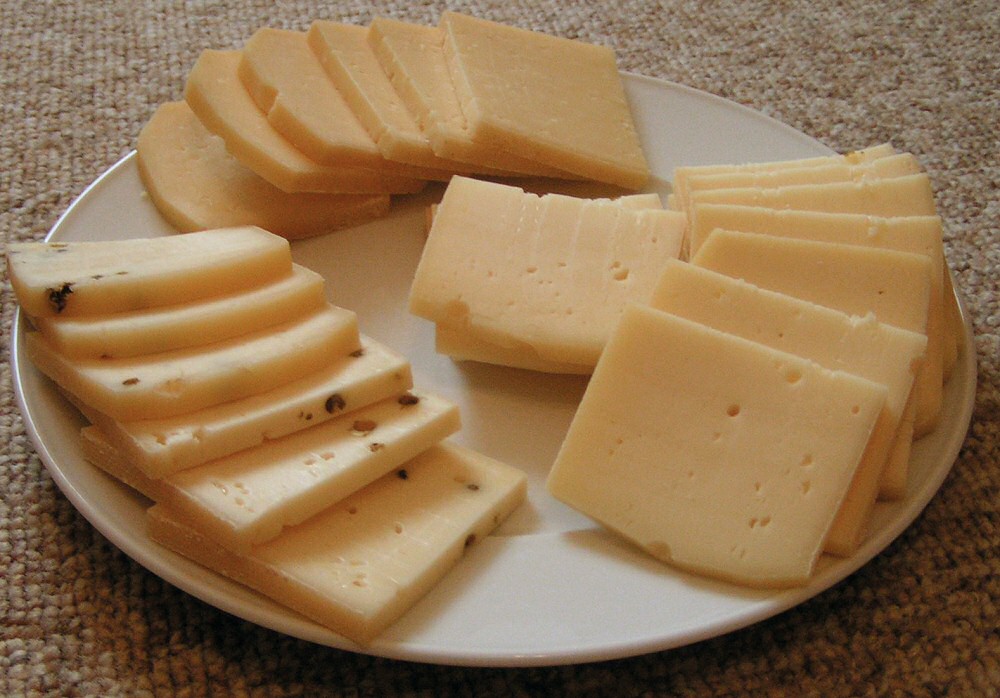
Raclette du Valais
In its own language: Walliser Raclette
A semi-hard Swiss cow's-milk cheese from Valais, aged for melting or eating.
Raclette du Valais is a semi-hard cheese made from Alpine cow's milk in the Canton of Valais, Switzerland. It forms wheels weighing about 6 kg and is protected by AOP status since 2013. The cheese melts well for the traditional dish but is also eaten on its own.
- Semi-hard Swiss cheese from Valais
- Made from Alpine cow's milk
- Wheels weigh about 6 kg
- Aged for 3 to 6 months
- Protected by AOP since 2013
What is Raclette du Valais?
Raclette du Valais is a semi-hard cheese crafted from Alpine cow's milk. It typically takes the shape of a wheel weighing approximately 6 kilograms. The paste is firm yet suitable for melting. This dairy product originates from the Swiss canton of Valais. It carries the Appellation d'origine protégée label, ensuring its authenticity. While often melted for dishes, it can also be sliced and eaten directly.
Where does Raclette du Valais come from?
This cheese comes from the Canton of Valais in Switzerland. It holds the AOP certification, which was granted in 2013. Before that, it had AOC status from 2003 to 2013. Non-AOP versions are produced elsewhere, including France, Austria, Germany, and other countries. However, the authentic version remains tied to the Valais region.
What does Raclette du Valais taste like?
They only confirm the texture as semi-hard. No details are provided regarding how taste changes with age.
How Raclette du Valais is made
The cheese is made from Alpine cow's milk. It is formed into wheels of about 6 kg. The aging process lasts between 3 and 6 months. The milk is not pasteurized. Specific steps like cutting, cooking, or salting are not detailed in the provided text.
Raclette du Valais, drawn
How Raclette du Valais is eaten and cooked
It is most commonly used for melting in the dish called raclette. The cheese is heated until soft and scraped onto food. It can also be consumed as is, meaning it can be eaten plain without melting.
Raclette du Valais through the day
It serves primarily as a melting cheese for the raclette dish. It can also be part of a board when eaten as is. No specific meals like breakfast or dessert are mentioned.
Raclette du Valais in the world's kitchens
It belongs to Swiss cuisine, specifically from the Valais region. Other countries make non-AOP versions, but the original is Swiss.
At a glance: where it turns up
By meal and use
Cuisines

Raclette du Valais at celebrations
No festivals or celebrations are linked to this cheese in the provided text.
Custom and folk tradition
It is native to the Canton of Valais. The traditional dish involves melting the cheese. No folk customs or herding lore are described.
What to use instead of Raclette du Valais
Non-AOP versions exist in various regions, but no specific substitutes are recommended.
Protection and trade
It has AOP protection since 2013. Previously, it had AOC status from 2003 to 2013. Non-AOP versions are made in France, Luxembourg, Austria, Germany, Finland, the UK, Australia, Canada, and the US.
Dishes with Raclette du Valais
Questions people ask about Raclette du Valais
What is Raclette du Valais?
It is a semi-hard Swiss cheese made from Alpine cow's milk. It comes from the Canton of Valais and is protected by AOP status.
Where does it come from?
It originates in the Canton of Valais, Switzerland. Non-AOP versions are also made in other countries like France and Austria.
How is it eaten?
It is mostly melted for the raclette dish. It can also be eaten as is, sliced and served on a board.
What milk is used?
It is made exclusively from Alpine cow's milk. The milk is not pasteurized according to the infobox.
Good reading and sources
- Raclette du Valais on WikipediaEncyclopedia
- More photos on Wikimedia CommonsPhotos and video
- Wikidata recordOpen data
The facts on this page come from the Wikipedia article "Raclette du Valais", written by its contributors and used under the CC BY-SA 4.0 licence, and from its Wikidata record (CC0). EveryCheese rewrote the text in its own words, with AI assistance, and compares every page with the article to make sure no passage is copied. It may be reused under the same CC BY-SA 4.0 licence with a link back.
It may contain mistakes. Recipes, ageing and customs differ from one dairy, valley or kitchen to the next. Folk beliefs are described as tradition, never as advice. If something is wrong, tell us. Last refreshed 2026-10-15.
More from Switzerland
All the cheeses of Switzerland 🇨🇭 Switzerland and 5 moreEmmentalEmmentaler
A yellow, medium-hard Swiss cheese with natural holes, aged for several months.Cow · Semi-hard · Savoury and brothy
🇨🇭 Switzerland and 5 moreEmmentalEmmentaler
A yellow, medium-hard Swiss cheese with natural holes, aged for several months.Cow · Semi-hard · Savoury and brothy
 🇩🇪 Germany and 2 moreTilsitTilsiter
A semi-hard smear-ripened cow's milk cheese from East Prussia with a dark yellow rind.Cow · Semi-hard · Savoury and brothy
🇩🇪 Germany and 2 moreTilsitTilsiter
A semi-hard smear-ripened cow's milk cheese from East Prussia with a dark yellow rind.Cow · Semi-hard · Savoury and brothy
 🇨🇭 Switzerland and 1 moreTête de Moine
A semi-hard Swiss cow's milk cheese shaved into rosettes with a special tool.Cow · Semi-hard · Savoury and brothy
🇨🇭 Switzerland and 1 moreTête de Moine
A semi-hard Swiss cow's milk cheese shaved into rosettes with a special tool.Cow · Semi-hard · Savoury and brothy
 🇫🇷 France and 1 moreTomme
A low-fat alpine cheese from France and Switzerland, often made from skimmed milk.Cow · Semi-hard · Milky and fresh
🇫🇷 France and 1 moreTomme
A low-fat alpine cheese from France and Switzerland, often made from skimmed milk.Cow · Semi-hard · Milky and fresh
Its cousins elsewhere
All semi-hard cheeses 🇮🇳 IndiaKalimpong cheese
A mild, crumbly cow's-milk cheese from a West Bengal hill station, started by a Jesuit priest.Cow · Semi-hard · Tangy and lactic
🇮🇳 IndiaKalimpong cheese
A mild, crumbly cow's-milk cheese from a West Bengal hill station, started by a Jesuit priest.Cow · Semi-hard · Tangy and lactic
 🇸🇾 Syria and 5 moreAkkawiجبنة عكاوي
A white brined cow's milk cheese from the Levant named after Acre.Cow · Brined · Salty
🇸🇾 Syria and 5 moreAkkawiجبنة عكاوي
A white brined cow's milk cheese from the Levant named after Acre.Cow · Brined · Salty