
Emmental
In its own language: Emmentaler
A yellow, medium-hard Swiss cheese with natural holes, aged for several months.
Emmental is a classic Swiss cheese from the Emme Valley, made from raw cow's milk. It has a mild, savoury taste and distinctive eyes formed by bacterial activity. The cheese is eaten cold or melted in dishes like gratins.
- Holes come from bacterial gas around hay dust particles
- Protected AOP requires raw milk and rural dairies
- Ziger is a whey by-product of Emmental production
- Acoustic analysis checks quality through sound
- Mild savoury taste suits melting and snacking
What is Emmental?
Emmental is a yellow, medium-hard cheese known for its characteristic holes. It comes from the Emme Valley in Switzerland and is classified as a Swiss-type cheese. The paste is firm yet smooth, while the rind is natural and untreated. Traditionally, the holes were seen as a flaw, but today they signal quality and maturation. The cheese has a mild, savoury flavour that appeals to many palates. It is typically sold in large wheels or blocks, ready to be sliced or chunked for eating.
Where does Emmental come from?
The cheese originated in the Emme Valley of Switzerland. While 'Emmentaler' is protected there, similar cheeses exist elsewhere. France produces Emmental de Savoie and Emmental français est-central. Germany makes Allgäuer Emmentaler. These varieties hold protected status under European law. In other regions, the name is used more loosely for any cheese of this style.
What does Emmental taste like?
The taste is mild and savoury, never overpowering. Texture varies with age, becoming firmer over time. The holes, caused by gas bubbles, add a pleasant visual element and prevent cracks. Summer milk may produce smaller holes than winter milk due to hay dust differences. Modern techniques have reduced hole size in Swiss production, though some makers add hay flower powder to restore them.
How Emmental is made
Three bacteria are essential: Streptococcus thermophilus, Lactococcus lactis, and Propionibacterium freudenreichii. The milk is set using natural starter cultures and rennet. For the protected AOP version, only raw cow's milk and natural ingredients are allowed. The curds are cooked and pressed into wheels. Aging occurs in traditional cellars for at least four months. Ziger, a whey cheese, is produced alongside it.
Emmental, drawn
How Emmental is eaten and cooked
Emmental is commonly eaten cold as slices or chunks. It melts well, making it ideal for gratins and fondues. Its mild flavour allows it to blend into dishes without dominating. It is also grated over pasta or baked into breads. In many English-speaking countries, it is simply called Swiss cheese when used in cooking.
Emmental through the day
It fits comfortably into lunch and dinner settings. Slices pair well with salads or sandwiches. Melted versions serve as hearty main courses or sides. It is rarely found at breakfast but works well as a snack or part of a cheese board.
Emmental in the world's kitchens
Swiss cuisine claims its origin, producing the most authentic versions. French cooks use regional varieties like those from Savoie. German chefs prepare Allgäuer Emmentaler. Dutch and Uruguayan producers make their own styles, such as Maasdam and Colonia. Each region adapts the recipe slightly while keeping the core characteristics.
At a glance: where it turns up


Faith and ritual
The cheese is not associated with fasting rules or monastic production in the provided text.
Emmental at celebrations
It is treated as an everyday food item rather than a ceremonial dish.
Custom and folk tradition
Historically, cheese makers avoided hole formation, viewing it as imperfection. Today, acoustic analysis helps assess quality based on eye development. Traditional cellars remain important for aging the AOP version. Rural dairies still produce small batches using raw milk, preserving older methods.
Buying, keeping and serving Emmental
Sources do not provide specific storage instructions. General practice suggests wrapping in wax paper or storing in a cheese drawer to maintain moisture and flavour.
What to use instead of Emmental
Jarlsberg, Grevé, Maasdam, and Colonia are listed as similar cheeses. In the US, 'Swiss cheese' is often used interchangeably with Emmentaler. These alternatives share the holey texture and mild taste.
Protection and trade
Emmentaler holds AOP status in Switzerland since 2013. Several EU countries recognize protected names for their versions. Imitations are widespread globally, often labeled simply as Swiss cheese. The USDA treats Emmentaler and Swiss cheese as the same category.
Dishes with Emmental
Questions people ask about Emmental
Where does Emmental come from?
It originates in the Emme Valley of Switzerland. Protected varieties exist in France, Germany, and other regions, but the original style is Swiss.
What milk is used to make Emmental?
Traditional Emmental is made from raw cow's milk. Some non-Swiss versions may use pasteurized milk, but the AOP standard requires raw.
Why does Emmental have holes?
Holes form when Propionibacterium freudenreichii produces gas around microscopic hay dust particles introduced during milking. This creates the characteristic eyes.
How is Emmental typically eaten?
It is often consumed cold as slices or chunks. It also melts beautifully, making it popular for gratins, fondues, and baked dishes.
Is all Emmental the same?
No. Swiss Emmentaler has strict AOP rules. Other countries produce similar cheeses under different names like Jarlsberg or Maasdam, which vary in taste and texture.
Good reading and sources
- Encyclopaedia BritannicaArticle
- Geographical indications and quality schemes explainedEuropean Commission, Article
- Swiss scientists plug hole in cheese knowledgeThe Guardian, Article
- Emmental cheese on WikipediaEncyclopedia
- More photos on Wikimedia CommonsPhotos and video
- Wikidata recordOpen data
The facts on this page come from the Wikipedia article "Emmental cheese", written by its contributors and used under the CC BY-SA 4.0 licence, and from its Wikidata record (CC0). EveryCheese rewrote the text in its own words, with AI assistance, and compares every page with the article to make sure no passage is copied. It may be reused under the same CC BY-SA 4.0 licence with a link back.
It may contain mistakes. Recipes, ageing and customs differ from one dairy, valley or kitchen to the next. Folk beliefs are described as tradition, never as advice. If something is wrong, tell us. Last refreshed 2026-10-15.
More from Switzerland
All the cheeses of Switzerland 🇩🇪 Germany and 2 moreTilsitTilsiter
A semi-hard smear-ripened cow's milk cheese from East Prussia with a dark yellow rind.Cow · Semi-hard · Savoury and brothy
🇩🇪 Germany and 2 moreTilsitTilsiter
A semi-hard smear-ripened cow's milk cheese from East Prussia with a dark yellow rind.Cow · Semi-hard · Savoury and brothy
 🇨🇭 Switzerland and 1 moreTête de Moine
A semi-hard Swiss cow's milk cheese shaved into rosettes with a special tool.Cow · Semi-hard · Savoury and brothy
🇨🇭 Switzerland and 1 moreTête de Moine
A semi-hard Swiss cow's milk cheese shaved into rosettes with a special tool.Cow · Semi-hard · Savoury and brothy
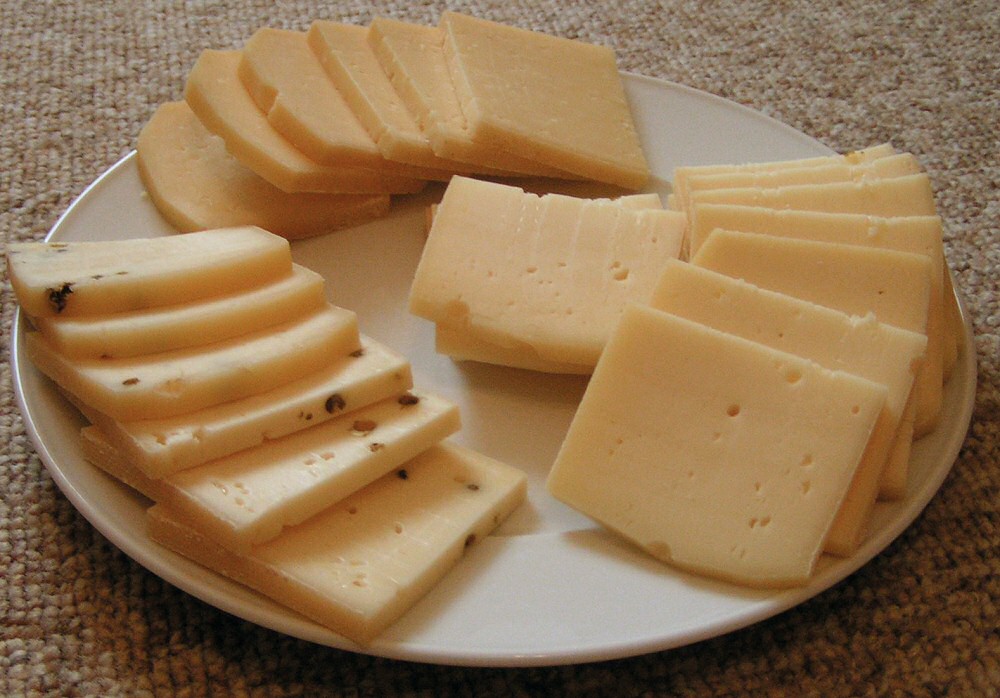 🇨🇭 SwitzerlandRaclette du ValaisWalliser Raclette
A semi-hard Swiss cow's-milk cheese from Valais, aged for melting or eating.Cow · Semi-hard
🇨🇭 SwitzerlandRaclette du ValaisWalliser Raclette
A semi-hard Swiss cow's-milk cheese from Valais, aged for melting or eating.Cow · Semi-hard
 🇫🇷 France and 1 moreTomme
A low-fat alpine cheese from France and Switzerland, often made from skimmed milk.Cow · Semi-hard · Milky and fresh
🇫🇷 France and 1 moreTomme
A low-fat alpine cheese from France and Switzerland, often made from skimmed milk.Cow · Semi-hard · Milky and fresh
Its cousins elsewhere
All semi-hard cheeses 🇾🇪 YemenYemeni cheeseجبنة تعز
A smoked semi-hard sheep or goat milk cheese from Taiz Governorate in Yemen.Sheep · Semi-soft · Savoury and brothy
🇺🇸 United StatesCold-pack cheese
A chilled blend of natural cheeses mixed with flavorings without cooking.Mixed · Bloomy rind · Savoury and brothy
🇾🇪 YemenYemeni cheeseجبنة تعز
A smoked semi-hard sheep or goat milk cheese from Taiz Governorate in Yemen.Sheep · Semi-soft · Savoury and brothy
🇺🇸 United StatesCold-pack cheese
A chilled blend of natural cheeses mixed with flavorings without cooking.Mixed · Bloomy rind · Savoury and brothy
 🇮🇳 IndiaKalari
A semi-soft cow or buffalo milk cheese from Jammu and Kashmir, dried and sautéed until gooey.Cow · Semi-soft · Savoury and brothy
🇮🇳 IndiaKalari
A semi-soft cow or buffalo milk cheese from Jammu and Kashmir, dried and sautéed until gooey.Cow · Semi-soft · Savoury and brothy
 🇲🇽 Mexico and 1 moreAsaderoqueso asadero
A fresh Mexican cheese made from cow and goat milk that melts easily for grilling.Cow · Fresh · Savoury and brothy
🇲🇽 Mexico and 1 moreAsaderoqueso asadero
A fresh Mexican cheese made from cow and goat milk that melts easily for grilling.Cow · Fresh · Savoury and brothy