
Leyden cheese
In its own language: Leidse kaas
A semi-hard Dutch cow's-milk cheese flavoured with cumin and caraway seeds.
This semi-hard cheese from the Netherlands blends cow's milk with cumin and caraway seeds. It features a distinctive flat round shape with sharp edges and a pale yellow paste. The flavour is aromatic and savoury, typical of spiced Dutch varieties.
- Flavoured with cumin and caraway seeds
- Flat round shape with sharp edges
- Protected Designation of Origin since 1997
- Made from pasteurised cow's milk
- Weights range from 3 to 9 kg
What is Leyden cheese?
Leyden cheese is a semi-hard variety produced in the Netherlands using cow's milk. It belongs to the komijnekaas family, meaning it is flavoured with spices. The wheel is flat and round, similar to Gouda, but distinguished by sharp edges on one side. The paste is pale yellow, while the rind is natural. Weights range from three to nine kilograms. Fat content sits between thirty and forty percent. The texture is firm yet sliceable.
Where does Leyden cheese come from?
The cheese originates near Leiden in the western Netherlands. Historically, local farms made butter for markets, leaving behind skimmed milk. Farmers used this surplus to create low-fat cheeses that preserved better than full-cream types. They added cumin seeds and annatto for colour. Traditional farm-made versions carry the protected name Boeren-Leidse met sleutels. This title references the keys found on Leiden's coat of arms.
What does Leyden cheese taste like?
The taste is defined by the addition of cumin and caraway seeds. These spices provide a warm, aromatic quality that cuts through the dairy richness. The semi-hard texture offers a clean bite. Savoury notes dominate the profile. The fat content contributes a smooth mouthfeel. The spice blend remains consistent throughout the wheel.
How Leyden cheese is made
Producers set pasteurised cow's milk with rennet at twenty-eight to thirty degrees Celsius. Curds are cut, stirred, and cooked further. Buttermilk may be added during production. Spices are mixed into portions of the curd. The mixture is layered into cloth-lined hoops with spiced curd in the middle. Pressing lasts several hours. Salting occurs via dry salt or brine immersion. Curing happens in cool, moist cellars.
Leyden cheese, drawn
How Leyden cheese is eaten and cooked
Slices of Leyden cheese work well on bread or crackers. It serves as a snack or part of a cheese board. The firm texture allows for easy slicing. The spice flavour pairs with dark beers or mustards. It does not melt smoothly due to its structure. Cooks generally serve it cold rather than heated.
Leyden cheese through the day
This cheese fits daily eating habits in the Netherlands. It appears on lunch tables alongside bread. It also serves as an afternoon snack. Board presentations include it among other Dutch varieties. It rarely features in breakfast dishes. Dinner service might offer it as a starter.
Leyden cheese in the world's kitchens
Dutch cuisine claims Leyden as a staple. It represents traditional west-Netherlands farming heritage. The spice profile distinguishes it from plain Dutch cheeses. Other European regions do not typically produce this specific style. Local markets still sell traditional farm versions.
At a glance: where it turns up

Faith and ritual
No religious rituals surround this cheese. It lacks ties to fasting periods or monastic production. The ingredients are standard secular dairy products. Vegetarian concerns apply only if animal rennet is used, which is common.
Leyden cheese at celebrations
The cheese does not mark specific festivals. It is not reserved for weddings or new years. Daily consumption defines its cultural role. Local fairs may display traditional wheels, but no holiday is dedicated to it.
Custom and folk tradition
Farmers historically created this cheese to use skimmed milk. The practice reflects resourceful rural life. Adding spices helped preserve the product. The key motif on protected labels honors civic history. Modern factories continue the recipe alongside small farms.
Buying, keeping and serving Leyden cheese
Keep the cheese wrapped in wax paper in the refrigerator. Avoid plastic wrap that traps moisture. Consume within a few weeks of opening. The hard texture helps it last longer than soft varieties.
What to use instead of Leyden cheese
Other spiced Dutch cheeses like Edam with cumin may substitute. Komijnekaas varieties share similar profiles. Non-spiced semi-hard cheeses lack the aromatic depth. Foreign cumin cheeses differ in texture and milk type.
Protection and trade
The European Union granted protected status in nineteen ninety-seven. This designation safeguards traditional methods. Both industrial plants and small farms produce the cheese. Exports reach international markets. Imitations exist but lack the protected name.
Questions people ask about Leyden cheese
What milk is used to make Leyden cheese?
It is made exclusively from cow's milk. Producers often pasteurise the milk before adding cultures and rennet to begin the cheesemaking process.
Where does Leyden cheese come from?
It originates in the Netherlands, specifically around the city of Leiden. Traditional versions carry a protected designation linked to this region.
What does Leyden cheese taste like?
The flavour is savoury and aromatic due to cumin and caraway seeds. The semi-hard texture provides a firm bite that complements the spices.
Is Leyden cheese a hard or soft cheese?
It is classified as a semi-hard cheese. It is firmer than fresh varieties but softer than aged grating cheeses like Parmesan.
Good reading and sources
- Leyden cheese on WikipediaEncyclopedia
- More photos on Wikimedia CommonsPhotos and video
- Wikidata recordOpen data
The facts on this page come from the Wikipedia article "Leyden cheese", written by its contributors and used under the CC BY-SA 4.0 licence, and from its Wikidata record (CC0). EveryCheese rewrote the text in its own words, with AI assistance, and compares every page with the article to make sure no passage is copied. It may be reused under the same CC BY-SA 4.0 licence with a link back.
It may contain mistakes. Recipes, ageing and customs differ from one dairy, valley or kitchen to the next. Folk beliefs are described as tradition, never as advice. If something is wrong, tell us. Last refreshed 2026-10-15.
More from the Netherlands
All the cheeses of the Netherlands 🇨🇭 Switzerland and 5 moreEmmentalEmmentaler
A yellow, medium-hard Swiss cheese with natural holes, aged for several months.Cow · Semi-hard · Savoury and brothy
🇨🇭 Switzerland and 5 moreEmmentalEmmentaler
A yellow, medium-hard Swiss cheese with natural holes, aged for several months.Cow · Semi-hard · Savoury and brothy
 🇳🇱 Netherlands and 5 moreEdamEdammer
A semi-hard Dutch cow's-milk cheese aged in distinctive red wax spheres.Cow · Semi-hard · Nutty
🇳🇱 Netherlands and 5 moreEdamEdammer
A semi-hard Dutch cow's-milk cheese aged in distinctive red wax spheres.Cow · Semi-hard · Nutty
 🇳🇱 NetherlandsMaasdam
A semi-hard Dutch cow's milk cheese with holes, aged for one to three months.Cow · Semi-hard · Nutty
🇳🇱 NetherlandsMaasdam
A semi-hard Dutch cow's milk cheese with holes, aged for one to three months.Cow · Semi-hard · Nutty
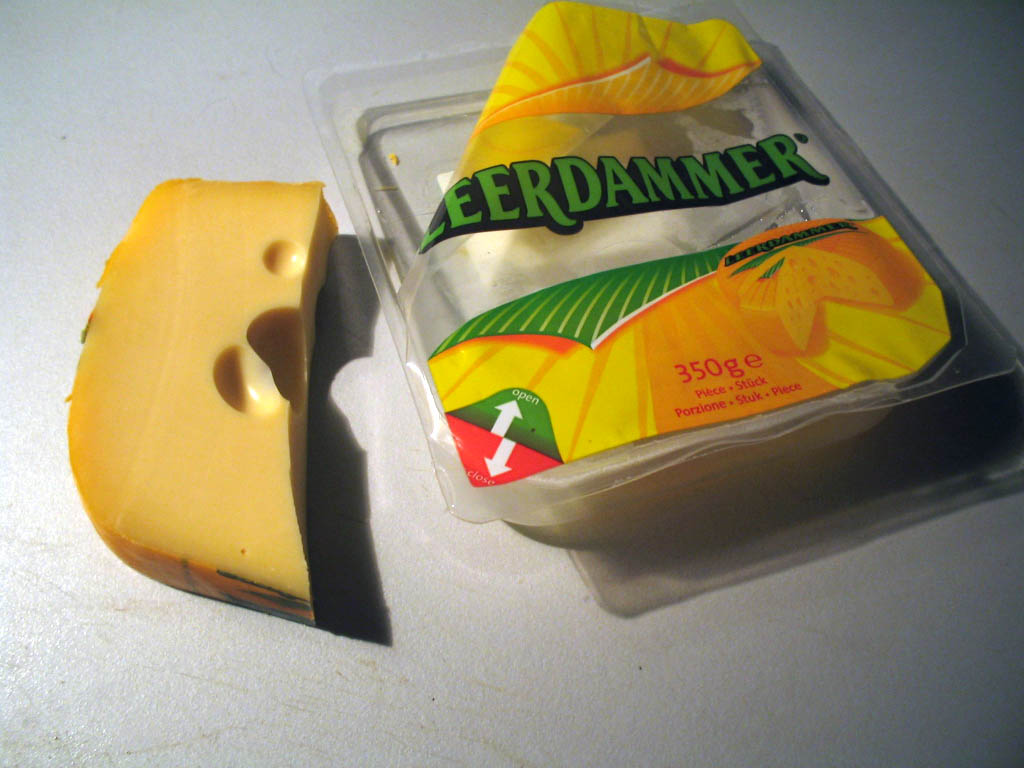 🇳🇱 Netherlands and 1 moreLeerdammer
A Dutch semihard cow's-milk cheese with holes and a sweet nutty taste.Cow · Semi-hard · Sweet and caramel
🇳🇱 Netherlands and 1 moreLeerdammer
A Dutch semihard cow's-milk cheese with holes and a sweet nutty taste.Cow · Semi-hard · Sweet and caramel
Its cousins elsewhere
All semi-hard cheeses 🇾🇪 YemenYemeni cheeseجبنة تعز
A smoked semi-hard sheep or goat milk cheese from Taiz Governorate in Yemen.Sheep · Semi-soft · Savoury and brothy
🇺🇸 United StatesCold-pack cheese
A chilled blend of natural cheeses mixed with flavorings without cooking.Mixed · Bloomy rind · Savoury and brothy
🇾🇪 YemenYemeni cheeseجبنة تعز
A smoked semi-hard sheep or goat milk cheese from Taiz Governorate in Yemen.Sheep · Semi-soft · Savoury and brothy
🇺🇸 United StatesCold-pack cheese
A chilled blend of natural cheeses mixed with flavorings without cooking.Mixed · Bloomy rind · Savoury and brothy
 🇮🇳 IndiaKalari
A semi-soft cow or buffalo milk cheese from Jammu and Kashmir, dried and sautéed until gooey.Cow · Semi-soft · Savoury and brothy
🇮🇳 IndiaKalari
A semi-soft cow or buffalo milk cheese from Jammu and Kashmir, dried and sautéed until gooey.Cow · Semi-soft · Savoury and brothy
 🇲🇽 Mexico and 1 moreAsaderoqueso asadero
A fresh Mexican cheese made from cow and goat milk that melts easily for grilling.Cow · Fresh · Savoury and brothy
🇲🇽 Mexico and 1 moreAsaderoqueso asadero
A fresh Mexican cheese made from cow and goat milk that melts easily for grilling.Cow · Fresh · Savoury and brothy