
Maasdam
A semi-hard Dutch cow's milk cheese with holes, aged for one to three months.
Maasdam is a semi-hard cheese from the Netherlands made from pasteurized cow's milk. It features a smooth yellow rind and internal holes, offering a nutty and sweet taste that is softer than Swiss Emmental due to higher moisture content. The cheese ripens quickly, typically within four weeks to three months, making it a popular everyday option in Dutch cuisine.
- Created in 1984 by Baars company as Leerdammer
- Made from pasteurized cow's milk
- Aged between one and three months
- Features holes and a smooth yellow rind
- Named after the village of Maasdam
What is Maasdam?
Maasdam is a semi-hard cheese produced in the Netherlands using pasteurized cow's milk. The paste is pale yellow and contains distinct holes formed during the ripening process. A smooth yellow rind covers the wheel, which is sometimes coated in wax similar to Gouda. The texture is softer than Swiss Emmental because of its higher moisture content. The flavor profile is characterized by notes that are both nutty and sweet, distinguishing it from harder, more intense alpine varieties.
Where does Maasdam come from?
The cheese was developed in 1984 by the Baars company, initially launched under the trademarked name Leerdammer. The goal was to create a product that could compete with Swiss Emmentaler cheeses while being less expensive and faster to produce. The name Maasdam was later adopted to honor the village of Maasdam in South Holland. Today, other Dutch manufacturers produce the cheese under the Maasdammer name, maintaining the style established decades ago.
What does Maasdam taste like?
Tasters describe Maasdam as having a gentle sweetness paired with nutty undertones. Because it retains more moisture than traditional Emmental, the texture is noticeably softer and smoother on the palate. The flavor does not become sharp or pungent even as it ages up to three months. Instead, it remains mild and approachable, making it suitable for those who prefer less aggressive cheese profiles.
How Maasdam is made
Producers start with pasteurized cow's milk to ensure consistency and safety. The curds are processed similarly to Emmental but with adjustments that result in higher moisture retention. This allows the cheese to ripen much faster than other Dutch varieties, taking only about four weeks to begin developing its characteristic holes. Aging continues for up to three months before the wheels are ready for market, often receiving a smooth yellow rind or wax coating.
Maasdam, drawn
How Maasdam is eaten and cooked
This cheese melts well, making it ideal for sandwiches, burgers, and hot dishes where a creamy texture is desired. Its mild sweetness also works well when served on cheese boards alongside fruits and crackers. Cooks may grate it over pasta or bake it into casseroles. It is commonly eaten as a snack or included in lunch and dinner meals across the Netherlands.
Maasdam through the day
Maasdam fits comfortably into daily eating routines rather than special occasions. It is frequently enjoyed as a standalone snack or part of a light lunch. The cheese also appears on dinner tables and cheese boards. Its melting properties make it a practical choice for quick meals, while its mild flavor suits casual dining settings without overwhelming other ingredients.
Maasdam in the world's kitchens
The cheese is deeply rooted in Dutch culinary traditions. It serves as a local alternative to imported Swiss varieties, offering a comparable experience at a lower cost. Dutch consumers appreciate its versatility in both hot and cold preparations. The style has influenced other regional productions, establishing a standard for semi-hard, hole-punched cheeses within the country's dairy industry.
At a glance: where it turns up
Protection and trade
Production began with the Baars company introducing the Leerdammer trademark in 1984. The success of this model led to broader adoption by other Dutch firms, who now manufacture the cheese under the Maasdammer label. The naming convention pays homage to the South Holland village of Maasdam. While originally designed to undercut Swiss competitors, the cheese has secured its own place in the market through its unique balance of speed of production and pleasant flavor.
Questions people ask about Maasdam
What kind of milk is used to make Maasdam cheese?
Maasdam is made exclusively from pasteurized cow's milk. This choice contributes to its consistent texture and mild, sweet flavor profile that distinguishes it from harder alpine cheeses.
Where does Maasdam cheese come from?
It originates in the Netherlands. The name honors the village of Maasdam in South Holland, though the style was first introduced commercially by the Baars company in 1984.
How does Maasdam taste compared to Emmental?
Maasdam shares nutty and sweet notes with Emmental but is softer due to higher moisture content. It lacks the intensity of Swiss varieties, offering a milder experience suitable for everyday eating.
How long is Maasdam cheese aged?
The cheese is aged for one to three months. This relatively short ripening period allows it to develop its characteristic holes and smooth rind faster than many traditional Dutch cheeses.
Good reading and sources
- Maasdam cheese on WikipediaEncyclopedia
- More photos on Wikimedia CommonsPhotos and video
- Wikidata recordOpen data
The facts on this page come from the Wikipedia article "Maasdam cheese", written by its contributors and used under the CC BY-SA 4.0 licence, and from its Wikidata record (CC0). EveryCheese rewrote the text in its own words, with AI assistance, and compares every page with the article to make sure no passage is copied. It may be reused under the same CC BY-SA 4.0 licence with a link back.
It may contain mistakes. Recipes, ageing and customs differ from one dairy, valley or kitchen to the next. Folk beliefs are described as tradition, never as advice. If something is wrong, tell us. Last refreshed 2026-10-15.
More from the Netherlands
All the cheeses of the Netherlands 🇨🇭 Switzerland and 5 moreEmmentalEmmentaler
A yellow, medium-hard Swiss cheese with natural holes, aged for several months.Cow · Semi-hard · Savoury and brothy
🇨🇭 Switzerland and 5 moreEmmentalEmmentaler
A yellow, medium-hard Swiss cheese with natural holes, aged for several months.Cow · Semi-hard · Savoury and brothy
 🇳🇱 Netherlands and 5 moreEdamEdammer
A semi-hard Dutch cow's-milk cheese aged in distinctive red wax spheres.Cow · Semi-hard · Nutty
🇳🇱 Netherlands and 5 moreEdamEdammer
A semi-hard Dutch cow's-milk cheese aged in distinctive red wax spheres.Cow · Semi-hard · Nutty
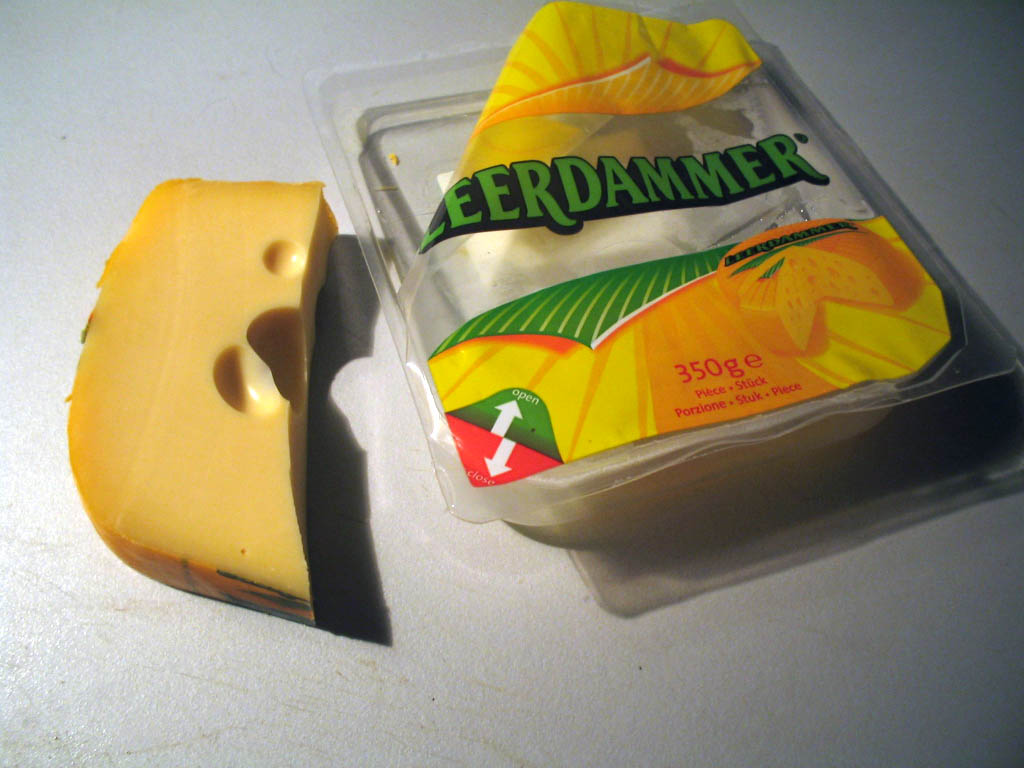 🇳🇱 Netherlands and 1 moreLeerdammer
A Dutch semihard cow's-milk cheese with holes and a sweet nutty taste.Cow · Semi-hard · Sweet and caramel
🇳🇱 Netherlands and 1 moreLeerdammer
A Dutch semihard cow's-milk cheese with holes and a sweet nutty taste.Cow · Semi-hard · Sweet and caramel
 🇳🇱 NetherlandsLeyden cheeseLeidse kaas
A semi-hard Dutch cow's-milk cheese flavoured with cumin and caraway seeds.Cow · Semi-hard · Savoury and brothy
🇳🇱 NetherlandsLeyden cheeseLeidse kaas
A semi-hard Dutch cow's-milk cheese flavoured with cumin and caraway seeds.Cow · Semi-hard · Savoury and brothy
Its cousins elsewhere
All semi-hard cheeses 🇸🇾 SyriaTresseجبنة مشللة
A braided Syrian string cheese with a nutty aroma and springy texture.Cow · Semi-soft · Nutty
🇵🇰 Pakistan and 1 moreKadchgall
A hard, sweet and salty cylindrical cheese made from sheep or camel milk by Pashtun communities.Sheep · Hard · Sweet and caramel
🇸🇾 SyriaTresseجبنة مشللة
A braided Syrian string cheese with a nutty aroma and springy texture.Cow · Semi-soft · Nutty
🇵🇰 Pakistan and 1 moreKadchgall
A hard, sweet and salty cylindrical cheese made from sheep or camel milk by Pashtun communities.Sheep · Hard · Sweet and caramel
 🇮🇳 India and 2 moreKhoa
A soft South Asian cheese made by simmering whole milk until thick and dry.Cow · Fresh · Milky and fresh
🇮🇳 India and 2 moreKhoa
A soft South Asian cheese made by simmering whole milk until thick and dry.Cow · Fresh · Milky and fresh