
Edam
In its own language: Edammer
A semi-hard Dutch cow's-milk cheese aged in distinctive red wax spheres.
This semi-hard cheese comes from the Netherlands and is named for the town of Edam. It features a pale yellow interior encased in red paraffin wax. Young versions taste mild and nutty, while older wheels become sharp and firm.
- Named after the Dutch town of Edam in North Holland.
- Wrapped in distinctive red paraffin wax to preserve freshness.
- Tastes mild and nutty when young, sharp when aged.
- Fried as a street snack in the Czech Republic and Slovakia.
- Served with ham and bread during Filipino Christmas feasts.
What is Edam?
Edam is a pressed uncooked cheese produced in the Netherlands. It takes its name from the town of Edam in North Holland. The cheese forms into flat-ended spheres with a pale yellow paste inside. A bright red paraffin wax coating protects the wheel. This wax layer prevents drying out during long storage or shipping. The texture remains semi-hard throughout its life. Fat content can drop as low as twenty-eight percent in dry matter. Modern batches are softer than cheddar due to this lower fat ratio.
Where does Edam come from?
The cheese originated in the Netherlands. Its name derives directly from the town of Edam. Historical records show it became the most popular cheese globally between the fourteenth and eighteenth centuries. Sailors and colonists favored it because it hardened rather than spoiled over time. The wax seal allowed it to travel well across oceans. This durability made it a staple in remote colonies and at sea.
What does Edam taste like?
Young Edam offers a very mild taste. It carries slight salty or nutty notes. The aroma is nearly absent compared to other varieties. As the cheese ages past six months, the flavor sharpens significantly. The texture becomes firmer and more resistant to chewing. Older wheels develop a distinct tang that contrasts with the fresh version.
How Edam is made
Producers use pasteurized cow's milk to create the curds. The mixture is pressed into spherical molds. Once formed, the wheels receive a coat of red paraffin wax. This sealing step is crucial for preservation. The cheese then rests for a period ranging from four weeks to ten months. Shorter aging yields a soft, mild product. Longer periods produce a harder, sharper wheel.
Edam, drawn
How Edam is eaten and cooked
Mild versions pair well with fresh fruits like melons and cherries. Aged wheels suit hard fruits such as pears and apples. People eat it on crackers or bread slices. In some cultures, it serves as a dessert snack with biscuits. Cooks also grate it into dishes or fry it. In Mexico, chefs stuff whole balls with meat and raisins before braising them in stock.
Edam through the day
It appears frequently as a board item or snack. Families serve it with coffee and bread in Belize. Indonesian households enjoy it in baked snacks during major holidays. Filipino tables feature it during Christmas Eve feasts alongside bread and ham. Scandinavian buffets include it at holiday gatherings. Its versatility allows it to fit lunch plates or dinner sides.
Edam in the world's kitchens
In the Czech Republic, locals call it eidam and fry it for a popular street snack called smažený sýr. They serve it with tartar sauce or mayonnaise. Slovakians prepare similar fried versions often with ham. In Indonesia, cooks bake it into kaasstengels for festive occasions. Filipinos treat queso de bola as a holiday delicacy served with jamón. Belizeans eat aged versions with coffee as a daily treat.
At a glance: where it turns up
By meal and use
Celebrations

Edam at celebrations
The cheese plays a central role in several holiday traditions. Indonesian families bake it into snacks for Eid ul-Fitr, Christmas, and Chinese New Year. Filipino communities serve it during Noche Buena celebrations. Swedish and Norwegian holiday tables feature it on Christmas buffets due to its festive red color. These occasions highlight its status as a celebratory food.
Custom and folk tradition
Historical trade routes spread this cheese far beyond Europe. Its durability made it essential for colonial expansion. The red wax coating became an iconic visual marker of Dutch dairy exports. Local lore in various regions adapted the cheese to their own tastes. Mexican chefs transformed it into stuffed specialties. Central Europeans turned it into fried comfort food.
Buying, keeping and serving Edam
The red wax shell keeps moisture locked inside. This design allows the cheese to last for extended periods without spoiling. Consumers should store it in cool conditions to maintain texture. The wax can be removed before slicing if desired. Properly sealed wheels resist mold growth better than bare cheeses.
What to use instead of Edam
Eidam serves as the local name in Czech markets. Queso de bola refers to the same product in Latin America. Cooks sometimes substitute other semi-hard cheeses when Edam is unavailable. However, the specific wax coating and mild profile make it unique. No direct global equivalent matches its exact combination of traits.
Protection and trade
Production remains centered in the Netherlands. Global demand historically drove its widespread availability. Today, it stays popular in former Dutch colonies and European markets. The cheese maintains its identity through consistent branding and packaging. Export figures reflect its enduring appeal in international grocery stores.
Dishes with Edam
Days Edam belongs to
Questions people ask about Edam
Where does Edam cheese come from?
It originates in the Netherlands, specifically named after the town of Edam in North Holland. The region produces this semi-hard cow's milk cheese using traditional pressing methods.
What kind of milk is used to make Edam?
Producers use pasteurized cow's milk to create the curds. The fat content varies, sometimes dropping to twenty-eight percent in dry matter, which affects the final texture.
Why is Edam covered in red wax?
The red paraffin wax coating protects the cheese from drying out. This seal allows it to age for months or years without spoiling, making it ideal for long sea voyages and storage.
How does the taste change as Edam ages?
Young Edam is very mild with slight salty or nutty notes. As it ages past several months, the flavor sharpens significantly and the texture becomes firmer and more resistant.
Is Edam eaten differently in various countries?
Yes. Czechs fry it as a street snack called eidam. Filipinos serve it with ham during Christmas. Indonesians bake it into holiday snacks. Belizeans eat aged versions with coffee.
Good reading and sources
- Edam cheese on WikipediaEncyclopedia
- More photos on Wikimedia CommonsPhotos and video
- Wikidata recordOpen data
The facts on this page come from the Wikipedia article "Edam cheese", written by its contributors and used under the CC BY-SA 4.0 licence, and from its Wikidata record (CC0). EveryCheese rewrote the text in its own words, with AI assistance, and compares every page with the article to make sure no passage is copied. It may be reused under the same CC BY-SA 4.0 licence with a link back.
It may contain mistakes. Recipes, ageing and customs differ from one dairy, valley or kitchen to the next. Folk beliefs are described as tradition, never as advice. If something is wrong, tell us. Last refreshed 2026-10-15.
More from the Netherlands
All the cheeses of the Netherlands 🇨🇭 Switzerland and 5 moreEmmentalEmmentaler
A yellow, medium-hard Swiss cheese with natural holes, aged for several months.Cow · Semi-hard · Savoury and brothy
🇨🇭 Switzerland and 5 moreEmmentalEmmentaler
A yellow, medium-hard Swiss cheese with natural holes, aged for several months.Cow · Semi-hard · Savoury and brothy
 🇳🇱 NetherlandsMaasdam
A semi-hard Dutch cow's milk cheese with holes, aged for one to three months.Cow · Semi-hard · Nutty
🇳🇱 NetherlandsMaasdam
A semi-hard Dutch cow's milk cheese with holes, aged for one to three months.Cow · Semi-hard · Nutty
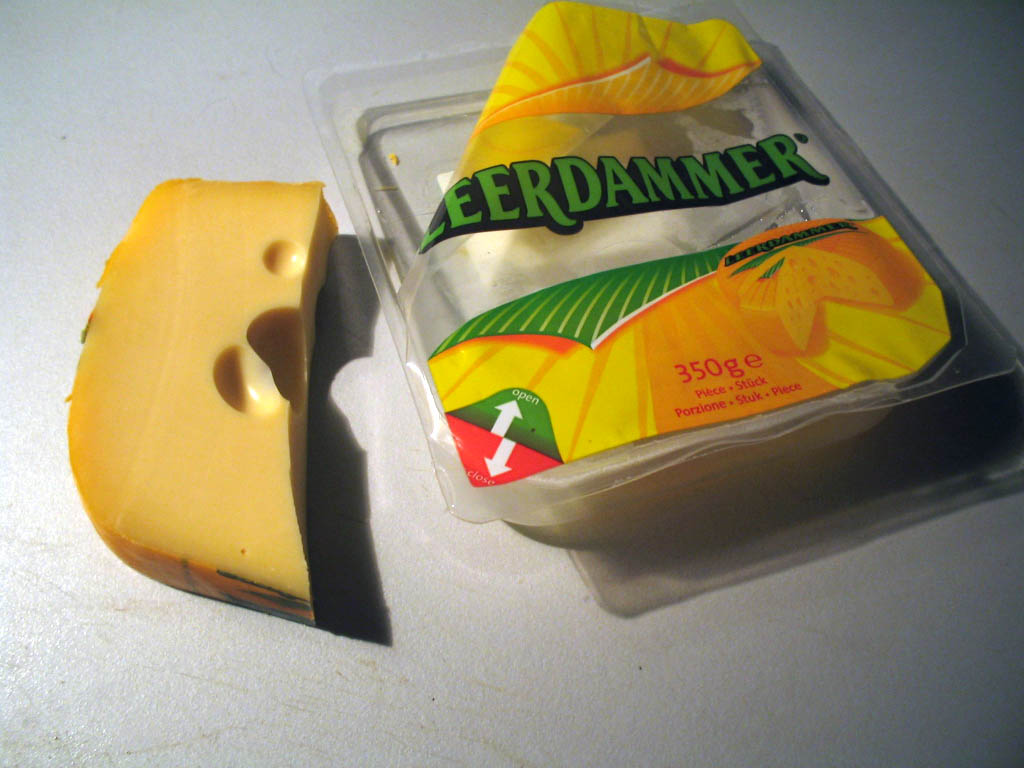 🇳🇱 Netherlands and 1 moreLeerdammer
A Dutch semihard cow's-milk cheese with holes and a sweet nutty taste.Cow · Semi-hard · Sweet and caramel
🇳🇱 Netherlands and 1 moreLeerdammer
A Dutch semihard cow's-milk cheese with holes and a sweet nutty taste.Cow · Semi-hard · Sweet and caramel
 🇳🇱 NetherlandsLeyden cheeseLeidse kaas
A semi-hard Dutch cow's-milk cheese flavoured with cumin and caraway seeds.Cow · Semi-hard · Savoury and brothy
🇳🇱 NetherlandsLeyden cheeseLeidse kaas
A semi-hard Dutch cow's-milk cheese flavoured with cumin and caraway seeds.Cow · Semi-hard · Savoury and brothy
Its cousins elsewhere
All semi-hard cheeses 🇪🇬 EgyptMishمش (meš)
A fermented Egyptian salty cheese aged in buttermilk brine until sharp and pungent.Mixed · Bloomy rind · Salty
🇪🇬 EgyptMishمش (meš)
A fermented Egyptian salty cheese aged in buttermilk brine until sharp and pungent.Mixed · Bloomy rind · Salty
 🇪🇬 Egypt and 1 moreRumiجبنة رومى
A hard, salty Egyptian cow or buffalo milk cheese with a pungent aroma.Cow · Hard · Salty
🇪🇬 Egypt and 1 moreRumiجبنة رومى
A hard, salty Egyptian cow or buffalo milk cheese with a pungent aroma.Cow · Hard · Salty
 🇲🇽 MexicoPanela cheeseQueso panela
A fresh, white Mexican cow's-milk cheese that holds its shape when fried.Cow · Fresh · Milky and fresh
🇻🇪 VenezuelaPalmitaqueso palmita
A fresh, salty cow's milk cheese from Venezuela's Zulia state, made in large wooden vats.Cow · Fresh · Salty
🇲🇽 MexicoPanela cheeseQueso panela
A fresh, white Mexican cow's-milk cheese that holds its shape when fried.Cow · Fresh · Milky and fresh
🇻🇪 VenezuelaPalmitaqueso palmita
A fresh, salty cow's milk cheese from Venezuela's Zulia state, made in large wooden vats.Cow · Fresh · Salty