
Mish
In its own language: مش (meš)
A fermented Egyptian salty cheese aged in buttermilk brine until sharp and pungent.
Mish is a traditional Egyptian cheese made by fermenting salty cheese for months or years. It has a yellowish-brown paste, tastes sharp and salty, and is often prepared at home in earthenware jars with peppers and whey.
- Fermented for at least one year in earthenware jars.
- Contains tiny harmless worms that breed during aging.
- Flavor is sharp, salty, and pungent when ripe.
- May resemble cheese found in Pharaoh Hor-Aha's tomb.
What is Mish?
Mish is a soft Egyptian cheese with no eyeholes. It measures about ten by fifteen centimetres and weighs between one hundred fifty and two hundred grams. The paste turns yellowish-brown when ripe. The texture is soft and the flavour is sharp, salty, and pungent. Tiny worms may breed inside, which are not dangerous. The cheese is traditionally made from Areesh, but commercial versions use Domiati or Rumi. It is a staple of Egyptian dairy culture.
Where does Mish come from?
The cheese dates back to ancient times. Similar products may have been found in the tomb of Pharaoh Hor-Aha at Saqqara from three thousand two hundred BC. This suggests a long history of fermentation techniques in Egypt. Today it remains a traditional item, mostly prepared in households rather than factories.
What does Mish taste like?
The taste is defined by saltiness and a sharp bite. As it ferments, it becomes more pungent. The aroma reflects this intensity. The texture stays soft throughout the aging process. There are no hard crumbles or creamy spreads; it is a unified soft mass. The flavor deepens over time without changing its basic profile.
How Mish is made
Home makers drain salty cheese and rinse it. They layer it with salt in an earthenware jar. Buttermilk, sour skim milk, whey, and red and green peppers fill the container. A piece of old mish starts the fermentation. The jar seals and sits at room temperature for a year or more. People can open it to take some out and add fresh ingredients later.
Mish, drawn
How Mish is eaten and cooked
It is eaten as a snack or on a cheese board. The strong flavor means small amounts go far. It is not typically melted or baked into dishes. Instead, it is served directly due to its intense taste. Commercial versions might be sliced for similar purposes.
Mish through the day
This cheese fits well as a snack or part of a casual board. Its strong flavor makes it suitable for simple eating rather than complex meals. It does not appear in breakfasts or desserts. It stands alone as a savory item.
Mish in the world's kitchens
Egyptian cuisine features mish as a traditional fermented product. It appears in local markets and homes across the country. Other cultures do not commonly adopt this specific method. The use of peppers and whey distinguishes it from other Middle Eastern cheeses.
At a glance: where it turns up
By meal and use
Cuisines
Faith and ritual
There are no known religious restrictions or rituals tied to mish. It is not associated with fasting periods or holy days. Any dietary considerations would depend on individual preferences regarding fermentation or animal products.
Mish at celebrations
Mish is not linked to weddings, festivals, or new year celebrations. It is an everyday food item. Families prepare it for regular consumption rather than special occasions.
Custom and folk tradition
In Egypt, saying something is 'like mish' means it is everywhere. Another phrase says mish worms arise from mish, meaning a problem cannot be solved but is not worth worry. These sayings show how common the cheese is in daily life.
Buying, keeping and serving Mish
Keep the jar sealed at room temperature. You can open it to remove portions while adding fresh cheese and brine. This allows the batch to continue aging indefinitely. Do not refrigerate if following traditional methods.
What to use instead of Mish
No direct substitutes exist outside Egypt. Some might try other fermented white cheeses, but the pepper and whey brine gives mish its unique taste. Commercial versions using Domiati or Rumi offer a closer approximation.
Protection and trade
Most mish is made at home. Some is sold in local Egyptian markets. Commercial producers make similar items using different base cheeses. There are no protected status labels mentioned for this traditional product.
Questions people ask about Mish
What kind of milk is used to make mish?
Traditional mish uses Areesh cheese, while commercial versions use Domiati or Rumi cheese. These are typically cow or buffalo milks common in Egypt.
Where did mish originate?
It is a traditional Egyptian cheese. Similar products may date back to the First Dynasty Pharaoh Hor-Aha's tomb at Saqqara around 3200 BC.
How is mish flavored?
It is fermented in a brine of buttermilk, whey, and peppers. The result is a sharp, salty, and pungent taste with a soft texture.
Is mish safe to eat with worms inside?
Yes, tiny worms often breed in the mish during fermentation. They are not considered dangerous and are part of the traditional process.
Good reading and sources
The facts on this page come from the Wikipedia article "Mish", written by its contributors and used under the CC BY-SA 4.0 licence, and from its Wikidata record (CC0). EveryCheese rewrote the text in its own words, with AI assistance, and compares every page with the article to make sure no passage is copied. It may be reused under the same CC BY-SA 4.0 licence with a link back.
It may contain mistakes. Recipes, ageing and customs differ from one dairy, valley or kitchen to the next. Folk beliefs are described as tradition, never as advice. If something is wrong, tell us. Last refreshed 2026-10-15.
More from Egypt
All the cheeses of Egypt 🇪🇬 Egypt and 1 moreRumiجبنة رومى
A hard, salty Egyptian cow or buffalo milk cheese with a pungent aroma.Cow · Hard · Salty
🇪🇬 Egypt and 1 moreRumiجبنة رومى
A hard, salty Egyptian cow or buffalo milk cheese with a pungent aroma.Cow · Hard · Salty
 🇪🇬 Egypt and 1 moreDomiatiجبنه دمياطى
A soft, salty Egyptian white cheese salted before coagulation.Buffalo · Bloomy rind · Salty
🇪🇬 Egypt and 1 moreDomiatiجبنه دمياطى
A soft, salty Egyptian white cheese salted before coagulation.Buffalo · Bloomy rind · Salty
 🇸🇾 Syria and 5 moreAkkawiجبنة عكاوي
A white brined cow's milk cheese from the Levant named after Acre.Cow · Brined · Salty
🇸🇾 Syria and 5 moreAkkawiجبنة عكاوي
A white brined cow's milk cheese from the Levant named after Acre.Cow · Brined · Salty
Its cousins elsewhere
All bloomy rind cheeses 🇮🇹 Italy and 3 moreParmesanParmigiano Reggiano
A hard, granular cow's-milk cheese aged at least a year in northern Italy.Cow · Hard · Sharp and tangy-aged
🇮🇹 Italy and 3 moreParmesanParmigiano Reggiano
A hard, granular cow's-milk cheese aged at least a year in northern Italy.Cow · Hard · Sharp and tangy-aged
 🇬🇷 Greece and 5 moreFetaφέτα
A crumbly Greek brined cheese made from sheep and goat milk.Sheep · Brined · Tangy and lactic
🇬🇷 Greece and 5 moreFetaφέτα
A crumbly Greek brined cheese made from sheep and goat milk.Sheep · Brined · Tangy and lactic
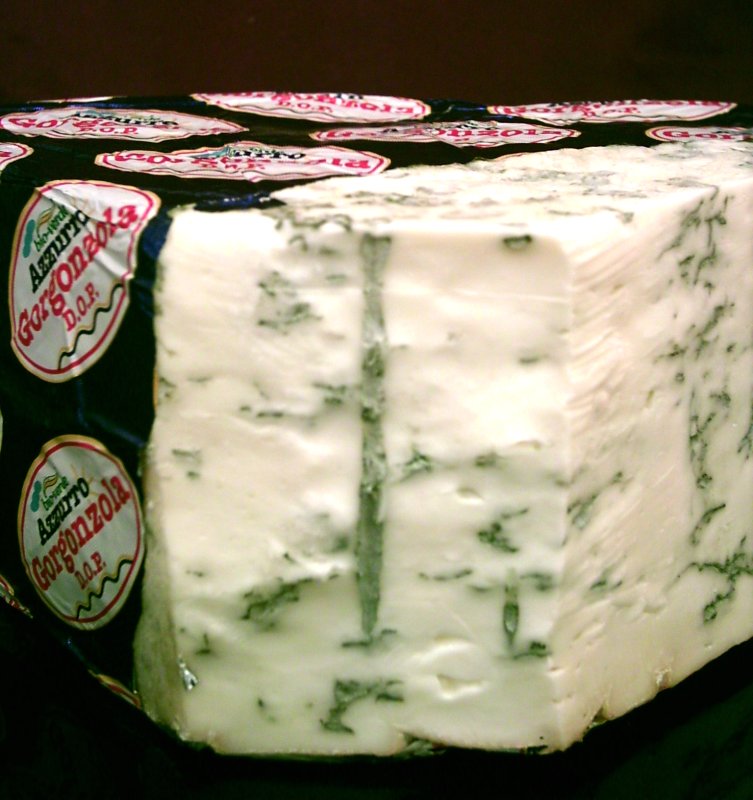 🇮🇹 Italy and 2 moreGorgonzola
A creamy Italian blue cheese from Lombardy with two distinct styles.Cow · Bloomy rind · Salty
🇮🇹 Italy and 2 moreGorgonzola
A creamy Italian blue cheese from Lombardy with two distinct styles.Cow · Bloomy rind · Salty
 🇫🇷 FranceRoquefortRòcafòrt
A raw sheep's milk blue cheese aged in the Combalou caves of southern France.Sheep · Semi-hard · Tangy and lactic
🇫🇷 FranceRoquefortRòcafòrt
A raw sheep's milk blue cheese aged in the Combalou caves of southern France.Sheep · Semi-hard · Tangy and lactic