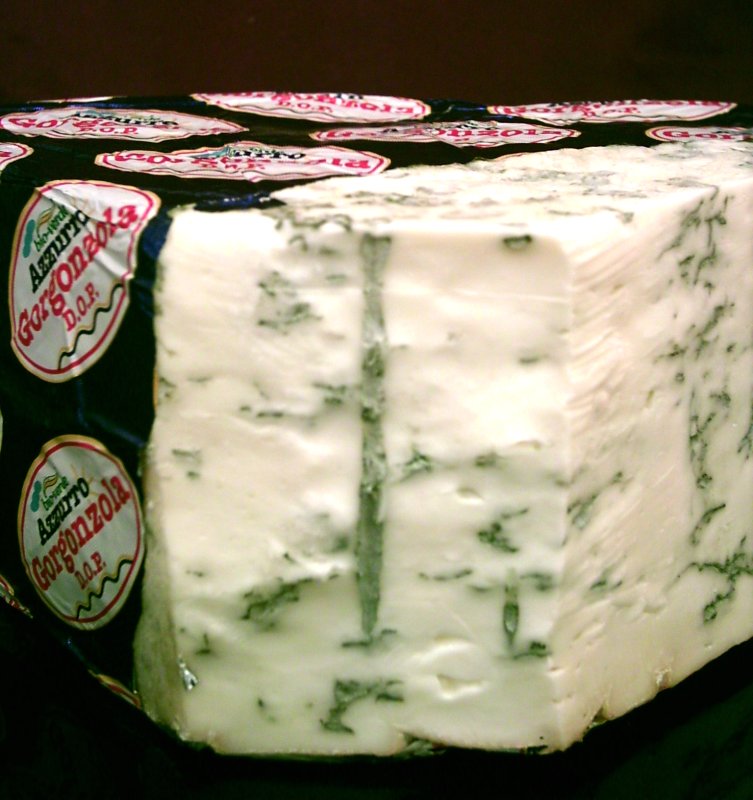
Gorgonzola
A creamy Italian blue cheese from Lombardy with two distinct styles.
This Italian blue cheese comes from unskimmed cow's milk and originates in the Lombardy region. It features a soft texture with blue-green veins and offers either a mild, buttery taste or a sharper, saltier profile depending on its age.
- Made from unskimmed cow's milk in Italy.
- Features blue-green veins from Penicillium mold.
- Available as mild dolce or sharp piccante.
- Protected by EU PDO status since 1996.
- Originates from the town of Gorgonzola.
What is Gorgonzola?
Gorgonzola is a well-known Italian cheese crafted from whole cow's milk. It belongs to the family of soft blue cheeses, characterized by its distinctive greenish-blue marbling. The paste is typically soft and crumbly, though it can range from creamy to firm. Its appearance is marked by white curds streaked with blue veins created by mold growth. The cheese carries a salty flavor profile that varies significantly between its two main varieties.
Where does Gorgonzola come from?
The cheese takes its name from the town of Gorgonzola near Milan in Lombardy, where production began centuries ago. Legend claims a cheesemaker accidentally left fresh curds exposed overnight while rushing to meet a lover, resulting in the first blue-molded cheese. Historical records suggest creation between 879 and 1007 AD. However, this origin story is disputed by other localities like Pasturo nella Valsassina, which boasts natural caves ideal for aging dairy products.
What does Gorgonzola taste like?
Two primary styles exist based on ripening time. Dolce is younger, offering a delicate, buttery consistency with a slightly sweet finish and milder saltiness. Piccante ages longer, developing a firmer, more crumbly texture and a pungent, sharp bite. Both varieties feature a noticeable salinity derived from their blue veining, which adds a distinct tang to the palate as the cheese matures.
How Gorgonzola is made
Producers remove whey during the curdling process before aging the cheese at cool temperatures. Metal rods are inserted and removed quickly during maturation to create air channels. These holes allow mold spores to grow into hyphae, forming the characteristic blue-green veins. The duration of aging determines the final texture, with shorter periods yielding softer results and longer periods creating firmer wheels.
Gorgonzola, drawn
How Gorgonzola is eaten and cooked
Chefs often melt this cheese into risottos during the final cooking stage. It serves as a topping for steak, sometimes paired with port wine, or added to gnocchi and pasta dishes. A classic application is pizza quattro formaggi, where it combines with other soft cheeses. It may also be served alongside polenta or eaten simply as part of a cheese board.
Gorgonzola through the day
The cheese fits comfortably into lunch and dinner settings. It appears frequently as an ingredient in savory dishes rather than breakfast items. Slices or cubes work well as a snack when paired with bread or fruit. Its melting properties make it suitable for hot meals, while its bold flavor allows it to stand alone on a tasting board without additional accompaniments.
Gorgonzola in the world's kitchens
Italian cuisine relies heavily on authentic Gorgonzola produced within specific provinces like Milan, Bergamo, and Brescia. Outside Europe, particularly in the United States and Australia, the term describes various cow's milk blue cheeses inspired by the original. American regulations define specific standards for imported and domestic versions, allowing broader use of the name compared to strict European geographical indications.
At a glance: where it turns up

Faith and ritual
No religious dietary restrictions or spiritual rituals are associated with this cheese. It is not considered kosher or halal by default due to standard rennet usage, though specific production methods might vary. There are no monastic traditions linked to its creation, nor does it play a role in fasting periods or religious feasts beyond general secular celebrations.
Gorgonzola at celebrations
The town of Gorgonzola hosts an annual festival each September called the Sagra Nazionale del Gorgonzola DOP. This event celebrates the cheese's heritage and promotes its protected status. While not tied to major holidays like Christmas or Easter, the festival draws locals and tourists to honor the product's history and culinary significance in the region.
Custom and folk tradition
Historically, the cheese was known as stracchino verde, referring to its young, soft nature and blue-green color. Local lore attributes its discovery to accidental mold growth during hurried cheesemaking. Traditional producers emphasize the importance of cave aging for maintaining consistent temperatures. The dispute over origin highlights regional pride in Lombardy's dairy heritage and the value placed on geographical authenticity.
Buying, keeping and serving Gorgonzola
Keep the cheese wrapped in parchment paper inside a refrigerator to maintain moisture without drying out. Consume it within a few weeks of opening for optimal flavor. Avoid freezing, as it alters the crumbly texture. Serve at room temperature to enhance its aromatic qualities and allow the fats to soften properly for tasting.
Protection and trade
European law protects the name through PDO status since 1996, restricting production to defined provinces. Before this, it held DOC status from 1955. International agreements extend some protection globally, but US regulations allow broader naming conventions for similar products. Major production occurs in Piedmont and Lombardy, supporting local economies through exports and tourism related to the cheese's reputation.
Questions people ask about Gorgonzola
Where does Gorgonzola come from?
It originates in the Lombardy region of Italy, specifically named after the town of Gorgonzola near Milan. Production is now restricted to several provinces in northern Italy under European protection laws.
What kind of milk is used?
Authentic Gorgonzola is made exclusively from unskimmed cow's milk. This full-fat base contributes to its rich, creamy texture and buttery flavor profile found in the younger varieties.
How does it taste?
Taste depends on the style: dolce is mild, buttery, and slightly sweet, while piccante is sharper, saltier, and more pungent. Both have a distinctive tang from their blue mold veins.
Can I use it for cooking?
Yes, it melts beautifully. Chefs use it in risottos, pasta sauces, on steaks with wine, or on four-cheese pizzas. Its strong flavor stands up well to heat and other ingredients.
Good reading and sources
- Gorgonzola on WikipediaEncyclopedia
- More photos on Wikimedia CommonsPhotos and video
- Wikidata recordOpen data
The facts on this page come from the Wikipedia article "Gorgonzola", written by its contributors and used under the CC BY-SA 4.0 licence, and from its Wikidata record (CC0). EveryCheese rewrote the text in its own words, with AI assistance, and compares every page with the article to make sure no passage is copied. It may be reused under the same CC BY-SA 4.0 licence with a link back.
It may contain mistakes. Recipes, ageing and customs differ from one dairy, valley or kitchen to the next. Folk beliefs are described as tradition, never as advice. If something is wrong, tell us. Last refreshed 2026-10-15.
More from Italy
All the cheeses of Italy 🇫🇷 France and 1 moreReblochon
A soft washed-rind cow's milk cheese from the French Alps with a nutty flavour.Cow · Bloomy rind · Nutty
🇫🇷 France and 1 moreReblochon
A soft washed-rind cow's milk cheese from the French Alps with a nutty flavour.Cow · Bloomy rind · Nutty
 🇮🇹 ItalyToma
A soft to semi-hard Italian cow's milk cheese prized for melting.Cow · Bloomy rind
🇮🇹 ItalyToma
A soft to semi-hard Italian cow's milk cheese prized for melting.Cow · Bloomy rind
 🇮🇹 ItalyCaciotta
A mild Italian cheese made from cow, sheep, goat, or buffalo milk.Cow · Bloomy rind · Milky and fresh
🇮🇹 ItalyCaciotta
A mild Italian cheese made from cow, sheep, goat, or buffalo milk.Cow · Bloomy rind · Milky and fresh
 🇮🇹 ItalyRobiola
A soft-ripened Italian cheese from Piedmont and Lombardy, made from cow, goat, or sheep milk.Cow · Bloomy rind · Sweet and caramel
🇮🇹 ItalyRobiola
A soft-ripened Italian cheese from Piedmont and Lombardy, made from cow, goat, or sheep milk.Cow · Bloomy rind · Sweet and caramel
Its cousins elsewhere
All bloomy rind cheeses 🇪🇬 EgyptMishمش (meš)
A fermented Egyptian salty cheese aged in buttermilk brine until sharp and pungent.Mixed · Bloomy rind · Salty
🇪🇬 EgyptMishمش (meš)
A fermented Egyptian salty cheese aged in buttermilk brine until sharp and pungent.Mixed · Bloomy rind · Salty
 🇺🇸 United StatesBergenost
A triple-cream Norwegian-style butter cheese from New York with green wax.Mixed · Semi-soft · Buttery and creamy
🇺🇸 United StatesBergenost
A triple-cream Norwegian-style butter cheese from New York with green wax.Mixed · Semi-soft · Buttery and creamy