
Cabrales
In its own language: queso de Cabrales
A pungent blue cheese from the Picos de Europa mountains of Asturias, Spain.
Cabrales is a protected blue cheese made in the mountainous region of Asturias, Spain. It uses milk from cow, goat, or sheep herds raised in the Picos de Europa, aged in natural limestone caves to develop its sharp, spicy flavor and distinctive veining.
- Aged in natural limestone caves in the Picos de Europa.
- Uses a blend of cow, goat, and sheep milk for complex flavor.
- Protected by European PDO status since its recognition.
- Traditionally wrapped in sycamore maple leaves locally.
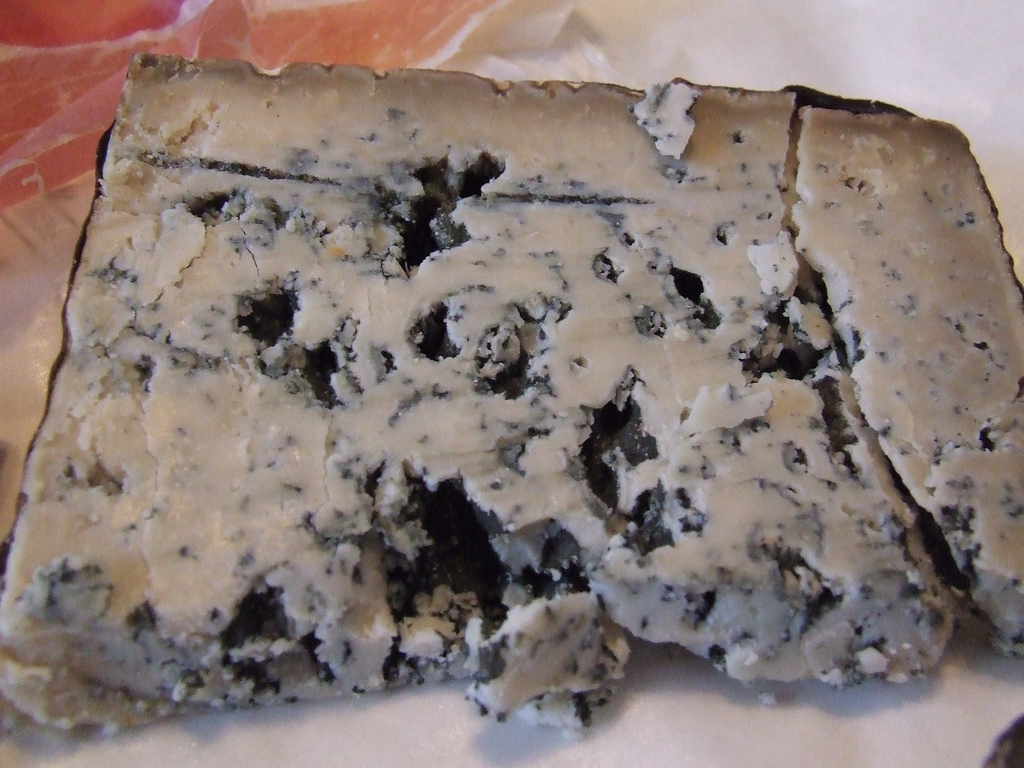
- Features a soft gray rind with blue-green veining inside.
What is Cabrales?
Cabrales is a celebrated Spanish blue cheese originating from the rural dairy farms of Asturias. It takes the form of a cylindrical wheel, standing between seven and fifteen centimeters tall with a variable diameter. The exterior features a soft, thin rind that appears gray with patches of yellow or reddish tones. Inside, the paste is unctuous and compact without any holes. The milk base varies; it can be pure cow’s milk or a traditional blend including goat and sheep milk, which intensifies the spice. All milk must come from herds grazing within a specific zone in the Picos de Europa mountains.
Where does Cabrales come from?
This cheese hails from the artisan traditions of Asturias, located in northern Spain. Rural dairy farmers have produced it for generations in the shadow of the Picos de Europa. The name refers to the local area where production is centered. Its reputation rivals other famous European blues like Roquefort and Gorgonzola. The strict geographical boundaries ensure that only milk from these specific mountain pastures qualifies for the authentic product.
What does Cabrales taste like?
The taste profile is strong and often quite acidic, offering a complex experience especially when mixed milks are used. The blending of cow, goat, and sheep milk creates layers of spiciness and tang. The texture remains firm yet creamy, allowing the bold flavors to stand out. As the cheese matures in the cool caves, the blue-green veins spread throughout the paste, deepening the savory punch and adding a distinct earthy quality to every bite.
How Cabrales is made
Farmers heat the fresh milk and add rennet to curdle it. Once formed, the whey is drained away. The curds are packed into cylindrical molds known as arnios to shape the wheels. After salting, the cheeses undergo an initial curing period of about two weeks. They then move to natural limestone caves for aging. There, they rest on wooden shelves called talameras. Workers turn and clean them regularly. The caves maintain high humidity and cool temperatures, ideal for growing the characteristic mold veins.
Cabrales, drawn
How Cabrales is eaten and cooked
Cabrales is typically served on a cheese board alongside crusty bread or fruits. Its robust nature makes it suitable for snacking on its own. Cooks may also grate it over dishes to add a pungent kick. While not primarily a melting cheese like some others, its intensity pairs well with hearty meals. It is rarely used in sweet applications due to its sharp, salty character. Traditional serving methods emphasize its role as a standalone delicacy rather than an ingredient.
Cabrales in the world's kitchens
Spanish cuisine claims Cabrales as a regional treasure from Asturias. It is deeply embedded in local food culture, reflecting the pastoral life of the Picos de Europa. Neighboring regions may appreciate it, but it remains distinctly Asturian. Other Spanish blues like Valdeón share similar leaf-wrapping histories, but Cabrales holds its own PDO status. International palates recognize it among top-tier European blues, though its consumption remains rooted in its home territory.
At a glance: where it turns up
By meal and use
Cuisines

Faith and ritual
No specific religious rituals or dietary laws are tied to Cabrales production. It does not hold a place in monastic traditions or fasting periods. The cheese is secular in nature, produced by lay farmers rather than clergy. There are no kosher or halal certifications mentioned in its traditional preparation. It serves as a cultural symbol of Asturian heritage rather than a spiritual offering.
Cabrales at celebrations
The cheese is not linked to specific weddings, festivals, or holiday tables. It is available year-round as part of daily life in Asturias. While large wheels have set auction records, this is a commercial milestone rather than a celebratory custom. Farmers produce it continuously to meet demand, without tying harvest times to seasonal feasts or new-year traditions.
Custom and folk tradition
Historically, Cabrales was wrapped in moist sycamore maple leaves to preserve moisture and add subtle flavor. This practice persists in small-batch local sales, though modern regulations require aluminum foil for export. The leaf-wrapping tradition highlights the close connection between the forest and the dairy. Farmers still value this old method for domestic consumption, maintaining a link to ancestral techniques despite industrial standards.
Buying, keeping and serving Cabrales
Commercially sold Cabrales comes in dark-green aluminum foil with an official stamp. This packaging protects the cheese during transport and storage. For best results, keep it refrigerated in its original wrapping. If bought leaf-wrapped locally, consume it sooner as it lacks export-grade preservation. Serve at room temperature to allow the aromas to fully develop before eating.
What to use instead of Cabrales
Roquefort and Gorgonzola are often cited as comparable blues due to their shared fame and cave-aging methods. However, Cabrales offers a unique spicier profile from its mixed milk origins. No direct substitute replicates the exact Asturian terroir. Cooks seeking a similar punch might try other Spanish blues like Picón Bejes-Tresviso, though textures and milk blends differ.
Protection and trade
The Consejo Regulador D.O.P. Cabrales oversees production and enforces PDO rules. In 2019, nearly 433,000 kilograms were produced before pandemic disruptions. Large wheels have fetched record prices at auctions, highlighting its premium status. Regulations mandate specific packaging for exported goods, banning the traditional leaf wrap for international trade. This ensures consistency and protects the brand's integrity across markets.
Questions people ask about Cabrales
Where does Cabrales cheese come from?
It originates from Asturias in northern Spain, specifically from herds grazing in the Picos de Europa mountains. Production is restricted to this designated zone to ensure authenticity and traditional quality.
What kind of milk is used to make Cabrales?
It can be made from pure cow’s milk or a traditional mix of cow, goat, and sheep milk. The blended version provides a stronger, spicier flavor profile compared to the single-milk variety.
How is Cabrales aged?
After an initial two-week cure, the cheese ages for two to five months in natural limestone caves. These caves provide cool temperatures and high humidity, encouraging the growth of characteristic blue-green mold veins.
What does Cabrales taste like?
It has a strong, sharp, and sometimes acidic flavor. The texture is unctuous and compact. Mixed-milk versions offer greater complexity and a distinct spicy kick that sets it apart from milder blues.
Is Cabrales protected by any certification?
Yes, it holds Protected Designation of Origin (PDO) status in the European Union. This legal protection guarantees that only cheese made in the specified Asturian region using traditional methods can bear the name.
Good reading and sources
- Cabrales cheese on WikipediaEncyclopedia
- More photos on Wikimedia CommonsPhotos and video
- Wikidata recordOpen data
The facts on this page come from the Wikipedia article "Cabrales cheese", written by its contributors and used under the CC BY-SA 4.0 licence, and from its Wikidata record (CC0). EveryCheese rewrote the text in its own words, with AI assistance, and compares every page with the article to make sure no passage is copied. It may be reused under the same CC BY-SA 4.0 licence with a link back.
It may contain mistakes. Recipes, ageing and customs differ from one dairy, valley or kitchen to the next. Folk beliefs are described as tradition, never as advice. If something is wrong, tell us. Last refreshed 2026-10-15.
More from Spain
All the cheeses of Spain 🇪🇸 SpainMahónformatge de Maó / queso de Mahón
A cow's-milk cheese from Menorca that ranges from soft and mild to hard and sharp.Cow · Semi-soft · Buttery and creamy
🇪🇸 SpainMahónformatge de Maó / queso de Mahón
A cow's-milk cheese from Menorca that ranges from soft and mild to hard and sharp.Cow · Semi-soft · Buttery and creamy
 🇪🇸 SpainGamonéuQueso de Gamonéu
A lightly smoked, mixed-milk cheese from the mountains of Asturias with a moulded rind.Mixed · Smoked · Savoury and brothy
🇪🇸 SpainGamonéuQueso de Gamonéu
A lightly smoked, mixed-milk cheese from the mountains of Asturias with a moulded rind.Mixed · Smoked · Savoury and brothy
 🇪🇸 SpainIboresQueso Ibores
A firm, salty goat cheese from Extremadura with a natural or paprika-rubbed rind.Goat · Semi-hard · Salty
🇪🇸 SpainIboresQueso Ibores
A firm, salty goat cheese from Extremadura with a natural or paprika-rubbed rind.Goat · Semi-hard · Salty
 🇪🇸 SpainSan Simón da Costa
A pear-shaped, smoked cow's milk cheese from Galicia with a smooth brown rind.Cow · Semi-hard · Salty
🇪🇸 SpainSan Simón da Costa
A pear-shaped, smoked cow's milk cheese from Galicia with a smooth brown rind.Cow · Semi-hard · Salty
Its cousins elsewhere
All blue cheeses 🇮🇳 IndiaKalimpong cheese
A mild, crumbly cow's-milk cheese from a West Bengal hill station, started by a Jesuit priest.Cow · Semi-hard · Tangy and lactic
🇺🇸 United StatesCold-pack cheese
A chilled blend of natural cheeses mixed with flavorings without cooking.Mixed · Bloomy rind · Savoury and brothy
🇮🇳 IndiaKalimpong cheese
A mild, crumbly cow's-milk cheese from a West Bengal hill station, started by a Jesuit priest.Cow · Semi-hard · Tangy and lactic
🇺🇸 United StatesCold-pack cheese
A chilled blend of natural cheeses mixed with flavorings without cooking.Mixed · Bloomy rind · Savoury and brothy
 🇮🇳 IndiaKalari
A semi-soft cow or buffalo milk cheese from Jammu and Kashmir, dried and sautéed until gooey.Cow · Semi-soft · Savoury and brothy
🇨🇳 ChinaKefir cheese
A tangy, creamy cheese set using kefir culture rather than rennet or acid.Mixed · Fresh · Tangy and lactic
🇮🇳 IndiaKalari
A semi-soft cow or buffalo milk cheese from Jammu and Kashmir, dried and sautéed until gooey.Cow · Semi-soft · Savoury and brothy
🇨🇳 ChinaKefir cheese
A tangy, creamy cheese set using kefir culture rather than rennet or acid.Mixed · Fresh · Tangy and lactic