
Beaufort
A firm, hole-free Alpine cow's milk cheese from the French Savoie region.
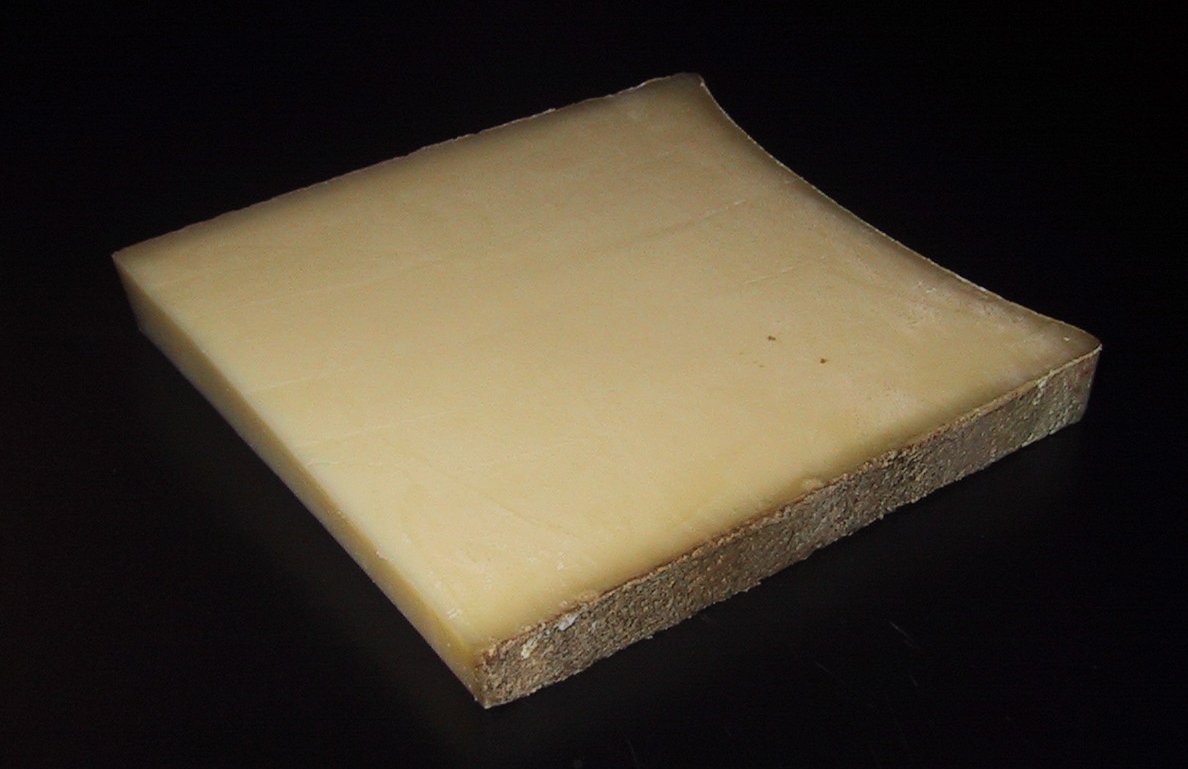
Beaufort is a pressed cooked cheese made from raw cow's milk in the French Alps. It has a smooth, pale yellow paste and a distinct grassy aroma. The cheese melts well for fondue or pairs with fish and white wine.
- Firm cow's milk cheese from France's Savoie region.
- Concave shape created by beechwood hoops.
- Rind smeared with morge for flavour development.
- Excellent melting cheese for fondue.
- Protected by AOC status since 1968.
What is Beaufort?
Beaufort is a firm, pressed cooked cheese from the French Alps. It belongs to the Gruyère family but lacks the holes found in similar cheeses. The paste is smooth, creamy, and pale yellow. Each wheel weighs between 20 and 70 kilograms. The shape is distinctive, measuring 35 to 75 centimeters wide with an 11 to 16 centimeter concave heel. The rind develops a strong flavour and a pale yellow colour through a specific maturation process. It smells of the high pastures where the cows graze.
Where does Beaufort come from?
The cheese comes from the Beaufortain, Tarentaise valley, and Maurienne valleys in the Savoie region. Some suggest a Roman origin mentioned by Pliny the Elder, though this is unconfirmed. Beaufort received its Appellation d'Origine Contrôlée status on April 4, 1968. Production covers 450,000 hectares of the Savoie region, including parts of the Val d'Arly valley.
What does Beaufort taste like?
The taste is savoury and buttery with a distinct grassy aroma. The texture is smooth and creamy. Varieties include summer, alpine, and winter types. The alpine version is made in chalets on high pastures. The summer cheese uses milk from Tarine or Abondance cows grazing in the Alps. The winter variety offers a different profile based on indoor feeding. The rind adds a pungent note to the overall experience.
How Beaufort is made
Producers use 11 liters of milk for every kilogram of cheese. The milk is heated, acidified, and coagulated. Curds are cast into beechwood hoops to create the concave shape. The cheese presses for 24 hours, then cools for another 24 hours. It soaks in brine before resting on spruce shelves for one to two months. Workers salt one side daily and massage the cheese each afternoon. A mixture called morge smears the rind to mature it.
Beaufort, drawn
How Beaufort is eaten and cooked
Beaufort melts easily, making it ideal for fondue. It pairs well with salmon and other fish dishes. The cheese also complements white wine. It can be eaten as part of a meal or served on a board. Its melting quality makes it popular in hot dishes. The firm texture allows it to hold up well when cooked.
Beaufort through the day
This cheese fits into lunch and dinner settings. It is a staple for melting dishes like fondue. It works well as a snack or part of a cheese board. The pairing with fish suggests a lighter meal option. White wine accompanies it nicely. It is not typically a breakfast item but serves well in evening meals.
Beaufort in the world's kitchens
French cuisine features Beaufort prominently. It is a key ingredient in Alpine cooking. The cheese reflects the local dairy traditions of Savoie. It is often served with regional fish dishes. The melting property suits traditional Swiss-influenced recipes common in the area. Local producers defend its authenticity through a dedicated union.
At a glance: where it turns up


Faith and ritual
The cheese is produced by farmstead dairies and larger operations. There is no connection to monastic life or specific dietary laws like kosher or halal. It is a secular product of Alpine pastoral life.
Beaufort at celebrations
The cheese is linked to daily eating and seasonal changes. Summer and winter varieties reflect the agricultural calendar. Alpine production happens during the pasture season. There are no specific festivals mentioned. The cheese marks the passage of seasons in the mountains.
Custom and folk tradition
Alpine herding traditions influence the cheese. The use of spruce shelves and beechwood hoops reflects local materials. The morge smear is a traditional technique. Pastoral life dictates the timing of production. The cheese embodies the culture of the French Alps.
Buying, keeping and serving Beaufort
Sources do not provide specific storage instructions. The cheese ages in cool mountain cellars. Consumers should store it according to standard cheese practices. Keep it wrapped to maintain moisture. Consume within a reasonable time after opening.
What to use instead of Beaufort
No substitutes are mentioned. The cheese is unique due to its AOC status. Similar Gruyère family cheeses might be used, but they lack the specific terroir. The concave shape and smooth texture distinguish it.
Protection and trade
The Syndicat de Défense du Fromage Beaufort protects the name. Production is restricted to the defined geographical area. The AOC certification ensures quality standards. Exports and trade figures are not provided. Imitations exist outside the protected zone.
Dishes with Beaufort
Questions people ask about Beaufort
What kind of milk is used to make Beaufort?
Beaufort is made exclusively from raw cow's milk. The cows, often Tarine or Abondance breeds, graze in the Alpine pastures of the Savoie region.
Where does Beaufort cheese come from?
It originates in the French Alps, specifically the Beaufortain, Tarentaise, and Maurienne valleys in the Savoie department of France.
How does Beaufort taste and smell?
It has a smooth, creamy texture and a pale yellow colour. The aroma is distinct and grassy, reminiscent of the high mountain pastures where the milk comes from.
Is Beaufort good for melting?
Yes, Beaufort melts very easily. It is commonly used to make fondue and pairs well with fish dishes like salmon.
What are the different types of Beaufort?
There are three main varieties: Beaufort d'été (summer), Beaufort d'alpage (made on high pastures), and Beaufort d'hiver (winter).
Good reading and sources
- Beaufort cheese on WikipediaEncyclopedia
- More photos on Wikimedia CommonsPhotos and video
- Wikidata recordOpen data
The facts on this page come from the Wikipedia article "Beaufort cheese", written by its contributors and used under the CC BY-SA 4.0 licence, and from its Wikidata record (CC0). EveryCheese rewrote the text in its own words, with AI assistance, and compares every page with the article to make sure no passage is copied. It may be reused under the same CC BY-SA 4.0 licence with a link back.
It may contain mistakes. Recipes, ageing and customs differ from one dairy, valley or kitchen to the next. Folk beliefs are described as tradition, never as advice. If something is wrong, tell us. Last refreshed 2026-10-15.
More from France
All the cheeses of France 🇨🇭 Switzerland and 5 moreEmmentalEmmentaler
A yellow, medium-hard Swiss cheese with natural holes, aged for several months.Cow · Semi-hard · Savoury and brothy
🇨🇭 Switzerland and 5 moreEmmentalEmmentaler
A yellow, medium-hard Swiss cheese with natural holes, aged for several months.Cow · Semi-hard · Savoury and brothy
 🇫🇷 France and 4 moreTrappista cheeseTrapist sir
A semi-hard cow's-milk cheese with a mild flavor and pale yellow paste.Cow · Semi-hard
🇫🇷 France and 4 moreTrappista cheeseTrapist sir
A semi-hard cow's-milk cheese with a mild flavor and pale yellow paste.Cow · Semi-hard
 🇫🇷 FranceRoquefortRòcafòrt
A raw sheep's milk blue cheese aged in the Combalou caves of southern France.Sheep · Semi-hard · Tangy and lactic
🇫🇷 FranceRoquefortRòcafòrt
A raw sheep's milk blue cheese aged in the Combalou caves of southern France.Sheep · Semi-hard · Tangy and lactic
 🇨🇭 Switzerland and 2 moreGruyère
A hard, pressed Swiss cheese made from raw cow's milk, aged for several months.Cow · Hard · Sweet and caramel
🇨🇭 Switzerland and 2 moreGruyère
A hard, pressed Swiss cheese made from raw cow's milk, aged for several months.Cow · Hard · Sweet and caramel
Its cousins elsewhere
All alpine cheeses 🇨🇦 CanadaPikauba
A semi-firm washed-rind cow's milk cheese from Quebec with a buttery taste and orange rind.Cow · Semi-soft · Buttery and creamy
🇺🇸 United StatesCold-pack cheese
A chilled blend of natural cheeses mixed with flavorings without cooking.Mixed · Bloomy rind · Savoury and brothy
🇨🇦 CanadaPikauba
A semi-firm washed-rind cow's milk cheese from Quebec with a buttery taste and orange rind.Cow · Semi-soft · Buttery and creamy
🇺🇸 United StatesCold-pack cheese
A chilled blend of natural cheeses mixed with flavorings without cooking.Mixed · Bloomy rind · Savoury and brothy
 🇮🇳 IndiaKalari
A semi-soft cow or buffalo milk cheese from Jammu and Kashmir, dried and sautéed until gooey.Cow · Semi-soft · Savoury and brothy
🇮🇳 IndiaKalari
A semi-soft cow or buffalo milk cheese from Jammu and Kashmir, dried and sautéed until gooey.Cow · Semi-soft · Savoury and brothy