Cow's milk cheeses
Most of the world's cheese: cheddar, Gouda, Brie, Parmigiano, paneer and the great Alpine wheels.
Cow's milk makes most of the world's cheese. It is plentiful, mild and balanced in fat and protein, which lets cheesemakers turn it into everything from paneer to Parmigiano. Its fat carries carotene from grass, so cow's milk cheese is often pale yellow, deeper in summer when the herds graze fresh pasture. Cheddar, Gouda, Brie, Camembert, Emmental, Comté and mozzarella all begin here, and so does most of India's paneer.
Breeds and feed
Breed matters to a cheesemaker. Holstein-Friesians give large volumes of milk, while Jersey and Guernsey milk is richer in fat and protein. Many protected cheeses name their breeds: Comté must be made from the milk of Montbéliarde or French Simmental cows, and some Parmigiano Reggiano dairies work only with the old red Reggiana breed. Feed matters too. The rules for Comté and Parmigiano Reggiano forbid silage, because fermented feed can carry bacteria that spoil a long-aged wheel.
India and the cooperatives
India produces more milk than any other country, from cows and buffaloes together, and a great deal of it becomes paneer and chhena. The cooperative movement that began at Anand in Gujarat in 1946 grew, through the programme known as Operation Flood, into a national network of village dairies, and today it makes paneer, processed cheese and mozzarella on a large scale. Native breeds such as Gir and Sahiwal are kept for their milk, and many families still set paneer at home from the morning's delivery.
One milk, many cheeses
Cow's milk can become soft or hard, fresh or aged for years. It separates its cream easily, which suits both butter and skimmed-milk cheeses, and its curd sets firmly with rennet. Cheeses from the same milk can taste wholly different depending on the cultures, the size of the cut, the cooking, the salting and the cellar. That is why cheddar and Camembert, paneer and Parmigiano, all made from the milk of the same kind of animal, share almost nothing on the plate.
Worth knowing
- Cheddar: The most widely copied cheese in the world
- Parmigiano Reggiano: Grana of the Po valley, aged at least a year
- Gouda: Dutch washed-curd cheese, young to very old
- Camembert de Normandie: Raw-milk bloomy rind of Normandy
- Comté: Jura wheel of Montbéliarde milk
- Emmental: Swiss wheel with large holes
- Paneer: India's fresh pressed cheese
- Kalimpong cheese: Small Himalayan wheel of West Bengal
Good to know
- Pale cheese in winter and golden cheese in summer is normal for pasture-fed herds.
- Cow's milk cheeses suit almost any wine, beer or tea: match strength with strength.
- Store firm cow's milk cheeses in paper and soft ones in a closed box.
Sources and further reading
- Cheese on Wikipedia
- Dairy cattle, Wikipedia
- White revolution (India), Wikipedia
- Cheese, Encyclopaedia Britannica
Original text by the EveryCheese desk, written with AI assistance and checked against the sources above. Customs are described as tradition, not as advice. If we have something wrong, tell us.
Cow on EveryCheese
The cheeses written up so far, best known first.
 🇫🇷 France and 4 moreTrappista cheeseTrapist sir
A semi-hard cow's-milk cheese with a mild flavor and pale yellow paste.Cow · Semi-hard
🇦🇹 AustriaLüneberg
A saffron-tinted cow's-milk cheese from the Austrian Alps, bridging Swiss and German styles.Cow · Semi-hard · Nutty
🇮🇪 IrelandBay Lough Cheese
A self-taught Irish cheddar-style cheese aged in waxed wheels.Cow · Semi-hard · Savoury and brothy
🇮🇹 ItalyCastelrosso
A rare semi-hard cow's milk cheese from Piedmont with a gray rind and mild lactic flavor.Cow · Semi-hard · Buttery and creamy
🇦🇹 AustriaChorherrenkäse
A mild, semi-hard Austrian cow's milk cheese with a buttery taste and white rind.Cow · Semi-hard · Buttery and creamy
🇬🇧 United KingdomHereford Hop
A firm cow's-milk cheese with a rind coated in toasted hops, made in Herefordshire.Cow · Semi-hard · Savoury and brothy
🇳🇴 NorwayFløtemysost
A mild brown cheese from Norway made with cow's milk and cream.Cow · Semi-hard · Sweet and caramel
🇸🇪 Sweden and 1 moreBondostbond-ost
A firm Swedish cow's-milk cheese aged in brine for six to eight weeks.Cow · Semi-hard · Salty
🇮🇪 IrelandWicklow Farmhouse Cheese
A range of handmade cow's milk cheeses from Arklow, Ireland, spanning soft bries to hard cheddars.Cow · Bloomy rind · Nutty
🇫🇷 France and 4 moreTrappista cheeseTrapist sir
A semi-hard cow's-milk cheese with a mild flavor and pale yellow paste.Cow · Semi-hard
🇦🇹 AustriaLüneberg
A saffron-tinted cow's-milk cheese from the Austrian Alps, bridging Swiss and German styles.Cow · Semi-hard · Nutty
🇮🇪 IrelandBay Lough Cheese
A self-taught Irish cheddar-style cheese aged in waxed wheels.Cow · Semi-hard · Savoury and brothy
🇮🇹 ItalyCastelrosso
A rare semi-hard cow's milk cheese from Piedmont with a gray rind and mild lactic flavor.Cow · Semi-hard · Buttery and creamy
🇦🇹 AustriaChorherrenkäse
A mild, semi-hard Austrian cow's milk cheese with a buttery taste and white rind.Cow · Semi-hard · Buttery and creamy
🇬🇧 United KingdomHereford Hop
A firm cow's-milk cheese with a rind coated in toasted hops, made in Herefordshire.Cow · Semi-hard · Savoury and brothy
🇳🇴 NorwayFløtemysost
A mild brown cheese from Norway made with cow's milk and cream.Cow · Semi-hard · Sweet and caramel
🇸🇪 Sweden and 1 moreBondostbond-ost
A firm Swedish cow's-milk cheese aged in brine for six to eight weeks.Cow · Semi-hard · Salty
🇮🇪 IrelandWicklow Farmhouse Cheese
A range of handmade cow's milk cheeses from Arklow, Ireland, spanning soft bries to hard cheddars.Cow · Bloomy rind · Nutty
 🇮🇳 IndiaKalimpong cheese
A mild, crumbly cow's-milk cheese from a West Bengal hill station, started by a Jesuit priest.Cow · Semi-hard · Tangy and lactic
🇮🇳 IndiaKalimpong cheese
A mild, crumbly cow's-milk cheese from a West Bengal hill station, started by a Jesuit priest.Cow · Semi-hard · Tangy and lactic
 🇨🇭 Switzerland and 5 moreEmmentalEmmentaler
A yellow, medium-hard Swiss cheese with natural holes, aged for several months.Cow · Semi-hard · Savoury and brothy
🇨🇭 Switzerland and 5 moreEmmentalEmmentaler
A yellow, medium-hard Swiss cheese with natural holes, aged for several months.Cow · Semi-hard · Savoury and brothy
 🇳🇱 Netherlands and 5 moreEdamEdammer
A semi-hard Dutch cow's-milk cheese aged in distinctive red wax spheres.Cow · Semi-hard · Nutty
🇳🇱 Netherlands and 5 moreEdamEdammer
A semi-hard Dutch cow's-milk cheese aged in distinctive red wax spheres.Cow · Semi-hard · Nutty
 🇩🇪 Germany and 2 moreTilsitTilsiter
A semi-hard smear-ripened cow's milk cheese from East Prussia with a dark yellow rind.Cow · Semi-hard · Savoury and brothy
🇩🇪 Germany and 2 moreTilsitTilsiter
A semi-hard smear-ripened cow's milk cheese from East Prussia with a dark yellow rind.Cow · Semi-hard · Savoury and brothy
 🇧🇬 Bulgaria and 5 moreKashkavalkaşkaval
A semi-hard yellow cheese from cow, sheep, or goat milk, popular across the Balkans and Turkey.Cow · Semi-hard · Milky and fresh
🇧🇬 Bulgaria and 5 moreKashkavalkaşkaval
A semi-hard yellow cheese from cow, sheep, or goat milk, popular across the Balkans and Turkey.Cow · Semi-hard · Milky and fresh
 🇫🇷 FranceComté
A hard, cooked-pressed cow's milk cheese from eastern France, aged up to three years.Cow · Semi-hard · Nutty
🇫🇷 FranceComté
A hard, cooked-pressed cow's milk cheese from eastern France, aged up to three years.Cow · Semi-hard · Nutty
 🇮🇹 Italy and 4 moreProvolone
A semi-hard Italian stretched-curd cheese aged for at least four months.Cow · Semi-hard · Sharp and tangy-aged
🇮🇹 Italy and 4 moreProvolone
A semi-hard Italian stretched-curd cheese aged for at least four months.Cow · Semi-hard · Sharp and tangy-aged
 🇫🇷 FranceBeaufort
A firm, hole-free Alpine cow's milk cheese from the French Savoie region.Cow · Alpine · Buttery and creamy
🇫🇷 FranceBeaufort
A firm, hole-free Alpine cow's milk cheese from the French Savoie region.Cow · Alpine · Buttery and creamy
 🇮🇹 Italy and 4 moreCaciocavallo
A stretched-curd cheese from southern Italy shaped like a teardrop and aged to develop a hard rind.Cow · Stretched curd · Nutty
🇮🇹 Italy and 4 moreCaciocavallo
A stretched-curd cheese from southern Italy shaped like a teardrop and aged to develop a hard rind.Cow · Stretched curd · Nutty
 🇳🇱 NetherlandsMaasdam
A semi-hard Dutch cow's milk cheese with holes, aged for one to three months.Cow · Semi-hard · Nutty
🇳🇱 NetherlandsMaasdam
A semi-hard Dutch cow's milk cheese with holes, aged for one to three months.Cow · Semi-hard · Nutty
 🇫🇷 FranceAbondance
A semi-hard raw cow's milk cheese from Haute-Savoie aged on spruce boards.Cow · Semi-hard · Savoury and brothy
🇫🇷 FranceAbondance
A semi-hard raw cow's milk cheese from Haute-Savoie aged on spruce boards.Cow · Semi-hard · Savoury and brothy
 🇨🇭 Switzerland and 1 moreTête de Moine
A semi-hard Swiss cow's milk cheese shaved into rosettes with a special tool.Cow · Semi-hard · Savoury and brothy
🇨🇭 Switzerland and 1 moreTête de Moine
A semi-hard Swiss cow's milk cheese shaved into rosettes with a special tool.Cow · Semi-hard · Savoury and brothy
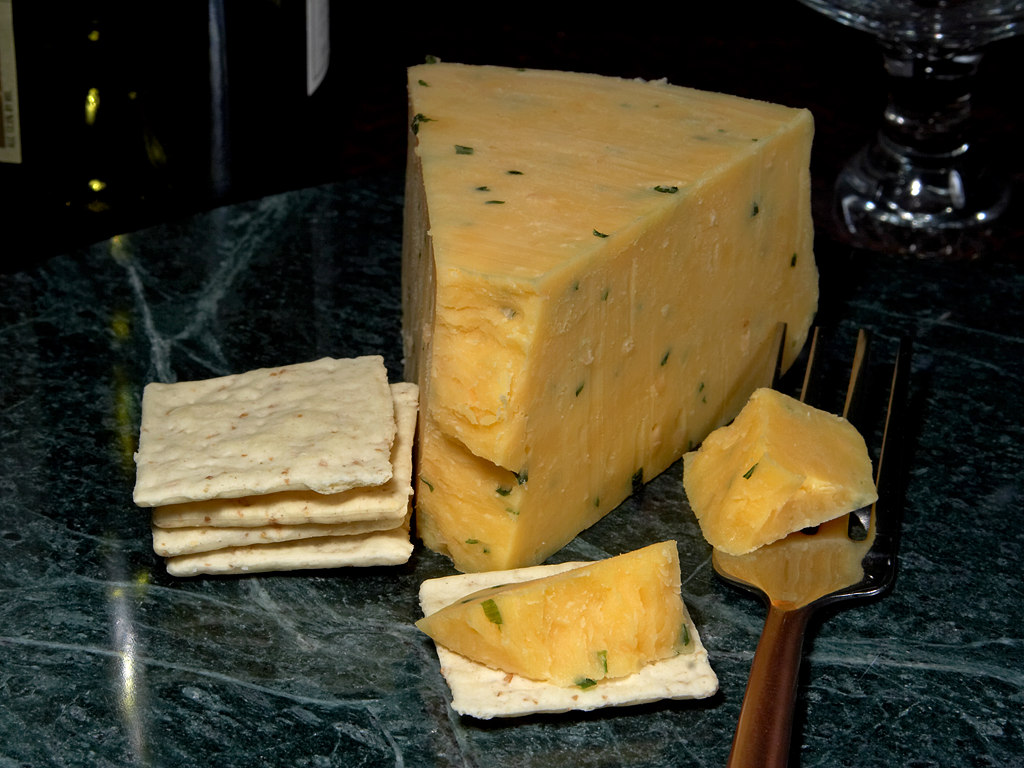 🇬🇧 United KingdomDouble Gloucester
A semi-hard cow's-milk cheese from England with a savoury flavour and natural rind.Cow · Semi-hard · Savoury and brothy
🇬🇧 United KingdomDouble Gloucester
A semi-hard cow's-milk cheese from England with a savoury flavour and natural rind.Cow · Semi-hard · Savoury and brothy
 🇫🇷 FranceFourme d'AmbertForma d'Embèrt
A narrow cylindrical blue cheese from the Auvergne region of France.Cow · Semi-hard · Savoury and brothy
🇫🇷 FranceFourme d'AmbertForma d'Embèrt
A narrow cylindrical blue cheese from the Auvergne region of France.Cow · Semi-hard · Savoury and brothy
 🇳🇴 NorwayGamalostgammelost
A firm, sour Norwegian cheese made from skimmed cow's milk and aged for several weeks.Cow · Semi-hard · Tangy and lactic
🇳🇴 NorwayGamalostgammelost
A firm, sour Norwegian cheese made from skimmed cow's milk and aged for several weeks.Cow · Semi-hard · Tangy and lactic
 🇫🇷 FranceLaguioleLa Guiòla
A semi-hard pressed cow's milk cheese from the Aubrac plateau in southern France.Cow · Semi-hard · Nutty
🇫🇷 FranceLaguioleLa Guiòla
A semi-hard pressed cow's milk cheese from the Aubrac plateau in southern France.Cow · Semi-hard · Nutty
 🇸🇾 Syria and 5 moreAkkawiجبنة عكاوي
A white brined cow's milk cheese from the Levant named after Acre.Cow · Brined · Salty
🇸🇾 Syria and 5 moreAkkawiجبنة عكاوي
A white brined cow's milk cheese from the Levant named after Acre.Cow · Brined · Salty
 🇫🇷 FranceSalersSalèrn
A semi-hard cow's-milk cheese from the Auvergne, aged in caves for up to four years.Cow · Semi-hard · Savoury and brothy
🇫🇷 FranceSalersSalèrn
A semi-hard cow's-milk cheese from the Auvergne, aged in caves for up to four years.Cow · Semi-hard · Savoury and brothy
 🇵🇹 PortugalSão Jorge CheeseQueijo São Jorge
A hard cow's-milk cheese from the Azores with a spicy aroma and protected origin status.Cow · Semi-hard · Savoury and brothy
🇵🇹 PortugalSão Jorge CheeseQueijo São Jorge
A hard cow's-milk cheese from the Azores with a spicy aroma and protected origin status.Cow · Semi-hard · Savoury and brothy
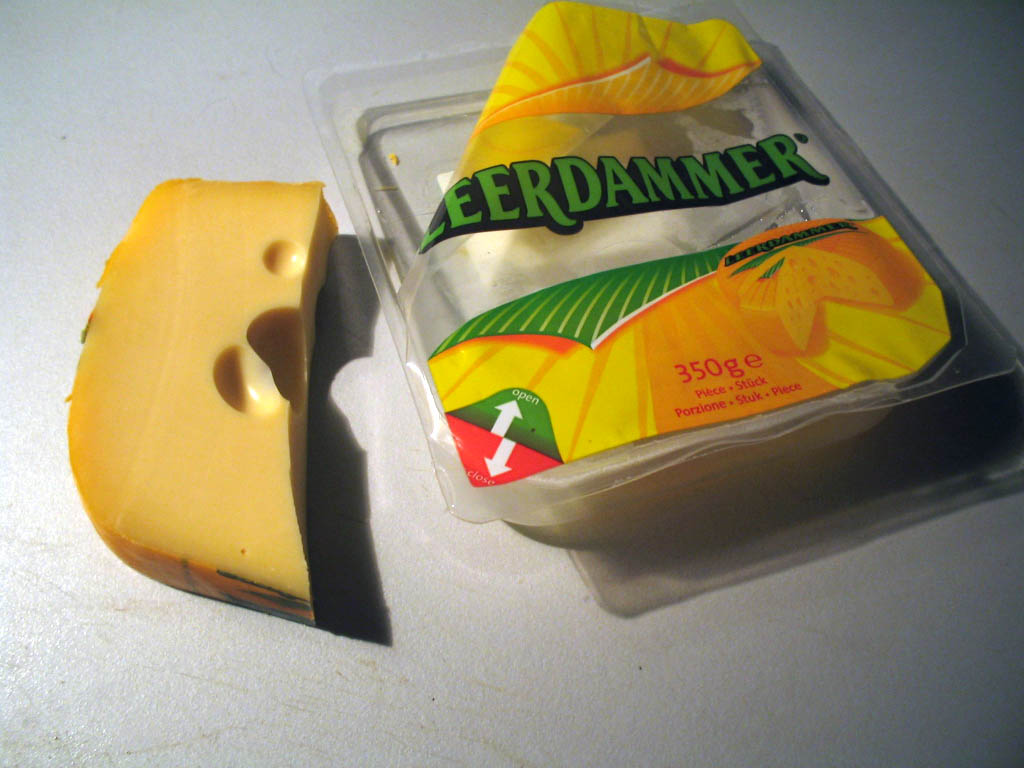 🇳🇱 Netherlands and 1 moreLeerdammer
A Dutch semihard cow's-milk cheese with holes and a sweet nutty taste.Cow · Semi-hard · Sweet and caramel
🇳🇱 Netherlands and 1 moreLeerdammer
A Dutch semihard cow's-milk cheese with holes and a sweet nutty taste.Cow · Semi-hard · Sweet and caramel
 🇺🇸 United States and 1 moreMonterey Jack
A mild, semi-hard cow's-milk cheese from California with a creamy texture and slight sweetness.Cow · Semi-hard · Sweet and caramel
🇺🇸 United States and 1 moreMonterey Jack
A mild, semi-hard cow's-milk cheese from California with a creamy texture and slight sweetness.Cow · Semi-hard · Sweet and caramel
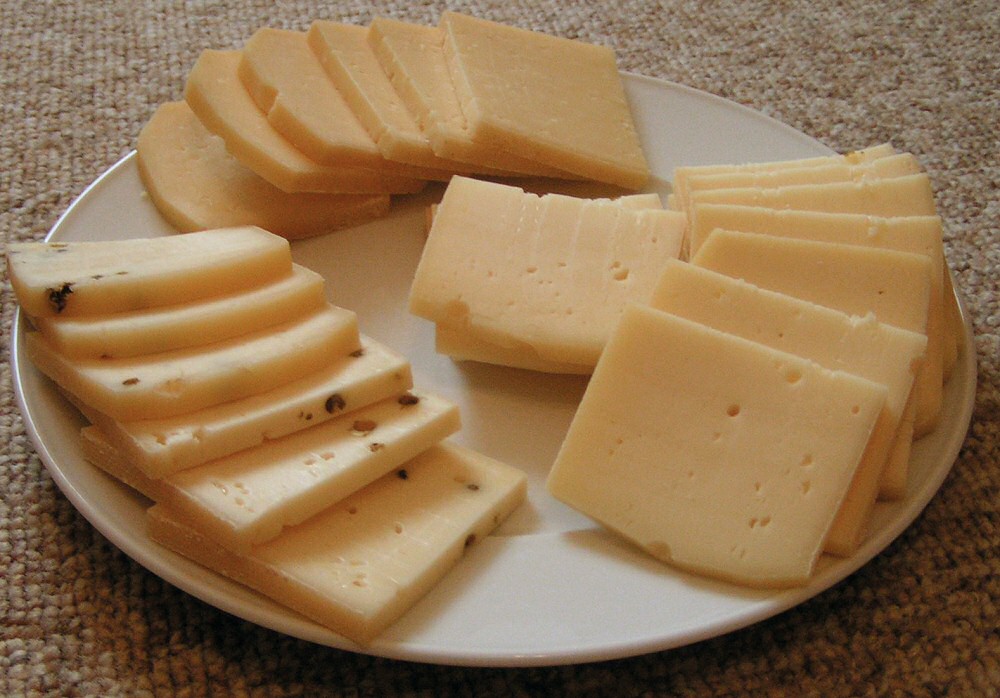 🇨🇭 SwitzerlandRaclette du ValaisWalliser Raclette
A semi-hard Swiss cow's-milk cheese from Valais, aged for melting or eating.Cow · Semi-hard
🇨🇭 SwitzerlandRaclette du ValaisWalliser Raclette
A semi-hard Swiss cow's-milk cheese from Valais, aged for melting or eating.Cow · Semi-hard
 🇳🇱 NetherlandsLeyden cheeseLeidse kaas
A semi-hard Dutch cow's-milk cheese flavoured with cumin and caraway seeds.Cow · Semi-hard · Savoury and brothy
🇳🇱 NetherlandsLeyden cheeseLeidse kaas
A semi-hard Dutch cow's-milk cheese flavoured with cumin and caraway seeds.Cow · Semi-hard · Savoury and brothy
 🇸🇰 SlovakiaParenica
A semi-firm Slovak cheese made from steamed curds, often smoked and woven into spirals.Sheep · Semi-hard · Savoury and brothy
🇸🇰 SlovakiaParenica
A semi-firm Slovak cheese made from steamed curds, often smoked and woven into spirals.Sheep · Semi-hard · Savoury and brothy
 🇮🇹 ItalyRaschera
A semi-hard cow's-milk cheese from Piedmont with a savory taste and ivory paste.Cow · Semi-hard · Salty
🇮🇹 ItalyRaschera
A semi-hard cow's-milk cheese from Piedmont with a savory taste and ivory paste.Cow · Semi-hard · Salty
 🇬🇧 United KingdomLancashire cheese
A cow's-milk cheese from England with creamy, nutty, or crumbly varieties.Cow · Semi-hard · Nutty
🇬🇧 United KingdomLancashire cheese
A cow's-milk cheese from England with creamy, nutty, or crumbly varieties.Cow · Semi-hard · Nutty
 🇺🇸 United States and 5 moreSwiss cheese
A yellow, medium-hard cheese with characteristic holes, produced globally in various styles.Cow · Semi-hard · Nutty
🇺🇸 United States and 5 moreSwiss cheese
A yellow, medium-hard cheese with characteristic holes, produced globally in various styles.Cow · Semi-hard · Nutty
 🇲🇽 Mexico and 5 moreOaxaca cheesequeso Oaxaca
A semi-hard, stringy cow's milk cheese from southern Mexico, made using the pasta filata method.Cow · Semi-hard · Milky and fresh
🇲🇽 Mexico and 5 moreOaxaca cheesequeso Oaxaca
A semi-hard, stringy cow's milk cheese from southern Mexico, made using the pasta filata method.Cow · Semi-hard · Milky and fresh
 🇸🇰 Slovakia and 1 moreKorbáčikkorbáčik (Slovak), korbacz (Polish)
A braided string cheese from the Orava region of Slovakia and Poland.Cow · Stretched curd · Salty
🇸🇰 Slovakia and 1 moreKorbáčikkorbáčik (Slovak), korbacz (Polish)
A braided string cheese from the Orava region of Slovakia and Poland.Cow · Stretched curd · Salty
 🇸🇪 SwedenHerrgårdsost
A semi-hard Swedish cow's milk cheese with a waxed rind and nutty flavor.Cow · Semi-hard · Nutty
🇸🇪 SwedenHerrgårdsost
A semi-hard Swedish cow's milk cheese with a waxed rind and nutty flavor.Cow · Semi-hard · Nutty
 🇪🇸 SpainMahónformatge de Maó / queso de Mahón
A cow's-milk cheese from Menorca that ranges from soft and mild to hard and sharp.Cow · Semi-soft · Buttery and creamy
🇪🇸 SpainMahónformatge de Maó / queso de Mahón
A cow's-milk cheese from Menorca that ranges from soft and mild to hard and sharp.Cow · Semi-soft · Buttery and creamy
 🇮🇹 ItalyCastelmagno
A semi-hard Italian cheese from Piedmont with blue veining and a sharp taste.Cow · Semi-hard · Sharp and tangy-aged
🇮🇹 ItalyCastelmagno
A semi-hard Italian cheese from Piedmont with blue veining and a sharp taste.Cow · Semi-hard · Sharp and tangy-aged
 🇺🇸 United StatesColby
A semi-hard American cow's-milk cheese with a mild flavor and orange hue from annatto.Cow · Semi-hard · Milky and fresh
🇺🇸 United StatesColby
A semi-hard American cow's-milk cheese with a mild flavor and orange hue from annatto.Cow · Semi-hard · Milky and fresh
 🇫🇷 FranceTome des Bauges
A pressed cow's-milk cheese from the French Alps with a grey-brown rind and hazelnut aroma.Cow · Semi-hard · Nutty
🇫🇷 FranceTome des Bauges
A pressed cow's-milk cheese from the French Alps with a grey-brown rind and hazelnut aroma.Cow · Semi-hard · Nutty
 🇫🇷 France and 1 moreTomme
A low-fat alpine cheese from France and Switzerland, often made from skimmed milk.Cow · Semi-hard · Milky and fresh
🇫🇷 France and 1 moreTomme
A low-fat alpine cheese from France and Switzerland, often made from skimmed milk.Cow · Semi-hard · Milky and fresh
 🇸🇪 SwedenGrevé
A semi-hard Swedish cow's-milk cheese with a nutty, slightly sweet flavour.Cow · Semi-hard · Nutty
🇸🇪 SwedenGrevé
A semi-hard Swedish cow's-milk cheese with a nutty, slightly sweet flavour.Cow · Semi-hard · Nutty
 🇸🇪 SwedenHushållsost
A mild, semi-hard Swedish cow's-milk cheese aged for about two months.Cow · Semi-hard · Tangy and lactic
🇸🇪 SwedenHushållsost
A mild, semi-hard Swedish cow's-milk cheese aged for about two months.Cow · Semi-hard · Tangy and lactic
Photo credits on this page
The small pictures above come from Wikimedia Commons under free licences. Some are cropped to fit.
- Havarti: Unknown author, CC BY-SA 3.0, source
- Mahón: Slastic, Public domain, source
- Salers: Coyau, CC BY-SA 3.0, source
- Beaufort: Coyau, CC BY-SA 3.0, source
- Monterey Jack: Frank Schulenburg, CC BY-SA 3.0, source
- Akkawi: Paul Joseph, CC BY 2.0, source
- Lancashire cheese: Jon Sullivan, Public domain, source
- Emmental: Coyau, CC BY-SA 3.0, source
- Double Gloucester: Jon Sullivan, Public domain, source
- Gamalost: Quick fix, CC BY 2.0, source
- Castelmagno: Marco Plassio, CC BY-SA 3.0, source
- Laguiole: Myrabella, CC BY-SA 3.0, source
- Leerdammer: M.Minderhoud, CC BY-SA 3.0, source
- Grevé: Ankara, CC BY-SA 3.0, source
- Herrgårdsost: -- Holger.Ellgaard ( talk ) 16:26, 29 October 2008 (UTC), CC BY 3.0, source
- Tomme: Unknown author, CC BY-SA 3.0, source
- São Jorge Cheese: VulcaoAtlantico, CC BY 4.0, source
- Korbáčik: Mariuszjbie, CC BY-SA 3.0, source
- Comté: Myrabella, CC BY-SA 3.0, source
- Edam: Yvwv, CC BY-SA 3.0, source
- Tête de Moine: The original uploader was Stucki at French Wikipedia ., CC BY-SA 1.0, source
- Kalimpong cheese: Coyau, CC BY-SA 3.0, source
- Trappista cheese: Shabicht, CC BY-SA 4.0, source
- Raschera: F Ceragioli, CC BY-SA 4.0, source
- Abondance: Coyau, CC BY-SA 3.0, source
- Tome des Bauges: Mit-Mit, Public domain, source
- Parenica: Stanislav Doronenko, Public domain, source
- Fourme d'Ambert: Coyau, CC BY-SA 3.0, source
- Provolone: Lenore Edman, CC BY 2.0, source
- Caciocavallo: Peachyeung316, CC BY-SA 4.0, source
- Kashkaval: Nnikolce, Public domain, source
- Raclette du Valais: Martin Steiger, CC0, source
- Maasdam: Arz, CC BY-SA 3.0, source
- Hushållsost: Grönmossan, CC BY-SA 4.0, source
- Swiss cheese: Renee Comet (photographer), Public domain, source
- Leyden cheese: Edwtie, CC BY-SA 3.0, source
- Oaxaca cheese: Javier Lastras, CC BY 2.0, source
- Colby: Jeff the quiet, CC BY-SA 3.0, source