Cheeses for cheese boards
Served on its own, sliced or cut at the table, with bread, fruit and something to drink.
A cheese board serves cheese for its own sake, cut at the table and eaten with bread, fruit and something to drink. In France it comes after the main course and before dessert; in Britain and Ireland, often after dessert with a glass of port; in Spain and Italy, as tapas or antipasto. A good board balances styles, milks and strengths, so that each cheese shows off the others.
Building a board
Three to five cheeses are plenty for most tables. A common pattern is one of each kind: a soft bloomy or fresh goat cheese, a firm aged cheese such as Comté or Manchego, a blue, and perhaps a washed rind. Mixing cow's, goat's and sheep's milk adds variety. Allow about 30 to 50 grams of each cheese per person after a meal, and more if the board is the meal. Take the cheeses out of the fridge an hour before serving.
Order and cutting
Taste from mild to strong, so that a blue or a washed rind comes last. Cut each cheese so that everyone gets a fair share of rind and centre: wedges from the middle of a round, long slices along a wedge of hard cheese. An old rule of etiquette says never to cut the point off a wedge of Brie, which leaves the next person with only rind. Use a separate knife for blues and strong cheeses, so their flavour does not travel.
What goes with it
Bread and plain crackers, fresh and dried fruit, nuts, honey and fruit pastes are the usual partners. Spain serves Manchego with membrillo, quince paste; Britain serves Stilton with port; France eats its board with bread and red wine. In India, cheese boards from the country's growing number of artisan dairies set Bandel, Kalimpong and hill-farm cheeses beside chutneys, fresh fruit and roasted nuts.
Worth knowing
- Comté: A firm, nutty anchor for any board
- Brie de Meaux: The classic soft cheese
- Stilton: Blue served with port
- Manchego: Served with quince paste
- Roquefort: Sheep's milk blue for the end of the board
- Crottin de Chavignol: A fresh goat note
- Époisses: A strong washed rind to finish
- Kalimpong cheese: A mild Indian hill cheese
Sources and further reading
Original text by the EveryCheese desk, written with AI assistance and checked against the sources above. Customs are described as tradition, not as advice. If we have something wrong, tell us.
Cheese boards on EveryCheese
The cheeses written up so far, best known first.
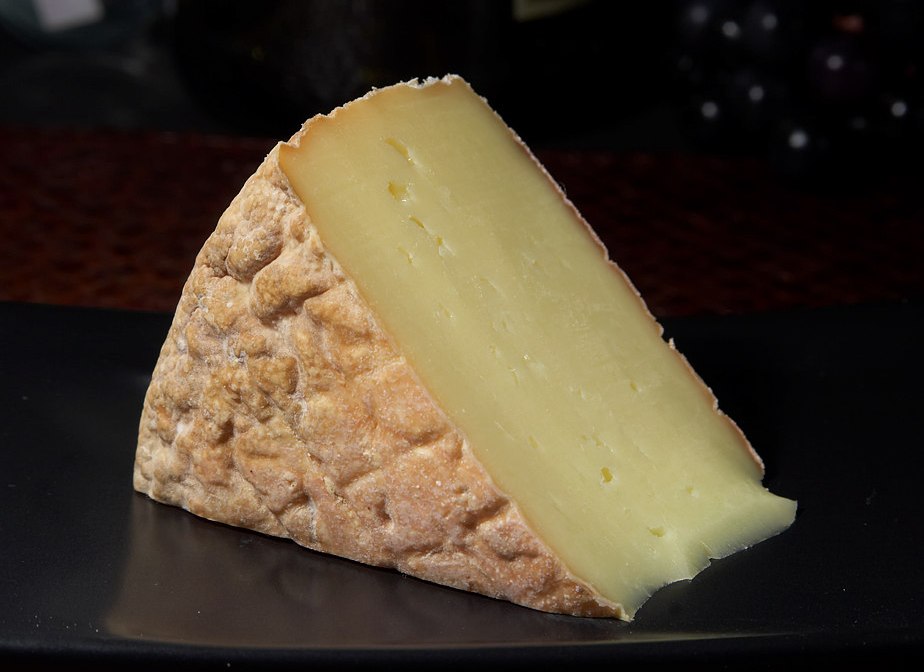 🇮🇪 IrelandGubbeen
A washed-rind semi-soft cow's milk cheese from County Cork, Ireland.Cow · Semi-soft · Mushroomy
🇮🇪 IrelandWicklow Farmhouse Cheese
A range of handmade cow's milk cheeses from Arklow, Ireland, spanning soft bries to hard cheddars.Cow · Bloomy rind · Nutty
🇮🇪 IrelandGubbeen
A washed-rind semi-soft cow's milk cheese from County Cork, Ireland.Cow · Semi-soft · Mushroomy
🇮🇪 IrelandWicklow Farmhouse Cheese
A range of handmade cow's milk cheeses from Arklow, Ireland, spanning soft bries to hard cheddars.Cow · Bloomy rind · Nutty
 🇫🇷 France and 3 moreBrie
A soft, pale French cow's-milk cheese with a white mould rind, aged for about five weeks.Cow · Bloomy rind · Nutty
🇦🇹 AustriaLüneberg
A saffron-tinted cow's-milk cheese from the Austrian Alps, bridging Swiss and German styles.Cow · Semi-hard · Nutty
🇳🇱 NetherlandsRoomano
An aged hard cow's-milk cheese from Friesland with less butterfat than standard Gouda.Cow · Hard · Salty
🇮🇪 IrelandBay Lough Cheese
A self-taught Irish cheddar-style cheese aged in waxed wheels.Cow · Semi-hard · Savoury and brothy
🇫🇷 France and 3 moreBrie
A soft, pale French cow's-milk cheese with a white mould rind, aged for about five weeks.Cow · Bloomy rind · Nutty
🇦🇹 AustriaLüneberg
A saffron-tinted cow's-milk cheese from the Austrian Alps, bridging Swiss and German styles.Cow · Semi-hard · Nutty
🇳🇱 NetherlandsRoomano
An aged hard cow's-milk cheese from Friesland with less butterfat than standard Gouda.Cow · Hard · Salty
🇮🇪 IrelandBay Lough Cheese
A self-taught Irish cheddar-style cheese aged in waxed wheels.Cow · Semi-hard · Savoury and brothy
 🇳🇱 Netherlands and 5 moreEdamEdammer
A semi-hard Dutch cow's-milk cheese aged in distinctive red wax spheres.Cow · Semi-hard · Nutty
🇳🇱 Netherlands and 5 moreEdamEdammer
A semi-hard Dutch cow's-milk cheese aged in distinctive red wax spheres.Cow · Semi-hard · Nutty
 🇨🇭 SwitzerlandAppenzeller
A hard, washed-rind cow's-milk cheese from northeast Switzerland with a herbal brine rind.Cow · Hard · Nutty
🇨🇭 SwitzerlandAppenzeller
A hard, washed-rind cow's-milk cheese from northeast Switzerland with a herbal brine rind.Cow · Hard · Nutty
 🇮🇹 ItalyGrana Padano
A hard, grainy Italian cow's-milk cheese aged for at least nine months in the Po Valley.Cow · Hard · Nutty
🇮🇹 ItalyGrana Padano
A hard, grainy Italian cow's-milk cheese aged for at least nine months in the Po Valley.Cow · Hard · Nutty
 🇫🇷 FranceComté
A hard, cooked-pressed cow's milk cheese from eastern France, aged up to three years.Cow · Semi-hard · Nutty
🇫🇷 FranceComté
A hard, cooked-pressed cow's milk cheese from eastern France, aged up to three years.Cow · Semi-hard · Nutty
 🇫🇷 France and 1 moreMimolette
A bright orange cow's-milk cheese from northern France, aged with mites for a nutty flavor.Cow · Hard · Nutty
🇫🇷 France and 1 moreMimolette
A bright orange cow's-milk cheese from northern France, aged with mites for a nutty flavor.Cow · Hard · Nutty
 🇳🇱 NetherlandsMaasdam
A semi-hard Dutch cow's milk cheese with holes, aged for one to three months.Cow · Semi-hard · Nutty
🇳🇱 NetherlandsMaasdam
A semi-hard Dutch cow's milk cheese with holes, aged for one to three months.Cow · Semi-hard · Nutty
 🇮🇹 Italy and 4 moreCaciocavallo
A stretched-curd cheese from southern Italy shaped like a teardrop and aged to develop a hard rind.Cow · Stretched curd · Nutty
🇮🇹 Italy and 4 moreCaciocavallo
A stretched-curd cheese from southern Italy shaped like a teardrop and aged to develop a hard rind.Cow · Stretched curd · Nutty
 🇫🇷 FranceCoulommiers
A soft cow's-milk cheese with a bloomy rind from the Seine-et-Marne department of France.Cow · Bloomy rind · Nutty
🇫🇷 FranceCoulommiers
A soft cow's-milk cheese with a bloomy rind from the Seine-et-Marne department of France.Cow · Bloomy rind · Nutty
 🇫🇷 FranceLaguioleLa Guiòla
A semi-hard pressed cow's milk cheese from the Aubrac plateau in southern France.Cow · Semi-hard · Nutty
🇫🇷 FranceLaguioleLa Guiòla
A semi-hard pressed cow's milk cheese from the Aubrac plateau in southern France.Cow · Semi-hard · Nutty
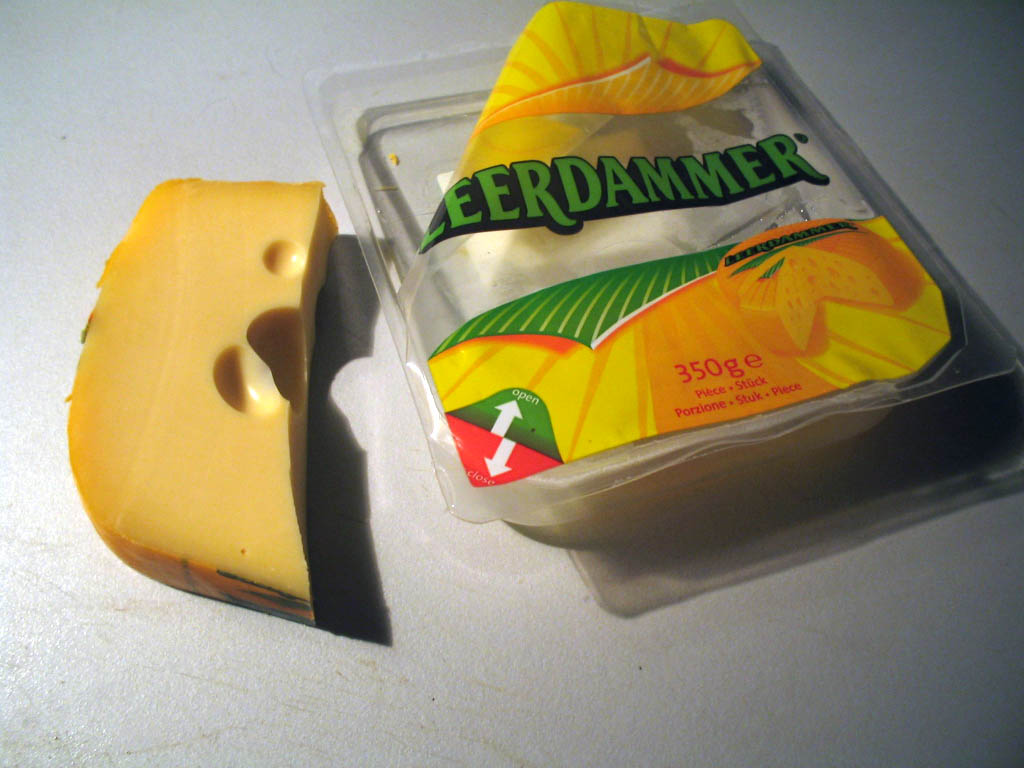 🇳🇱 Netherlands and 1 moreLeerdammer
A Dutch semihard cow's-milk cheese with holes and a sweet nutty taste.Cow · Semi-hard · Sweet and caramel
🇳🇱 Netherlands and 1 moreLeerdammer
A Dutch semihard cow's-milk cheese with holes and a sweet nutty taste.Cow · Semi-hard · Sweet and caramel
 🇳🇱 NetherlandsLeyden cheeseLeidse kaas
A semi-hard Dutch cow's-milk cheese flavoured with cumin and caraway seeds.Cow · Semi-hard · Savoury and brothy
🇳🇱 NetherlandsLeyden cheeseLeidse kaas
A semi-hard Dutch cow's-milk cheese flavoured with cumin and caraway seeds.Cow · Semi-hard · Savoury and brothy
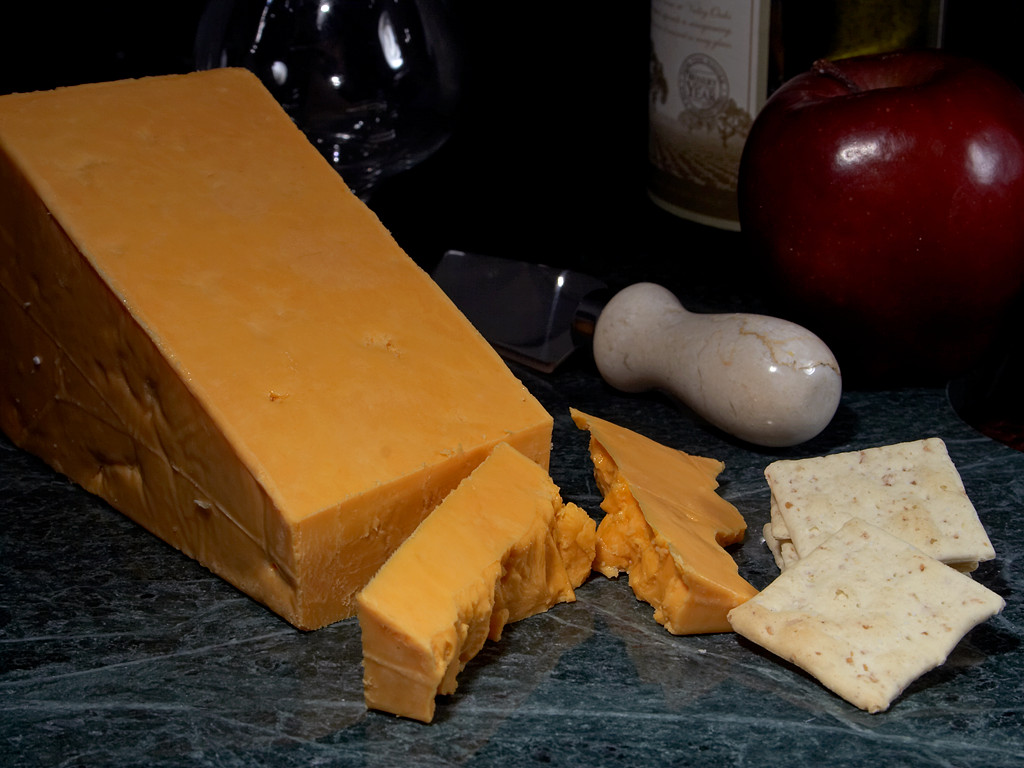 🇬🇧 United KingdomRed Leicester
A hard, crumbly cow's-milk cheese from England, aged for months and coloured with annatto.Cow · Hard · Sweet and caramel
🇬🇧 United KingdomRed Leicester
A hard, crumbly cow's-milk cheese from England, aged for months and coloured with annatto.Cow · Hard · Sweet and caramel
 🇸🇪 SwedenVästerbottenVästerbottensost
A hard, salty Swedish cow's milk cheese aged at least a year in VästerbottenCow · Hard · Salty
🇸🇪 SwedenVästerbottenVästerbottensost
A hard, salty Swedish cow's milk cheese aged at least a year in VästerbottenCow · Hard · Salty
 🇫🇷 FranceTome des Bauges
A pressed cow's-milk cheese from the French Alps with a grey-brown rind and hazelnut aroma.Cow · Semi-hard · Nutty
🇫🇷 FranceTome des Bauges
A pressed cow's-milk cheese from the French Alps with a grey-brown rind and hazelnut aroma.Cow · Semi-hard · Nutty
 🇪🇸 SpainMahónformatge de Maó / queso de Mahón
A cow's-milk cheese from Menorca that ranges from soft and mild to hard and sharp.Cow · Semi-soft · Buttery and creamy
🇪🇸 SpainMahónformatge de Maó / queso de Mahón
A cow's-milk cheese from Menorca that ranges from soft and mild to hard and sharp.Cow · Semi-soft · Buttery and creamy
 🇸🇪 SwedenPrästost
A semi-hard Swedish cow's-milk cheese with a mild, nutty flavour and a washed rind.Cow · Semi-hard · Nutty
🇮🇹 ItalySpressa delle Giudicarie
A semi-hard cow's milk cheese from the Giudicarie valley in Trentino-Alto Adige.Cow · Semi-hard · Nutty
🇸🇪 SwedenPrästost
A semi-hard Swedish cow's-milk cheese with a mild, nutty flavour and a washed rind.Cow · Semi-hard · Nutty
🇮🇹 ItalySpressa delle Giudicarie
A semi-hard cow's milk cheese from the Giudicarie valley in Trentino-Alto Adige.Cow · Semi-hard · Nutty
 🇦🇹 Austria and 2 moreVorarlberger Bergkäse
A hard, nutty cow's-milk cheese from the Austrian Alps, aged for months or years.Cow · Hard · Nutty
🇦🇹 Austria and 2 moreVorarlberger Bergkäse
A hard, nutty cow's-milk cheese from the Austrian Alps, aged for months or years.Cow · Hard · Nutty
 🇳🇱 NetherlandsBoerenkaas
A Dutch semi-hard raw milk cheese with TSG protection, often spiced and farm-made.Cow · Semi-hard · Salty
🇳🇱 NetherlandsBoerenkaas
A Dutch semi-hard raw milk cheese with TSG protection, often spiced and farm-made.Cow · Semi-hard · Salty
 🇨🇦 CanadaOka
A semi-soft washed-rind cow's milk cheese from Quebec with a copper-orange rind.Cow · Semi-soft · Pungent and funky
🇨🇦 CanadaOka
A semi-soft washed-rind cow's milk cheese from Quebec with a copper-orange rind.Cow · Semi-soft · Pungent and funky
 🇮🇪 Ireland and 1 moreDubliner
A hard, granular Irish cow's-milk cheese aged for at least a year.Cow · Hard · Sweet and caramel
🇮🇪 Ireland and 1 moreDubliner
A hard, granular Irish cow's-milk cheese aged for at least a year.Cow · Hard · Sweet and caramel
 🇮🇹 ItalyPallone di Gravina
A firm pasta filata cow's milk cheese from southern Italy, aged for at least a year.Cow · Stretched curd · Nutty
🇮🇹 ItalyPallone di Gravina
A firm pasta filata cow's milk cheese from southern Italy, aged for at least a year.Cow · Stretched curd · Nutty
 🇨🇦 CanadaLe Riopelle de l'Isle
A soft triple-cream cow's milk cheese from Isle-aux-Grues in Quebec.Cow · Bloomy rind · Buttery and creamy
🇨🇿 Czech Republic and 1 moreGran Moravia
A hard, long-aged cow's-milk grana-style cheese from the Czech Republic.Cow · Hard · Nutty
🇨🇦 CanadaLe Riopelle de l'Isle
A soft triple-cream cow's milk cheese from Isle-aux-Grues in Quebec.Cow · Bloomy rind · Buttery and creamy
🇨🇿 Czech Republic and 1 moreGran Moravia
A hard, long-aged cow's-milk grana-style cheese from the Czech Republic.Cow · Hard · Nutty
 🇨🇦 CanadaFriulano
A rindless Canadian cow's-milk cheese with a salty hazelnut flavour, aged to improve its character.Cow · Semi-hard · Salty
🇨🇦 CanadaLe Douanier
A semi-soft cow's milk cheese with a wash-rinsed rind and a central edible line from Quebec.Cow · Semi-soft · Nutty
🇨🇦 CanadaFriulano
A rindless Canadian cow's-milk cheese with a salty hazelnut flavour, aged to improve its character.Cow · Semi-hard · Salty
🇨🇦 CanadaLe Douanier
A semi-soft cow's milk cheese with a wash-rinsed rind and a central edible line from Quebec.Cow · Semi-soft · Nutty
 🇫🇷 FranceAbbaye de Timadeuc CheeseFourmaj Abati Tinadeuc
A soft, salty cow's-milk cheese made by Trappist monks in Brittany.Cow · Semi-soft · Salty
🇫🇷 FranceAbbaye de Timadeuc CheeseFourmaj Abati Tinadeuc
A soft, salty cow's-milk cheese made by Trappist monks in Brittany.Cow · Semi-soft · Salty
 🇫🇷 FranceBrie de Melun
A small, strong cow's-milk cheese from Seine-et-Marne with an AOC label.Cow · Bloomy rind · Tangy and lactic
🇫🇷 FranceBrie de Melun
A small, strong cow's-milk cheese from Seine-et-Marne with an AOC label.Cow · Bloomy rind · Tangy and lactic
 🇬🇧 United KingdomCheddar
A pressed cow's-milk cheese from England, defined by the cheddaring process and long aging.Cow · Semi-hard · Nutty
🇬🇧 United KingdomCheddar
A pressed cow's-milk cheese from England, defined by the cheddaring process and long aging.Cow · Semi-hard · Nutty
Photo credits on this page
The small pictures above come from Wikimedia Commons under free licences. Some are cropped to fit.
- Brie de Meaux: Coyau, CC BY-SA 3.0, source
- Coulommiers: Myrabella, CC BY-SA 3.0, source
- Tome des Bauges: Mit-Mit, Public domain, source
- Mimolette: Peachyeung316, CC BY-SA 4.0, source
- Friesian Clove: Takeaway, CC BY-SA 4.0, source
- Västerbotten: Nata Uploaded by File Upload Bot (Magnus Manske), CC BY 2.0, source
- Laguiole: Myrabella, CC BY-SA 3.0, source
- Leerdammer: M.Minderhoud, CC BY-SA 3.0, source
- Red Leicester: Jon Sullivan, Public domain, source
- Oka: User Y6y6y6 on en.wikipedia, Public domain, source
- Prästost: Nordelch, CC BY 3.0, source
- Comté: Myrabella, CC BY-SA 3.0, source
- Edam: Yvwv, CC BY-SA 3.0, source
- Gubbeen: The original uploader was Y6y6y6 at English Wikipedia .. The author is, Public domain, source
- Grana Padano: Claudia Castaldi, CC BY-SA 4.0, source
- Caciocavallo: Peachyeung316, CC BY-SA 4.0, source
- Appenzeller: Ulled, CC BY-SA 4.0, source
- Maasdam: Arz, CC BY-SA 3.0, source
- Leyden cheese: Edwtie, CC BY-SA 3.0, source
- Vorarlberger Bergkäse: Hubertl, CC BY-SA 4.0, source
- Pallone di Gravina: Antucco at Italian Wikipedia, CC BY-SA 3.0, source
- Dubliner: B137, CC0, source
- Friulano: VerifiedCactus, CC BY-SA 4.0, source
- Le Riopelle de l'Isle: Lëa-Kim Châteauneuf, CC BY-SA 4.0, source
- Mahón: Slastic, Public domain, source
- Abbaye de Timadeuc Cheese: Salsero35, CC BY-SA 3.0, source
- Brie de Melun: Thesupermat, CC BY-SA 4.0, source
- Cheddar: Gary Bembridge, CC BY 2.0, source