
Cheddar
A pressed cow's-milk cheese from England, defined by the cheddaring process and long aging.
Originating in Somerset, England, Cheddar is a firm cow's-milk cheese shaped by stacking curds to expel moisture. It ranges from mild to sharp depending on how long it ages, offering savory, nutty flavors that evolve over time.
- Named after Cheddar village in Somerset, England.
- Cheddaring stacks curds to remove whey and build flavor.
- Ages range from two months to ten years.
- Uses animal, microbial, or vegetable rennet.
- Texture shifts from smooth to crumbly with age.
What is Cheddar?
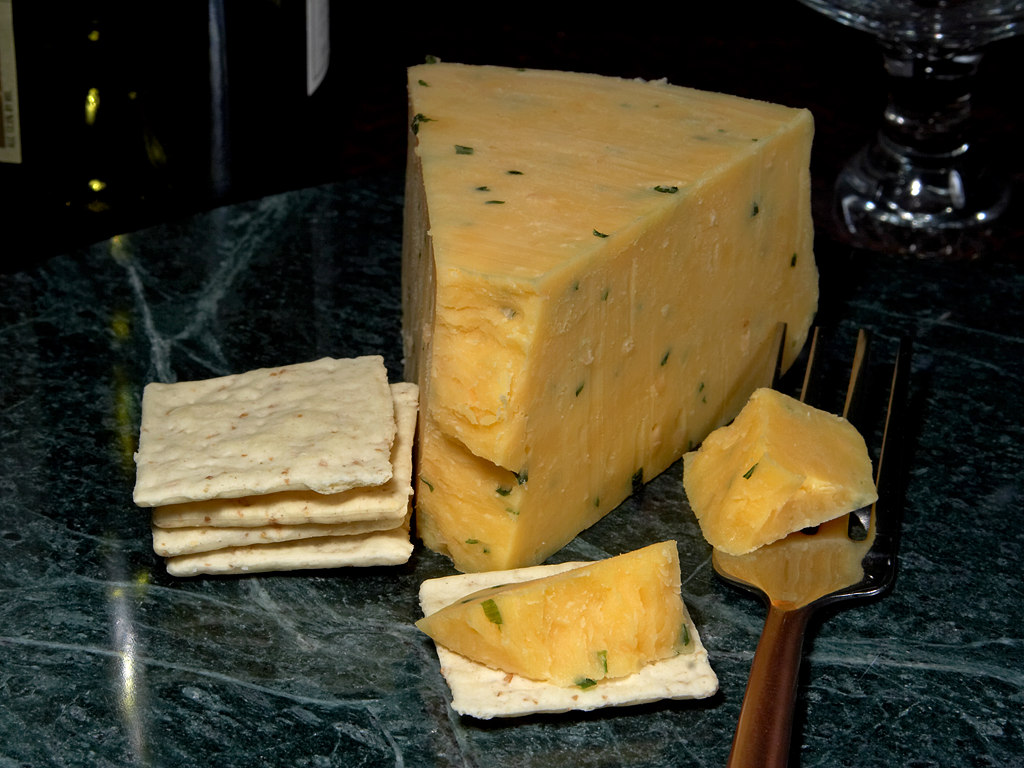
Cheddar is a firm cheese made from cow’s milk, originally crafted in the village of Cheddar in Somerset, England. The cheese forms into blocks after being pressed in molds. Its paste is typically white or yellow, while the rind varies based on processing methods. The texture is dense and can be crumbly, especially in older wheels. Flavor profiles shift significantly with age, moving from mild and creamy to sharp and pungent. The name comes directly from its place of origin, though the production technique has spread globally.
Where does Cheddar come from?
The cheese takes its name from the village of Cheddar in Southwest England. This location is where the specific manufacturing techniques were first developed. Over time, the method spread worldwide, making the term 'cheddar' generic for many similar cheeses. While rooted in English tradition, modern production occurs in various countries using adapted processes.
What does Cheddar taste like?
Young Cheddar offers mild, buttery notes with a smooth texture. As it matures, the flavor intensifies, developing sharp, tangy, and sometimes nutty characteristics. Extended aging creates complex, savory depths and a drier, more crumbly consistency. The acidity levels during production influence whether the final taste remains balanced or becomes bitter if not managed correctly.
How Cheddar is made
Raw cow’s milk is ripened with lactic acid bacteria before adding rennet to coagulate proteins. Curds are cut into small cubes and cooked slowly to remove moisture. The defining step is cheddaring: curd loaves are stacked repeatedly to squeeze out whey and increase acidity. After milling into smaller pieces, salt is mixed in to preserve flavor and control moisture. Finally, the curds are pressed into molds for aging.
Cheddar, drawn
How Cheddar is eaten and cooked
Mild Cheddar is often eaten fresh as a snack or on sandwiches. Older varieties serve well on cheese boards for their strong flavor. The cheese melts smoothly, making it ideal for baked dishes like macaroni and cheese or grilled sandwiches. Grated sharp Cheddar adds depth to soups and casseroles. It pairs well with fruits, nuts, and breads.
Cheddar through the day
This cheese fits into daily eating habits across many meals. It serves as a quick snack or lunch component. On dinner tables, it appears in hot dishes or alongside main courses. Cheese boards feature aged wheels as a centerpiece. Its versatility allows it to transition easily from breakfast toast to evening appetizers.
Cheddar in the world's kitchens
English cuisine claims its birthplace, but the style is now global. In the United States, large-scale production dominates, often using microbial rennet. Other regions adapt the cheddaring process for local tastes. Varieties like Red Leicester and Lincolnshire Poacher share the same foundational technique, showing how the method influences broader dairy traditions beyond just one country.
At a glance: where it turns up
By meal and use
Cuisines
Celebrations


Faith and ritual
Traditional animal rennet makes standard Cheddar unsuitable for vegetarian or kosher diets. However, modern producers use microbial or vegetable rennet alternatives to accommodate these restrictions. These versions allow religious observers who avoid animal-derived enzymes to enjoy the cheese without compromising dietary laws.
Cheddar at celebrations
Cheddar is primarily an everyday food rather than a festival-specific item. It appears regularly at family gatherings and casual social events. While not tied to specific holidays, its presence at communal meals reinforces its role in hospitality and daily sustenance across cultures that have adopted it.
Custom and folk tradition
The cheddaring process itself is a traditional craft passed down through generations. Herders and cheesemakers historically relied on this stacking method to manage moisture without modern equipment. Local lore in Somerset ties the cheese’s identity to the specific caves and climate of the region, preserving the historical link between place and product.
Buying, keeping and serving Cheddar
Keep Cheddar wrapped in wax paper or cheese cloth to allow it to breathe. Refrigeration slows aging but preserves freshness. Avoid plastic wrap directly on the surface, which can trap moisture and cause mold. Consume within weeks of opening for best flavor. Older wheels last longer due to lower moisture content.
What to use instead of Cheddar
When Cheddar is unavailable, other semi-hard cheeses like Gouda or Monterey Jack work well in melting applications. For sharpness, aged Gouda or Parmigiano-Reggiano provide similar intensity. Vegetarians should seek versions labeled with microbial rennet. Regional imitations may lack the distinct cheddared texture but offer comparable salty profiles.
Protection and trade
Production standards vary by country, with the US Code of Federal Regulations setting specific moisture and fat requirements. Large facilities use automated vats and viscometers to ensure consistency. Export markets demand strict adherence to aging times to guarantee flavor profiles. Imitation products often mimic the taste but skip the labor-intensive cheddaring step.
Dishes with Cheddar
Questions people ask about Cheddar
Where does Cheddar cheese come from?
It originates from the village of Cheddar in Somerset, England. The name reflects this specific geographic origin, though the production method is now used worldwide.
What kind of milk is used to make Cheddar?
Cheddar is made exclusively from cow’s milk. The milk is often raw and ripened with lactic acid bacteria before rennet is added to form curds.
What gives Cheddar its unique texture?
The cheddaring process defines its texture. Curd loaves are stacked and turned repeatedly to expel whey, creating a dense, firm, and sometimes crumbly structure.
How long is Cheddar aged?
Aging varies widely. Mild versions last two to three months, while mature types age twelve to eighteen months. Some special wheels age up to ten years.
Is Cheddar suitable for vegetarians?
Traditional Cheddar uses animal rennet, making it non-vegetarian. However, many modern brands use microbial or vegetable rennet, so check labels for vegetarian-friendly options.
Good reading and sources
The facts on this page come from the Wikipedia article "Manufacture of cheddar cheese", written by its contributors and used under the CC BY-SA 4.0 licence, and from its Wikidata record (CC0). EveryCheese rewrote the text in its own words, with AI assistance, and compares every page with the article to make sure no passage is copied. It may be reused under the same CC BY-SA 4.0 licence with a link back.
It may contain mistakes. Recipes, ageing and customs differ from one dairy, valley or kitchen to the next. Folk beliefs are described as tradition, never as advice. If something is wrong, tell us. Last refreshed 2026-10-15.
More from the United Kingdom
All the cheeses of the United Kingdom 🇬🇧 United Kingdom and 1 moreMarble cheese
A processed cow's milk cheese with distinct colored marbling patterns.Cow · Hard · Savoury and brothy
🇬🇧 United Kingdom and 1 moreMarble cheese
A processed cow's milk cheese with distinct colored marbling patterns.Cow · Hard · Savoury and brothy
 🇬🇧 United KingdomDouble Gloucester
A semi-hard cow's-milk cheese from England with a savoury flavour and natural rind.Cow · Semi-hard · Savoury and brothy
🇬🇧 United KingdomDouble Gloucester
A semi-hard cow's-milk cheese from England with a savoury flavour and natural rind.Cow · Semi-hard · Savoury and brothy
 🇬🇧 United KingdomCaerphilly
A hard, crumbly cow's-milk cheese from South Wales with a mild lemony taste.Cow · Hard · Tangy and lactic
🇬🇧 United KingdomCaerphilly
A hard, crumbly cow's-milk cheese from South Wales with a mild lemony taste.Cow · Hard · Tangy and lactic
Its cousins elsewhere
All semi-hard cheeses 🇪🇬 EgyptMishمش (meš)
A fermented Egyptian salty cheese aged in buttermilk brine until sharp and pungent.Mixed · Bloomy rind · Salty
🇪🇬 EgyptMishمش (meš)
A fermented Egyptian salty cheese aged in buttermilk brine until sharp and pungent.Mixed · Bloomy rind · Salty
 🇸🇾 SyriaTresseجبنة مشللة
A braided Syrian string cheese with a nutty aroma and springy texture.Cow · Semi-soft · Nutty
🇸🇾 SyriaTresseجبنة مشللة
A braided Syrian string cheese with a nutty aroma and springy texture.Cow · Semi-soft · Nutty
 🇪🇬 Egypt and 1 moreRumiجبنة رومى
A hard, salty Egyptian cow or buffalo milk cheese with a pungent aroma.Cow · Hard · Salty
🇪🇬 Egypt and 1 moreRumiجبنة رومى
A hard, salty Egyptian cow or buffalo milk cheese with a pungent aroma.Cow · Hard · Salty