
Caerphilly
A hard, crumbly cow's-milk cheese from South Wales with a mild lemony taste.
Caerphilly is a hard, white, crumbly cheese made from cow's milk in the area around Caerphilly, Wales. It has a mild flavour with a hint of lemon and is often eaten fresh or used for baking.
- Made from cow's milk and dusted with rice flour for a white rind.
- Originally created to feed coal miners in South Wales.
- Most mass production now happens in Somerset and Wiltshire.
- Holds PGI status as Traditional Welsh Caerphilly.
- Celebrated annually at The Big Cheese festival in Caerphilly.
What is Caerphilly?
Caerphilly is a distinctive hard cheese known for its crumbly texture and pale, almost white appearance. Made exclusively from cow's milk, it typically holds between 45% and 55% fat. The paste is light and breaks easily, while the rind is dusted with rice flour to maintain its bright colour. Originally moist and farm-made, modern versions are drier and quicker to produce. Despite changes in moisture levels, the cheese retains a unique identity linked to its South Welsh origins.
Where does Caerphilly come from?
This cheese began as a practical food source for coal miners in the Caerphilly area of Wales. Early versions were highly moist and produced on local farms to sustain manual labourers underground. By the early twentieth century, milk shortages shifted production to England. World War II halted farmhouse making, leading factories to mass-produce a drier version that matured faster than Cheddar. While most is now made in Somerset and Wiltshire, artisan makers in Wales continue traditional methods.
What does Caerphilly taste like?
The taste is notably mild and salty, often described as having a subtle tang of lemon. Artisan versions offer a buttery richness, contrasting sharply with mass-produced types that can taste young and chalky. The texture varies significantly; traditional styles are crumbly and moist, while industrial ones are firmer and drier. Acid production during ripening naturally dries the curd, creating the signature crumbling consistency that earned it the nickname "The Crumblies."
How Caerphilly is made
Producers add rennet to buttermilk to form the curd. This mixture is cut and lightly pressed into cylindrical moulds. The rounds are then submerged in brine for twenty-four hours to develop a rind. Finally, the cheese is dusted with rice flour, which preserves its white exterior. Ripening is rapid, sometimes taking only two weeks. The slow initial acid buildup and low temperatures help dry out the curd, ensuring the characteristic crumbly structure.
Caerphilly, drawn
How Caerphilly is eaten and cooked
Caerphilly is versatile in the kitchen. Its mild flavour makes it suitable for eating plain on a board or as a quick snack. The crumbly texture allows it to melt well, making it ideal for baking in pastries or gratins. Historically, it was consumed by miners who appreciated its ability to stay fresh in damp conditions. Today, it appears in Welsh dishes and is celebrated at local festivals where it is served fresh or aged slightly.
Caerphilly through the day
This cheese fits comfortably into daily meals and festive occasions alike. It serves as a satisfying snack or a component of a cheese board. Bakers use it for its melting properties in hot dishes. During the annual Big Cheese festival in Caerphilly, it takes centre stage. It remains a staple for those seeking a mild, non-intimidating cheese for everyday consumption or simple cooking.
Caerphilly in the world's kitchens
Welsh cuisine claims Caerphilly as a regional icon, though much is now produced in English counties like Somerset and Wiltshire. British culinary traditions embrace both the artisanal farmhouse style and the industrial variety. The cheese reflects the history of South Wales, transitioning from a miner's ration to a protected geographical product. International reviews have noted its similarity to ricotta or cheddar, highlighting its unique position between fresh and aged cheeses.
At a glance: where it turns up
By meal and use
Celebrations


Faith and ritual
There are no specific religious rituals tied to this cheese. However, its historical role in feeding coal miners highlights its importance in working-class culture. The cheese was valued for its durability and salt content, essential for physical labour.
Caerphilly at celebrations
The town of Caerphilly hosts an annual three-day event called The Big Cheese to honour the product. A sculpture of the cheese stands in the town, marking its cultural significance. The British Cheese Awards include a category specifically for Caerphilly, celebrating both traditional and modern producers. These events preserve the memory of the cheese's mining-era origins and its evolution into a protected specialty.
Custom and folk tradition
Local lore suggests the cheese was designed for coal miners, providing necessary salt and energy. Edward Lewis, a market hall caretaker, once graded cheese quality, stamping good batches with marks reading "Caws Cymru" or "Genuine Caerphilly Cheese." This practice ended in 1909. The shift from moist farm cheese to dry factory product represents a major change in local tradition, with some artisans striving to keep the original recipe alive.
Buying, keeping and serving Caerphilly
Sources do not provide specific storage instructions. Generally, hard cheeses should be kept wrapped in wax paper in the refrigerator. Consume within a few weeks of opening for best texture. Avoid freezing, as it alters the crumbly structure.
What to use instead of Caerphilly
Some reviewers compare it to a halfway point between ricotta and cheddar. For baking, other mild melting cheeses might work, but the unique crumbly texture is distinct. Yarg from Cornwall is listed as a similar style, though they differ in rind treatment.
Protection and trade
Traditional Welsh Caerphilly holds Protected Geographical Indication (PGI) status. In 2015, it was considered for name protection under EU rules. Most mass production occurs in Somerset and Wiltshire. Artisan makers like Castle Dairies and Gorwydd Farm use pre-war techniques and have won awards. The decline of local Welsh production was reversed by small-scale businesses utilizing excess milk quotas.
Dishes with Caerphilly
Questions people ask about Caerphilly
Where does Caerphilly cheese come from?
It originates from the area around the town of Caerphilly in South Wales, though most is now made in English counties like Somerset and Wiltshire.
What kind of milk is used to make it?
Caerphilly is made exclusively from cow's milk, typically with a fat content between 45% and 55%.
What does Caerphilly taste like?
It has a mild, salty flavour with a distinct tang of lemon. Artisan versions are buttery, while factory ones can be chalky.
Why is it called "The Crumblies"?
The nickname comes from its uniquely crumbly texture, caused by slow acid production and low-temperature drying during making.
Is it a hard or soft cheese?
It is classified as a hard, crumbly cheese, though traditional versions are moister than the modern industrial varieties.
Good reading and sources
- Caerphilly cheese on WikipediaEncyclopedia
- More photos on Wikimedia CommonsPhotos and video
- Wikidata recordOpen data
The facts on this page come from the Wikipedia article "Caerphilly cheese", written by its contributors and used under the CC BY-SA 4.0 licence, and from its Wikidata record (CC0). EveryCheese rewrote the text in its own words, with AI assistance, and compares every page with the article to make sure no passage is copied. It may be reused under the same CC BY-SA 4.0 licence with a link back.
It may contain mistakes. Recipes, ageing and customs differ from one dairy, valley or kitchen to the next. Folk beliefs are described as tradition, never as advice. If something is wrong, tell us. Last refreshed 2026-10-15.
More from the United Kingdom
All the cheeses of the United Kingdom 🇬🇧 United Kingdom and 1 moreMarble cheese
A processed cow's milk cheese with distinct colored marbling patterns.Cow · Hard · Savoury and brothy
🇬🇧 United Kingdom and 1 moreMarble cheese
A processed cow's milk cheese with distinct colored marbling patterns.Cow · Hard · Savoury and brothy
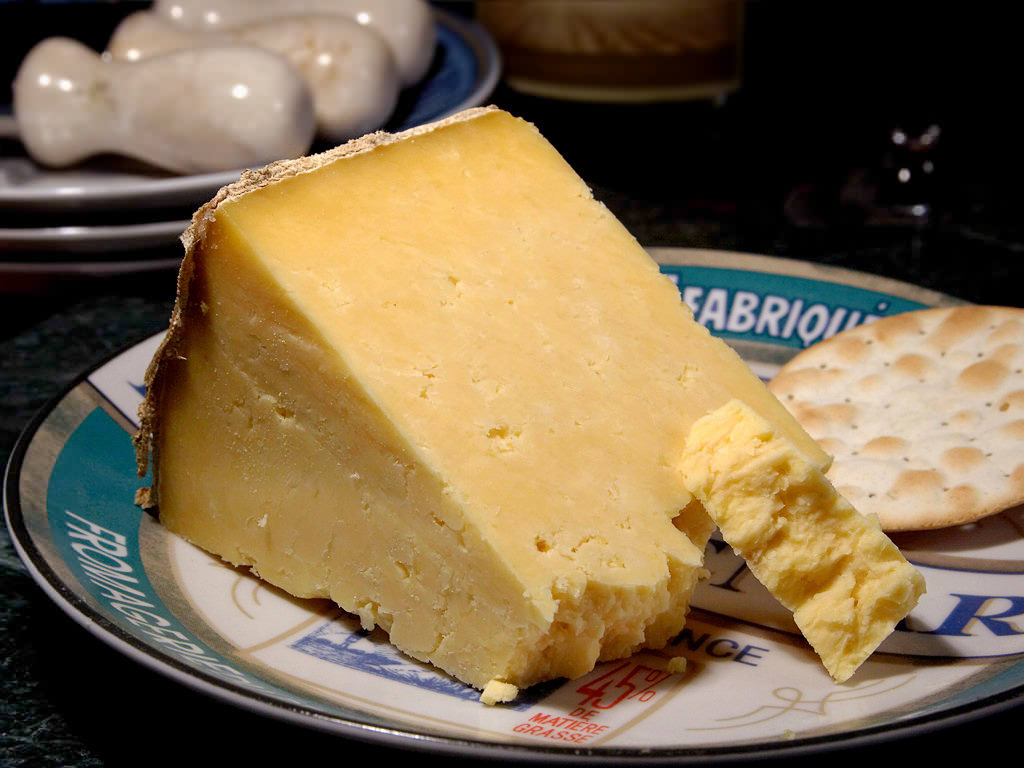 🇬🇧 United Kingdom and 1 moreCheshire
A dense, crumbly cow's-milk cheese from the English county of Cheshire.Cow · Hard · Salty
🇬🇧 United Kingdom and 1 moreCheshire
A dense, crumbly cow's-milk cheese from the English county of Cheshire.Cow · Hard · Salty
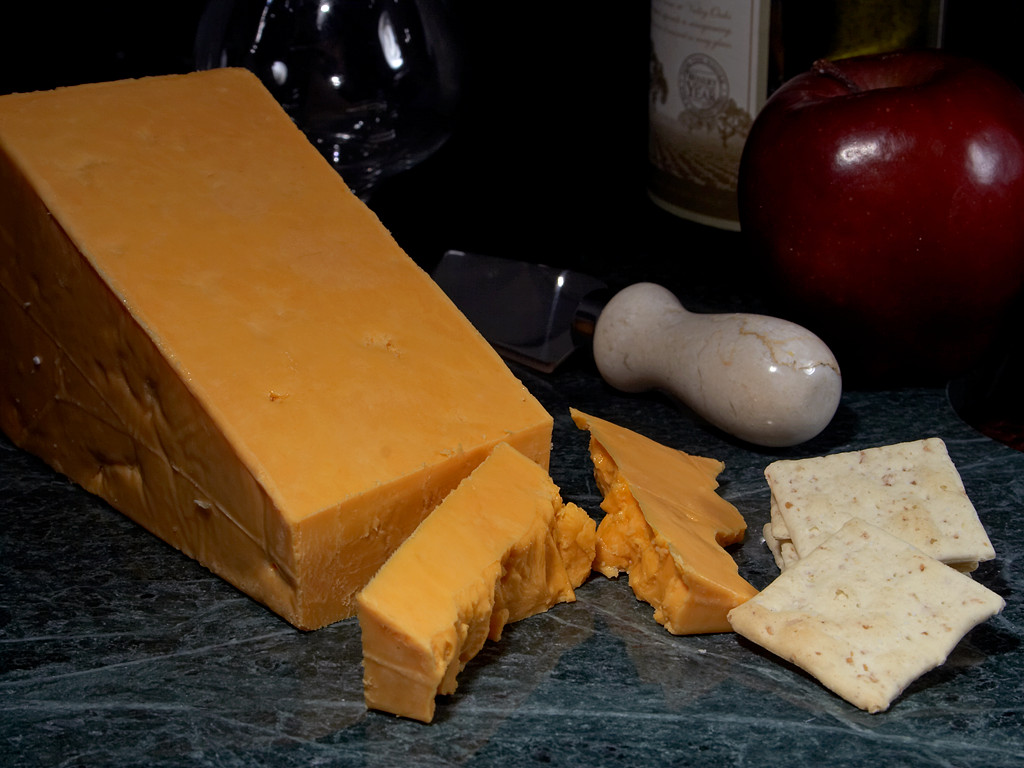 🇬🇧 United KingdomRed Leicester
A hard, crumbly cow's-milk cheese from England, aged for months and coloured with annatto.Cow · Hard · Sweet and caramel
🇬🇧 United KingdomRed Leicester
A hard, crumbly cow's-milk cheese from England, aged for months and coloured with annatto.Cow · Hard · Sweet and caramel
 🇬🇧 United KingdomDunlopcàise Dhùn Lùib
A mild Scottish cheese from Ayrshire made with unskimmed cow's milk.Cow · Semi-soft · Sweet and caramel
🇬🇧 United KingdomDunlopcàise Dhùn Lùib
A mild Scottish cheese from Ayrshire made with unskimmed cow's milk.Cow · Semi-soft · Sweet and caramel
Its cousins elsewhere
All hard cheeses 🇺🇸 United StatesBergenost
A triple-cream Norwegian-style butter cheese from New York with green wax.Mixed · Semi-soft · Buttery and creamy
🇺🇸 United StatesBergenost
A triple-cream Norwegian-style butter cheese from New York with green wax.Mixed · Semi-soft · Buttery and creamy
 🇺🇸 United States and 2 moreCottage cheese
A fresh, unaged curd cheese made from skimmed milk and dressed with cream.Cow · Fresh · Tangy and lactic
🇺🇸 United States and 2 moreCottage cheese
A fresh, unaged curd cheese made from skimmed milk and dressed with cream.Cow · Fresh · Tangy and lactic