
Dunlop
In its own language: càise Dhùn Lùib
A mild Scottish cheese from Ayrshire made with unskimmed cow's milk.
Dunlop is a mild cheese from East Ayrshire in Scotland. It uses unskimmed cow's milk and has a texture similar to soft Cheddar. The taste is sweet and buttery. People eat it on its own or with whisky.
- Made from unskimmed cow's milk in East Ayrshire.
- Created by Barbara Gilmour in the early 18th century.
- Texture resembles soft Cheddar.
- Protected Geographical Indication since 2015.
- Favored by poet Robert Burns.
What is Dunlop?
Dunlop is a cheese from East Ayrshire in Scotland. It comes from unskimmed cow's milk. The texture looks like soft Cheddar. Young pieces are semi-soft. Older pieces become hard and fudgey. The paste is white or cream. The rind is natural. The smell is mild. The taste is sweet and buttery. It starts soft and tasteless. It needs time to mature. The flavor becomes light and charming after aging. It does not have a strong punch. It is easy to eat. Many people enjoy it for its gentle profile.
Where does Dunlop come from?
Barbara Gilmour created this cheese in the early 1700s. She used unskimmed milk from Ayrshire cows. Her neighbors copied her method. The cheese became very popular. Farmers spread it to other areas. William Cobbett praised its quality. He said it matched cheeses from England. Merchants sold it across Scotland. Local traders took it to Glasgow markets. The name came from the town of Dunlop. Production stopped around 1940. It returned later at West Clerkland Farm. The traditional method got PGI status in 2015.
What does Dunlop taste like?
The taste is mild and sweet. It has a buttery note. Young cheese is soft and bland. It needs six to twelve months to develop. Aging brings a light fragrance. The texture changes from soft to hard. Salt from Saltcoats gave a distinct taste. Magnesium sulphate added to the salt helped. Imported mined salt was debated. The cheese undergoes slight fermentation. It heaves slightly on top during aging. Turning it upside down helps drying.
How Dunlop is made
Milk comes from unskimmed Ayrshire cows. Barbara Gilmour taught the process. Neighbors learned her technique. Salt from local saltpans was common. This salt contained magnesium salts. These salts gave a unique flavor. The cheese is turned frequently. It must stay in a dry place. Fermentation causes it to rise slightly. Turning prevents issues. The process was widely copied. Sheep milk areas switched to this method. Railways changed milk distribution. Fresh milk went further away. Less milk remained for cheese making.
Dunlop, drawn
How Dunlop is eaten and cooked
People eat it on its own. It pairs well with whisky. A dram of whisky complements the cheese. It works in various recipes. Roasting was valued historically. Ayrshire families ate it with oat cake. They spread roasted cheese on farl. Supple scones also held the cheese. Milk or whey accompanied the meal. English people ate it raw with bread. Mustard often topped the bread. Beer was a common drink. Dry Cheddar competed with it. Cheddar retained weight better in stock.
Dunlop in the world's kitchens
Scottish cuisine features this cheese. Ayrshire locals prized it highly. They ate it for breakfast. Oat cake and roasted cheese were common. Bacon was sometimes skipped for this meal. English consumers preferred dry cheeses. They ate them with loaf bread. Mustard added flavor to the bread. Beer washed down the salty cheese. American cheese also appeared in England. The dryness caused thirst. Thirst increased beer consumption. Scottish production shifted over time. Modern makers produce it sporadically.
At a glance: where it turns up


Custom and folk tradition
Robert Burns loved this cheese. His friend Jessie Lewars wrote about him. Burns found no dinner ready once. He did not get angry. He ate what was available cheerfully. Friends sent good cheese from Ayrshire. He sat with bread and cheese. A book stayed by his side. Visitors saw him as happy as a king. This story links the poet to the cheese. It shows the value of simple food. The cheese brought joy to the poet.
Protection and trade
Production ceased around 1940. It resumed sporadically after the war. West Clerkland Farm makes it near Stewarton. Islay also produces some now. The factory was near Dunlop station. A housing estate sits there now. Creamery Row keeps the memory alive. Traditional methods gained protection in 2015. The EU granted PGI status. The UK kept it after Brexit. The name is Traditional Ayrshire Dunlop. This protects the specific style. Makers follow the old rules. Demand exists for the authentic product.
Questions people ask about Dunlop
What kind of milk is used to make Dunlop?
Dunlop is made using unskimmed cow's milk. This means the fat is not removed before processing. The milk comes from Ayrshire cows in Scotland. This full-fat content contributes to the sweet and buttery flavor.
Where does Dunlop cheese come from?
It originates from Dunlop in East Ayrshire, Scotland. Barbara Gilmour developed the recipe in the early 1700s. The cheese is named after the town where it began. Production remains concentrated in this region today.
How would you describe the taste of Dunlop?
The taste is mild, sweet, and buttery. Young cheese is soft and relatively tasteless. After six to twelve months, it develops a light charm. The texture shifts from semi-soft to hard and fudgey.
Is Dunlop cheese protected?
Yes, the traditional method has PGI status. This started in 2015 in the EU. The UK maintained this after Brexit. The protected name is Traditional Ayrshire Dunlop. This ensures only specific methods qualify.
How is Dunlop typically eaten?
It is often eaten on its own. A dram of whisky pairs well with it. Historically, it was roasted on oat cakes. English consumers ate it raw with mustard and bread. It works in various cooking recipes too.
Good reading and sources
The facts on this page come from the Wikipedia article "Dunlop cheese", written by its contributors and used under the CC BY-SA 4.0 licence, and from its Wikidata record (CC0). EveryCheese rewrote the text in its own words, with AI assistance, and compares every page with the article to make sure no passage is copied. It may be reused under the same CC BY-SA 4.0 licence with a link back.
It may contain mistakes. Recipes, ageing and customs differ from one dairy, valley or kitchen to the next. Folk beliefs are described as tradition, never as advice. If something is wrong, tell us. Last refreshed 2026-10-15.
More from the United Kingdom
All the cheeses of the United Kingdom 🇬🇧 United KingdomStinking Bishop
A washed-rind cow's-milk cheese from Gloucestershire, ripened in perry.Cow · Semi-soft · Savoury and brothy
🇬🇧 United KingdomStinking Bishop
A washed-rind cow's-milk cheese from Gloucestershire, ripened in perry.Cow · Semi-soft · Savoury and brothy
 🇬🇧 United Kingdom and 1 moreMarble cheese
A processed cow's milk cheese with distinct colored marbling patterns.Cow · Hard · Savoury and brothy
🇬🇧 United Kingdom and 1 moreMarble cheese
A processed cow's milk cheese with distinct colored marbling patterns.Cow · Hard · Savoury and brothy
 🇬🇧 United KingdomCaerphilly
A hard, crumbly cow's-milk cheese from South Wales with a mild lemony taste.Cow · Hard · Tangy and lactic
🇬🇧 United KingdomCaerphilly
A hard, crumbly cow's-milk cheese from South Wales with a mild lemony taste.Cow · Hard · Tangy and lactic
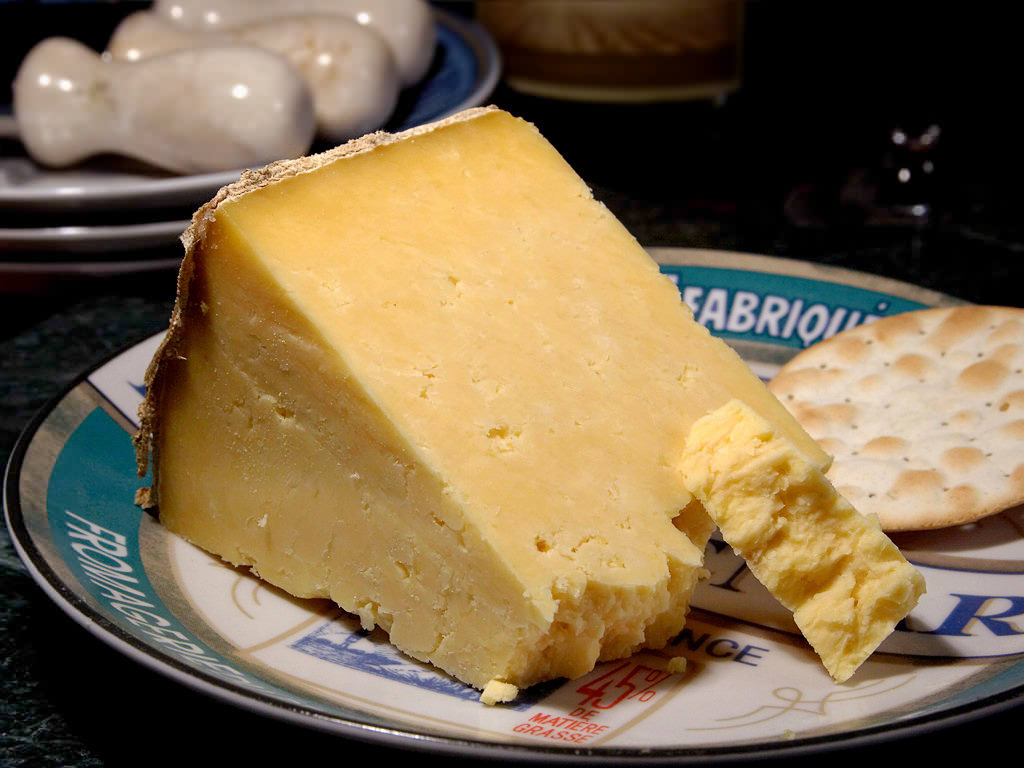 🇬🇧 United Kingdom and 1 moreCheshire
A dense, crumbly cow's-milk cheese from the English county of Cheshire.Cow · Hard · Salty
🇬🇧 United Kingdom and 1 moreCheshire
A dense, crumbly cow's-milk cheese from the English county of Cheshire.Cow · Hard · Salty
Its cousins elsewhere
All semi-soft cheeses 🇺🇸 United States and 1 moreMonterey Jack
A mild, semi-hard cow's-milk cheese from California with a creamy texture and slight sweetness.Cow · Semi-hard · Sweet and caramel
🇵🇰 Pakistan and 1 moreKadchgall
A hard, sweet and salty cylindrical cheese made from sheep or camel milk by Pashtun communities.Sheep · Hard · Sweet and caramel
🇺🇸 United States and 1 moreMonterey Jack
A mild, semi-hard cow's-milk cheese from California with a creamy texture and slight sweetness.Cow · Semi-hard · Sweet and caramel
🇵🇰 Pakistan and 1 moreKadchgall
A hard, sweet and salty cylindrical cheese made from sheep or camel milk by Pashtun communities.Sheep · Hard · Sweet and caramel
 🇺🇸 United StatesBergenost
A triple-cream Norwegian-style butter cheese from New York with green wax.Mixed · Semi-soft · Buttery and creamy
🇺🇸 United StatesBergenost
A triple-cream Norwegian-style butter cheese from New York with green wax.Mixed · Semi-soft · Buttery and creamy
 🇺🇸 United States and 2 moreCottage cheese
A fresh, unaged curd cheese made from skimmed milk and dressed with cream.Cow · Fresh · Tangy and lactic
🇺🇸 United States and 2 moreCottage cheese
A fresh, unaged curd cheese made from skimmed milk and dressed with cream.Cow · Fresh · Tangy and lactic