
Vorarlberger Bergkäse
A hard, nutty cow's-milk cheese from the Austrian Alps, aged for months or years.
This firm mountain cheese comes from the Austrian state of Vorarlberg. It is made from raw cow's milk and offers a taste that ranges from mild to spicy with herbal notes.
- Made from raw cow's milk fed only on hay, never silage.
- Protected by EU PDO status since 1997.
- Wheels weigh up to 35 kg and measure 55-65 cm wide.
- Taste ranges from mild to spicy with nutty and herbal notes.
- Swiss herdsmen introduced the 'fat senning' method in the 17th century.
What is Vorarlberger Bergkäse?
Vorarlberger Bergkäse is a traditional hard cheese from Austria. The wheels are round loaves, roughly 55 to 65 centimetres across and weighing up to 35 kilograms. Some varieties feature small holes, which locals view as a mark of quality. The paste is firm, sometimes becoming crumbly in long-aged versions. The aroma shifts from mild to spicy, while the taste delivers distinct nutty and herbal notes. It contains 45 percent fat in its dry matter.
Where does Vorarlberger Bergkäse come from?
Cheese making has deep roots in the Bregenz Forest, dating back to Celtic livestock practices. For centuries, producers focused on sour cheeses until Swiss herdsmen from Appenzell arrived after the Thirty Years' War. They introduced 'fat senning,' a method using whole milk rather than skimmed milk to create hard cheese. This technique established the foundation for the modern product. By the mid-18th century, production grew so large that it was exported professionally to Italy.
What does Vorarlberger Bergkäse taste like?
The profile is defined by a transition from mildness to spiciness depending on age. Nuttiness serves as the primary base note, supported by distinct herbal characteristics derived from the alpine pastures. Texture varies significantly; younger wheels are firm, while those matured for two years or more develop a crumbly consistency. The intensity of the spice increases as the cheese ages.
How Vorarlberger Bergkäse is made
Producers use only natural raw milk from cows fed exclusively on hay, never silage. The milk must be delivered daily and processed immediately in designated alpine dairies located in specific valleys like the Bregenz Forest and Walsertal. Traditional manual methods are mandatory. Natural rennet sets the milk. In summer, milk from high-altitude pastures makes Alpkäse, while winter milk produces the standard Bergkäse.
Vorarlberger Bergkäse, drawn
How Vorarlberger Bergkäse is eaten and cooked
Cooks typically serve this cheese on their own or as part of a cheese board. Its firm texture allows it to be sliced easily for snacks. The spicy and nutty flavour pairs well with simple accompaniments.
Vorarlberger Bergkäse through the day
This cheese fits comfortably into snack time or as a component of a dedicated cheese board. It is not typically associated with breakfast or dessert. The solid nature of the wheel makes it ideal for sharing among guests or enjoying as an afternoon treat.
Vorarlberger Bergkäse in the world's kitchens
The cheese is central to Austrian cuisine, specifically within the Vorarlberg region. Historically, it became a staple in Italian markets due to trade routes established in the 18th century. Today, it remains a regional specialty, often featured on local menus alongside other Alpine products. The Bregenz Forest Cheese Route promotes its integration into local culinary tourism.
At a glance: where it turns up

Faith and ritual
There are no specific religious rituals or dietary laws attached to this cheese in the provided material.
Vorarlberger Bergkäse at celebrations
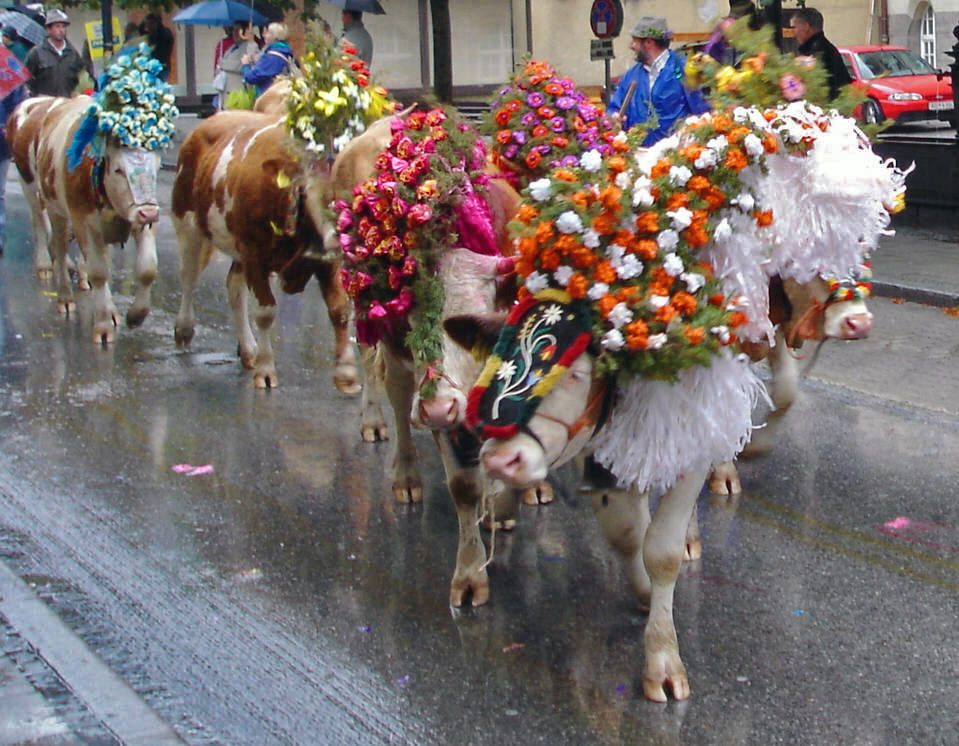
The production cycle aligns with the seasonal movement of cattle. Summer milk creates Alpkäse on high pastures, while autumn brings the Almabtrieb, a celebration marking the descent of cattle from the mountains. This event is traditionally viewed as an occasion for community gatherings and festivities surrounding the harvest of dairy products.
Custom and folk tradition
Centuries-old pasture management defines the local culture. Farmers practice transhumance, moving cows to different altitudes seasonally to ensure fresh feed without silage. This 'hay milk' requirement is a strict tradition preserved through PDO regulations. The Bregenz Forest Cheese Route, founded in 1998, helps maintain these heritage practices by connecting farmers with visitors.
Buying, keeping and serving Vorarlberger Bergkäse
They focus on the production and delivery requirements, such as daily milk transport, rather than consumer storage guidelines.
What to use instead of Vorarlberger Bergkäse
However, it does not explicitly suggest it as a direct substitute for Vorarlberger Bergkäse in modern cooking contexts.
Protection and trade
The cheese holds Protected Designation of Origin status within the European Union since 1997. Production is restricted to specific valleys in Vorarlberg using traditional manual methods. Strict rules mandate that only farms practicing grassland farming without silage can supply the milk. The Bregenz Forest Cheese Route supports the preservation of this local dairy heritage.
Questions people ask about Vorarlberger Bergkäse
Where does Vorarlberger Bergkäse come from?
It originates in the Austrian state of Vorarlberg, specifically from alpine dairies in the Bregenz Forest, Walsertal, and Rhine Valley regions.
What kind of milk is used to make this cheese?
It is made exclusively from raw cow's milk. The cows must be fed a diet of fresh hay and grass, with no silage allowed under the protection rules.
How would you describe the taste?
The flavour ranges from mild to spicy. It features prominent nutty undertones and distinct herbal notes derived from the alpine pastures where the cows graze.
Is this cheese protected?
Yes, it has Protected Designation of Origin (PDO) status in the European Union since 1997, ensuring it is made in specific regions using traditional methods.
Good reading and sources
The facts on this page come from the Wikipedia article "Vorarlberger Bergkäse", written by its contributors and used under the CC BY-SA 4.0 licence, and from its Wikidata record (CC0). EveryCheese rewrote the text in its own words, with AI assistance, and compares every page with the article to make sure no passage is copied. It may be reused under the same CC BY-SA 4.0 licence with a link back.
It may contain mistakes. Recipes, ageing and customs differ from one dairy, valley or kitchen to the next. Folk beliefs are described as tradition, never as advice. If something is wrong, tell us. Last refreshed 2026-10-15.
More from Austria
All the cheeses of Austria 🇮🇹 Italy and 3 moreAlpkäse
A seasonal hard cow's-milk cheese made on high Alpine pastures in summer.Cow · Hard · Tangy and lactic
🇮🇹 Italy and 3 moreAlpkäse
A seasonal hard cow's-milk cheese made on high Alpine pastures in summer.Cow · Hard · Tangy and lactic
 🇦🇹 Austria and 1 moreTyrolean grey cheeseTiroler Graukäse
A low-fat cow's milk acid-curd quark from the Tyrolean Alps with a moulded rind.Cow · Fresh · Tangy and lactic
🇦🇹 Austria and 1 moreTyrolean grey cheeseTiroler Graukäse
A low-fat cow's milk acid-curd quark from the Tyrolean Alps with a moulded rind.Cow · Fresh · Tangy and lactic
 🇦🇹 AustriaSura Kees
A low-fat sour milk cheese from the Montafon valley in Austria.Cow · Tangy and lactic
🇦🇹 AustriaLüneberg
A saffron-tinted cow's-milk cheese from the Austrian Alps, bridging Swiss and German styles.Cow · Semi-hard · Nutty
🇦🇹 AustriaSura Kees
A low-fat sour milk cheese from the Montafon valley in Austria.Cow · Tangy and lactic
🇦🇹 AustriaLüneberg
A saffron-tinted cow's-milk cheese from the Austrian Alps, bridging Swiss and German styles.Cow · Semi-hard · Nutty
Its cousins elsewhere
All hard cheeses 🇸🇾 SyriaTresseجبنة مشللة
A braided Syrian string cheese with a nutty aroma and springy texture.Cow · Semi-soft · Nutty
🇸🇾 SyriaTresseجبنة مشللة
A braided Syrian string cheese with a nutty aroma and springy texture.Cow · Semi-soft · Nutty
 🇦🇲 ArmeniaMotalմոթալ
A soft, brined Armenian cheese aged in leather bags with wild thyme.Sheep · Brined · Milky and fresh
🇦🇲 ArmeniaMotalմոթալ
A soft, brined Armenian cheese aged in leather bags with wild thyme.Sheep · Brined · Milky and fresh
 🇺🇸 United StatesMuenster
A semi-soft American cow's-milk cheese with a smooth texture and an orange rind dyed with annatto.Cow · Semi-soft · Nutty
🇺🇸 United StatesMuenster
A semi-soft American cow's-milk cheese with a smooth texture and an orange rind dyed with annatto.Cow · Semi-soft · Nutty
 🇨🇦 CanadaOka
A semi-soft washed-rind cow's milk cheese from Quebec with a copper-orange rind.Cow · Semi-soft · Pungent and funky
🇨🇦 CanadaOka
A semi-soft washed-rind cow's milk cheese from Quebec with a copper-orange rind.Cow · Semi-soft · Pungent and funky