
Boerenkaas
A Dutch semi-hard raw milk cheese with TSG protection, often spiced and farm-made.
Boerenkaas is a traditional Dutch cheese made from raw cow, goat, sheep, or buffalo milk. Most varieties are handmade on the farm where the milk originates. It features a semi-hard texture and may include cumin or other spices for flavor.
- Protected as TSG by the EU since 2007.
- Must contain at least 50% milk from the producing farm.
- Can be made from cow, goat, sheep, or buffalo milk.
- Often includes cumin or other seeds and herbs.
- Brined for one to six days before maturing.
What is Boerenkaas?
Boerenkaas translates directly to farmers cheese. It is a Dutch product defined by its production method rather than a single recipe. The cheese is typically semi-hard and weighs between one and two kilograms. While most versions are made from raw cow milk, regulations allow for goat, sheep, or buffalo milk as well. A key requirement is that at least half of the milk must come from the farm producing the cheese. The paste can be yellow or pale, depending on the milk type. Some varieties include visible seeds or herbs mixed into the curd before pressing.
Where does Boerenkaas come from?
The name Boerenkaas is protected under European Union law as a Traditional Speciality Guaranteed. This status was granted in 2007 to preserve the traditional farming methods associated with the cheese. The term broadly applies to cheeses made within the EU following specific commission regulations. However, the mark KB certifies that the cheese is of Dutch origin. Historically, this cheese represents the output of small-scale dairy farms across the Netherlands, emphasizing local production over industrial manufacturing.
What does Boerenkaas taste like?
The taste profile varies significantly based on the milk source and aging period. Raw milk versions often carry a deeper, more complex character than pasteurized alternatives. Common flavors include salty notes from the brining process and nutty undertones that develop during maturation. Spiced variants introduce aromatic elements like cumin, which cuts through the richness of the fat. The texture remains firm yet sliceable, offering a pleasant resistance when bitten.
How Boerenkaas is made
Production begins by heating fresh unpasteurized milk to twenty-nine degrees Celsius. Rennet is then added to coagulate the liquid. After thirty minutes, the resulting curd is cut into fine grains. Hot water is introduced to cook the curd further, with temperatures rising gradually. The mixture is stirred slowly before being poured into molds. After draining, the wheels are pressed and turned. They are then salted and soaked in brine for up to six days. Finally, they mature in a curing room where they are regularly flipped.
Boerenkaas, drawn
How Boerenkaas is eaten and cooked
This cheese is commonly served as a standalone snack or placed on a cheese board alongside bread and pickles. Its firm texture makes it suitable for slicing thinly. Spiced varieties add interest to simple platters. While not primarily used for melting due to its density, it can be incorporated into hot dishes if desired. The most common consumption method is eating it cold, allowing the distinct farm-fresh flavors to shine without interference from heat.
Boerenkaas through the day
Boerenkaas fits comfortably into daily meals throughout the day. It is a staple for lunch, often paired with rye bread. It also serves as an afternoon snack or part of a casual dinner spread. On cheese boards, it provides a sturdy contrast to softer varieties. Because it is a everyday farm product, it does not require special occasions for consumption, making it accessible for regular household use.
Boerenkaas in the world's kitchens
The cheese is central to Dutch culinary traditions. Regional variations reflect local farming practices, such as Goudse Boerenkaas from the Gouda area or Edammer Boerenkaas from Edam. Leidse Boerenkaas hails from Leiden. These regional names highlight the geographic specificity within the broader Dutch category. The cuisine values simplicity and quality ingredients, relying on the natural taste of the milk rather than heavy processing or artificial additives.
At a glance: where it turns up

Faith and ritual
There are no specific religious associations or ritual uses tied to Boerenkaas. It is a secular food product consumed by the general population. The production methods are traditional but not monastic or tied to any specific faith community. It is available in markets and stores without restriction related to dietary laws beyond standard food safety regulations.
Boerenkaas at celebrations
The cheese is not specifically linked to weddings, festivals, or holiday tables. It is considered a daily staple rather than a celebratory item. Farmers produce it year-round to meet local demand. There are no known ceremonies or annual events dedicated solely to the tasting or gifting of Boerenkaas, although it may appear at local agricultural fairs showcasing regional products.
Custom and folk tradition
The tradition of Boerenkaas lies in the farmhouse method of production. It reflects a lifestyle where dairy farming and cheese making are integrated. The requirement for farm-sourced milk ensures that the cheese remains connected to the land and the animals. This practice supports small-scale agriculture and preserves rural heritage. The KB mark helps maintain this distinction against industrially produced imitations.
Buying, keeping and serving Boerenkaas
Keep the cheese wrapped in wax paper or cheese cloth in the refrigerator. Consume it within a few weeks of opening for best flavor. If the surface dries out, trim the outer layer before serving. Avoid freezing, as this alters the texture and breaks down the creamy structure of the semi-hard paste.
What to use instead of Boerenkaas
No direct substitute exists due to the unique raw milk and farm-production requirements. Gouda or Edam cheeses may offer similar textures but lack the specific farmhouse character. For those seeking spiced versions, other seeded hard cheeses might provide a comparable experience, though the flavor profile will differ significantly.
Protection and trade
The TSG label protects the name Boerenkaas across the European Union. This certification ensures that only cheeses meeting the specific production criteria can bear the name. The KB mark further identifies Dutch origin. Production figures are not publicly detailed, but the cheese remains a significant part of the Dutch dairy market. Imitations lacking the proper certification cannot legally use the name.
Questions people ask about Boerenkaas
What kind of milk is used to make Boerenkaas?
It is primarily made from raw cow milk, but regulations also permit the use of goat, sheep, or buffalo milk. At least half of the milk must come from the farm where the cheese is produced.
Where does Boerenkaas come from?
It is a Dutch cheese with strong ties to regions like Gouda, Edam, and Leiden. The name is protected by the EU, ensuring it meets specific traditional production standards.
Is Boerenkaas spicy?
Not inherently, but many varieties include cumin, caraway, or other seeds and herbs mixed into the curd. This adds a distinct aromatic flavor to the otherwise savory and salty cheese.
How long is Boerenkaas aged?
There is no fixed minimum age. The cheese matures in a curing room until it reaches the desired level of ripeness, which can vary from a few weeks to several months depending on the producer.
Good reading and sources
- Boerenkaas on WikipediaEncyclopedia
- More photos on Wikimedia CommonsPhotos and video
- Wikidata recordOpen data
The facts on this page come from the Wikipedia article "Boerenkaas", written by its contributors and used under the CC BY-SA 4.0 licence, and from its Wikidata record (CC0). EveryCheese rewrote the text in its own words, with AI assistance, and compares every page with the article to make sure no passage is copied. It may be reused under the same CC BY-SA 4.0 licence with a link back.
It may contain mistakes. Recipes, ageing and customs differ from one dairy, valley or kitchen to the next. Folk beliefs are described as tradition, never as advice. If something is wrong, tell us. Last refreshed 2026-10-15.
More from the Netherlands
All the cheeses of the Netherlands 🇨🇭 Switzerland and 5 moreEmmentalEmmentaler
A yellow, medium-hard Swiss cheese with natural holes, aged for several months.Cow · Semi-hard · Savoury and brothy
🇨🇭 Switzerland and 5 moreEmmentalEmmentaler
A yellow, medium-hard Swiss cheese with natural holes, aged for several months.Cow · Semi-hard · Savoury and brothy
 🇳🇱 Netherlands and 5 moreEdamEdammer
A semi-hard Dutch cow's-milk cheese aged in distinctive red wax spheres.Cow · Semi-hard · Nutty
🇳🇱 Netherlands and 5 moreEdamEdammer
A semi-hard Dutch cow's-milk cheese aged in distinctive red wax spheres.Cow · Semi-hard · Nutty
 🇳🇱 NetherlandsMaasdam
A semi-hard Dutch cow's milk cheese with holes, aged for one to three months.Cow · Semi-hard · Nutty
🇳🇱 NetherlandsMaasdam
A semi-hard Dutch cow's milk cheese with holes, aged for one to three months.Cow · Semi-hard · Nutty
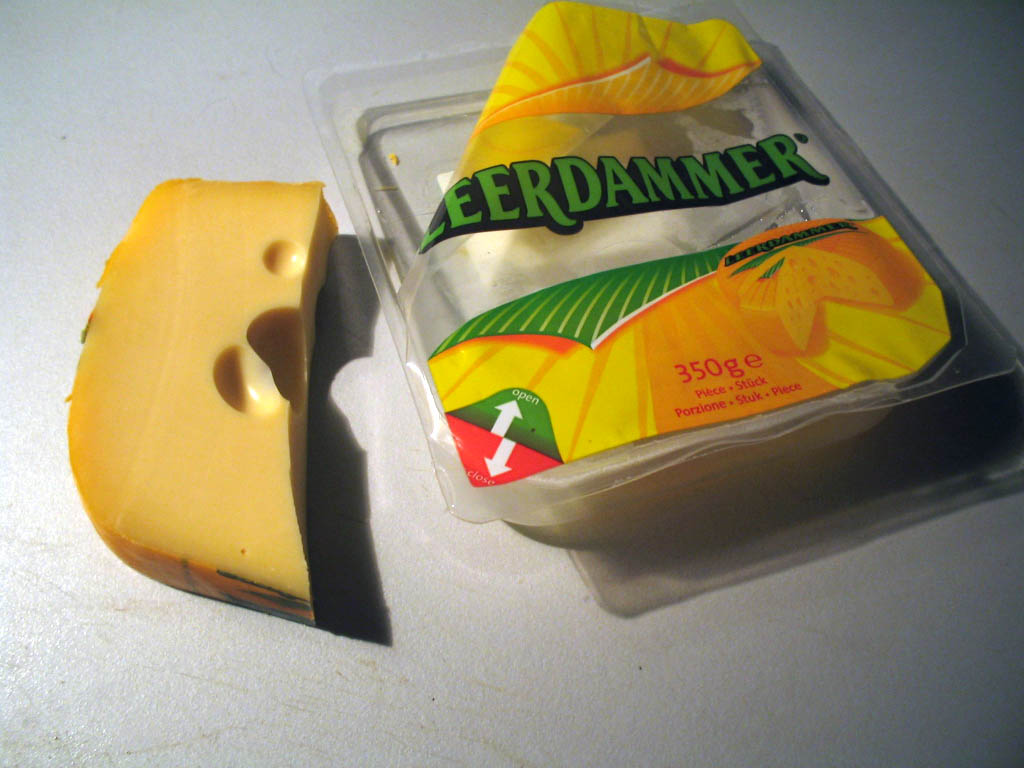 🇳🇱 Netherlands and 1 moreLeerdammer
A Dutch semihard cow's-milk cheese with holes and a sweet nutty taste.Cow · Semi-hard · Sweet and caramel
🇳🇱 Netherlands and 1 moreLeerdammer
A Dutch semihard cow's-milk cheese with holes and a sweet nutty taste.Cow · Semi-hard · Sweet and caramel
Its cousins elsewhere
All semi-hard cheeses 🇨🇦 CanadaFriulano
A rindless Canadian cow's-milk cheese with a salty hazelnut flavour, aged to improve its character.Cow · Semi-hard · Salty
🇵🇰 Pakistan and 1 moreKadchgall
A hard, sweet and salty cylindrical cheese made from sheep or camel milk by Pashtun communities.Sheep · Hard · Sweet and caramel
🇻🇪 VenezuelaPalmitaqueso palmita
A fresh, salty cow's milk cheese from Venezuela's Zulia state, made in large wooden vats.Cow · Fresh · Salty
🇨🇦 CanadaFriulano
A rindless Canadian cow's-milk cheese with a salty hazelnut flavour, aged to improve its character.Cow · Semi-hard · Salty
🇵🇰 Pakistan and 1 moreKadchgall
A hard, sweet and salty cylindrical cheese made from sheep or camel milk by Pashtun communities.Sheep · Hard · Sweet and caramel
🇻🇪 VenezuelaPalmitaqueso palmita
A fresh, salty cow's milk cheese from Venezuela's Zulia state, made in large wooden vats.Cow · Fresh · Salty
 🇲🇽 MexicoPanela cheeseQueso panela
A fresh, white Mexican cow's-milk cheese that holds its shape when fried.Cow · Fresh · Milky and fresh
🇲🇽 MexicoPanela cheeseQueso panela
A fresh, white Mexican cow's-milk cheese that holds its shape when fried.Cow · Fresh · Milky and fresh