Cow's milk cheeses
Most of the world's cheese: cheddar, Gouda, Brie, Parmigiano, paneer and the great Alpine wheels.
Cow's milk makes most of the world's cheese. It is plentiful, mild and balanced in fat and protein, which lets cheesemakers turn it into everything from paneer to Parmigiano. Its fat carries carotene from grass, so cow's milk cheese is often pale yellow, deeper in summer when the herds graze fresh pasture. Cheddar, Gouda, Brie, Camembert, Emmental, Comté and mozzarella all begin here, and so does most of India's paneer.
Breeds and feed
Breed matters to a cheesemaker. Holstein-Friesians give large volumes of milk, while Jersey and Guernsey milk is richer in fat and protein. Many protected cheeses name their breeds: Comté must be made from the milk of Montbéliarde or French Simmental cows, and some Parmigiano Reggiano dairies work only with the old red Reggiana breed. Feed matters too. The rules for Comté and Parmigiano Reggiano forbid silage, because fermented feed can carry bacteria that spoil a long-aged wheel.
India and the cooperatives
India produces more milk than any other country, from cows and buffaloes together, and a great deal of it becomes paneer and chhena. The cooperative movement that began at Anand in Gujarat in 1946 grew, through the programme known as Operation Flood, into a national network of village dairies, and today it makes paneer, processed cheese and mozzarella on a large scale. Native breeds such as Gir and Sahiwal are kept for their milk, and many families still set paneer at home from the morning's delivery.
One milk, many cheeses
Cow's milk can become soft or hard, fresh or aged for years. It separates its cream easily, which suits both butter and skimmed-milk cheeses, and its curd sets firmly with rennet. Cheeses from the same milk can taste wholly different depending on the cultures, the size of the cut, the cooking, the salting and the cellar. That is why cheddar and Camembert, paneer and Parmigiano, all made from the milk of the same kind of animal, share almost nothing on the plate.
Worth knowing
- Cheddar: The most widely copied cheese in the world
- Parmigiano Reggiano: Grana of the Po valley, aged at least a year
- Gouda: Dutch washed-curd cheese, young to very old
- Camembert de Normandie: Raw-milk bloomy rind of Normandy
- Comté: Jura wheel of Montbéliarde milk
- Emmental: Swiss wheel with large holes
- Paneer: India's fresh pressed cheese
- Kalimpong cheese: Small Himalayan wheel of West Bengal
Good to know
- Pale cheese in winter and golden cheese in summer is normal for pasture-fed herds.
- Cow's milk cheeses suit almost any wine, beer or tea: match strength with strength.
- Store firm cow's milk cheeses in paper and soft ones in a closed box.
Sources and further reading
- Cheese on Wikipedia
- Dairy cattle, Wikipedia
- White revolution (India), Wikipedia
- Cheese, Encyclopaedia Britannica
Original text by the EveryCheese desk, written with AI assistance and checked against the sources above. Customs are described as tradition, not as advice. If we have something wrong, tell us.
Cow on EveryCheese
The cheeses written up so far, best known first.
 🇺🇸 United States and 1 moreHavartiflødehavarti
A semi-soft Danish cow's-milk cheese with a buttery taste and small irregular eyes.Cow · Semi-soft · Buttery and creamy
🇺🇸 United States and 1 moreHavartiflødehavarti
A semi-soft Danish cow's-milk cheese with a buttery taste and small irregular eyes.Cow · Semi-soft · Buttery and creamy
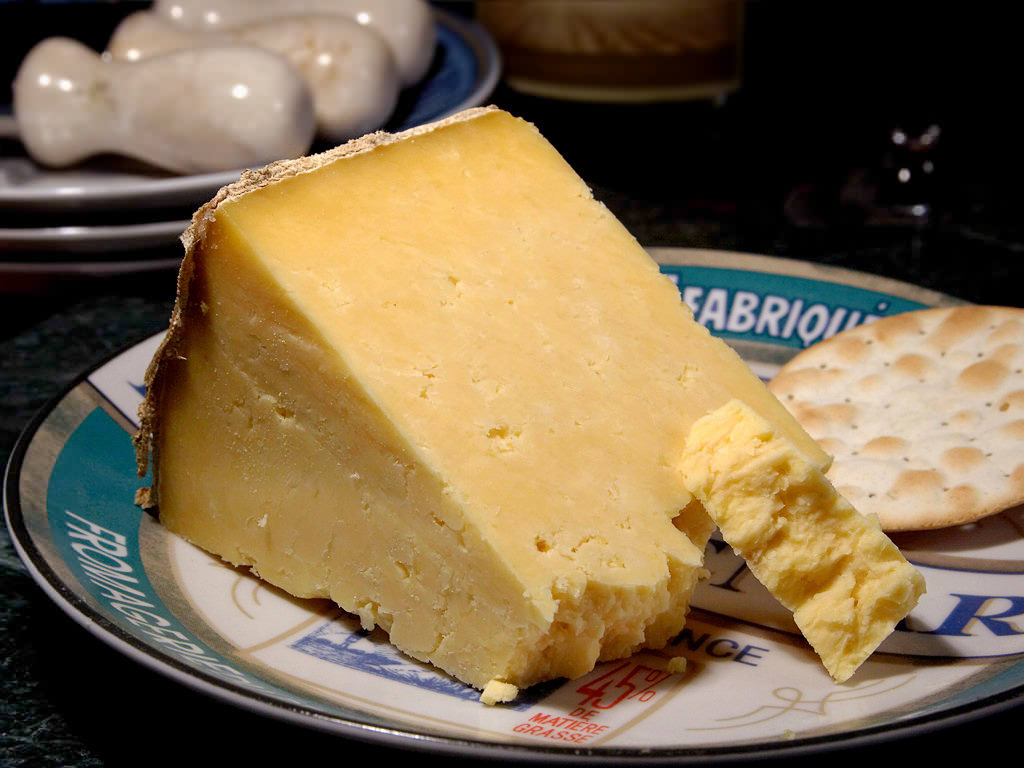 🇬🇧 United Kingdom and 1 moreCheshire
A dense, crumbly cow's-milk cheese from the English county of Cheshire.Cow · Hard · Salty
🇬🇧 United Kingdom and 1 moreCheshire
A dense, crumbly cow's-milk cheese from the English county of Cheshire.Cow · Hard · Salty
 🇨🇿 Czech RepublicOlomouc curd cheeseOlomoucké tvarůžky
A pungent, low-fat ripened soft cheese from the Czech Republic made from quark.Cow · Bloomy rind · Pungent and funky
🇨🇿 Czech RepublicOlomouc curd cheeseOlomoucké tvarůžky
A pungent, low-fat ripened soft cheese from the Czech Republic made from quark.Cow · Bloomy rind · Pungent and funky
 🇫🇷 FranceCoulommiers
A soft cow's-milk cheese with a bloomy rind from the Seine-et-Marne department of France.Cow · Bloomy rind · Nutty
🇫🇷 FranceCoulommiers
A soft cow's-milk cheese with a bloomy rind from the Seine-et-Marne department of France.Cow · Bloomy rind · Nutty
 🇫🇷 FranceChaource
A soft-ripened cow's-milk cheese from north-eastern France with a white mould rind.Cow · Bloomy rind · Salty
🇫🇷 FranceChaource
A soft-ripened cow's-milk cheese from north-eastern France with a white mould rind.Cow · Bloomy rind · Salty
 🇫🇷 FranceFourme de MontbrisonFôrma de Montbréson
A mild, cylindrical cow's-milk blue cheese from the Forez mountains of France.Cow · Blue
🇫🇷 FranceFourme de MontbrisonFôrma de Montbréson
A mild, cylindrical cow's-milk blue cheese from the Forez mountains of France.Cow · Blue
 🇫🇷 FranceBleu des CaussesBlau dels Causses
A raw cow's milk blue cheese aged in the limestone caves of southern France.Cow · Blue · Savoury and brothy
🇫🇷 FranceBleu des CaussesBlau dels Causses
A raw cow's milk blue cheese aged in the limestone caves of southern France.Cow · Blue · Savoury and brothy
 🇩🇪 GermanyCambozola
A mild German cow's-milk blue cheese with a creamy texture and white rind.Cow · Bloomy rind · Buttery and creamy
🇩🇪 GermanyCambozola
A mild German cow's-milk blue cheese with a creamy texture and white rind.Cow · Bloomy rind · Buttery and creamy
 🇫🇮 Finland and 1 moreBread cheeseleipäjuusto
A Finnish fresh cow's-milk cheese that squeaks when bitten and is traditionally baked or grilled.Cow · Fresh · Savoury and brothy
🇫🇮 Finland and 1 moreBread cheeseleipäjuusto
A Finnish fresh cow's-milk cheese that squeaks when bitten and is traditionally baked or grilled.Cow · Fresh · Savoury and brothy
 🇫🇷 FranceSalersSalèrn
A semi-hard cow's-milk cheese from the Auvergne, aged in caves for up to four years.Cow · Semi-hard · Savoury and brothy
🇫🇷 FranceSalersSalèrn
A semi-hard cow's-milk cheese from the Auvergne, aged in caves for up to four years.Cow · Semi-hard · Savoury and brothy
 🇫🇷 FranceSaint-NectaireSench-Nectari
A semi-soft washed-rind cow's-milk cheese from the volcanic Auvergne region of France.Cow · Semi-soft · Nutty
🇫🇷 FranceSaint-NectaireSench-Nectari
A semi-soft washed-rind cow's-milk cheese from the volcanic Auvergne region of France.Cow · Semi-soft · Nutty
 🇸🇾 Syria and 5 moreAkkawiجبنة عكاوي
A white brined cow's milk cheese from the Levant named after Acre.Cow · Brined · Salty
🇸🇾 Syria and 5 moreAkkawiجبنة عكاوي
A white brined cow's milk cheese from the Levant named after Acre.Cow · Brined · Salty
 🇵🇹 PortugalSão Jorge CheeseQueijo São Jorge
A hard cow's-milk cheese from the Azores with a spicy aroma and protected origin status.Cow · Semi-hard · Savoury and brothy
🇵🇹 PortugalSão Jorge CheeseQueijo São Jorge
A hard cow's-milk cheese from the Azores with a spicy aroma and protected origin status.Cow · Semi-hard · Savoury and brothy
 🇮🇹 Italy and 1 moreBel Paese
A semi-soft cow's milk cheese from Italy with a mild buttery flavor and pale yellow color.Cow · Semi-soft · Buttery and creamy
🇮🇹 Italy and 1 moreBel Paese
A semi-soft cow's milk cheese from Italy with a mild buttery flavor and pale yellow color.Cow · Semi-soft · Buttery and creamy
 🇫🇷 FrancePort Salut
A mild semi-soft cow's milk cheese with an orange rind, made in France since the nineteenth century.Cow · Semi-soft
🇫🇷 FrancePort Salut
A mild semi-soft cow's milk cheese with an orange rind, made in France since the nineteenth century.Cow · Semi-soft
 🇫🇷 FranceTomme de Savoie
A semi-soft cow's milk cheese from the French Alps with a thick rind.Cow · Semi-soft
🇫🇷 FranceTomme de Savoie
A semi-soft cow's milk cheese from the French Alps with a thick rind.Cow · Semi-soft
 🇫🇷 France and 1 moreVacherin Mont d'Or
A soft, seasonal cow's milk cheese wrapped in spruce bark from the Jura mountains.Cow · Bloomy rind · Earthy and cellar
🇫🇷 France and 1 moreVacherin Mont d'Or
A soft, seasonal cow's milk cheese wrapped in spruce bark from the Jura mountains.Cow · Bloomy rind · Earthy and cellar
 🇫🇷 France and 1 moreCancoillotte
A runny French cheese made by melting metton, served hot or cold in the east.Cow · Processed · Milky and fresh
🇫🇷 France and 1 moreCancoillotte
A runny French cheese made by melting metton, served hot or cold in the east.Cow · Processed · Milky and fresh
 🇪🇸 SpainTetillaQueixo Tetilla
A soft, conical cow's-milk cheese from Galicia with a distinctive nipple-like peak.Cow · Bloomy rind · Buttery and creamy
🇪🇸 SpainTetillaQueixo Tetilla
A soft, conical cow's-milk cheese from Galicia with a distinctive nipple-like peak.Cow · Bloomy rind · Buttery and creamy
 🇳🇵 Nepal and 2 moreChhurpiछुर्पी
A smoked yak and cow milk cheese from the Himalayas, available in soft or hard forms.Yak · Smoked · Tangy and lactic
🇳🇵 Nepal and 2 moreChhurpiछुर्पी
A smoked yak and cow milk cheese from the Himalayas, available in soft or hard forms.Yak · Smoked · Tangy and lactic
 🇺🇸 United States and 1 moreMonterey Jack
A mild, semi-hard cow's-milk cheese from California with a creamy texture and slight sweetness.Cow · Semi-hard · Sweet and caramel
🇺🇸 United States and 1 moreMonterey Jack
A mild, semi-hard cow's-milk cheese from California with a creamy texture and slight sweetness.Cow · Semi-hard · Sweet and caramel
 🇨🇦 Canada and 1 moreCheese curds
Fresh, squeaky pieces of cheddar-style curd eaten in North America.Cow · Fresh · Milky and fresh
🇨🇦 Canada and 1 moreCheese curds
Fresh, squeaky pieces of cheddar-style curd eaten in North America.Cow · Fresh · Milky and fresh
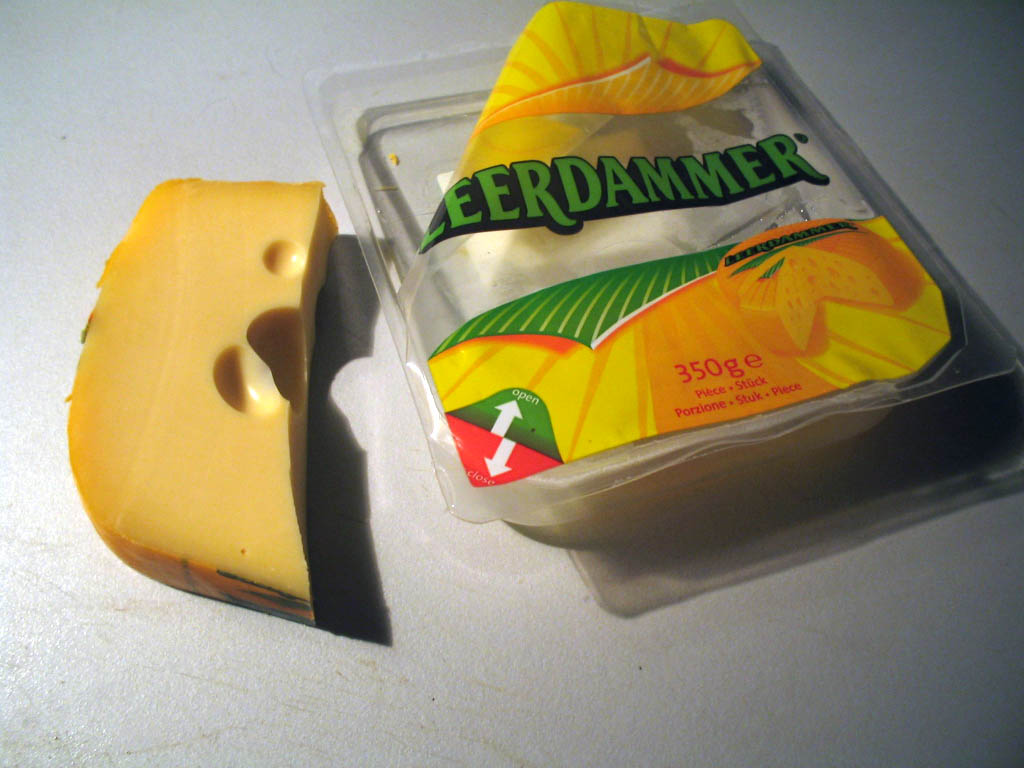 🇳🇱 Netherlands and 1 moreLeerdammer
A Dutch semihard cow's-milk cheese with holes and a sweet nutty taste.Cow · Semi-hard · Sweet and caramel
🇳🇱 Netherlands and 1 moreLeerdammer
A Dutch semihard cow's-milk cheese with holes and a sweet nutty taste.Cow · Semi-hard · Sweet and caramel
 🇫🇷 FranceBleu du Vercors-Sassenage
A mild, semi-soft cow's milk blue cheese from the French Alps.Cow · Semi-soft · Sweet and caramel
🇫🇷 FranceBleu du Vercors-Sassenage
A mild, semi-soft cow's milk blue cheese from the French Alps.Cow · Semi-soft · Sweet and caramel
 🇫🇷 FranceBrie de Meaux
A soft-ripened cow's milk cheese with a white rind from the Brie region of France.Cow · Bloomy rind · Milky and fresh
🇫🇷 FranceBrie de Meaux
A soft-ripened cow's milk cheese with a white rind from the Brie region of France.Cow · Bloomy rind · Milky and fresh
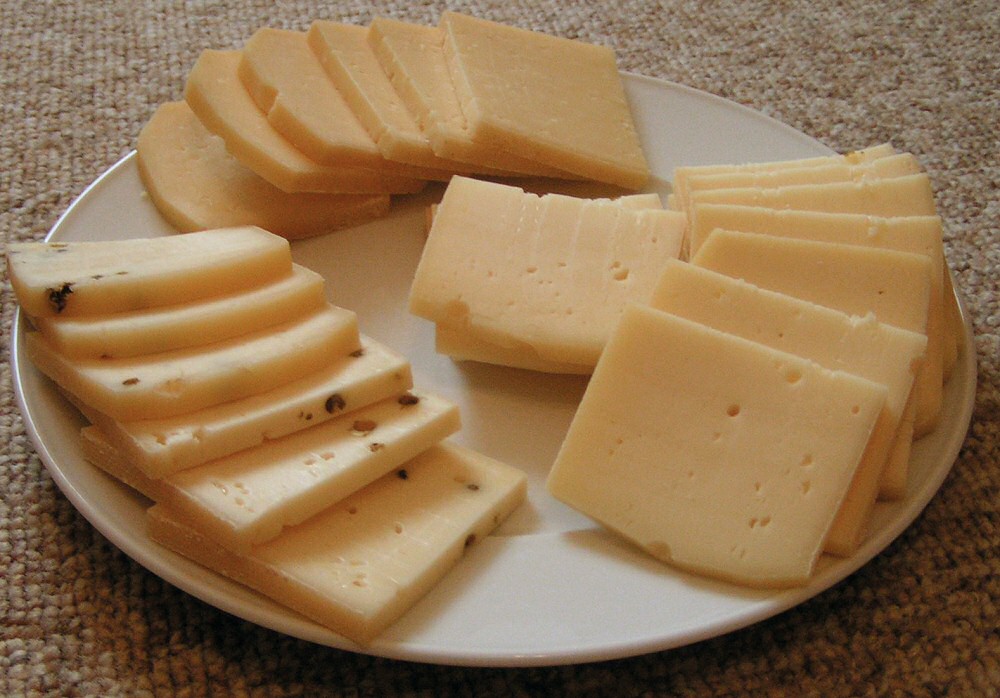 🇨🇭 SwitzerlandRaclette du ValaisWalliser Raclette
A semi-hard Swiss cow's-milk cheese from Valais, aged for melting or eating.Cow · Semi-hard
🇨🇭 SwitzerlandRaclette du ValaisWalliser Raclette
A semi-hard Swiss cow's-milk cheese from Valais, aged for melting or eating.Cow · Semi-hard
 🇳🇱 NetherlandsLeyden cheeseLeidse kaas
A semi-hard Dutch cow's-milk cheese flavoured with cumin and caraway seeds.Cow · Semi-hard · Savoury and brothy
🇳🇱 NetherlandsLeyden cheeseLeidse kaas
A semi-hard Dutch cow's-milk cheese flavoured with cumin and caraway seeds.Cow · Semi-hard · Savoury and brothy
 🇫🇷 FranceBleu de Bresse
A creamy French blue cheese from the Bresse region, aged for a few weeks.Cow · Blue · Earthy and cellar
🇫🇷 FranceBleu de Bresse
A creamy French blue cheese from the Bresse region, aged for a few weeks.Cow · Blue · Earthy and cellar
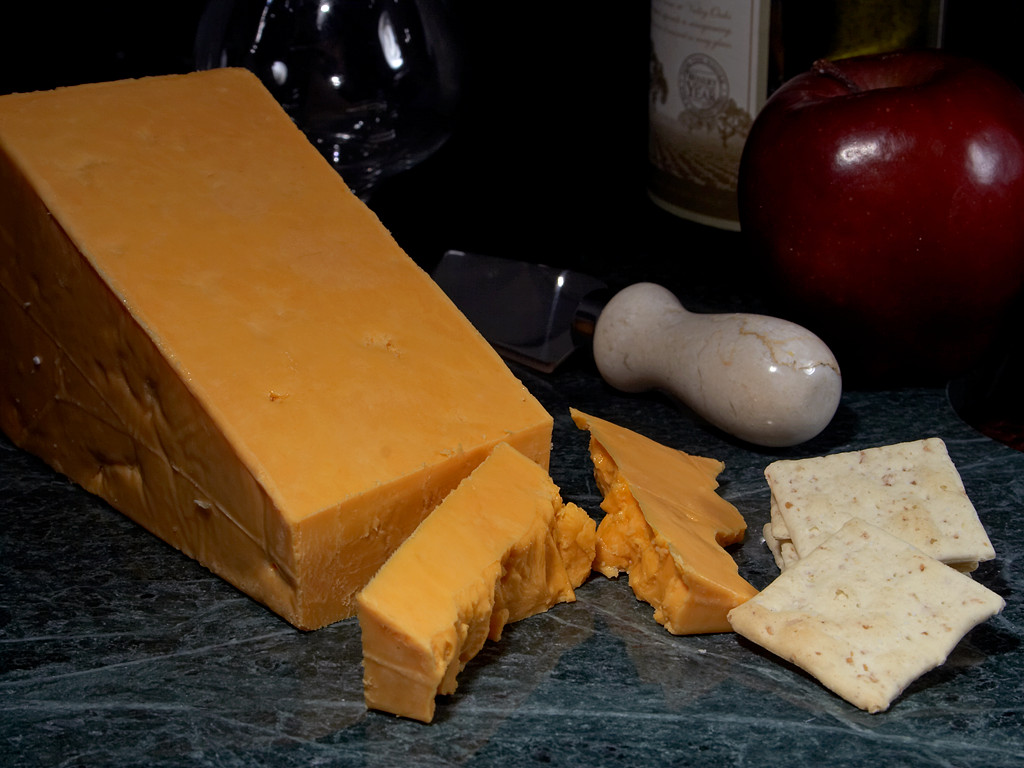 🇬🇧 United KingdomRed Leicester
A hard, crumbly cow's-milk cheese from England, aged for months and coloured with annatto.Cow · Hard · Sweet and caramel
🇬🇧 United KingdomRed Leicester
A hard, crumbly cow's-milk cheese from England, aged for months and coloured with annatto.Cow · Hard · Sweet and caramel
 🇨🇭 SwitzerlandSchabziger
A hard, green whey cheese from Switzerland flavored with blue fenugreek.Cow · Hard · Herbal and grassy
🇨🇭 SwitzerlandSchabziger
A hard, green whey cheese from Switzerland flavored with blue fenugreek.Cow · Hard · Herbal and grassy
 🇩🇪 GermanyHarzer
A low-fat German sour milk cheese from the Harz mountains, often spiced with caraway.Cow · Fresh · Tangy and lactic
🇩🇪 GermanyHarzer
A low-fat German sour milk cheese from the Harz mountains, often spiced with caraway.Cow · Fresh · Tangy and lactic
 🇸🇪 SwedenVästerbottenVästerbottensost
A hard, salty Swedish cow's milk cheese aged at least a year in VästerbottenCow · Hard · Salty
🇸🇪 SwedenVästerbottenVästerbottensost
A hard, salty Swedish cow's milk cheese aged at least a year in VästerbottenCow · Hard · Salty
 🇬🇷 GreeceGravieraγραβιέρα
A hard Greek cheese made from sheep or cow milk, aged for months and marked with a crisscross rind.Sheep · Hard · Sweet and caramel
🇬🇷 GreeceGravieraγραβιέρα
A hard Greek cheese made from sheep or cow milk, aged for months and marked with a crisscross rind.Sheep · Hard · Sweet and caramel
 🇮🇳 India and 1 moreChhenaଛେନ୍ନା / ছানা
A fresh, acid-set cow or buffalo milk cheese from eastern India and Bangladesh.Cow · Fresh · Milky and fresh
🇮🇳 India and 1 moreChhenaଛେନ୍ନା / ছানা
A fresh, acid-set cow or buffalo milk cheese from eastern India and Bangladesh.Cow · Fresh · Milky and fresh
 🇸🇰 SlovakiaParenica
A semi-firm Slovak cheese made from steamed curds, often smoked and woven into spirals.Sheep · Semi-hard · Savoury and brothy
🇸🇰 SlovakiaParenica
A semi-firm Slovak cheese made from steamed curds, often smoked and woven into spirals.Sheep · Semi-hard · Savoury and brothy
 🇫🇷 FranceGaperon
A dome-shaped Auvergne cheese with a white mold rind and garlic-pepper filling.Cow · Bloomy rind · Buttery and creamy
🇫🇷 FranceGaperon
A dome-shaped Auvergne cheese with a white mold rind and garlic-pepper filling.Cow · Bloomy rind · Buttery and creamy
 🇮🇹 ItalyRaschera
A semi-hard cow's-milk cheese from Piedmont with a savory taste and ivory paste.Cow · Semi-hard · Salty
🇮🇹 ItalyRaschera
A semi-hard cow's-milk cheese from Piedmont with a savory taste and ivory paste.Cow · Semi-hard · Salty
 🇧🇷 BrazilMinas cheesequeijo minas
A semi-soft cow's milk cheese from Brazil with fresh and aged varieties.Cow · Semi-soft · Salty
🇧🇷 BrazilMinas cheesequeijo minas
A semi-soft cow's milk cheese from Brazil with fresh and aged varieties.Cow · Semi-soft · Salty
 🇬🇧 United KingdomLancashire cheese
A cow's-milk cheese from England with creamy, nutty, or crumbly varieties.Cow · Semi-hard · Nutty
🇬🇧 United KingdomLancashire cheese
A cow's-milk cheese from England with creamy, nutty, or crumbly varieties.Cow · Semi-hard · Nutty
 🇺🇸 United States and 5 moreSwiss cheese
A yellow, medium-hard cheese with characteristic holes, produced globally in various styles.Cow · Semi-hard · Nutty
🇺🇸 United States and 5 moreSwiss cheese
A yellow, medium-hard cheese with characteristic holes, produced globally in various styles.Cow · Semi-hard · Nutty
 🇬🇧 United KingdomDunlopcàise Dhùn Lùib
A mild Scottish cheese from Ayrshire made with unskimmed cow's milk.Cow · Semi-soft · Sweet and caramel
🇬🇧 United KingdomDunlopcàise Dhùn Lùib
A mild Scottish cheese from Ayrshire made with unskimmed cow's milk.Cow · Semi-soft · Sweet and caramel
 🇲🇽 Mexico and 5 moreOaxaca cheesequeso Oaxaca
A semi-hard, stringy cow's milk cheese from southern Mexico, made using the pasta filata method.Cow · Semi-hard · Milky and fresh
🇲🇽 Mexico and 5 moreOaxaca cheesequeso Oaxaca
A semi-hard, stringy cow's milk cheese from southern Mexico, made using the pasta filata method.Cow · Semi-hard · Milky and fresh
 🇸🇰 Slovakia and 1 moreKorbáčikkorbáčik (Slovak), korbacz (Polish)
A braided string cheese from the Orava region of Slovakia and Poland.Cow · Stretched curd · Salty
🇸🇰 Slovakia and 1 moreKorbáčikkorbáčik (Slovak), korbacz (Polish)
A braided string cheese from the Orava region of Slovakia and Poland.Cow · Stretched curd · Salty
 🇸🇪 SwedenHerrgårdsost
A semi-hard Swedish cow's milk cheese with a waxed rind and nutty flavor.Cow · Semi-hard · Nutty
🇸🇪 SwedenHerrgårdsost
A semi-hard Swedish cow's milk cheese with a waxed rind and nutty flavor.Cow · Semi-hard · Nutty
 🇪🇸 SpainMahónformatge de Maó / queso de Mahón
A cow's-milk cheese from Menorca that ranges from soft and mild to hard and sharp.Cow · Semi-soft · Buttery and creamy
🇪🇸 SpainMahónformatge de Maó / queso de Mahón
A cow's-milk cheese from Menorca that ranges from soft and mild to hard and sharp.Cow · Semi-soft · Buttery and creamy
 🇫🇷 FranceTome des Bauges
A pressed cow's-milk cheese from the French Alps with a grey-brown rind and hazelnut aroma.Cow · Semi-hard · Nutty
🇫🇷 FranceTome des Bauges
A pressed cow's-milk cheese from the French Alps with a grey-brown rind and hazelnut aroma.Cow · Semi-hard · Nutty
 🇮🇹 ItalyCastelmagno
A semi-hard Italian cheese from Piedmont with blue veining and a sharp taste.Cow · Semi-hard · Sharp and tangy-aged
🇮🇹 ItalyCastelmagno
A semi-hard Italian cheese from Piedmont with blue veining and a sharp taste.Cow · Semi-hard · Sharp and tangy-aged
 🇩🇪 Germany and 2 moreWeisslackerWeißlacker
A pungent German cow's-milk cheese aged seven months with a whitewashed rind.Cow · Semi-soft · Pungent and funky
🇩🇪 Germany and 2 moreWeisslackerWeißlacker
A pungent German cow's-milk cheese aged seven months with a whitewashed rind.Cow · Semi-soft · Pungent and funky
Photo credits on this page
The small pictures above come from Wikimedia Commons under free licences. Some are cropped to fit.
- Dunlop: Rosser1954 Roger Griffith, Public domain, source
- Havarti: Unknown author, CC BY-SA 3.0, source
- Brie de Meaux: Coyau, CC BY-SA 3.0, source
- Bleu du Vercors-Sassenage: Damouns, CC BY-SA 4.0, source
- Coulommiers: Myrabella, CC BY-SA 3.0, source
- Minas cheese: The original uploader was Hellkt at German Wikipedia . ( Original text, Public domain, source
- Cheshire: The original uploader was Y6y6y6 at English Wikipedia . Later versions, Public domain, source
- Mahón: Slastic, Public domain, source
- Salers: Coyau, CC BY-SA 3.0, source
- Bel Paese: Jon Sullivan, Public domain, source
- Bleu de Bresse: Unknown author, CC BY-SA 3.0, source
- Olomouc curd cheese: Chmee2, CC BY-SA 3.0, source
- Monterey Jack: Frank Schulenburg, CC BY-SA 3.0, source
- Chhurpi: Arijit Dasgupta, CC BY 2.0, source
- Akkawi: Paul Joseph, CC BY 2.0, source
- Lancashire cheese: Jon Sullivan, Public domain, source
- Tetilla: Tamorlan, CC BY 3.0, source
- Västerbotten: Nata Uploaded by File Upload Bot (Magnus Manske), CC BY 2.0, source
- Castelmagno: Marco Plassio, CC BY-SA 3.0, source
- Saint-Nectaire: Homer Ectus, CC BY-SA 3.0, source
- Vacherin Mont d'Or: Zubro, CC BY-SA 3.0, source
- Tomme de Savoie: Coyau, CC BY-SA 3.0, source
- Fourme de Montbrison: Thesupermat, CC BY-SA 4.0, source
- Leerdammer: M.Minderhoud, CC BY-SA 3.0, source
- Herrgårdsost: -- Holger.Ellgaard ( talk ) 16:26, 29 October 2008 (UTC), CC BY 3.0, source
- Red Leicester: Jon Sullivan, Public domain, source
- São Jorge Cheese: VulcaoAtlantico, CC BY 4.0, source
- Korbáčik: Mariuszjbie, CC BY-SA 3.0, source
- Cancoillotte: Popo le Chien, CC0, source
- Schabziger: Flyout, CC BY-SA 3.0, source
- Raschera: F Ceragioli, CC BY-SA 4.0, source
- Tome des Bauges: Mit-Mit, Public domain, source
- Parenica: Stanislav Doronenko, Public domain, source
- Bread cheese: Teemu Rajala, CC BY 2.5, source
- Chaource: Coyau, CC BY-SA 3.0, source
- Bleu des Causses: Coyau, CC BY-SA 3.0, source
- Cheese curds: Jonathunder, GFDL 1.2, source
- Gaperon: Pymouss, CC BY-SA 4.0, source
- Graviera: Catlemur, CC BY-SA 4.0, source
- Harzer: Unknown author, CC BY-SA 3.0, source
- Raclette du Valais: Martin Steiger, CC0, source
- Swiss cheese: Renee Comet (photographer), Public domain, source
- Chhena: Biswarup Ganguly, CC BY 3.0, source
- Leyden cheese: Edwtie, CC BY-SA 3.0, source
- Cambozola: Jorchr, CC BY-SA 3.0, source
- Weisslacker: Langinger, CC BY-SA 3.0, source
- Oaxaca cheese: Javier Lastras, CC BY 2.0, source
- Port Salut: Jon Sullivan, Public domain, source