
Brie de Meaux
A soft-ripened cow's milk cheese with a white rind from the Brie region of France.
This French cheese is made from raw cow's milk and ripened for six to eight weeks. It features a creamy straw-yellow interior and a delicate white mould rind. The name references the town of Meaux in the Brie region.
- Made from raw cow's milk with a white mould rind
- Received AOC status in 1980
- Ripens for 6 to 8 weeks at controlled temperatures
- Named after the town of Meaux in the Brie region
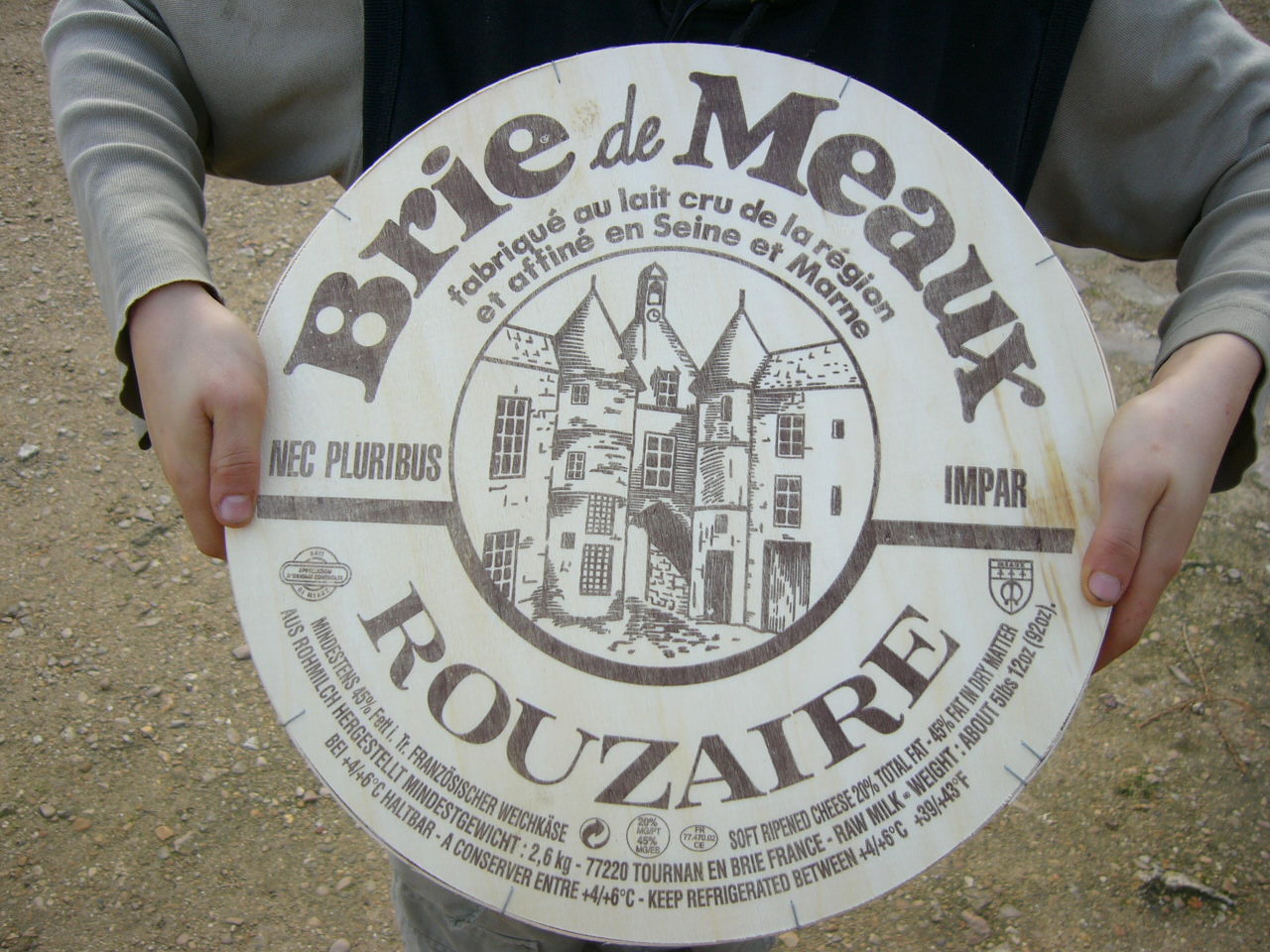
- Weighs about 2.8 kg with a diameter of 36 cm
What is Brie de Meaux?
Brie de Meaux is a celebrated French cheese crafted from unpasteurized cow's milk. Each wheel typically weighs around 2.8 kilograms and measures roughly 36 centimeters across. The exterior displays a soft, edible white mould that protects the paste inside. That interior reveals a pale yellow hue and a smooth, buttery consistency. The texture remains supple and inviting when fully ripe. Its aroma carries gentle dairy notes without being overpowering. Tasters often detect sweet and milky undertones in the flavor profile. The cheese presents as a classic example of soft-ripened varieties.
Where does Brie de Meaux come from?
The cheese takes its name from the town of Meaux within the historic Brie area. A legend links the product to Charlemagne in the eighth century. Stories claim he enjoyed a similar creamy cheese and ordered annual deliveries. These tales appear in later accounts rather than contemporary records. The modern designation received official status in 1980 through the Appellation d'Origine Contrôlée system. This certification helps preserve the traditional methods used by local producers.
What does Brie de Meaux taste like?
The taste centers on fresh dairy qualities with a distinct creaminess. As the cheese ages toward the eight-week mark, the flavors deepen slightly. The rind contributes an earthy mushroom note to the overall experience. The paste offers a silky mouthfeel that melts on the tongue. Salt levels remain balanced to highlight the natural sweetness of the milk. The aroma reflects these mild characteristics without sharp edges.
How Brie de Meaux is made
Producers begin with raw cow's milk placed in tanks for fermentation. Curdling occurs in bowls over the course of an hour. Artisans cut the curds into small cubes using specialized tools. They then shape the mixture by hand into thin layers using brie shovels. Temperature control plays a vital role during whey drainage. The environment shifts from warmer to cooler stages over several days. Salting happens the following day before transfer to curing rooms. Hand-turning ensures even mould development throughout the ripening period.
Brie de Meaux, drawn
How Brie de Meaux is eaten and cooked
This cheese serves best when presented on a wooden board alongside crusty bread. It pairs well with fruit and nuts for a simple snack. The creamy texture makes it suitable for warm dishes where it melts smoothly. Cooks sometimes bake it whole or incorporate it into savory tarts. It works equally well at room temperature for lunch or dinner gatherings. The mild flavor allows it to complement various accompaniments without dominating them.
Brie de Meaux through the day
Diners enjoy this cheese primarily during lunch and dinner service. It functions as a centerpiece for cheese boards served before main courses. The soft nature makes it ideal for casual snacking between meals. Some households include it in festive spreads for holiday dinners. Its versatility allows it to bridge the gap between appetizer and dessert depending on pairings.
Brie de Meaux in the world's kitchens
French gastronomy holds this cheese in high regard as a regional specialty. Producers operate mainly in surrounding departments like Seine-et-Marne and Loiret. The production zone extends beyond immediate proximity to Meaux itself. Local traditions emphasize handcrafted techniques passed down through generations. International markets recognize the quality associated with the protected designation.
At a glance: where it turns up
By meal and use
Cuisines

Faith and ritual
No specific religious rituals or dietary laws govern the consumption of this cheese. It does not hold a central place in monastic traditions or fasting periods. The production relies on secular agricultural practices rather than spiritual observances. Vegetarian concerns regarding rennet sources are not explicitly detailed in historical records.
Brie de Meaux at celebrations
Talleyrand reportedly praised the cheese as the king of cheeses during the Congress of Vienna in 1815. This anecdote highlights its prestige among European elites. Modern celebrations focus on local harvest festivals and agricultural fairs. The cheese appears frequently at community events celebrating regional produce.
Custom and folk tradition
Local lore connects the cheese to ancient Frankish history and imperial courts. Farmers in the Brie region have maintained production methods for centuries. The emphasis on manual shaping and turning preserves artisanal standards. Community identity remains tied to the land and the specific microclimate of the area.
Buying, keeping and serving Brie de Meaux
Keep the cheese wrapped in wax paper or cheese cloth in the refrigerator. Consume it within a few days of purchase for optimal freshness. Allow it to reach room temperature before serving to enhance flavor release. Avoid freezing as it damages the delicate texture and alters the taste profile.
What to use instead of Brie de Meaux
Other soft-ripened cow's milk cheeses may serve as alternatives if unavailable. Brie Norman or similar regional varieties offer comparable textures. However, the specific terroir and aging process of Brie de Meaux create unique characteristics difficult to replicate exactly.
Protection and trade
Production volumes reached approximately 6,774 tonnes in 2003. This figure represented a decline from previous years. The Protected Designation of Origin rules strictly limit where the cheese can be made. Only approved departments contribute to the final product. Export markets value the authenticity guaranteed by the AOC label.
Questions people ask about Brie de Meaux
Where does Brie de Meaux come from?
It originates in the Brie region of France, specifically named after the town of Meaux. Production is restricted to certain departments under AOC regulations.
What kind of milk is used to make it?
The cheese is made exclusively from raw, unpasteurized cow's milk. This gives it a distinct creamy texture and mild flavor.
How long is Brie de Meaux aged?
It is typically ripened for six to eight weeks. During this time, it develops its characteristic white rind and soft interior.
What does it taste like?
It offers a milky, buttery flavor with earthy notes from the rind. The texture is soft and creamy, melting easily in the mouth.
Is it a hard or soft cheese?
It is a soft-ripened cheese. The paste is supple and creamy, surrounded by an edible white mould rind.
Good reading and sources
- Brie de Meaux on WikipediaEncyclopedia
- More photos on Wikimedia CommonsPhotos and video
- Wikidata recordOpen data
The facts on this page come from the Wikipedia article "Brie de Meaux", written by its contributors and used under the CC BY-SA 4.0 licence, and from its Wikidata record (CC0). EveryCheese rewrote the text in its own words, with AI assistance, and compares every page with the article to make sure no passage is copied. It may be reused under the same CC BY-SA 4.0 licence with a link back.
It may contain mistakes. Recipes, ageing and customs differ from one dairy, valley or kitchen to the next. Folk beliefs are described as tradition, never as advice. If something is wrong, tell us. Last refreshed 2026-10-15.
More from France
All the cheeses of France 🇫🇷 FranceCamembert
A soft-ripened cow's milk cheese from Normandy with a white mould rindCow · Bloomy rind · Earthy and cellar
🇫🇷 FranceCamembert
A soft-ripened cow's milk cheese from Normandy with a white mould rindCow · Bloomy rind · Earthy and cellar
 🇬🇷 Greece and 5 moreFetaφέτα
A crumbly Greek brined cheese made from sheep and goat milk.Sheep · Brined · Tangy and lactic
🇫🇷 FranceClochette
A small bell-shaped goat cheese from France with a wrinkled white rind and firm texture.Goat · Bloomy rind · Tangy and lactic
🇫🇷 FranceRoule cheese
A soft, herb and garlic flavoured cow's milk cheese rolled into a spiral shape.Cow · Bloomy rind · Herbal and grassy
🇬🇷 Greece and 5 moreFetaφέτα
A crumbly Greek brined cheese made from sheep and goat milk.Sheep · Brined · Tangy and lactic
🇫🇷 FranceClochette
A small bell-shaped goat cheese from France with a wrinkled white rind and firm texture.Goat · Bloomy rind · Tangy and lactic
🇫🇷 FranceRoule cheese
A soft, herb and garlic flavoured cow's milk cheese rolled into a spiral shape.Cow · Bloomy rind · Herbal and grassy
Its cousins elsewhere
All bloomy rind cheeses 🇺🇸 United States and 2 moreCottage cheese
A fresh, unaged curd cheese made from skimmed milk and dressed with cream.Cow · Fresh · Tangy and lactic
🇺🇸 United States and 2 moreCottage cheese
A fresh, unaged curd cheese made from skimmed milk and dressed with cream.Cow · Fresh · Tangy and lactic
 🇨🇦 CanadaBleu d'Élizabeth
A thermized cow's milk blue cheese from Sainte-Élizabeth-de-Warwick, Quebec.Cow · Semi-hard · Buttery and creamy
🇮🇱 Israel and 1 moreGvina levanaגבינה לבנה
A soft, unripened cow's-milk cheese spread on bread in Israel.Cow · Fresh · Tangy and lactic
🇺🇸 United States and 1 morePot cheese
A soft, crumbly, unaged cow's-milk cheese popular in North America and Austria.Cow · Fresh · Milky and fresh
🇨🇦 CanadaBleu d'Élizabeth
A thermized cow's milk blue cheese from Sainte-Élizabeth-de-Warwick, Quebec.Cow · Semi-hard · Buttery and creamy
🇮🇱 Israel and 1 moreGvina levanaגבינה לבנה
A soft, unripened cow's-milk cheese spread on bread in Israel.Cow · Fresh · Tangy and lactic
🇺🇸 United States and 1 morePot cheese
A soft, crumbly, unaged cow's-milk cheese popular in North America and Austria.Cow · Fresh · Milky and fresh