Cheeses for cheese boards
Served on its own, sliced or cut at the table, with bread, fruit and something to drink.
A cheese board serves cheese for its own sake, cut at the table and eaten with bread, fruit and something to drink. In France it comes after the main course and before dessert; in Britain and Ireland, often after dessert with a glass of port; in Spain and Italy, as tapas or antipasto. A good board balances styles, milks and strengths, so that each cheese shows off the others.
Building a board
Three to five cheeses are plenty for most tables. A common pattern is one of each kind: a soft bloomy or fresh goat cheese, a firm aged cheese such as Comté or Manchego, a blue, and perhaps a washed rind. Mixing cow's, goat's and sheep's milk adds variety. Allow about 30 to 50 grams of each cheese per person after a meal, and more if the board is the meal. Take the cheeses out of the fridge an hour before serving.
Order and cutting
Taste from mild to strong, so that a blue or a washed rind comes last. Cut each cheese so that everyone gets a fair share of rind and centre: wedges from the middle of a round, long slices along a wedge of hard cheese. An old rule of etiquette says never to cut the point off a wedge of Brie, which leaves the next person with only rind. Use a separate knife for blues and strong cheeses, so their flavour does not travel.
What goes with it
Bread and plain crackers, fresh and dried fruit, nuts, honey and fruit pastes are the usual partners. Spain serves Manchego with membrillo, quince paste; Britain serves Stilton with port; France eats its board with bread and red wine. In India, cheese boards from the country's growing number of artisan dairies set Bandel, Kalimpong and hill-farm cheeses beside chutneys, fresh fruit and roasted nuts.
Worth knowing
- Comté: A firm, nutty anchor for any board
- Brie de Meaux: The classic soft cheese
- Stilton: Blue served with port
- Manchego: Served with quince paste
- Roquefort: Sheep's milk blue for the end of the board
- Crottin de Chavignol: A fresh goat note
- Époisses: A strong washed rind to finish
- Kalimpong cheese: A mild Indian hill cheese
Sources and further reading
Original text by the EveryCheese desk, written with AI assistance and checked against the sources above. Customs are described as tradition, not as advice. If we have something wrong, tell us.
Cheese boards on EveryCheese
The cheeses written up so far, best known first.
 🇬🇷 Greece and 5 moreFetaφέτα
A crumbly Greek brined cheese made from sheep and goat milk.Sheep · Brined · Tangy and lactic
🇬🇷 Greece and 5 moreFetaφέτα
A crumbly Greek brined cheese made from sheep and goat milk.Sheep · Brined · Tangy and lactic
 🇪🇬 EgyptMishمش (meš)
A fermented Egyptian salty cheese aged in buttermilk brine until sharp and pungent.Mixed · Bloomy rind · Salty
🇪🇬 EgyptMishمش (meš)
A fermented Egyptian salty cheese aged in buttermilk brine until sharp and pungent.Mixed · Bloomy rind · Salty
 🇬🇪 GeorgiaGuda cheeseგუდის ყველი
A salted sheep's-milk cheese ripened inside a leather wineskin in the Georgian mountains.Sheep · Semi-hard · Salty
🇬🇪 GeorgiaGuda cheeseგუდის ყველი
A salted sheep's-milk cheese ripened inside a leather wineskin in the Georgian mountains.Sheep · Semi-hard · Salty
 🇹🇷 TurkeyGolot cheese
A granular, pressed Turkish whey cheese from the Eastern Black Sea region.Mixed · Semi-hard · Salty
🇹🇷 TurkeyGolot cheese
A granular, pressed Turkish whey cheese from the Eastern Black Sea region.Mixed · Semi-hard · Salty
 🇷🇴 RomaniaBrânză de coșuleț
A lightly smoked sheep's milk cheese from Transylvania, cured in fir bark.Sheep · Smoked · Salty
🇸🇪 Sweden and 1 moreBondostbond-ost
A firm Swedish cow's-milk cheese aged in brine for six to eight weeks.Cow · Semi-hard · Salty
🇳🇱 NetherlandsRoomano
An aged hard cow's-milk cheese from Friesland with less butterfat than standard Gouda.Cow · Hard · Salty
🇷🇴 RomaniaBrânză de coșuleț
A lightly smoked sheep's milk cheese from Transylvania, cured in fir bark.Sheep · Smoked · Salty
🇸🇪 Sweden and 1 moreBondostbond-ost
A firm Swedish cow's-milk cheese aged in brine for six to eight weeks.Cow · Semi-hard · Salty
🇳🇱 NetherlandsRoomano
An aged hard cow's-milk cheese from Friesland with less butterfat than standard Gouda.Cow · Hard · Salty
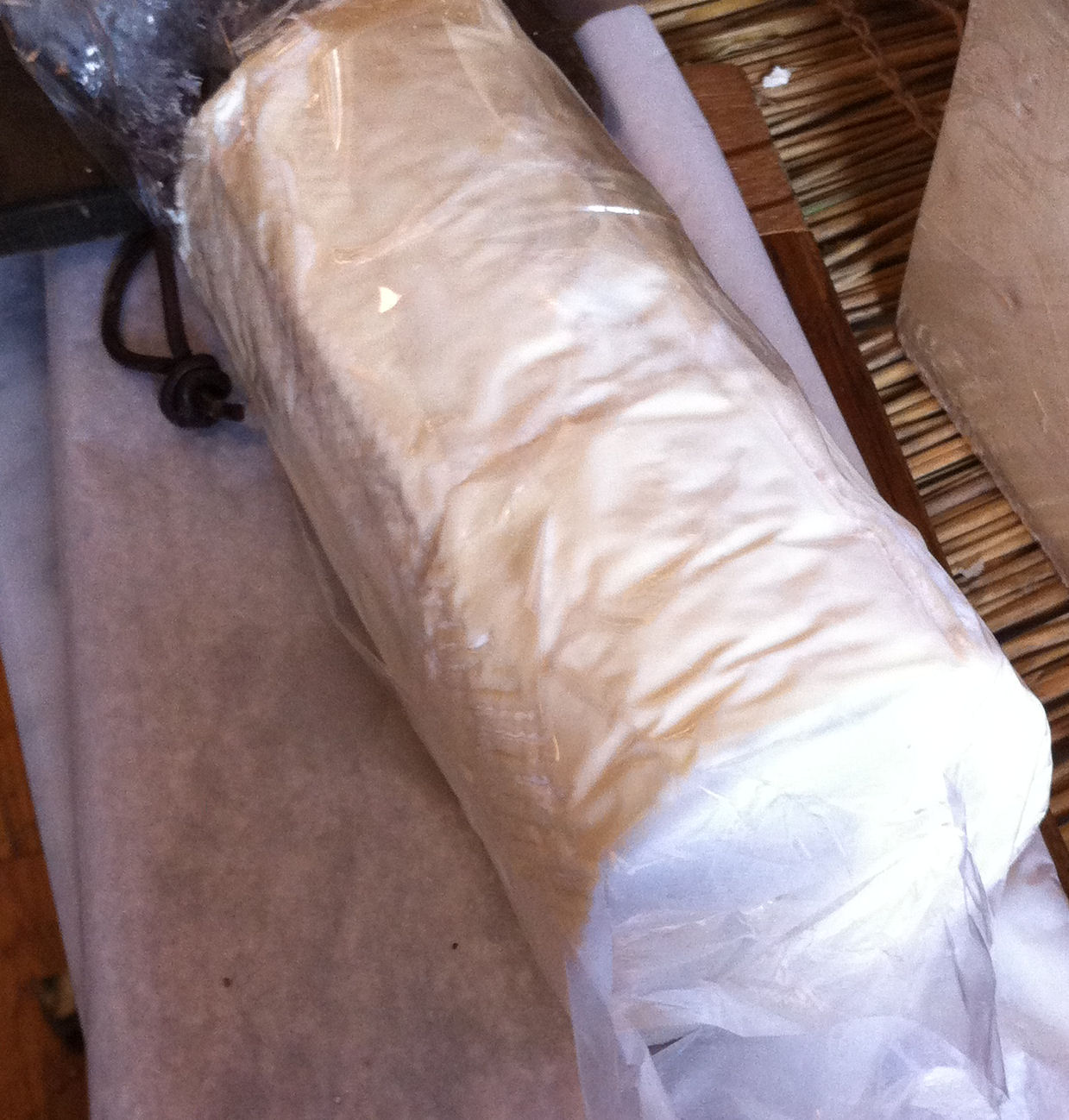 🇮🇪 IrelandSt Tola
Handmade goat's milk cheese from Inagh, County Clare, ranging from fresh logs to aged wheels.Goat · Fresh · Tangy and lactic
🇮🇪 IrelandSt Tola
Handmade goat's milk cheese from Inagh, County Clare, ranging from fresh logs to aged wheels.Goat · Fresh · Tangy and lactic
 🇪🇸 SpainPata de mulo cheese
A tubular, hard ewe's-milk cheese from Spain, shaped like a mule's leg.Sheep · Hard · Salty
🇪🇸 SpainPata de mulo cheese
A tubular, hard ewe's-milk cheese from Spain, shaped like a mule's leg.Sheep · Hard · Salty
 🇹🇷 Turkey and 1 moreBasket cheesesepet peyniri
A fresh, unsalted or lightly salted whey and curd cheese shaped in reed baskets from the Aegean coast.Goat · Fresh · Milky and fresh
🇹🇷 Turkey and 1 moreBasket cheesesepet peyniri
A fresh, unsalted or lightly salted whey and curd cheese shaped in reed baskets from the Aegean coast.Goat · Fresh · Milky and fresh
 🇦🇹 Austria and 1 moreTyrolean grey cheeseTiroler Graukäse
A low-fat cow's milk acid-curd quark from the Tyrolean Alps with a moulded rind.Cow · Fresh · Tangy and lactic
🇦🇹 Austria and 1 moreTyrolean grey cheeseTiroler Graukäse
A low-fat cow's milk acid-curd quark from the Tyrolean Alps with a moulded rind.Cow · Fresh · Tangy and lactic
 🇫🇷 FranceRoquefortRòcafòrt
A raw sheep's milk blue cheese aged in the Combalou caves of southern France.Sheep · Semi-hard · Tangy and lactic
🇫🇷 FranceRoquefortRòcafòrt
A raw sheep's milk blue cheese aged in the Combalou caves of southern France.Sheep · Semi-hard · Tangy and lactic
 🇳🇱 Netherlands and 5 moreEdamEdammer
A semi-hard Dutch cow's-milk cheese aged in distinctive red wax spheres.Cow · Semi-hard · Nutty
🇳🇱 Netherlands and 5 moreEdamEdammer
A semi-hard Dutch cow's-milk cheese aged in distinctive red wax spheres.Cow · Semi-hard · Nutty
 🇫🇷 France and 2 moreBlue cheese
A family of cheeses defined by blue-green mold veins created through deliberate inoculation and piercing.Cow · Semi-soft · Sharp and tangy-aged
🇫🇷 France and 2 moreBlue cheese
A family of cheeses defined by blue-green mold veins created through deliberate inoculation and piercing.Cow · Semi-soft · Sharp and tangy-aged
 🇮🇹 ItalyPecorino
A family of Italian hard sheep's-milk cheeses with protected status.Sheep · Hard · Buttery and creamy
🇮🇹 ItalyPecorino
A family of Italian hard sheep's-milk cheeses with protected status.Sheep · Hard · Buttery and creamy
 🇮🇹 ItalyGrana Padano
A hard, grainy Italian cow's-milk cheese aged for at least nine months in the Po Valley.Cow · Hard · Nutty
🇮🇹 ItalyGrana Padano
A hard, grainy Italian cow's-milk cheese aged for at least nine months in the Po Valley.Cow · Hard · Nutty
 🇫🇷 FranceComté
A hard, cooked-pressed cow's milk cheese from eastern France, aged up to three years.Cow · Semi-hard · Nutty
🇫🇷 FranceComté
A hard, cooked-pressed cow's milk cheese from eastern France, aged up to three years.Cow · Semi-hard · Nutty
 🇧🇬 Bulgaria and 5 moreKashkavalkaşkaval
A semi-hard yellow cheese from cow, sheep, or goat milk, popular across the Balkans and Turkey.Cow · Semi-hard · Milky and fresh
🇧🇬 Bulgaria and 5 moreKashkavalkaşkaval
A semi-hard yellow cheese from cow, sheep, or goat milk, popular across the Balkans and Turkey.Cow · Semi-hard · Milky and fresh
 🇫🇷 FranceFrench NeufchâtelNeufchâtel
A soft, grainy Normandy cow's-milk cheese with a bloomy rind, aged for two months.Cow · Bloomy rind · Salty
🇫🇷 FranceFrench NeufchâtelNeufchâtel
A soft, grainy Normandy cow's-milk cheese with a bloomy rind, aged for two months.Cow · Bloomy rind · Salty
 🇵🇱 PolandOscypek
A smoked, spindle-shaped sheep's milk cheese from Poland's Tatra Mountains.Sheep · Smoked · Salty
🇵🇱 PolandOscypek
A smoked, spindle-shaped sheep's milk cheese from Poland's Tatra Mountains.Sheep · Smoked · Salty
 🇬🇧 United KingdomCaerphilly
A hard, crumbly cow's-milk cheese from South Wales with a mild lemony taste.Cow · Hard · Tangy and lactic
🇬🇧 United KingdomCaerphilly
A hard, crumbly cow's-milk cheese from South Wales with a mild lemony taste.Cow · Hard · Tangy and lactic
 🇫🇷 FranceChaource
A soft-ripened cow's-milk cheese from north-eastern France with a white mould rind.Cow · Bloomy rind · Salty
🇫🇷 FranceChaource
A soft-ripened cow's-milk cheese from north-eastern France with a white mould rind.Cow · Bloomy rind · Salty
 🇳🇴 NorwayGamalostgammelost
A firm, sour Norwegian cheese made from skimmed cow's milk and aged for several weeks.Cow · Semi-hard · Tangy and lactic
🇳🇴 NorwayGamalostgammelost
A firm, sour Norwegian cheese made from skimmed cow's milk and aged for several weeks.Cow · Semi-hard · Tangy and lactic
 🇸🇾 Syria and 5 moreAkkawiجبنة عكاوي
A white brined cow's milk cheese from the Levant named after Acre.Cow · Brined · Salty
🇸🇾 Syria and 5 moreAkkawiجبنة عكاوي
A white brined cow's milk cheese from the Levant named after Acre.Cow · Brined · Salty
 🇫🇷 FrancePouligny-Saint-Pierre
A pyramidal goat cheese from central France with a mouldy rind and crumbly white paste.Goat · Bloomy rind · Salty
🇫🇷 FrancePouligny-Saint-Pierre
A pyramidal goat cheese from central France with a mouldy rind and crumbly white paste.Goat · Bloomy rind · Salty
 🇦🇲 Armenia and 4 moreChechilչեչիլ
A brined, stringy pasta filata cheese from the Caucasus region.Mixed · Brined · Salty
🇦🇲 Armenia and 4 moreChechilչեչիլ
A brined, stringy pasta filata cheese from the Caucasus region.Mixed · Brined · Salty
 🇫🇷 FrancePicodon
A small, spicy goat cheese from southern France with a rind that turns golden as it ages.Goat · Bloomy rind · Tangy and lactic
🇫🇷 FrancePicodon
A small, spicy goat cheese from southern France with a rind that turns golden as it ages.Goat · Bloomy rind · Tangy and lactic
 🇪🇸 SpainTorta del CasarTorta del Casal
A creamy sheep's milk cheese from Extremadura, coagulated with cardoon and aged for at least two months.Sheep · Semi-soft · Salty
🇪🇸 SpainTorta del CasarTorta del Casal
A creamy sheep's milk cheese from Extremadura, coagulated with cardoon and aged for at least two months.Sheep · Semi-soft · Salty
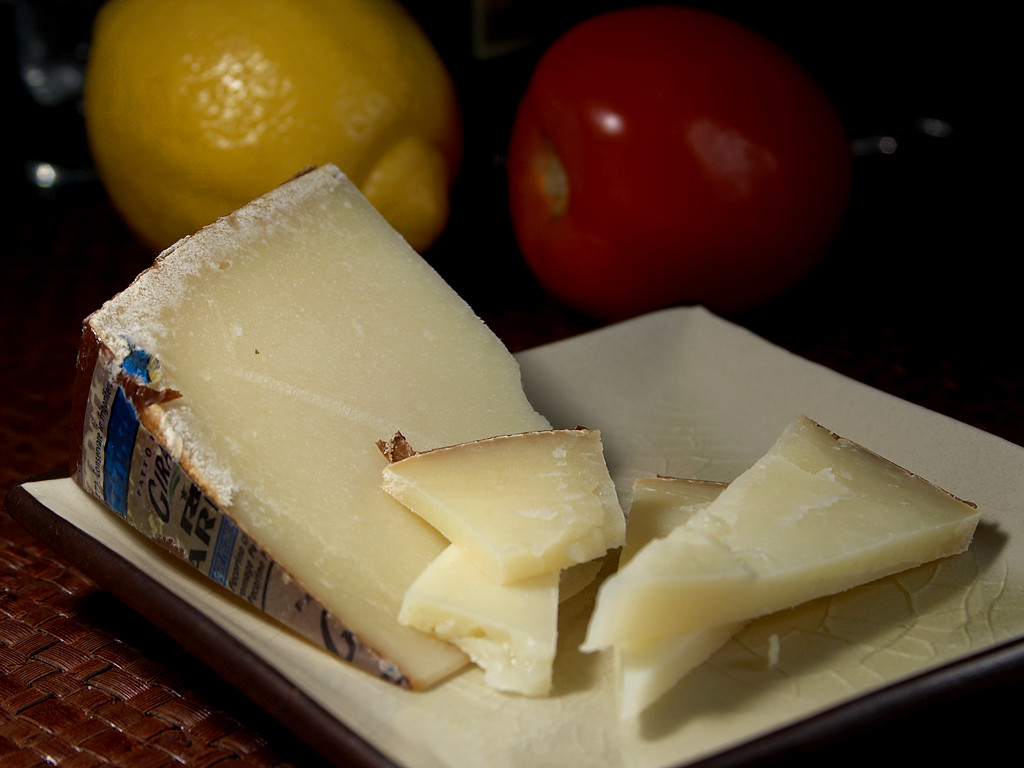 🇮🇹 ItalyPecorino Sardoberveghinu sardu
A hard, pressed sheep's milk cheese from Sardinia with two distinct age profiles.Sheep · Hard · Sharp and tangy-aged
🇮🇹 ItalyPecorino Sardoberveghinu sardu
A hard, pressed sheep's milk cheese from Sardinia with two distinct age profiles.Sheep · Hard · Sharp and tangy-aged
 🇸🇪 SwedenVästerbottenVästerbottensost
A hard, salty Swedish cow's milk cheese aged at least a year in VästerbottenCow · Hard · Salty
🇸🇪 SwedenVästerbottenVästerbottensost
A hard, salty Swedish cow's milk cheese aged at least a year in VästerbottenCow · Hard · Salty
 🇧🇷 BrazilMinas cheesequeijo minas
A semi-soft cow's milk cheese from Brazil with fresh and aged varieties.Cow · Semi-soft · Salty
🇧🇷 BrazilMinas cheesequeijo minas
A semi-soft cow's milk cheese from Brazil with fresh and aged varieties.Cow · Semi-soft · Salty
 🇫🇷 FranceSelles-sur-Cher
A small cylindrical goat cheese with a grey-blue mould rind from Centre-Val de Loire.Goat · Bloomy rind · Salty
🇫🇷 FranceSelles-sur-Cher
A small cylindrical goat cheese with a grey-blue mould rind from Centre-Val de Loire.Goat · Bloomy rind · Salty
 🇭🇷 CroatiaPag cheesePaški sir
A hard sheep's-milk cheese from Croatia's Pag island, aged up to eighteen months.Sheep · Hard · Salty
🇭🇷 CroatiaPag cheesePaški sir
A hard sheep's-milk cheese from Croatia's Pag island, aged up to eighteen months.Sheep · Hard · Salty
 🇸🇰 Slovakia and 1 moreKorbáčikkorbáčik (Slovak), korbacz (Polish)
A braided string cheese from the Orava region of Slovakia and Poland.Cow · Stretched curd · Salty
🇸🇰 Slovakia and 1 moreKorbáčikkorbáčik (Slovak), korbacz (Polish)
A braided string cheese from the Orava region of Slovakia and Poland.Cow · Stretched curd · Salty
 🇪🇸 SpainMahónformatge de Maó / queso de Mahón
A cow's-milk cheese from Menorca that ranges from soft and mild to hard and sharp.Cow · Semi-soft · Buttery and creamy
🇪🇸 SpainMahónformatge de Maó / queso de Mahón
A cow's-milk cheese from Menorca that ranges from soft and mild to hard and sharp.Cow · Semi-soft · Buttery and creamy
 🇩🇪 GermanyMilbenkäse
A German quark cheese ripened with living cheese mites in rye flour.Cow · Bloomy rind · Sharp and tangy-aged
🇩🇪 GermanyMilbenkäse
A German quark cheese ripened with living cheese mites in rye flour.Cow · Bloomy rind · Sharp and tangy-aged
 🇪🇬 Egypt and 1 moreRumiجبنة رومى
A hard, salty Egyptian cow or buffalo milk cheese with a pungent aroma.Cow · Hard · Salty
🇪🇬 Egypt and 1 moreRumiجبنة رومى
A hard, salty Egyptian cow or buffalo milk cheese with a pungent aroma.Cow · Hard · Salty
 🇵🇹 PortugalCheese of PicoQueijo do Pico
A soft, salty cow's-milk cheese from the Azores island of Pico, aged for three weeks.Cow · Salty
🇵🇹 PortugalCheese of PicoQueijo do Pico
A soft, salty cow's-milk cheese from the Azores island of Pico, aged for three weeks.Cow · Salty
 🇫🇷 FranceSaint AgurSant Agur
A soft, double-cream French blue cheese with olive-green veins and a mild spicy taste.Cow · Bloomy rind · Tangy and lactic
🇫🇷 FranceSaint AgurSant Agur
A soft, double-cream French blue cheese with olive-green veins and a mild spicy taste.Cow · Bloomy rind · Tangy and lactic
 🇨🇭 SwitzerlandBerner AlpkäseBerner Hobelkäse
A hard, hole-free Swiss cheese from the Bernese Alps, aged up to two years.Cow · Hard · Salty
🇨🇭 SwitzerlandBerner AlpkäseBerner Hobelkäse
A hard, hole-free Swiss cheese from the Bernese Alps, aged up to two years.Cow · Hard · Salty
 🇸🇪 SwedenÄdelost
A pasteurized cow's-milk blue cheese from Sweden with a creamy texture and sharp flavor.Cow · Blue · Sharp and tangy-aged
🇸🇪 SwedenÄdelost
A pasteurized cow's-milk blue cheese from Sweden with a creamy texture and sharp flavor.Cow · Blue · Sharp and tangy-aged
 🇫🇷 FranceTomme des PyrénéesToma de Pirenèus
A rustic pressed cheese from the French Pyrenees, made from cow, sheep or goat milk.Cow · Semi-hard · Salty
🇫🇷 FranceTomme des PyrénéesToma de Pirenèus
A rustic pressed cheese from the French Pyrenees, made from cow, sheep or goat milk.Cow · Semi-hard · Salty
 🇮🇹 ItalyPecorino Toscano
A firm Tuscan sheep's milk cheese with PDO status since 1996.Sheep · Hard · Salty
🇮🇹 ItalyPecorino Toscano
A firm Tuscan sheep's milk cheese with PDO status since 1996.Sheep · Hard · Salty
 🇵🇱 PolandRedykołka
A smoked, salted sheep's milk cheese from Poland's Podhale region, shaped like animals or hearts.Sheep · Semi-hard · Salty
🇫🇷 FranceVieux-Boulogne
A soft, beer-washed cow's milk cheese from northern France known for its intense aroma.Cow · Bloomy rind · Salty
🇵🇱 PolandRedykołka
A smoked, salted sheep's milk cheese from Poland's Podhale region, shaped like animals or hearts.Sheep · Semi-hard · Salty
🇫🇷 FranceVieux-Boulogne
A soft, beer-washed cow's milk cheese from northern France known for its intense aroma.Cow · Bloomy rind · Salty
 🇪🇸 SpainSan Simón da Costa
A pear-shaped, smoked cow's milk cheese from Galicia with a smooth brown rind.Cow · Semi-hard · Salty
🇪🇸 SpainSan Simón da Costa
A pear-shaped, smoked cow's milk cheese from Galicia with a smooth brown rind.Cow · Semi-hard · Salty
 🇮🇹 ItalyPecorino di Filiano
A firm sheep's milk cheese from Basilicata with PDO status since 2007.Sheep · Hard · Salty
🇮🇹 ItalyPecorino di Filiano
A firm sheep's milk cheese from Basilicata with PDO status since 2007.Sheep · Hard · Salty
 🇳🇱 NetherlandsBoerenkaas
A Dutch semi-hard raw milk cheese with TSG protection, often spiced and farm-made.Cow · Semi-hard · Salty
🇳🇱 NetherlandsBoerenkaas
A Dutch semi-hard raw milk cheese with TSG protection, often spiced and farm-made.Cow · Semi-hard · Salty
Photo credits on this page
The small pictures above come from Wikimedia Commons under free licences. Some are cropped to fit.
- Tyrolean grey cheese: Jürgele, CC BY-SA 3.0, source
- Minas cheese: The original uploader was Hellkt at German Wikipedia . ( Original text, Public domain, source
- Guda cheese: Jonathan Cardy, CC BY-SA 3.0, source
- Caerphilly: Jon Sullivan, Public domain, source
- Mahón: Slastic, Public domain, source
- French Neufchâtel: Coyau, CC BY-SA 3.0, source
- Friesian Clove: Takeaway, CC BY-SA 4.0, source
- Akkawi: Paul Joseph, CC BY 2.0, source
- Västerbotten: Nata Uploaded by File Upload Bot (Magnus Manske), CC BY 2.0, source
- Gamalost: Quick fix, CC BY 2.0, source
- Saint Agur: Micah Anderson, Public domain, source
- Pecorino Sardo: The original uploader was Frankie816 at English Wikipedia ., Public domain, source
- Pouligny-Saint-Pierre: Coyau, CC BY-SA 3.0, source
- Pecorino: Ji-Elle, CC BY-SA 3.0, source
- Pag cheese: Silverije, CC BY-SA 4.0, source
- Rumi: summer photo hobby, CC BY 2.0, source
- Redykołka: MOs810, CC BY-SA 4.0, source
- Pecorino Toscano: Dan, CC BY-SA 2.0, source
- Tomme des Pyrénées: Julie333411, CC BY-SA 4.0, source
- Feta: Unknown author, CC BY-SA 3.0, source
- Ädelost: Jorchr, CC BY-SA 3.0, source
- Korbáčik: Mariuszjbie, CC BY-SA 3.0, source
- Comté: Myrabella, CC BY-SA 3.0, source
- Edam: Yvwv, CC BY-SA 3.0, source
- San Simón da Costa: Tamorlan, CC BY 3.0, source
- Basket cheese: E4024, CC BY-SA 4.0, source
- Pata de mulo cheese: Triplecaña, CC BY-SA 4.0, source
- St Tola: HighKing, CC BY-SA 3.0, source
- Brânză de coșuleț: Vlad.saileanu at en.wikipedia, Public domain, source
- Golot cheese: E4024, CC BY-SA 4.0, source
- Mish: Reem Al-Kashif, CC BY-SA 4.0, source
- Berner Alpkäse: Mike Lehmann, Mike Switzerland 11:02, 19 November 2006 (UTC), CC BY-SA 3.0, source
- Torta del Casar: MollySVH, CC BY 2.0, source
- Roquefort: Thesupermat, CC BY-SA 4.0, source
- Milbenkäse: Benutzer:Dundak at de.wikipedia, CC BY-SA 3.0, source
- Picodon: Thesupermat, CC BY-SA 4.0, source
- Chechil: Valen1988, CC BY-SA 4.0, source
- Grana Padano: Claudia Castaldi, CC BY-SA 4.0, source
- Chaource: Coyau, CC BY-SA 3.0, source
- Selles-sur-Cher: Myrabella, CC BY-SA 3.0, source
- Oscypek: Pawel Swiegoda ( Paberu ), CC BY-SA 2.5, source
- Danish Blue: No machine-readable author provided. Brookie assumed (based on copyrig, CC BY-SA 3.0, source
- Kashkaval: Nnikolce, Public domain, source
- Cheese of Pico: Adriao, CC BY 3.0, source
- Pecorino di Filiano: Rlucia, CC BY 3.0, source