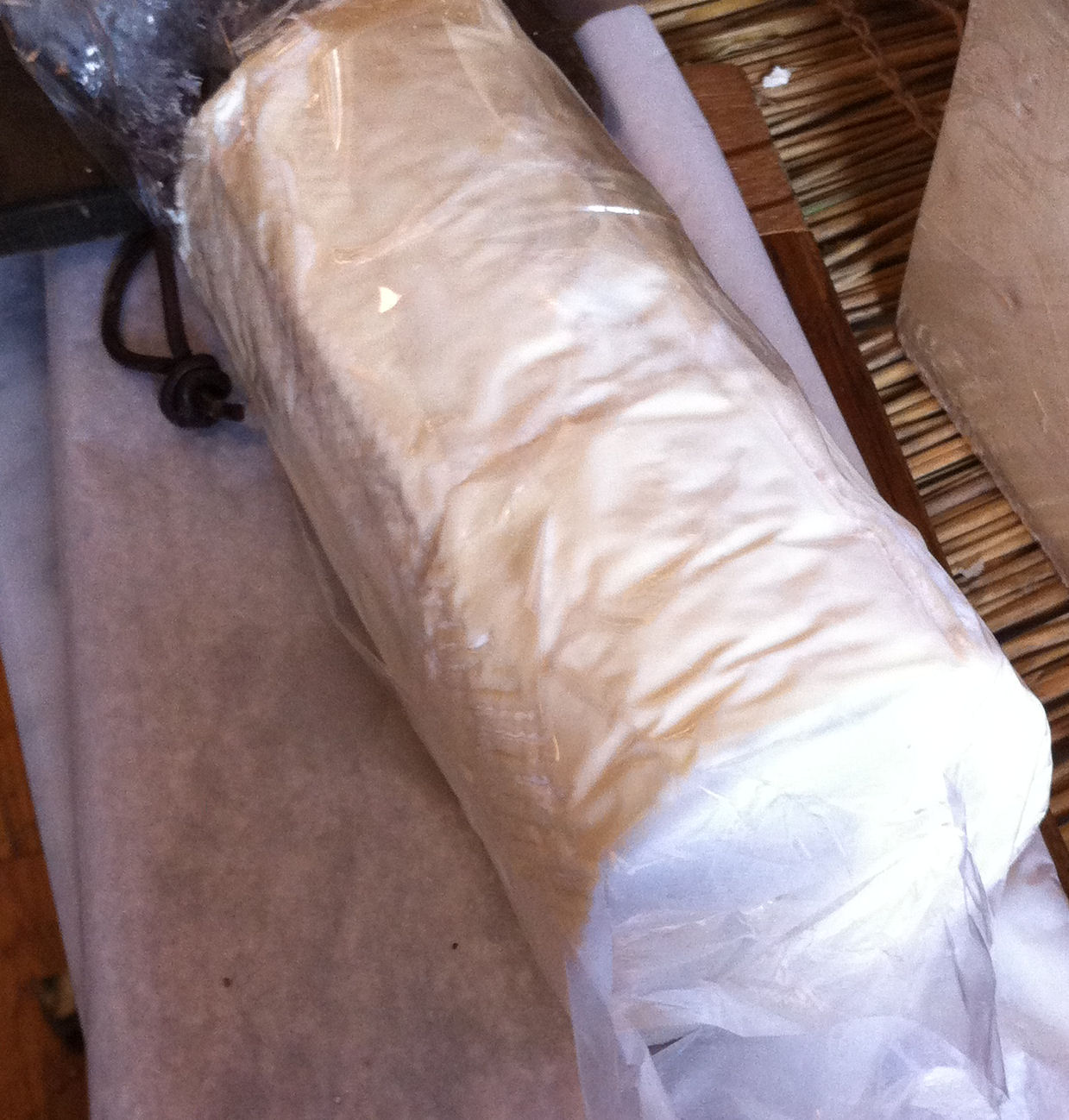
St Tola
Handmade goat's milk cheese from Inagh, County Clare, ranging from fresh logs to aged wheels.
St Tola is a range of handmade goat's milk cheeses produced in Inagh, County Clare, Ireland. The variety spans from soft fresh logs and spreadable creams to firm, Gouda-style hard cheeses, often featuring ash-coated rinds or fruit infusions like cranberry.
- Handmade goat's milk cheese from Inagh, County Clare, Ireland.
- Range includes fresh logs, crottins, spreads, and hard Gouda-style wheels.
- Some varieties feature ash coatings or cranberry infusions.
- Won Gold at the World Cheese Awards and multiple Great Taste Awards.
- Production shifted to Siobhán Ni Ghairbhith in 1999 after founders Meg and Derrick Gordan.
What is St Tola?
St Tola represents a collection of handmade cheeses crafted exclusively from goat’s milk. Produced in the village of Inagh within County Clare, Ireland, the range offers diverse textures and forms. Options include fresh soft logs, small rounds known as crottins, and creamy spreads. The selection also extends to firmer varieties, such as a Gouda-style hard cheese and a Greek-style option with a mild salty profile. Some products feature distinctive ash coatings on their rinds, while others are infused with ingredients like cranberries. The paste ranges from white and creamy in the fresh styles to firmer and more structured in the aged versions.
Where does St Tola come from?
The enterprise began in the early 1980s when Meg and Derrick Gordan established the business on their twenty-five-acre farm in County Clare. Production continued under their stewardship for nearly two decades. In 1999, ownership and cheesemaking responsibilities transferred to their neighbour, Siobhán Ni Ghairbhith, who continues the tradition on her own farm. The brand remains rooted in the local agricultural community of Inagh, maintaining its artisanal heritage through family-scale production methods passed down and adapted over time.
What does St Tola taste like?
The taste profile varies significantly across the different styles offered. Fresh logs and crottins provide a clean, tangy goat character typical of unripened dairy. Matured versions develop deeper savoury notes, with the hard cheese offering a denser, nuttier experience similar to Gouda. The Greek-style variant presents a distinct mild saltiness. Infused varieties introduce sweet contrasts, such as the tartness of cranberries against the creamy fat. Ash-coated cheeses often exhibit a subtle mineral edge that complements the underlying milk sweetness.
How St Tola is made
Cheeses are handcrafted using goat’s milk sourced locally. Producers offer both pasteurised and raw milk options depending on the specific product line. The process involves curd formation, followed by shaping into various forms such as logs, rounds, or slices. Some cheeses are left fresh, while others undergo aging periods to develop texture and flavour. Certain varieties are coated in vegetable ash to create a grey rind, which may influence moisture loss and microbial activity. Fruit additions, like cranberries, are incorporated during the mixing stage for specific flavoured lines.
St Tola, drawn
How St Tola is eaten and cooked
Fresh St Tola logs and crottins serve well as standalone snacks or components of a cheese board paired with crusty bread and fruits. The spreadable Divine style works effectively on crackers or as a dip base. Harder varieties can be sliced for lunch boxes or grated over dishes if suitable. The Greek-style cheese fits well in salads where its salty profile adds balance. Ash-coated and matured logs provide elegant appetizer pieces when served at room temperature. Cranberry-infused versions pair naturally with autumnal meals or dessert boards.
St Tola in the world's kitchens
St Tola is firmly embedded in Irish artisanal cuisine, reflecting the growing tradition of farmhouse cheesemaking in County Clare. It appears regularly on menus in local pubs and restaurants throughout Ireland, particularly those highlighting regional produce. International food critics and award bodies have recognized its quality, introducing it to broader culinary circles. The cheese aligns with modern European tastes for varied goat dairy products, bridging traditional pastoral practices with contemporary gourmet expectations.
At a glance: where it turns up
Faith and ritual
There are no specific religious associations or ritual uses documented for St Tola cheese. It is not tied to monastic traditions, fasting rules, or specific faith-based dietary laws beyond general vegetarian suitability inherent in most goat cheeses. Production focuses on commercial and culinary distribution rather than spiritual offerings or ceremonial consumption.
St Tola at celebrations
While not tied to specific festivals, St Tola cheeses frequently appear at hospitality events and food awards ceremonies. Their recognition in competitions like the World Cheese Awards and Blas na hÉireann highlights their role in celebrating Irish agricultural excellence. They are commonly featured at local markets and tourism events in County Clare, serving as representative products of the region’s gastronomic identity during seasonal gatherings and visitor experiences.
Custom and folk tradition
The cheesemaker’s journey reflects a shift from family farming to neighbourly succession, preserving local knowledge without industrial scaling. The use of both raw and pasteurised milk acknowledges differing consumer preferences while maintaining craft integrity. Sustainable practices have been formally recognized through codes of practice in the Burren and Cliffs of Moher Geopark, emphasizing environmental stewardship. This approach honors the pastoral heritage of Clare while adapting to modern artisanal standards.
Buying, keeping and serving St Tola
Fresh logs and spreadable varieties should be kept refrigerated and consumed promptly to maintain moisture and flavour. Matured and hard cheeses benefit from wrapping in parchment or wax paper to allow slight breathing while preventing drying out. Ash-coated varieties require careful handling to preserve their delicate rind structure. Bringing cheeses to room temperature before serving enhances their aromatic profile and textural softness.
What to use instead of St Tola
For fresh St Tola logs, other Irish or British goat milk chèvre logs serve as close alternatives. The Greek-style variant can be approximated by firm, mildly salty goat cheeses from Mediterranean regions. Hard Gouda-style goat cheeses are less common but may be found among specialist artisan producers. Spreadable Divine-style products might be substituted with whipped goat cream cheeses seasoned with herbs.
Protection and trade
St Tola has garnered numerous accolades, including Gold at the World Cheese Awards and multiple Great Taste Awards. These recognitions underscore its standing in the competitive global artisan market. Production remains small-scale and farm-based, limiting mass export but ensuring quality control. The brand participates actively in national and international cheese competitions, building reputation through consistent performance rather than volume distribution.
Questions people ask about St Tola
Where does St Tola cheese come from?
St Tola is produced in Inagh, County Clare, Ireland. It is a handmade artisan cheese made on local farms, reflecting the pastoral traditions of western Ireland.
What kind of milk is used to make St Tola?
St Tola is made exclusively from goat’s milk. Both raw and pasteurised milk options are available depending on the specific product style chosen.
What flavours can I expect from St Tola cheeses?
Flavours range from tangy and clean in fresh logs to savoury and salty in matured or Greek-style varieties. Ash-coated versions add a mineral note, while cranberry types offer sweet-tart contrast.
Are there different textures available in the St Tola range?
Yes. The range includes soft fresh logs, creamy spreads, firm crottins, and hard Gouda-style wheels. This variety allows for different culinary uses and eating experiences.
Is St Tola an award-winning cheese?
Yes, it has won numerous awards including Gold at the World Cheese Awards, multiple Great Taste Awards, and top honours at Blas na hÉireann and the Irish Cheese Awards.
Good reading and sources
The facts on this page come from the Wikipedia article "St Tola", written by its contributors and used under the CC BY-SA 4.0 licence, and from its Wikidata record (CC0). EveryCheese rewrote the text in its own words, with AI assistance, and compares every page with the article to make sure no passage is copied. It may be reused under the same CC BY-SA 4.0 licence with a link back.
It may contain mistakes. Recipes, ageing and customs differ from one dairy, valley or kitchen to the next. Folk beliefs are described as tradition, never as advice. If something is wrong, tell us. Last refreshed 2026-10-15.
More from Ireland
All the cheeses of Ireland 🇮🇪 IrelandGubbeen
A washed-rind semi-soft cow's milk cheese from County Cork, Ireland.Cow · Semi-soft · Mushroomy
🇮🇪 IrelandClonmore
A hard, waxed-rind goat's milk cheese from County Cork, IrelandGoat · Hard · Sweet and caramel
🇮🇪 IrelandWicklow Farmhouse Cheese
A range of handmade cow's milk cheeses from Arklow, Ireland, spanning soft bries to hard cheddars.Cow · Bloomy rind · Nutty
🇮🇪 IrelandCarrigaline Farmhouse Cheese
A semi-soft Irish cow's milk cheese made with vegetarian rennet in County Cork.Cow · Semi-soft
🇮🇪 IrelandGubbeen
A washed-rind semi-soft cow's milk cheese from County Cork, Ireland.Cow · Semi-soft · Mushroomy
🇮🇪 IrelandClonmore
A hard, waxed-rind goat's milk cheese from County Cork, IrelandGoat · Hard · Sweet and caramel
🇮🇪 IrelandWicklow Farmhouse Cheese
A range of handmade cow's milk cheeses from Arklow, Ireland, spanning soft bries to hard cheddars.Cow · Bloomy rind · Nutty
🇮🇪 IrelandCarrigaline Farmhouse Cheese
A semi-soft Irish cow's milk cheese made with vegetarian rennet in County Cork.Cow · Semi-soft
Its cousins elsewhere
All fresh cheeses 🇮🇳 IndiaKalari
A semi-soft cow or buffalo milk cheese from Jammu and Kashmir, dried and sautéed until gooey.Cow · Semi-soft · Savoury and brothy
🇮🇳 IndiaKalari
A semi-soft cow or buffalo milk cheese from Jammu and Kashmir, dried and sautéed until gooey.Cow · Semi-soft · Savoury and brothy
 🇮🇳 IndiaKalimpong cheese
A mild, crumbly cow's-milk cheese from a West Bengal hill station, started by a Jesuit priest.Cow · Semi-hard · Tangy and lactic
🇮🇳 IndiaKalimpong cheese
A mild, crumbly cow's-milk cheese from a West Bengal hill station, started by a Jesuit priest.Cow · Semi-hard · Tangy and lactic