Cheeses for cheese boards
Served on its own, sliced or cut at the table, with bread, fruit and something to drink.
A cheese board serves cheese for its own sake, cut at the table and eaten with bread, fruit and something to drink. In France it comes after the main course and before dessert; in Britain and Ireland, often after dessert with a glass of port; in Spain and Italy, as tapas or antipasto. A good board balances styles, milks and strengths, so that each cheese shows off the others.
Building a board
Three to five cheeses are plenty for most tables. A common pattern is one of each kind: a soft bloomy or fresh goat cheese, a firm aged cheese such as Comté or Manchego, a blue, and perhaps a washed rind. Mixing cow's, goat's and sheep's milk adds variety. Allow about 30 to 50 grams of each cheese per person after a meal, and more if the board is the meal. Take the cheeses out of the fridge an hour before serving.
Order and cutting
Taste from mild to strong, so that a blue or a washed rind comes last. Cut each cheese so that everyone gets a fair share of rind and centre: wedges from the middle of a round, long slices along a wedge of hard cheese. An old rule of etiquette says never to cut the point off a wedge of Brie, which leaves the next person with only rind. Use a separate knife for blues and strong cheeses, so their flavour does not travel.
What goes with it
Bread and plain crackers, fresh and dried fruit, nuts, honey and fruit pastes are the usual partners. Spain serves Manchego with membrillo, quince paste; Britain serves Stilton with port; France eats its board with bread and red wine. In India, cheese boards from the country's growing number of artisan dairies set Bandel, Kalimpong and hill-farm cheeses beside chutneys, fresh fruit and roasted nuts.
Worth knowing
- Comté: A firm, nutty anchor for any board
- Brie de Meaux: The classic soft cheese
- Stilton: Blue served with port
- Manchego: Served with quince paste
- Roquefort: Sheep's milk blue for the end of the board
- Crottin de Chavignol: A fresh goat note
- Époisses: A strong washed rind to finish
- Kalimpong cheese: A mild Indian hill cheese
Sources and further reading
Original text by the EveryCheese desk, written with AI assistance and checked against the sources above. Customs are described as tradition, not as advice. If we have something wrong, tell us.
Cheese boards on EveryCheese
The cheeses written up so far, best known first.
 🇬🇷 Greece and 5 moreFetaφέτα
A crumbly Greek brined cheese made from sheep and goat milk.Sheep · Brined · Tangy and lactic
🇦🇺 AustraliaCheer
A mature cheddar cheese made in Australia by Warrnambool Cheese and Butter.Cow · Semi-hard · Sharp and tangy-aged
🇬🇷 Greece and 5 moreFetaφέτα
A crumbly Greek brined cheese made from sheep and goat milk.Sheep · Brined · Tangy and lactic
🇦🇺 AustraliaCheer
A mature cheddar cheese made in Australia by Warrnambool Cheese and Butter.Cow · Semi-hard · Sharp and tangy-aged
 🇪🇬 EgyptMishمش (meš)
A fermented Egyptian salty cheese aged in buttermilk brine until sharp and pungent.Mixed · Bloomy rind · Salty
🇪🇬 EgyptMishمش (meš)
A fermented Egyptian salty cheese aged in buttermilk brine until sharp and pungent.Mixed · Bloomy rind · Salty
 🇦🇱 AlbaniaMishavin
A soft, crumbly Albanian cheese aged in skins and wood from sheep or cow milk.Sheep · Buttery and creamy
🇦🇱 AlbaniaMishavin
A soft, crumbly Albanian cheese aged in skins and wood from sheep or cow milk.Sheep · Buttery and creamy
 🇫🇷 FranceRoquefortRòcafòrt
A raw sheep's milk blue cheese aged in the Combalou caves of southern France.Sheep · Semi-hard · Tangy and lactic
🇫🇷 FranceRoquefortRòcafòrt
A raw sheep's milk blue cheese aged in the Combalou caves of southern France.Sheep · Semi-hard · Tangy and lactic
 🇳🇱 Netherlands and 5 moreEdamEdammer
A semi-hard Dutch cow's-milk cheese aged in distinctive red wax spheres.Cow · Semi-hard · Nutty
🇳🇱 Netherlands and 5 moreEdamEdammer
A semi-hard Dutch cow's-milk cheese aged in distinctive red wax spheres.Cow · Semi-hard · Nutty
 🇫🇷 France and 2 moreBlue cheese
A family of cheeses defined by blue-green mold veins created through deliberate inoculation and piercing.Cow · Semi-soft · Sharp and tangy-aged
🇫🇷 France and 2 moreBlue cheese
A family of cheeses defined by blue-green mold veins created through deliberate inoculation and piercing.Cow · Semi-soft · Sharp and tangy-aged
 🇮🇹 ItalyGrana Padano
A hard, grainy Italian cow's-milk cheese aged for at least nine months in the Po Valley.Cow · Hard · Nutty
🇮🇹 ItalyGrana Padano
A hard, grainy Italian cow's-milk cheese aged for at least nine months in the Po Valley.Cow · Hard · Nutty
 🇮🇹 Italy and 4 moreProvolone
A semi-hard Italian stretched-curd cheese aged for at least four months.Cow · Semi-hard · Sharp and tangy-aged
🇮🇹 Italy and 4 moreProvolone
A semi-hard Italian stretched-curd cheese aged for at least four months.Cow · Semi-hard · Sharp and tangy-aged
 🇫🇷 FranceFrench NeufchâtelNeufchâtel
A soft, grainy Normandy cow's-milk cheese with a bloomy rind, aged for two months.Cow · Bloomy rind · Salty
🇫🇷 FranceFrench NeufchâtelNeufchâtel
A soft, grainy Normandy cow's-milk cheese with a bloomy rind, aged for two months.Cow · Bloomy rind · Salty
 🇨🇭 Switzerland and 1 moreSbrinz
A very hard, full-fat cow's-milk cheese from Central Switzerland aged for over two years.Cow · Hard · Savoury and brothy
🇨🇭 Switzerland and 1 moreSbrinz
A very hard, full-fat cow's-milk cheese from Central Switzerland aged for over two years.Cow · Hard · Savoury and brothy
 🇪🇸 SpainCabralesqueso de Cabrales
A pungent blue cheese from the Picos de Europa mountains of Asturias, Spain.Mixed · Blue · Sharp and tangy-aged
🇪🇸 SpainCabralesqueso de Cabrales
A pungent blue cheese from the Picos de Europa mountains of Asturias, Spain.Mixed · Blue · Sharp and tangy-aged
 🇫🇷 FranceBleu des CaussesBlau dels Causses
A raw cow's milk blue cheese aged in the limestone caves of southern France.Cow · Blue · Savoury and brothy
🇫🇷 FranceBleu des CaussesBlau dels Causses
A raw cow's milk blue cheese aged in the limestone caves of southern France.Cow · Blue · Savoury and brothy
 🇫🇷 FrancePicodon
A small, spicy goat cheese from southern France with a rind that turns golden as it ages.Goat · Bloomy rind · Tangy and lactic
🇫🇷 FrancePicodon
A small, spicy goat cheese from southern France with a rind that turns golden as it ages.Goat · Bloomy rind · Tangy and lactic
 🇸🇪 SwedenVästerbottenVästerbottensost
A hard, salty Swedish cow's milk cheese aged at least a year in VästerbottenCow · Hard · Salty
🇸🇪 SwedenVästerbottenVästerbottensost
A hard, salty Swedish cow's milk cheese aged at least a year in VästerbottenCow · Hard · Salty
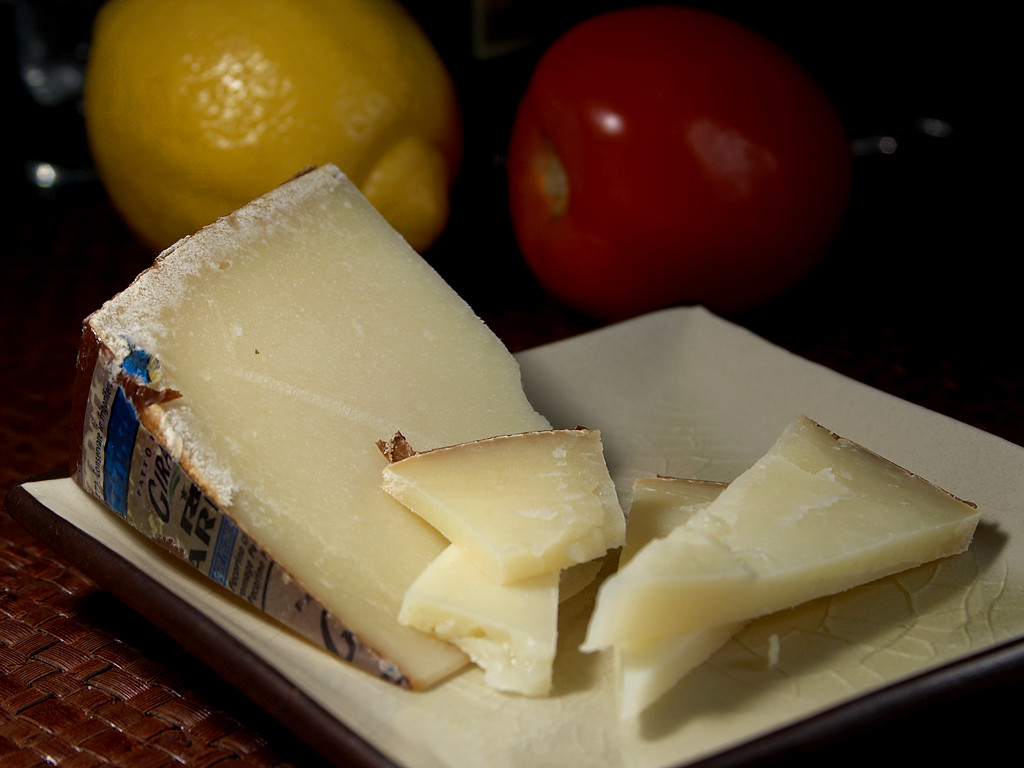 🇮🇹 ItalyPecorino Sardoberveghinu sardu
A hard, pressed sheep's milk cheese from Sardinia with two distinct age profiles.Sheep · Hard · Sharp and tangy-aged
🇮🇹 ItalyPecorino Sardoberveghinu sardu
A hard, pressed sheep's milk cheese from Sardinia with two distinct age profiles.Sheep · Hard · Sharp and tangy-aged
 🇬🇧 United KingdomShropshire Blue
A pasteurised cow's milk blue cheese with an orange rind and sharp flavour.Cow · Blue · Sharp and tangy-aged
🇬🇧 United KingdomShropshire Blue
A pasteurised cow's milk blue cheese with an orange rind and sharp flavour.Cow · Blue · Sharp and tangy-aged
 🇪🇬 Egypt and 1 moreRumiجبنة رومى
A hard, salty Egyptian cow or buffalo milk cheese with a pungent aroma.Cow · Hard · Salty
🇪🇬 Egypt and 1 moreRumiجبنة رومى
A hard, salty Egyptian cow or buffalo milk cheese with a pungent aroma.Cow · Hard · Salty
 🇩🇪 GermanyMilbenkäse
A German quark cheese ripened with living cheese mites in rye flour.Cow · Bloomy rind · Sharp and tangy-aged
🇩🇪 GermanyMilbenkäse
A German quark cheese ripened with living cheese mites in rye flour.Cow · Bloomy rind · Sharp and tangy-aged
 🇫🇷 FranceSaint AgurSant Agur
A soft, double-cream French blue cheese with olive-green veins and a mild spicy taste.Cow · Bloomy rind · Tangy and lactic
🇫🇷 FranceSaint AgurSant Agur
A soft, double-cream French blue cheese with olive-green veins and a mild spicy taste.Cow · Bloomy rind · Tangy and lactic
 🇸🇪 SwedenÄdelost
A pasteurized cow's-milk blue cheese from Sweden with a creamy texture and sharp flavor.Cow · Blue · Sharp and tangy-aged
🇮🇹 ItalySalvaSalva cremasco
A washed-rind cow's milk cheese from Lombardy, aged for several months.Cow · Washed rind · Savoury and brothy
🇸🇪 SwedenÄdelost
A pasteurized cow's-milk blue cheese from Sweden with a creamy texture and sharp flavor.Cow · Blue · Sharp and tangy-aged
🇮🇹 ItalySalvaSalva cremasco
A washed-rind cow's milk cheese from Lombardy, aged for several months.Cow · Washed rind · Savoury and brothy
 🇪🇸 SpainValdeónQueso de Valdeón
A Spanish blue cheese from León wrapped in sycamore or chestnut leavesCow · Semi-soft · Sharp and tangy-aged
🇪🇸 SpainValdeónQueso de Valdeón
A Spanish blue cheese from León wrapped in sycamore or chestnut leavesCow · Semi-soft · Sharp and tangy-aged
 🇬🇧 United KingdomDorset Blue Vinny
A hard, crumbly cow's-milk blue cheese from Dorset with a strong taste and protected status.Cow · Hard · Sharp and tangy-aged
🇬🇧 United KingdomDorset Blue Vinny
A hard, crumbly cow's-milk blue cheese from Dorset with a strong taste and protected status.Cow · Hard · Sharp and tangy-aged
 🇫🇮 Finland and 1 moreAura
A Finnish cow's-milk blue cheese aged for six or twelve weeks.Cow · Blue · Salty
🇫🇮 Finland and 1 moreAura
A Finnish cow's-milk blue cheese aged for six or twelve weeks.Cow · Blue · Salty
 🇮🇪 Ireland and 1 moreDubliner
A hard, granular Irish cow's-milk cheese aged for at least a year.Cow · Hard · Sweet and caramel
🇮🇪 Ireland and 1 moreDubliner
A hard, granular Irish cow's-milk cheese aged for at least a year.Cow · Hard · Sweet and caramel
 🇳🇱 Netherlands and 1 moreKanterkaas
A hard Dutch cow's milk cheese flavored with cumin and cloves, aged in Friesland.Cow · Hard · Sharp and tangy-aged
🇳🇱 Netherlands and 1 moreKanterkaas
A hard Dutch cow's milk cheese flavored with cumin and cloves, aged in Friesland.Cow · Hard · Sharp and tangy-aged
 🇳🇴 NorwayKraftkar
A Norwegian blue cheese made from cow's milk and cream in Nordmøre.Cow · Blue · Salty
🇳🇴 NorwayKraftkar
A Norwegian blue cheese made from cow's milk and cream in Nordmøre.Cow · Blue · Salty
 🇬🇧 United KingdomBanbury cheese
A historic English cow's-milk cheese from Oxfordshire, known for its thin rounds and sharp taste.Cow · Bloomy rind · Sharp and tangy-aged
🇬🇧 United KingdomBanbury cheese
A historic English cow's-milk cheese from Oxfordshire, known for its thin rounds and sharp taste.Cow · Bloomy rind · Sharp and tangy-aged
 🇨🇭 SwitzerlandDer Scharfe Maxx
A pungent Swiss hard cheese made from thermized cow's milk in Thurgau.Cow · Hard · Pungent and funky
🇦🇹 AustriaMondseer
A semi-hard Austrian cow's milk cheese with a washed rind and mild sharp taste.Cow · Semi-hard · Sweet and caramel
🇨🇭 SwitzerlandDer Scharfe Maxx
A pungent Swiss hard cheese made from thermized cow's milk in Thurgau.Cow · Hard · Pungent and funky
🇦🇹 AustriaMondseer
A semi-hard Austrian cow's milk cheese with a washed rind and mild sharp taste.Cow · Semi-hard · Sweet and caramel
Photo credits on this page
The small pictures above come from Wikimedia Commons under free licences. Some are cropped to fit.
- Dorset Blue Vinny: Jon Sullivan, Public domain, source
- Cabrales: PDPhoto.org, Public domain, source
- Shropshire Blue: Benoît Prieur, CC0, source
- French Neufchâtel: Coyau, CC BY-SA 3.0, source
- Västerbotten: Nata Uploaded by File Upload Bot (Magnus Manske), CC BY 2.0, source
- Saint Agur: Micah Anderson, Public domain, source
- Pecorino Sardo: The original uploader was Frankie816 at English Wikipedia ., Public domain, source
- Rumi: summer photo hobby, CC BY 2.0, source
- Der Scharfe Maxx: Balise42, CC BY 4.0, source
- Feta: Unknown author, CC BY-SA 3.0, source
- Ädelost: Jorchr, CC BY-SA 3.0, source
- Edam: Yvwv, CC BY-SA 3.0, source
- Valdeón: Tamorlan, CC BY 3.0, source
- Mishavin: Tizilohja25, CC BY-SA 4.0, source
- Kanterkaas: AlexanderVanLoon, CC BY-SA 3.0, source
- Mish: Reem Al-Kashif, CC BY-SA 4.0, source
- Sbrinz: Roy Egloff, CC BY-SA 4.0, source
- Roquefort: Thesupermat, CC BY-SA 4.0, source
- Milbenkäse: Benutzer:Dundak at de.wikipedia, CC BY-SA 3.0, source
- Picodon: Thesupermat, CC BY-SA 4.0, source
- Grana Padano: Claudia Castaldi, CC BY-SA 4.0, source
- Blue cheese: No machine-readable author provided. Brookie assumed (based on copyrig, CC BY-SA 3.0, source
- Bleu des Causses: Coyau, CC BY-SA 3.0, source
- Provolone: Lenore Edman, CC BY 2.0, source
- Dubliner: B137, CC0, source
- Aura: Suvi Korhonen, CC BY 2.0, source
- Kraftkar: Bernt Rostad, CC BY 2.0, source
- Banbury cheese: Unknown author, Public domain, source