
Dorset Blue Vinny
A hard, crumbly cow's-milk blue cheese from Dorset with a strong taste and protected status.
This traditional English blue cheese comes from Dorset and is made from whole cow's milk. It has a hard, crumbly texture and a sharp flavour that pairs well with local biscuits.
- Made from whole cow's milk near Sturminster Newton, Dorset.
- Hard, crumbly texture with distinct blue-green veins.
- Revived in the 1980s by Michael Davies at Woodbridge Farm.
- Holds Protected Geographical Indication status since 2006.
- Traditionally paired with Dorset knobs, a local hard biscuit.
What is Dorset Blue Vinny?
Dorset Blue Vinny is a distinctive British cheese produced in the county of Dorset. It is crafted from whole cow's milk, though historically farmers used skimmed milk left over from butter production. The result is a firm, dry wheel that breaks into crumbly shards rather than slicing smoothly. You will see distinct blue-green veins running through the pale paste, which gives the cheese its name; 'vinny' derives from an old word for blue vein. The rind is natural and rustic. This variety packs a powerful punch with a strong aroma and a sharp, tangy taste that lingers on the palate.
Where does Dorset Blue Vinny come from?
Cheese making in Dorset began as a practical way to preserve surplus milk when butter was the primary cash crop. Before railways could transport fresh milk quickly, farmers turned leftover skimmed milk into hard cheese for storage. Production nearly vanished after the Second World War, surviving only on a few farms. In the 1980s, Michael Davies revived the recipe at Woodbridge Farm near Sturminster Newton using whole milk instead of skimmed. Local folklore suggests the cheese was once so popular it was traded secretly, with deliveries left quietly on doorsteps to avoid attention.
What does Dorset Blue Vinny taste like?
The taste profile is bold and assertive. Expect a sharp, salty kick accompanied by the characteristic pungency of blue mould. The texture is dry and granular, crumbling easily between your fingers. As the cheese ages within its six-week window, the blue veins become more pronounced and the flavour intensifies. The smell is equally strong, filling the room with a earthy, dairy-heavy scent that signals its robust character to anyone nearby.
How Dorset Blue Vinny is made
Producers start with whole cow's milk, a shift from the historical use of skimmed milk. The milk is inoculated with cultures and rennet to set the curd. After setting, the curds are cut, cooked, and pressed into moulds to form wheels. The cheese is then salted and pierced to allow oxygen in, encouraging the growth of blue mould throughout the paste. It matures for approximately six weeks in cool conditions. While often made from unpasteurised milk, some producers may use pasteurised milk, a choice that sparks debate regarding safety versus tradition.
Dorset Blue Vinny, drawn
How Dorset Blue Vinny is eaten and cooked
This cheese stands up well on its own due to its intense flavour. It is commonly served on a cheese board alongside crusty bread or crackers. A classic local pairing involves serving it with Dorset knobs, a type of hard biscuit from the same region. Because of its crumbly nature, it does not melt smoothly like softer cheeses, but it can be crumbled over salads or mixed into hot dishes where its sharpness will shine through without becoming stringy.
Dorset Blue Vinny through the day
Dorset Blue Vinny fits comfortably into casual dining settings. It makes a satisfying snack on its own or with a drink. On a cheese board, it serves as a strong-flavoured option to balance milder varieties. It is not typically associated with breakfast or dessert courses. Its robust character makes it suitable for lunch or dinner accompaniments, particularly when paired with hearty breads or savoury snacks like local biscuits.
Dorset Blue Vinny in the world's kitchens
This cheese is deeply rooted in English rural traditions, specifically within Dorset. It reflects the agricultural history of the region, where preserving dairy products was essential before modern transport. Today, it represents a revival of local heritage, celebrated by those who value regional British produce. The pairing with Dorset knobs highlights a specific local culinary identity that connects the cheese directly to its place of origin.
At a glance: where it turns up
By meal and use
Cuisines
Faith and ritual
There are no specific religious associations or ritual uses linked to this cheese in the available records. It is a secular product of agricultural tradition rather than monastic or ceremonial practice.
Dorset Blue Vinny at celebrations
While not tied to specific national holidays, the cheese is part of the broader cultural celebration of Dorset's heritage. Its revival in the 1980s is a point of local pride. It might appear at local fairs or markets celebrating regional food, but there are no documented festivals dedicated solely to this variety.
Custom and folk tradition
Local lore speaks of the cheese being sold informally in the past, sometimes leaving it on doorsteps due to its perceived illicit popularity. This story adds a layer of mystery to its history. The transition from using skimmed milk to whole milk marks a significant shift in quality, reflecting changing economic conditions and consumer preferences over the last century.
Buying, keeping and serving Dorset Blue Vinny
Wrap the cheese in wax paper or parchment paper to allow it to breathe, then place it in the refrigerator. Consume it within a few weeks of purchase to enjoy its peak flavour. Avoid plastic wrap directly against the surface, as this can trap moisture and affect the texture.
Protection and trade
The cheese holds Protected Geographical Indication status, meaning only cheese made in Dorset following traditional methods can bear the name. This protection ensures authenticity and supports local producers like Woodbridge Farm. Production remains small-scale, focusing on quality and heritage rather than mass market distribution.
Questions people ask about Dorset Blue Vinny
Where does Dorset Blue Vinny come from?
It originates from Dorset, England, specifically around Sturminster Newton. The name 'Vinny' comes from an old word for blue vein, describing the mould inside the cheese.
What kind of milk is used to make it?
Modern versions use whole cow's milk. Historically, farmers used skimmed milk left over from butter production, resulting in a drier, less rich cheese.
How long is Dorset Blue Vinny aged?
It is typically aged for about six weeks. This relatively short period allows the blue mould to develop while keeping the texture hard and crumbly.
What does it taste like?
It has a strong, sharp, and tangy flavour with a savoury finish. The texture is dry and crumbles easily, offering a robust experience for blue cheese lovers.
Is it protected?
Yes, it has Protected Geographical Indication status. This means only cheese made in Dorset using traditional methods can legally carry the name Dorset Blue Vinny.
Good reading and sources
The facts on this page come from the Wikipedia article "Dorset Blue Vinney", written by its contributors and used under the CC BY-SA 4.0 licence, and from its Wikidata record (CC0). EveryCheese rewrote the text in its own words, with AI assistance, and compares every page with the article to make sure no passage is copied. It may be reused under the same CC BY-SA 4.0 licence with a link back.
It may contain mistakes. Recipes, ageing and customs differ from one dairy, valley or kitchen to the next. Folk beliefs are described as tradition, never as advice. If something is wrong, tell us. Last refreshed 2026-10-15.
More from the United Kingdom
All the cheeses of the United Kingdom 🇬🇧 United Kingdom and 1 moreMarble cheese
A processed cow's milk cheese with distinct colored marbling patterns.Cow · Hard · Savoury and brothy
🇬🇧 United Kingdom and 1 moreMarble cheese
A processed cow's milk cheese with distinct colored marbling patterns.Cow · Hard · Savoury and brothy
 🇬🇧 United KingdomCaerphilly
A hard, crumbly cow's-milk cheese from South Wales with a mild lemony taste.Cow · Hard · Tangy and lactic
🇬🇧 United KingdomCaerphilly
A hard, crumbly cow's-milk cheese from South Wales with a mild lemony taste.Cow · Hard · Tangy and lactic
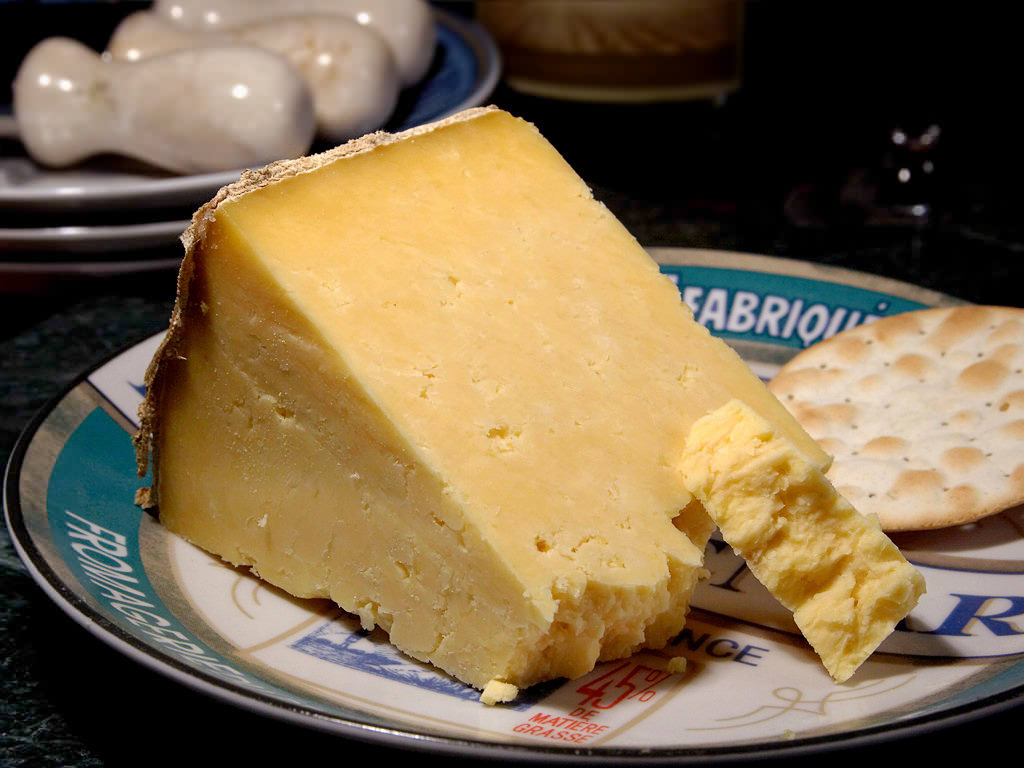 🇬🇧 United Kingdom and 1 moreCheshire
A dense, crumbly cow's-milk cheese from the English county of Cheshire.Cow · Hard · Salty
🇬🇧 United Kingdom and 1 moreCheshire
A dense, crumbly cow's-milk cheese from the English county of Cheshire.Cow · Hard · Salty
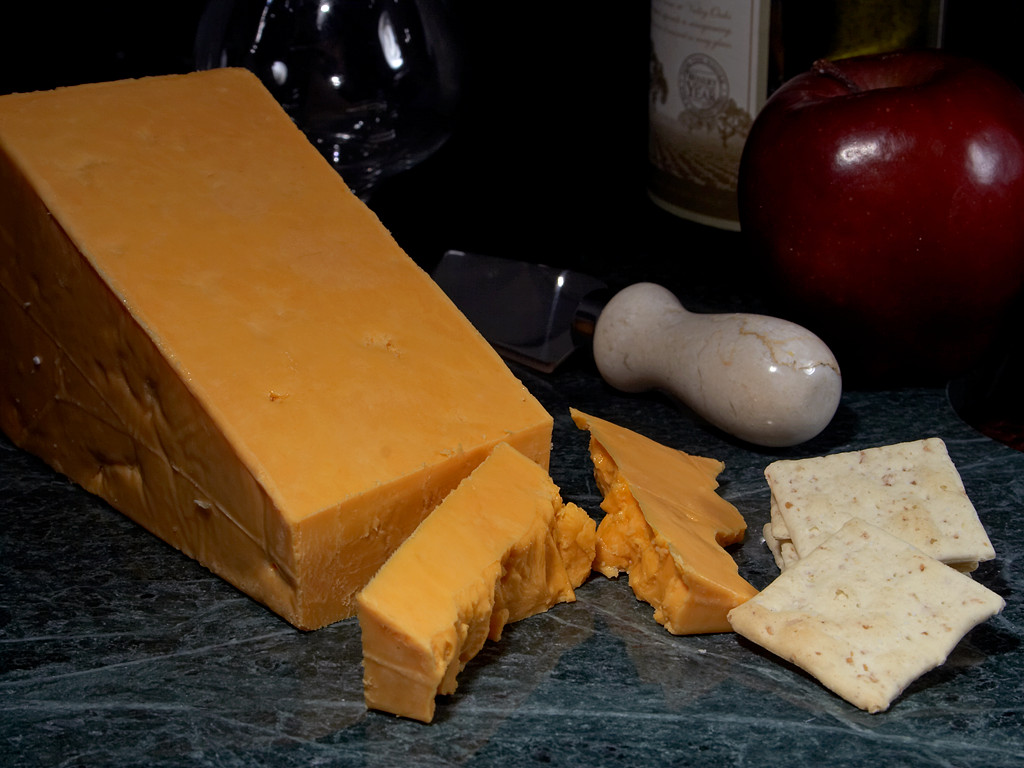 🇬🇧 United KingdomRed Leicester
A hard, crumbly cow's-milk cheese from England, aged for months and coloured with annatto.Cow · Hard · Sweet and caramel
🇬🇧 United KingdomRed Leicester
A hard, crumbly cow's-milk cheese from England, aged for months and coloured with annatto.Cow · Hard · Sweet and caramel
Its cousins elsewhere
All hard cheeses 🇮🇳 IndiaKalari
A semi-soft cow or buffalo milk cheese from Jammu and Kashmir, dried and sautéed until gooey.Cow · Semi-soft · Savoury and brothy
🇺🇸 United StatesCold-pack cheese
A chilled blend of natural cheeses mixed with flavorings without cooking.Mixed · Bloomy rind · Savoury and brothy
🇮🇳 IndiaKalari
A semi-soft cow or buffalo milk cheese from Jammu and Kashmir, dried and sautéed until gooey.Cow · Semi-soft · Savoury and brothy
🇺🇸 United StatesCold-pack cheese
A chilled blend of natural cheeses mixed with flavorings without cooking.Mixed · Bloomy rind · Savoury and brothy
 🇾🇪 YemenYemeni cheeseجبنة تعز
A smoked semi-hard sheep or goat milk cheese from Taiz Governorate in Yemen.Sheep · Semi-soft · Savoury and brothy
🇾🇪 YemenYemeni cheeseجبنة تعز
A smoked semi-hard sheep or goat milk cheese from Taiz Governorate in Yemen.Sheep · Semi-soft · Savoury and brothy