Parrano
A semi-firm Dutch cow's milk cheese aged five months with a nutty, salty-sweet profile.
Parrano is a semi-firm cow's milk cheese made in the Netherlands. It features a smooth golden paste and tastes mild, nutty, and slightly sweet. The cheese is often used for melting or snacking.
- Made from pasteurized cow milk in the Netherlands.
- Aged for five months in twenty-pound wheels.
- Technically a Gouda with a nutty, salty-sweet flavor.
- Won gold at the 2006 World Championship Cheese Contest.
- Marketed as an Italian-style cheese despite Dutch origins.
What is Parrano?
Parrano is a semi-firm cheese crafted from pasteurized cow milk in the Netherlands. The wheels weigh about twenty pounds and display a smooth, golden interior. Its texture is pliant rather than crumbly, making it distinct from harder grating cheeses. The flavor profile blends mild nuttiness with balanced salty and sweet notes. This combination gives it a taste reminiscent of aged parmesan while maintaining a softer mouthfeel. Producers market it as an Italian-style variety, though it belongs to the Gouda family. The cheese offers a more pronounced flavor than traditional Gouda versions. It presents as a versatile option for various culinary applications due to its consistent quality and approachable taste.
Where does Parrano come from?
The cheese originates in the Netherlands, where it is produced by Uniekaas Groep. It holds trademark protection under this brand. Marketing campaigns have described it playfully as a Dutch cheese that thinks it is Italian. Despite this Italian-inspired branding, the product is technically classified as a type of Gouda. The production process utilizes pasteurized milk to ensure safety and consistency. The brand competes directly with Prima Donna, another trademarked cheese produced by Vandersterre Groep. Both brands target similar markets with comparable flavor profiles and textures.
What does Parrano taste like?
Parrano delivers a mild taste defined by nutty undertones. Sweetness balances the saltiness on the palate, creating a harmonious blend. The texture remains semi-firm and smooth throughout consumption. Unlike sharp aged cheeses, Parrano avoids intense pungency. Instead, it offers a gentle richness suitable for broad appeal. The flavor intensity sits higher than standard Gouda but lacks the complexity of long-aged varieties. This balance makes it accessible to those who prefer subtle dairy flavors. The golden paste contributes to its visual appeal alongside its taste.
How Parrano is made
Producers start with pasteurized cow milk to begin the cheesemaking process. The milk is processed into wheels weighing approximately twenty pounds. These wheels undergo an aging period of five months before release. The pasteurization step ensures microbial safety while preserving the desired flavor characteristics. The semi-firm texture results from specific pressing and aging techniques typical of Gouda production. Salting occurs during processing to enhance the savory notes. The controlled environment allows the cheese to develop its characteristic smooth paste and golden color over time.
Parrano, drawn
How Parrano is eaten and cooked
This cheese excels in melting applications due to its pliant texture. It shreds easily for use on pasta or salads. Slicing works well for charcuterie boards or sandwiches. Cooks appreciate its ability to complement Italian dishes without overpowering other ingredients. Snacking on plain slices provides a mild treat. The versatility extends to entertaining settings where guests may prefer familiar flavors. It integrates smoothly into hot dishes, providing creaminess without separation. Its compatibility with various cuisines makes it a flexible ingredient for home cooks.
Parrano through the day
Parrano fits comfortably into casual dining scenarios. It serves as a standalone snack for afternoon breaks. Sliced pieces work well on lunch boards alongside fruits and crackers. Dinner preparations benefit from its melting properties in casseroles or sauces. Entertaining hosts use it for appetizer platters due to its broad appeal. The mild flavor ensures it does not dominate heavier meals. It pairs naturally with breads and vegetables for simple presentations.
Parrano in the world's kitchens
Dutch producers created this cheese for local and international markets. Italian cuisine enthusiasts adopt it for its parmesan-like qualities. The cheese bridges Northern European production methods with Southern European flavor expectations. American retailers import it to satisfy demand for mild, meltable options. The brand targets consumers seeking familiar yet slightly elevated dairy products. Its adaptability allows it to appear in diverse culinary contexts beyond its country of origin.
At a glance: where it turns up
By meal and use
Protection and trade
Uniekaas Groep holds exclusive rights to produce Parrano under trademark law. Prima Donna represents the primary competitive brand in this segment. Both products share similar taste profiles and target demographics. Paradiso, sold at Wegmans Markets, offers a comparable alternative imported from the Netherlands. The 2006 World Championship Cheese Contest recognized Parrano with a gold medal in the Gouda class. It also placed as first runner-up for the overall World Champion title. These accolades highlight its commercial success and quality standards within the global cheese market.
Questions people ask about Parrano
What kind of milk is used to make Parrano?
Parrano is made exclusively from pasteurized cow milk. This choice contributes to its smooth texture and mild, nutty flavor profile that distinguishes it from sharper varieties.
Where does Parrano cheese come from?
It is produced in the Netherlands by Uniekaas Groep. Although marketed as Italian-style, it is technically a type of Gouda cheese developed by Dutch manufacturers.
How would you describe the taste of Parrano?
The flavor is mild, nutty, and combines both salty and sweet notes. It resembles aged parmesan but maintains a softer, pliant texture typical of semi-firm cheeses.
Is Parrano good for melting?
Yes, its semi-firm texture makes it excellent for melting. It shreds easily and integrates well into hot dishes, sauces, and casseroles without becoming greasy.
Good reading and sources
The facts on this page come from the Wikipedia article "Parrano cheese", written by its contributors and used under the CC BY-SA 4.0 licence, and from its Wikidata record (CC0). EveryCheese rewrote the text in its own words, with AI assistance, and compares every page with the article to make sure no passage is copied. It may be reused under the same CC BY-SA 4.0 licence with a link back.
It may contain mistakes. Recipes, ageing and customs differ from one dairy, valley or kitchen to the next. Folk beliefs are described as tradition, never as advice. If something is wrong, tell us. Last refreshed 2026-10-15.
More from the Netherlands
All the cheeses of the Netherlands 🇨🇭 Switzerland and 5 moreEmmentalEmmentaler
A yellow, medium-hard Swiss cheese with natural holes, aged for several months.Cow · Semi-hard · Savoury and brothy
🇨🇭 Switzerland and 5 moreEmmentalEmmentaler
A yellow, medium-hard Swiss cheese with natural holes, aged for several months.Cow · Semi-hard · Savoury and brothy
 🇳🇱 Netherlands and 5 moreEdamEdammer
A semi-hard Dutch cow's-milk cheese aged in distinctive red wax spheres.Cow · Semi-hard · Nutty
🇳🇱 Netherlands and 5 moreEdamEdammer
A semi-hard Dutch cow's-milk cheese aged in distinctive red wax spheres.Cow · Semi-hard · Nutty
 🇳🇱 NetherlandsMaasdam
A semi-hard Dutch cow's milk cheese with holes, aged for one to three months.Cow · Semi-hard · Nutty
🇳🇱 NetherlandsMaasdam
A semi-hard Dutch cow's milk cheese with holes, aged for one to three months.Cow · Semi-hard · Nutty
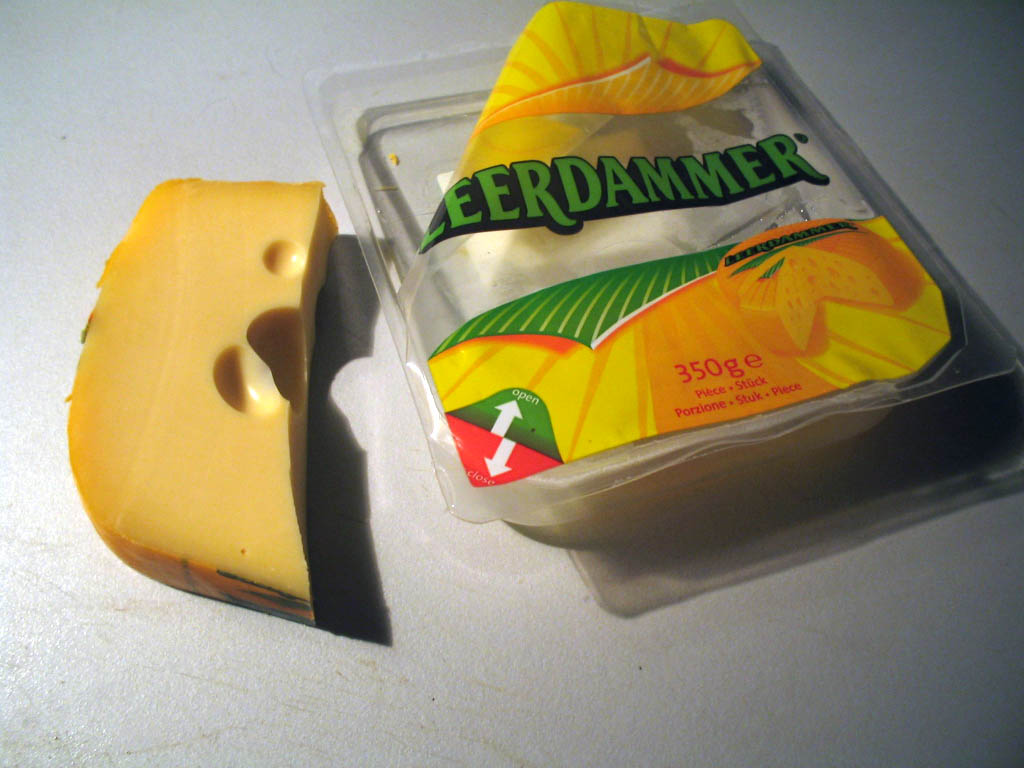 🇳🇱 Netherlands and 1 moreLeerdammer
A Dutch semihard cow's-milk cheese with holes and a sweet nutty taste.Cow · Semi-hard · Sweet and caramel
🇳🇱 Netherlands and 1 moreLeerdammer
A Dutch semihard cow's-milk cheese with holes and a sweet nutty taste.Cow · Semi-hard · Sweet and caramel
Its cousins elsewhere
All semi-hard cheeses 🇨🇦 CanadaFriulano
A rindless Canadian cow's-milk cheese with a salty hazelnut flavour, aged to improve its character.Cow · Semi-hard · Salty
🇨🇦 CanadaFriulano
A rindless Canadian cow's-milk cheese with a salty hazelnut flavour, aged to improve its character.Cow · Semi-hard · Salty
 🇲🇽 MexicoPanela cheeseQueso panela
A fresh, white Mexican cow's-milk cheese that holds its shape when fried.Cow · Fresh · Milky and fresh
🇲🇽 MexicoPanela cheeseQueso panela
A fresh, white Mexican cow's-milk cheese that holds its shape when fried.Cow · Fresh · Milky and fresh