Maaslander
A mild Dutch cow's milk Gouda with reduced salt and distinctive striped rinds.
Maaslander is a semi-hard cow's milk cheese from the Netherlands. It was created in 1978 to offer a milder, less salty alternative to traditional Gouda by using shorter brining times. The cheese features colored stripes on its rind to indicate age.
- Created in 1978 in Arkel, Netherlands.
- Semi-hard cow's milk Gouda variety.
- Shorter brining reduces salt content.
- Colored rind stripes indicate age.
- Made by Westland Cheese Specialties BV.
What is Maaslander?
Maaslander is a semi-hard cheese belonging to the Gouda family. It is made from pasteurized cow's milk. The paste is pale yellow. The rind has colored stripes that show the age. Green and yellow stripes mean it is slightly matured. Red and yellow stripes mean it is fully matured. The cheese is solid but not hard. It has a smooth texture. The flavor is mild and gentle. It is not sharp or strong. This makes it easy to eat for many people.
Where does Maaslander come from?
The brand started in 1978 at a factory in Arkel, Netherlands. Westland Cheese Specialties BV now runs it from Huizen. They wanted to make a cheese with less salt. Regular Gouda uses long brine baths. This adds too much sodium. Maaslander uses shorter immersion. This keeps more milk fluid inside. The result is a softer, milder taste. It is one of the first branded Dutch cheeses. It holds a protected designation status.
What does Maaslander taste like?
The taste is very mild. It lacks the sharp bite of aged Gouda. Salt levels are lower because of the short brining. The texture is slightly moist. This comes from the extra milk fluid left in the curds. Younger versions are creamier. Older versions are firmer. The aroma is gentle. It smells like fresh dairy. There are no pungent notes. The flavor stays consistent across ages.
How Maaslander is made
Producers use pasteurized cow's milk. They add cultures to start fermentation. The curds are cut and cooked gently. The mixture is pressed into molds. Instead of long brining, they dip the wheels briefly. This reduces salt intake. The cheese cures for up to ten months. Factories in the Netherlands and Germany make it. The rind gets colored stripes during aging. These marks identify the maturity level.
Maaslander, drawn
How Maaslander is eaten and cooked
People eat it as a snack. It works well on cheese boards. The mild taste pairs with fruits. It melts easily in dishes. Cooks use it in casseroles. Bakers add it to bread. Children often prefer it for sandwiches. It does not overpower other ingredients. Slices are common in supermarkets. Grated forms exist for cooking.
Maaslander in the world's kitchens
Dutch cuisine features this cheese daily. It is a staple in Netherlands homes. German factories also produce it for local markets. The style fits Northern European tastes. People who dislike strong flavors choose it. It represents modern Dutch dairy innovation. Traditionalists might find it too simple. But it appeals to broad audiences.
At a glance: where it turns up
Faith and ritual
No religious ties exist for this cheese. It is not linked to fasting rules. Monasteries do not make it. It is secular food. No dietary laws restrict its consumption. It contains standard dairy ingredients. Vegetarians can eat it if rennet allows. It has no spiritual significance.
Maaslander at celebrations
It is not a festival cheese. People eat it every day. It appears at casual gatherings. Families serve it with snacks. It is not reserved for weddings. It does not mark holidays. It is ordinary comfort food. Its role is practical, not ceremonial.
Custom and folk tradition
This cheese breaks old traditions. It challenges the salty Gouda norm. It shows industrial dairy progress. Herders do not make it. Farmers buy it from brands. It reflects urban consumer needs. The striped rind is a modern marketing tool. It signals quality without history.
Buying, keeping and serving Maaslander
Keep it wrapped in wax paper. Store it in the fridge cold. Do not freeze it raw. Use it within weeks of opening. Let it warm before eating. This brings out the mild flavor. Discard if mold grows on paste.
What to use instead of Maaslander
Use regular Gouda if unavailable. Choose young Gouda for similarity. Edam is another mild option. Lactose-free versions exist too. Avoid aged varieties. They are too sharp. Swiss cheese works in melting. But it changes the taste profile.
Protection and trade
Westland sells the brand globally. They market other cheeses too. Old Amsterdam is their premium line. Bradbury's distributes Old Amsterdam in the UK. Maaslander has protected status. Factories in Germany export it. Production figures are not public. It competes with supermarket brands.
Questions people ask about Maaslander
Where does Maaslander come from?
It originates in the Netherlands. Westland Cheese Specialties produces it. Factories are in Huizen and Arkel. German plants also make it.
What milk is used to make it?
It uses pasteurized cow's milk. The milk is set with cultures. The curds are pressed into wheels. This creates a semi-hard texture.
How does it taste compared to Gouda?
It is milder and less salty. Shorter brining leaves more moisture. The flavor is gentle and creamy. It lacks the sharpness of aged Gouda.
What do the rind stripes mean?
Green and yellow stripes show slight maturity. Red and yellow stripes show full maturity. The colors help buyers choose age.
Good reading and sources
The facts on this page come from the Wikipedia article "Maaslander", written by its contributors and used under the CC BY-SA 4.0 licence, and from its Wikidata record (CC0). EveryCheese rewrote the text in its own words, with AI assistance, and compares every page with the article to make sure no passage is copied. It may be reused under the same CC BY-SA 4.0 licence with a link back.
It may contain mistakes. Recipes, ageing and customs differ from one dairy, valley or kitchen to the next. Folk beliefs are described as tradition, never as advice. If something is wrong, tell us. Last refreshed 2026-10-15.
More from the Netherlands
All the cheeses of the Netherlands 🇨🇭 Switzerland and 5 moreEmmentalEmmentaler
A yellow, medium-hard Swiss cheese with natural holes, aged for several months.Cow · Semi-hard · Savoury and brothy
🇨🇭 Switzerland and 5 moreEmmentalEmmentaler
A yellow, medium-hard Swiss cheese with natural holes, aged for several months.Cow · Semi-hard · Savoury and brothy
 🇳🇱 Netherlands and 5 moreEdamEdammer
A semi-hard Dutch cow's-milk cheese aged in distinctive red wax spheres.Cow · Semi-hard · Nutty
🇳🇱 Netherlands and 5 moreEdamEdammer
A semi-hard Dutch cow's-milk cheese aged in distinctive red wax spheres.Cow · Semi-hard · Nutty
 🇳🇱 NetherlandsMaasdam
A semi-hard Dutch cow's milk cheese with holes, aged for one to three months.Cow · Semi-hard · Nutty
🇳🇱 NetherlandsMaasdam
A semi-hard Dutch cow's milk cheese with holes, aged for one to three months.Cow · Semi-hard · Nutty
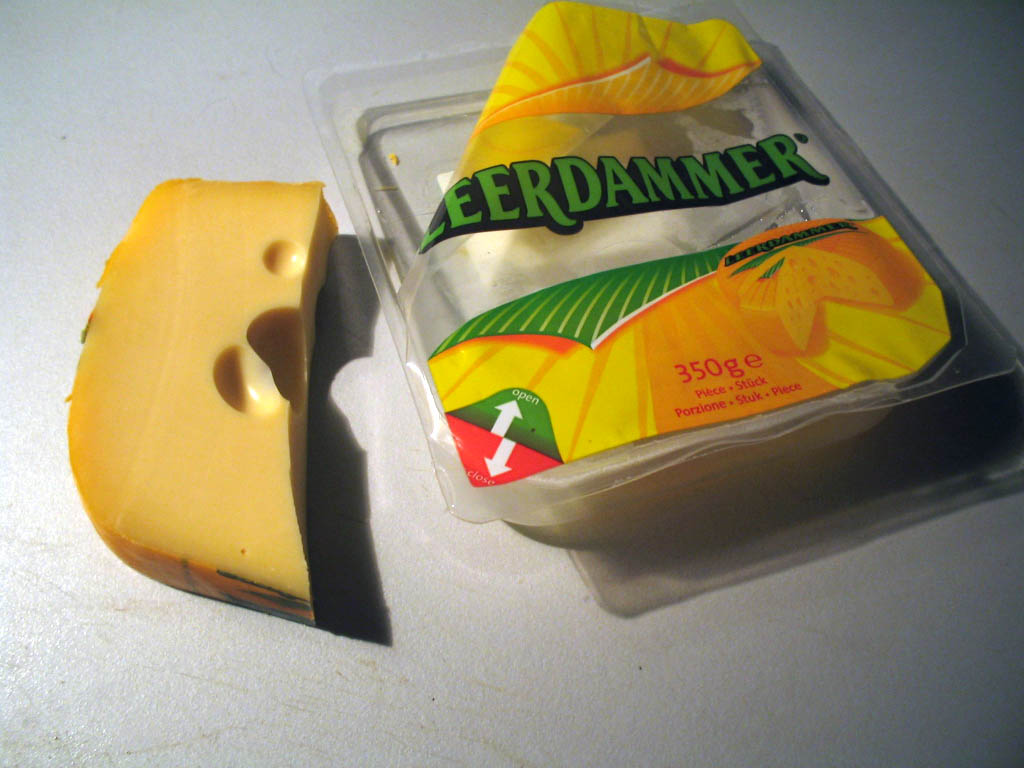 🇳🇱 Netherlands and 1 moreLeerdammer
A Dutch semihard cow's-milk cheese with holes and a sweet nutty taste.Cow · Semi-hard · Sweet and caramel
🇳🇱 Netherlands and 1 moreLeerdammer
A Dutch semihard cow's-milk cheese with holes and a sweet nutty taste.Cow · Semi-hard · Sweet and caramel
Its cousins elsewhere
All semi-hard cheeses 🇲🇽 MexicoPanela cheeseQueso panela
A fresh, white Mexican cow's-milk cheese that holds its shape when fried.Cow · Fresh · Milky and fresh
🇵🇰 Pakistan and 1 moreKadchgall
A hard, sweet and salty cylindrical cheese made from sheep or camel milk by Pashtun communities.Sheep · Hard · Sweet and caramel
🇻🇪 VenezuelaPalmitaqueso palmita
A fresh, salty cow's milk cheese from Venezuela's Zulia state, made in large wooden vats.Cow · Fresh · Salty
🇲🇽 MexicoPanela cheeseQueso panela
A fresh, white Mexican cow's-milk cheese that holds its shape when fried.Cow · Fresh · Milky and fresh
🇵🇰 Pakistan and 1 moreKadchgall
A hard, sweet and salty cylindrical cheese made from sheep or camel milk by Pashtun communities.Sheep · Hard · Sweet and caramel
🇻🇪 VenezuelaPalmitaqueso palmita
A fresh, salty cow's milk cheese from Venezuela's Zulia state, made in large wooden vats.Cow · Fresh · Salty
 🇪🇬 EgyptMishمش (meš)
A fermented Egyptian salty cheese aged in buttermilk brine until sharp and pungent.Mixed · Bloomy rind · Salty
🇪🇬 EgyptMishمش (meš)
A fermented Egyptian salty cheese aged in buttermilk brine until sharp and pungent.Mixed · Bloomy rind · Salty