Everyday use: cheeses that mark them
The cheeses of the working kitchen, reached for every day.
Most cheese is not for feasts but for every day: the block of cheddar in a British fridge, paneer bought fresh from an Indian dairy, Gouda sliced each morning in the Netherlands, feta on a Greek table at every meal and queso fresco in a Mexican kitchen. These are the working cheeses, chosen because they are reliable, easy to find and good in many dishes.
The everyday cheese of each country
Each country has its default cheese. In Britain and Ireland it is cheddar; in the Netherlands, Gouda; in Greece, feta, eaten with almost every meal; in Turkey, beyaz peynir; in Mexico, queso fresco and Oaxaca; in Brazil, queijo Minas; in India, paneer, and in many cities, processed cheese. Greece is among the countries that eat the most cheese per person in the world, and a large share of it is feta.
Buying and keeping
Buy fresh cheeses in small amounts and use them quickly; firm cheeses keep for weeks if they are well wrapped. Wrap cut cheese in waxed paper or cheese paper and then a loose bag, so it can breathe without drying out. Keep it in the vegetable drawer of the fridge, where it is cool and a little humid. Grate the leftover ends of hard cheese and freeze them for cooking, and save Parmigiano rinds for soup.
Making it at home
Paneer is made at home in many Indian kitchens: milk brought to the boil, lemon juice or vinegar stirred in, and the curds tied in muslin and pressed under a heavy pan. The same method makes queso blanco in Latin America. Quark, strained yoghurt cheese and ricotta are just as easy. Making a fresh cheese at home takes less than an hour and shows how all cheese begins: milk, a way to set it, and time.
Worth knowing
- Cheddar: The everyday cheese of Britain and Ireland
- Gouda: Sliced each morning in the Netherlands
- Feta: On the Greek table at every meal
- Beyaz peynir: Turkey's daily white cheese
- Queso fresco: Crumbled over Mexican food
- Minas cheese: Brazil's daily fresh cheese
- Paneer: Bought fresh or made at home in India
Sources and further reading
Original text by the EveryCheese desk, written with AI assistance and checked against the sources above. Customs are described as tradition, not as advice. If we have something wrong, tell us.
Everyday use on EveryCheese
The cheeses written up so far, best known first.
 🇫🇷 FranceTomme de Savoie
A semi-soft cow's milk cheese from the French Alps with a thick rind.Cow · Semi-soft
🇫🇷 FranceTomme de Savoie
A semi-soft cow's milk cheese from the French Alps with a thick rind.Cow · Semi-soft
 🇫🇷 France and 1 moreCancoillotte
A runny French cheese made by melting metton, served hot or cold in the east.Cow · Processed · Milky and fresh
🇫🇷 France and 1 moreCancoillotte
A runny French cheese made by melting metton, served hot or cold in the east.Cow · Processed · Milky and fresh
 🇳🇱 NetherlandsLeyden cheeseLeidse kaas
A semi-hard Dutch cow's-milk cheese flavoured with cumin and caraway seeds.Cow · Semi-hard · Savoury and brothy
🇳🇱 NetherlandsLeyden cheeseLeidse kaas
A semi-hard Dutch cow's-milk cheese flavoured with cumin and caraway seeds.Cow · Semi-hard · Savoury and brothy
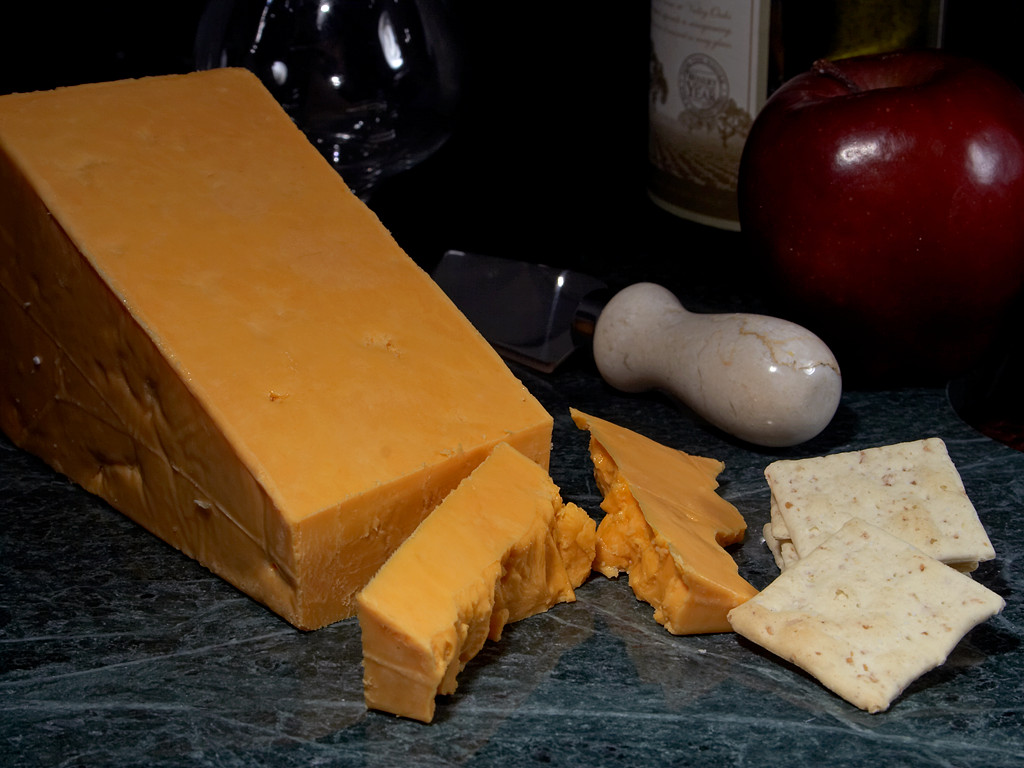 🇬🇧 United KingdomRed Leicester
A hard, crumbly cow's-milk cheese from England, aged for months and coloured with annatto.Cow · Hard · Sweet and caramel
🇬🇧 United KingdomRed Leicester
A hard, crumbly cow's-milk cheese from England, aged for months and coloured with annatto.Cow · Hard · Sweet and caramel
 🇫🇷 FranceBleu de Bresse
A creamy French blue cheese from the Bresse region, aged for a few weeks.Cow · Blue · Earthy and cellar
🇫🇷 FranceBleu de Bresse
A creamy French blue cheese from the Bresse region, aged for a few weeks.Cow · Blue · Earthy and cellar
 🇫🇷 FranceGaperon
A dome-shaped Auvergne cheese with a white mold rind and garlic-pepper filling.Cow · Bloomy rind · Buttery and creamy
🇫🇷 FranceGaperon
A dome-shaped Auvergne cheese with a white mold rind and garlic-pepper filling.Cow · Bloomy rind · Buttery and creamy
 🇨🇭 SwitzerlandSchabziger
A hard, green whey cheese from Switzerland flavored with blue fenugreek.Cow · Hard · Herbal and grassy
🇨🇭 SwitzerlandSchabziger
A hard, green whey cheese from Switzerland flavored with blue fenugreek.Cow · Hard · Herbal and grassy
 🇬🇧 United KingdomLancashire cheese
A cow's-milk cheese from England with creamy, nutty, or crumbly varieties.Cow · Semi-hard · Nutty
🇬🇧 United KingdomLancashire cheese
A cow's-milk cheese from England with creamy, nutty, or crumbly varieties.Cow · Semi-hard · Nutty
 🇧🇷 BrazilMinas cheesequeijo minas
A semi-soft cow's milk cheese from Brazil with fresh and aged varieties.Cow · Semi-soft · Salty
🇧🇷 BrazilMinas cheesequeijo minas
A semi-soft cow's milk cheese from Brazil with fresh and aged varieties.Cow · Semi-soft · Salty
 🇪🇸 SpainMahónformatge de Maó / queso de Mahón
A cow's-milk cheese from Menorca that ranges from soft and mild to hard and sharp.Cow · Semi-soft · Buttery and creamy
🇪🇸 SpainMahónformatge de Maó / queso de Mahón
A cow's-milk cheese from Menorca that ranges from soft and mild to hard and sharp.Cow · Semi-soft · Buttery and creamy
 🇫🇷 FranceTome des Bauges
A pressed cow's-milk cheese from the French Alps with a grey-brown rind and hazelnut aroma.Cow · Semi-hard · Nutty
🇫🇷 FranceTome des Bauges
A pressed cow's-milk cheese from the French Alps with a grey-brown rind and hazelnut aroma.Cow · Semi-hard · Nutty
 🇮🇹 ItalyCastelmagno
A semi-hard Italian cheese from Piedmont with blue veining and a sharp taste.Cow · Semi-hard · Sharp and tangy-aged
🇮🇹 ItalyCastelmagno
A semi-hard Italian cheese from Piedmont with blue veining and a sharp taste.Cow · Semi-hard · Sharp and tangy-aged
 🇺🇸 United StatesColby
A semi-hard American cow's-milk cheese with a mild flavor and orange hue from annatto.Cow · Semi-hard · Milky and fresh
🇺🇸 United StatesColby
A semi-hard American cow's-milk cheese with a mild flavor and orange hue from annatto.Cow · Semi-hard · Milky and fresh
 🇫🇷 France and 1 moreTomme
A low-fat alpine cheese from France and Switzerland, often made from skimmed milk.Cow · Semi-hard · Milky and fresh
🇫🇷 France and 1 moreTomme
A low-fat alpine cheese from France and Switzerland, often made from skimmed milk.Cow · Semi-hard · Milky and fresh
 🇪🇬 Egypt and 1 moreRumiجبنة رومى
A hard, salty Egyptian cow or buffalo milk cheese with a pungent aroma.Cow · Hard · Salty
🇪🇬 Egypt and 1 moreRumiجبنة رومى
A hard, salty Egyptian cow or buffalo milk cheese with a pungent aroma.Cow · Hard · Salty
 🇮🇹 Italy and 2 moreStracciatella
A fresh Italian shredded curd cheese mixed with cream, made from cow or buffalo milk.Cow · Fresh · Milky and fresh
🇮🇹 Italy and 2 moreStracciatella
A fresh Italian shredded curd cheese mixed with cream, made from cow or buffalo milk.Cow · Fresh · Milky and fresh
 🇩🇪 GermanyMilbenkäse
A German quark cheese ripened with living cheese mites in rye flour.Cow · Bloomy rind · Sharp and tangy-aged
🇩🇪 GermanyMilbenkäse
A German quark cheese ripened with living cheese mites in rye flour.Cow · Bloomy rind · Sharp and tangy-aged
 🇫🇷 FrancePetit suisse
A fresh, creamy French cow's milk cheese from Normandy, often sold in small cups.Cow · Fresh · Milky and fresh
🇫🇷 FrancePetit suisse
A fresh, creamy French cow's milk cheese from Normandy, often sold in small cups.Cow · Fresh · Milky and fresh
 🇪🇸 SpainAfuega'l pitu
A soft, unpasteurised cow's milk cheese from Asturias, shaped like a mitre or sphere and often dusted with paprika.Cow · Milky and fresh
🇪🇸 SpainAfuega'l pitu
A soft, unpasteurised cow's milk cheese from Asturias, shaped like a mitre or sphere and often dusted with paprika.Cow · Milky and fresh
 🇫🇷 FranceSaint-Marcellin
A small, soft cow's-milk cheese from Isère with a creamy interior and bloomy rind.Cow · Bloomy rind
🇫🇷 FranceSaint-Marcellin
A small, soft cow's-milk cheese from Isère with a creamy interior and bloomy rind.Cow · Bloomy rind
 🇫🇷 FranceSaint-PaulinSaint Paulin
A semi-soft French cow's milk cheese with a washed orange rind and buttery flavour.Cow · Semi-soft · Buttery and creamy
🇫🇷 FranceSaint-PaulinSaint Paulin
A semi-soft French cow's milk cheese with a washed orange rind and buttery flavour.Cow · Semi-soft · Buttery and creamy
 🇷🇺 Russia and 1 moreCircassian cheeseадыгейский сыр
A fresh, basket-molded cow's milk cheese from the North Caucasus that holds its shape when heated.Cow · Fresh
🇷🇺 Russia and 1 moreCircassian cheeseадыгейский сыр
A fresh, basket-molded cow's milk cheese from the North Caucasus that holds its shape when heated.Cow · Fresh
 🇫🇷 FranceAbbaye de Tamié
A soft cow's-milk cheese aged in the cellars of a Savoyard abbey by monks.Cow · Bloomy rind · Milky and fresh
🇫🇷 FranceAbbaye de Tamié
A soft cow's-milk cheese aged in the cellars of a Savoyard abbey by monks.Cow · Bloomy rind · Milky and fresh
 🇪🇬 Egypt and 1 moreDomiatiجبنه دمياطى
A soft, salty Egyptian white cheese salted before coagulation.Buffalo · Bloomy rind · Salty
🇪🇬 Egypt and 1 moreDomiatiجبنه دمياطى
A soft, salty Egyptian white cheese salted before coagulation.Buffalo · Bloomy rind · Salty
 🇬🇧 United KingdomCornish Yarg
A semi-hard cow's milk cheese from Cornwall wrapped in nettle leaves.Cow · Semi-hard · Tangy and lactic
🇬🇧 United KingdomCornish Yarg
A semi-hard cow's milk cheese from Cornwall wrapped in nettle leaves.Cow · Semi-hard · Tangy and lactic
 🇫🇷 FranceFaisselle
A fresh, very soft French cheese strained in a faisselle mold, made from cow, goat, or sheep milk.Cow · Fresh · Milky and fresh
🇫🇷 FranceFaisselle
A fresh, very soft French cheese strained in a faisselle mold, made from cow, goat, or sheep milk.Cow · Fresh · Milky and fresh
 🇮🇹 ItalyMonte Veronese
A semi-hard cow's-milk cheese from Verona with fresh and aged varieties.Cow · Semi-hard · Sweet and caramel
🇮🇹 ItalyMonte Veronese
A semi-hard cow's-milk cheese from Verona with fresh and aged varieties.Cow · Semi-hard · Sweet and caramel
 🇨🇭 Switzerland and 1 moreVacherin Fribourgeois
A Swiss semi-hard washed-rind cheese from the canton of Fribourg with a resiny taste.Cow · Semi-hard · Tangy and lactic
🇨🇭 Switzerland and 1 moreVacherin Fribourgeois
A Swiss semi-hard washed-rind cheese from the canton of Fribourg with a resiny taste.Cow · Semi-hard · Tangy and lactic
 🇳🇴 NorwayPultost
A soft Norwegian sour milk cheese flavored with caraway seeds and preserved with salt.Cow · Bloomy rind · Tangy and lactic
🇳🇴 NorwayPultost
A soft Norwegian sour milk cheese flavored with caraway seeds and preserved with salt.Cow · Bloomy rind · Tangy and lactic
 🇮🇹 ItalySilter
A brined, aged cow's-milk cheese from the Brescia mountains of Italy.Cow · Hard · Savoury and brothy
🇮🇹 ItalySilter
A brined, aged cow's-milk cheese from the Brescia mountains of Italy.Cow · Hard · Savoury and brothy
 🇪🇸 SpainSan Simón da Costa
A pear-shaped, smoked cow's milk cheese from Galicia with a smooth brown rind.Cow · Semi-hard · Salty
🇪🇸 SpainSan Simón da Costa
A pear-shaped, smoked cow's milk cheese from Galicia with a smooth brown rind.Cow · Semi-hard · Salty
 🇫🇷 FranceSaint Albray
A soft cow's-milk cheese from France with a flower-shaped rind and hollow center.Cow · Bloomy rind · Milky and fresh
🇮🇹 ItalySalvaSalva cremasco
A washed-rind cow's milk cheese from Lombardy, aged for several months.Cow · Washed rind · Savoury and brothy
🇫🇷 FranceSaint Albray
A soft cow's-milk cheese from France with a flower-shaped rind and hollow center.Cow · Bloomy rind · Milky and fresh
🇮🇹 ItalySalvaSalva cremasco
A washed-rind cow's milk cheese from Lombardy, aged for several months.Cow · Washed rind · Savoury and brothy
 🇲🇽 MexicoCotija
A salty, aged cow's milk cheese from Michoacán that crumbles but does not melt.Cow · Semi-hard · Salty
🇮🇹 ItalySpressa delle Giudicarie
A semi-hard cow's milk cheese from the Giudicarie valley in Trentino-Alto Adige.Cow · Semi-hard · Nutty
🇲🇽 MexicoCotija
A salty, aged cow's milk cheese from Michoacán that crumbles but does not melt.Cow · Semi-hard · Salty
🇮🇹 ItalySpressa delle Giudicarie
A semi-hard cow's milk cheese from the Giudicarie valley in Trentino-Alto Adige.Cow · Semi-hard · Nutty
 🇫🇷 FranceSaint-Félicien
A creamy cow's milk cheese from France with a flower-patterned rindCow · Bloomy rind · Milky and fresh
🇫🇷 FranceSaint-Félicien
A creamy cow's milk cheese from France with a flower-patterned rindCow · Bloomy rind · Milky and fresh
 🇩🇪 GermanySpundekäs
A spiced cream cheese spread from Northern Rhenish Hesse in Germany.Cow · Fresh · Salty
🇩🇪 GermanySpundekäs
A spiced cream cheese spread from Northern Rhenish Hesse in Germany.Cow · Fresh · Salty
 🇧🇹 BhutanDatshiདར་ཚི
A fresh Bhutanese cottage cheese made from cow milk, central to daily meals and curries.Cow · Fresh · Tangy and lactic
🇧🇷 BrazilColony cheesequeijo de colônia
A semi-hard cow's-milk cheese from southern Brazil with a yellow crust and creamy interior.Cow · Semi-hard · Tangy and lactic
🇧🇹 BhutanDatshiདར་ཚི
A fresh Bhutanese cottage cheese made from cow milk, central to daily meals and curries.Cow · Fresh · Tangy and lactic
🇧🇷 BrazilColony cheesequeijo de colônia
A semi-hard cow's-milk cheese from southern Brazil with a yellow crust and creamy interior.Cow · Semi-hard · Tangy and lactic
 🇳🇱 NetherlandsBoerenkaas
A Dutch semi-hard raw milk cheese with TSG protection, often spiced and farm-made.Cow · Semi-hard · Salty
🇳🇴 NorwaySnøfrisk
A soft, spreadable Norwegian goat cheese with a fresh, sour taste.Goat · Fresh · Tangy and lactic
🇳🇱 NetherlandsBoerenkaas
A Dutch semi-hard raw milk cheese with TSG protection, often spiced and farm-made.Cow · Semi-hard · Salty
🇳🇴 NorwaySnøfrisk
A soft, spreadable Norwegian goat cheese with a fresh, sour taste.Goat · Fresh · Tangy and lactic
 🇩🇪 GermanyNieheimer Käse
A sour milk cheese from North Rhine-Westphalia ripened in hops and flavored with caraway.Cow · Hard · Tangy and lactic
🇩🇪 GermanyNieheimer Käse
A sour milk cheese from North Rhine-Westphalia ripened in hops and flavored with caraway.Cow · Hard · Tangy and lactic
 🇮🇹 ItalyBastardo del Grappa
A semi-fat cow's milk cheese from the Veneto foothills with a soft crumbly texture.Cow · Semi-soft · Savoury and brothy
🇮🇹 ItalyBastardo del Grappa
A semi-fat cow's milk cheese from the Veneto foothills with a soft crumbly texture.Cow · Semi-soft · Savoury and brothy
 🇽🇰 Kosovo and 2 moreSharr cheeseDjathë i Sharrit / Шарски сир
A hard, salty cow and sheep milk cheese from the Šar Mountains of Kosovo.Cow · Hard · Salty
🇽🇰 Kosovo and 2 moreSharr cheeseDjathë i Sharrit / Шарски сир
A hard, salty cow and sheep milk cheese from the Šar Mountains of Kosovo.Cow · Hard · Salty
 🇮🇹 ItalyReblecRéblèque
A fresh Aosta Valley cheese made from surfaced cream and raw milk.Cow · Fresh · Milky and fresh
🇮🇹 ItalyReblecRéblèque
A fresh Aosta Valley cheese made from surfaced cream and raw milk.Cow · Fresh · Milky and fresh
 🇮🇹 ItalyPallone di Gravina
A firm pasta filata cow's milk cheese from southern Italy, aged for at least a year.Cow · Stretched curd · Nutty
🇮🇹 ItalyProvola silana
A semi-hard stretched-curd cheese from the Sila mountains of southern Italy.Cow · Semi-hard
🇮🇹 ItalyPallone di Gravina
A firm pasta filata cow's milk cheese from southern Italy, aged for at least a year.Cow · Stretched curd · Nutty
🇮🇹 ItalyProvola silana
A semi-hard stretched-curd cheese from the Sila mountains of southern Italy.Cow · Semi-hard
 🇬🇧 United KingdomDerby
A mild, semi-firm cow's milk cheese from Derbyshire with a buttery taste and smooth texture.Cow · Semi-soft · Buttery and creamy
🇬🇧 United KingdomDerby
A mild, semi-firm cow's milk cheese from Derbyshire with a buttery taste and smooth texture.Cow · Semi-soft · Buttery and creamy
Photo credits on this page
The small pictures above come from Wikimedia Commons under free licences. Some are cropped to fit.
- Minas cheese: The original uploader was Hellkt at German Wikipedia . ( Original text, Public domain, source
- Mahón: Slastic, Public domain, source
- Silter: Sistoiv, CC BY-SA 4.0, source
- Bleu de Bresse: Unknown author, CC BY-SA 3.0, source
- Friesian Clove: Takeaway, CC BY-SA 4.0, source
- Lancashire cheese: Jon Sullivan, Public domain, source
- Castelmagno: Marco Plassio, CC BY-SA 3.0, source
- Saint-Marcellin: Thesupermat, CC BY-SA 4.0, source
- Circassian cheese: Tetk200, CC BY-SA 3.0, source
- Petit suisse: Chtfn, CC BY 2.5, source
- Tomme de Savoie: Coyau, CC BY-SA 3.0, source
- Cornish Yarg: Tristan Ferne, CC BY 2.0, source
- Monte Veronese: La Casara Caseificio Dal 1920, CC BY 2.0, source
- Saint Albray: Lyokoï88, CC BY-SA 4.0, source
- Red Leicester: Jon Sullivan, Public domain, source
- Tomme: Unknown author, CC BY-SA 3.0, source
- Faisselle: Véronique PAGNIER, CC BY-SA 3.0, source
- Rumi: summer photo hobby, CC BY 2.0, source
- Sharr cheese: ThinkTank123, CC BY-SA 3.0, source
- Pultost: Jan-Tore Egge, CC BY-SA 4.0, source
- San Simón da Costa: Tamorlan, CC BY 3.0, source
- Cancoillotte: Popo le Chien, CC0, source
- Schabziger: Flyout, CC BY-SA 3.0, source
- Domiati: MartinKassemJ120, CC BY-SA 4.0, source
- Stracciatella: Florixc (original version) ; Off-shell (reprocessed version), CC0, source
- Vacherin Fribourgeois: Tombat24, CC BY-SA 3.0, source
- Tome des Bauges: Mit-Mit, Public domain, source
- Milbenkäse: Benutzer:Dundak at de.wikipedia, CC BY-SA 3.0, source
- Afuega'l pitu: Denissf, CC BY-SA 3.0, source
- Gaperon: Pymouss, CC BY-SA 4.0, source
- Saint-Paulin: Unknown author, CC BY-SA 3.0, source
- Leyden cheese: Edwtie, CC BY-SA 3.0, source
- Abbaye de Tamié: Tangopaso, Public domain, source
- Colby: Jeff the quiet, CC BY-SA 3.0, source
- Saint-Félicien: Coyau, CC BY-SA 3.0, source
- Cotija: Leslie Seaton, CC BY 2.0, source
- Pallone di Gravina: Antucco at Italian Wikipedia, CC BY-SA 3.0, source
- Reblec: F Ceragioli, CC BY-SA 3.0, source
- Derby: Compro, Public domain, source
- Datshi: Nair A, Choden D, Pradhan M., CC BY-SA 4.0, source
- Spundekäs: User:Kandschwar , edit by Rainer Z ..., CC BY-SA 3.0, source
- Nieheimer Käse: Tsungam, CC BY-SA 4.0, source
- Bastardo del Grappa: Krenakarore, Public domain, source