
Derby
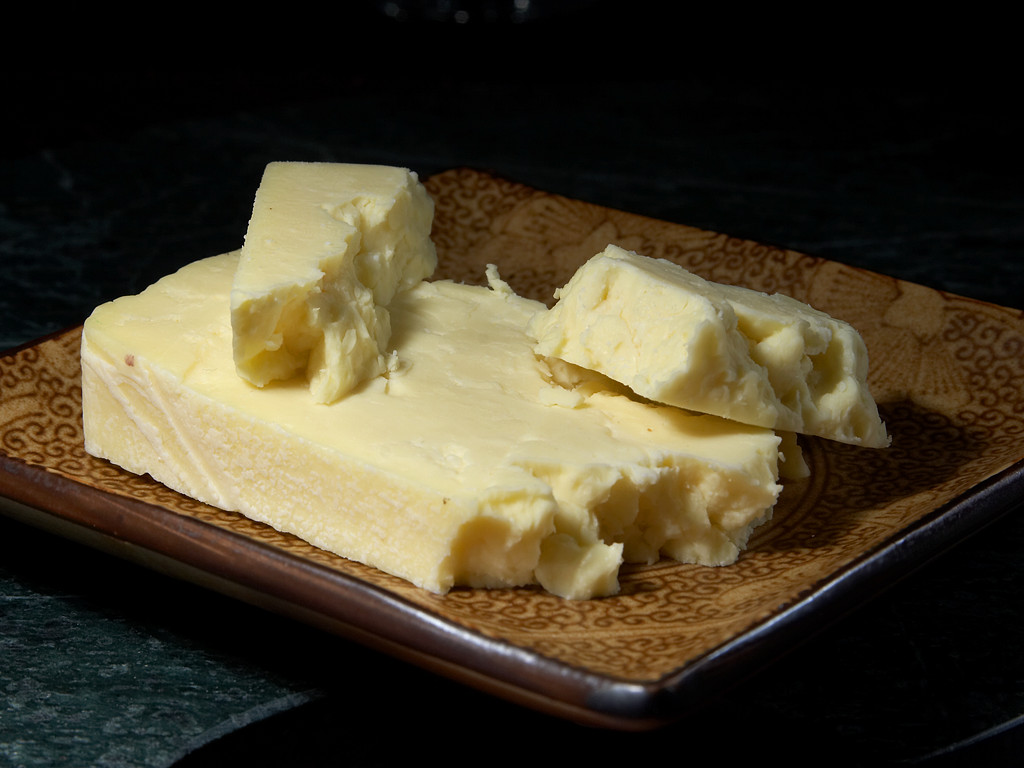
A mild, semi-firm cow's milk cheese from Derbyshire with a buttery taste and smooth texture.
This British cheese comes from Derbyshire and uses cow's milk. It offers a soft, springy bite when young, developing firmer textures and sweeter notes as it ages up to six months.
- First UK creamery opened in Longford, Derbyshire.
- Made from cow's milk with a semi-soft texture.
- Ripens for one to six months.
- Sage and Port Wine are common varieties.
- Does not undergo the cheddaring process.
What is Derby?
Derby is a traditional British cheese crafted entirely from cow's milk. You will find it in Derbyshire, where it maintains a gentle, semi-firm consistency. The paste ranges from pale ivory to a golden orange hue, depending on the variety. A natural rind or a wax coating protects the wheel. When fresh, the cheese feels springy and yields easily. As time passes, the structure tightens and becomes noticeably firmer. The flavour profile remains approachable, offering a distinct buttery quality that defines its character without overwhelming the palate.
Where does Derby come from?
The history of this cheese centres on Longford, a village in Derbyshire. This location holds the distinction of hosting the first creamery established in the United Kingdom. Local farmers decided to pool their resources and milk supplies to produce the cheese on a larger scale. They adopted manufacturing techniques originally developed in the United States. This cooperative effort marked a shift from purely farm-based production to a more centralized model, setting a precedent for future dairy operations in the region.
What does Derby taste like?
The taste is defined by its mildness and smooth mouthfeel. A creamy, buttery note runs through every bite, making it very approachable. Young wheels are light and springy, offering little resistance. With age, subtle sweet undertones emerge as the moisture reduces. The texture shifts from soft and pliable to firm and dense. Unlike harder cousins such as Cheddar, Derby avoids the cheddaring process, keeping its body softer and retaining slightly more moisture throughout its ripening period.
How Derby is made
Producers use cow's milk to create the curds. The mixture is set using standard coagulation methods, though specific rennet types are not detailed. The curds are cut and handled gently to preserve moisture. Unlike Cheddar, the cheese does not undergo cheddaring, which involves stacking and turning slabs of curd. Instead, the mass is pressed into moulds to form wheels. These wheels are then salted and left to ripen for one to six months. Some batches receive a wax coating to seal in freshness, while others keep a natural rind.
Derby, drawn
How Derby is eaten and cooked
Because of its gentle flavour, Derby works well as a standalone snack. It fits comfortably on a cheese board alongside fruits and crackers. The soft texture makes it suitable for melting in simple dishes, though it lacks the sharp punch of aged varieties. Sage Derby adds an herbal dimension to sandwiches or warm spreads. Port wine variations offer a richer depth for evening plates. It is rarely grated due to its higher moisture content compared to hard grating cheeses.
Derby through the day
This cheese serves as a versatile option for daily eating. It appears frequently as a midday snack or afternoon tea accompaniment. Its mild nature suits lunchboxes and packed meals. On a dinner table, it can anchor a simple cheese course. The sage and port variants add interest to evening boards. It is not typically associated with breakfast or heavy festive feasts, but rather with casual, everyday consumption.
Derby in the world's kitchens
Derby belongs firmly to British culinary traditions. It originated in Derbyshire and reflects local farming practices. The cheese gained prominence through the innovation of Longford creamery. While similar to Cheddar, it remains distinct due to its softer texture and lack of cheddaring. It represents a simpler era of British dairy production before industrialisation fully took hold. Today, it remains a staple of UK supermarkets and delis.
At a glance: where it turns up
Custom and folk tradition
Farmers in Longford pioneered the creamery system, moving away from isolated farm production. This shift allowed for larger-scale output using American-inspired techniques. The tradition of pooling milk was a significant economic step for local dairies. Sage Derby emerged as a popular variant, blending herbs into the paste. These additions reflect local preferences for flavoured cheeses. The cheese remains a symbol of regional innovation in British dairy history.
Buying, keeping and serving Derby
Keep Derby wrapped in parchment or wax paper to allow it to breathe. Store it in the vegetable drawer of your refrigerator. Consume it within a few weeks of opening for the best texture. Avoid freezing, as the higher moisture content can damage the structure. Let it sit at room temperature for thirty minutes before serving to enhance its buttery aroma.
What to use instead of Derby
Cheddar is the closest alternative, though it is firmer and often sharper. Red Leicester offers a similar colour and mildness. For Sage Derby, any herb-infused soft cheese works in a pinch. Port Wine Derby can be replaced with a rich, fruity brie if a dessert pairing is needed. Avoid hard grating cheeses, as they lack the necessary moisture and softness.
Protection and trade
Production has shifted from small farms to larger facilities over time. The original Longford creamery set a historical benchmark for UK dairy. Today, the cheese is widely available across Britain. Variants like Sage and Port Wine Derby expand its market appeal.
Questions people ask about Derby
Where does Derby cheese come from?
It originates in Derbyshire, England. The village of Longford is famous for establishing the first creamery in the UK, where farmers pooled milk to produce cheese on a larger scale.
What kind of milk is used?
Derby is made exclusively from cow's milk. The milk provides a smooth, mellow base that supports the cheese's buttery flavour and soft, springy texture.
How does it taste?
It has a mild, buttery flavour that becomes subtly sweeter as it ages. The texture starts springy and soft, becoming firmer over time, but it never reaches the hardness of Cheddar.
Is there a flavoured version?
Yes, Sage Derby is the most common variety. It blends light green sage leaves into the pale yellow paste. Port Wine Derby is another option, infused with port for a richer taste.
Good reading and sources
The facts on this page come from the Wikipedia article "Derby cheese", written by its contributors and used under the CC BY-SA 4.0 licence, and from its Wikidata record (CC0). EveryCheese rewrote the text in its own words, with AI assistance, and compares every page with the article to make sure no passage is copied. It may be reused under the same CC BY-SA 4.0 licence with a link back.
It may contain mistakes. Recipes, ageing and customs differ from one dairy, valley or kitchen to the next. Folk beliefs are described as tradition, never as advice. If something is wrong, tell us. Last refreshed 2026-10-15.
More from the United Kingdom
All the cheeses of the United Kingdom 🇬🇧 United KingdomStinking Bishop
A washed-rind cow's-milk cheese from Gloucestershire, ripened in perry.Cow · Semi-soft · Savoury and brothy
🇬🇧 United KingdomStinking Bishop
A washed-rind cow's-milk cheese from Gloucestershire, ripened in perry.Cow · Semi-soft · Savoury and brothy
 🇬🇧 United KingdomLancashire cheese
A cow's-milk cheese from England with creamy, nutty, or crumbly varieties.Cow · Semi-hard · Nutty
🇬🇧 United KingdomLancashire cheese
A cow's-milk cheese from England with creamy, nutty, or crumbly varieties.Cow · Semi-hard · Nutty
 🇬🇧 United KingdomDunlopcàise Dhùn Lùib
A mild Scottish cheese from Ayrshire made with unskimmed cow's milk.Cow · Semi-soft · Sweet and caramel
🇬🇧 United KingdomDunlopcàise Dhùn Lùib
A mild Scottish cheese from Ayrshire made with unskimmed cow's milk.Cow · Semi-soft · Sweet and caramel
 🇬🇧 United KingdomWensleydale
A medium, crumbly British cheese originally from sheep's milk in North Yorkshire.Cow · Semi-soft · Sweet and caramel
🇬🇧 United KingdomWensleydale
A medium, crumbly British cheese originally from sheep's milk in North Yorkshire.Cow · Semi-soft · Sweet and caramel
Its cousins elsewhere
All semi-soft cheeses 🇺🇸 United States and 1 moreMonterey Jack
A mild, semi-hard cow's-milk cheese from California with a creamy texture and slight sweetness.Cow · Semi-hard · Sweet and caramel
🇵🇰 Pakistan and 1 moreKadchgall
A hard, sweet and salty cylindrical cheese made from sheep or camel milk by Pashtun communities.Sheep · Hard · Sweet and caramel
🇺🇸 United States and 1 moreMonterey Jack
A mild, semi-hard cow's-milk cheese from California with a creamy texture and slight sweetness.Cow · Semi-hard · Sweet and caramel
🇵🇰 Pakistan and 1 moreKadchgall
A hard, sweet and salty cylindrical cheese made from sheep or camel milk by Pashtun communities.Sheep · Hard · Sweet and caramel
 🇺🇸 United StatesBergenost
A triple-cream Norwegian-style butter cheese from New York with green wax.Mixed · Semi-soft · Buttery and creamy
🇺🇸 United StatesBergenost
A triple-cream Norwegian-style butter cheese from New York with green wax.Mixed · Semi-soft · Buttery and creamy
 🇺🇸 United States and 2 moreCottage cheese
A fresh, unaged curd cheese made from skimmed milk and dressed with cream.Cow · Fresh · Tangy and lactic
🇺🇸 United States and 2 moreCottage cheese
A fresh, unaged curd cheese made from skimmed milk and dressed with cream.Cow · Fresh · Tangy and lactic