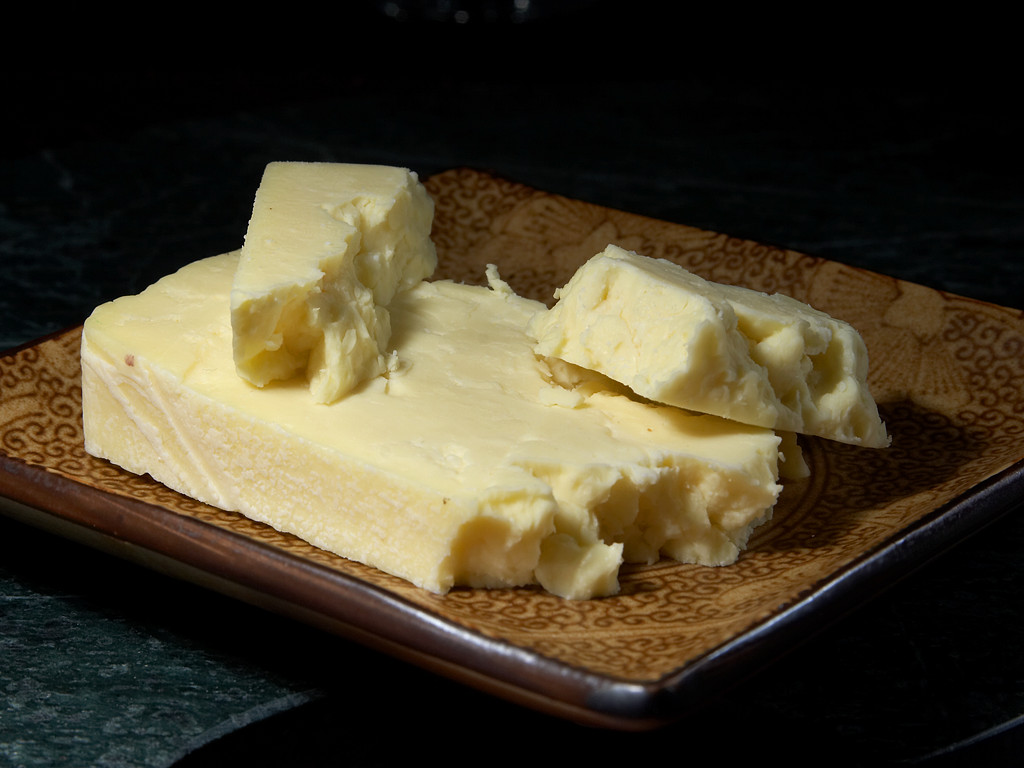
Wensleydale
A medium, crumbly British cheese originally from sheep's milk in North Yorkshire.
Wensleydale is a medium, crumbly cheese from England. It started with sheep's milk and now often uses cow's milk. The taste is mild with a hint of honey. It pairs well with fruit or cakes.
- Originally made by French Cistercian monks in Wensleydale.
- Texture is medium, supple, and crumbly.
- Has a slight honey aroma and mild taste.
- Gained popularity from the Wallace & Gromit series.
- Received PGI status in 2013 for Yorkshire Wensleydale.
What is Wensleydale?
Wensleydale is a style of cheese that comes from England. It has a medium texture that feels supple and breaks apart easily. The paste is usually white. The smell is slightly sweet, like honey. Originally made from sheep's milk, it now frequently uses cow's milk. Some versions are mixed or blue-veined, though the white kind is most common today. It is a soft but firm cheese that holds its shape when sliced.
Where does Wensleydale come from?
French Cistercian monks brought this cheese to northern England. They settled in Wensleydale and built a monastery at Fors. Later they moved to Jervaulx. They used sheep's milk for their recipe. In the fourteenth century, farmers began using cow's milk instead. This changed the cheese's character. Local people kept making it after the monastery closed in fifteen forty. Production dropped in the mid-twentieth century but rose again later.
What does Wensleydale taste like?
The taste is mild and buttery. It has a subtle sweetness that reminds some of honey. The texture is crumbly yet soft. It works well with tart fruits. Cranberries are a popular addition in many shops. The cheese does not have a strong pungent smell. It remains gentle even as it ages for a few months. Blue varieties exist but are rare now.
How Wensleydale is made
Monks first made this cheese using sheep's milk. Farmers later switched to cow's milk. They sometimes added a little ewes' milk to create an open texture. This also allowed blue mould to grow inside. The curds are pressed into wheels. These wheels age for three to six months. Commercial creameries now produce most of it. The first commercial factory opened in Hawes in eighteen ninety-seven.
Wensleydale, drawn
How Wensleydale is eaten and cooked
People eat this cheese on their own as a snack. It is common on cheese boards. Restaurants often serve it with sweet apples. Many delicatessens sell versions with cranberries baked in. In northern England, locals pair it with fruit cake or Christmas cake. It can be melted in cooking, though it is best known for cold serving.
Wensleydale through the day
This cheese fits well as a snack between meals. It is a standard choice for afternoon tea. People enjoy it on dinner tables alongside fruit. It appears on festive boards during holidays. The sweet variety suits dessert settings. It is not typically eaten for breakfast. It serves as a light lunch option with bread.
Wensleydale in the world's kitchens
British cooks use Wensleydale in traditional ways. It is a staple of English dairy culture. People in Yorkshire and North East England eat it often. It is served with local cakes and preserves. The cheese represents northern English farming history. Modern producers make it across the United Kingdom. It remains a key part of British culinary identity.
At a glance: where it turns up
By meal and use
Cuisines


Faith and ritual
The cheese began in a French monastery. Cistercian monks created the original recipe. They lived in Wensleydale and practiced their craft there. After the dissolution of the monasteries, lay farmers took over production. There are no specific religious rules for eating it today. It is simply a product of historical monastic tradition.
Wensleydale at celebrations
The cheese is linked to local festivals in Yorkshire. It is served at holiday gatherings. People enjoy it during Christmas with special cakes. The Wallace & Gromit films boosted its fame. Sales increased significantly after the movie came out. It is now a celebrated part of British pop culture.
Custom and folk tradition
Farmers in Wensleydale have made this cheese for centuries. They passed the knowledge down through generations. The name Yorkshire Wensleydale protects the regional style. Only cheese made in that valley can use the full name. The cheese survived low production periods due to local pride. It remains a symbol of rural English life.
Buying, keeping and serving Wensleydale
Keep the cheese wrapped in wax paper in the fridge. It stays fresh for several weeks. Bring it to room temperature before serving. This enhances the honey-like aroma. Do not freeze it for long periods. The texture may change if frozen too long.
What to use instead of Wensleydale
Cheese makers sometimes confuse it with other British whites. No direct substitute matches its unique honey notes. Some people use mild cheddar in a pinch. However, the crumbly texture is distinct. Fresh goat cheese offers a similar tang. Neither replaces the original experience fully.
Protection and trade
Protected Geographical Indication status was granted in twenty thirteen. This protects the name Yorkshire Wensleydale. Only cheese from Wensleydale can use that title. Commercial creameries produce most of the supply. The Wensleydale Creamery plays a major role. Sales jumped after appearing in animation. The brand benefits from global recognition.
Dishes with Wensleydale
Questions people ask about Wensleydale
Where does Wensleydale come from?
It originates from Wensleydale in North Yorkshire, England. French Cistercian monks introduced the recipe to the area centuries ago.
What milk is used to make it?
Traditionally it used sheep's milk. Today it is mostly made from cow's milk, sometimes with a little sheep's milk added.
How does it taste?
It has a mild, buttery flavour with a subtle honey-like sweetness. The texture is crumbly and soft.
Why is it famous?
It became widely known after being featured in the Wallace & Gromit cartoons. Sales increased significantly following the films.
Is it protected?
Yes, Yorkshire Wensleydale has Protected Geographical Indication status. Only cheese made in Wensleydale can use that specific name.
Good reading and sources
- Wensleydale cheese on WikipediaEncyclopedia
- More photos on Wikimedia CommonsPhotos and video
- Wikidata recordOpen data
The facts on this page come from the Wikipedia article "Wensleydale cheese", written by its contributors and used under the CC BY-SA 4.0 licence, and from its Wikidata record (CC0). EveryCheese rewrote the text in its own words, with AI assistance, and compares every page with the article to make sure no passage is copied. It may be reused under the same CC BY-SA 4.0 licence with a link back.
It may contain mistakes. Recipes, ageing and customs differ from one dairy, valley or kitchen to the next. Folk beliefs are described as tradition, never as advice. If something is wrong, tell us. Last refreshed 2026-10-15.
More from the United Kingdom
All the cheeses of the United Kingdom 🇬🇧 United KingdomStinking Bishop
A washed-rind cow's-milk cheese from Gloucestershire, ripened in perry.Cow · Semi-soft · Savoury and brothy
🇬🇧 United KingdomStinking Bishop
A washed-rind cow's-milk cheese from Gloucestershire, ripened in perry.Cow · Semi-soft · Savoury and brothy
 🇬🇧 United KingdomLancashire cheese
A cow's-milk cheese from England with creamy, nutty, or crumbly varieties.Cow · Semi-hard · Nutty
🇬🇧 United KingdomLancashire cheese
A cow's-milk cheese from England with creamy, nutty, or crumbly varieties.Cow · Semi-hard · Nutty
 🇬🇧 United KingdomDunlopcàise Dhùn Lùib
A mild Scottish cheese from Ayrshire made with unskimmed cow's milk.Cow · Semi-soft · Sweet and caramel
🇬🇧 United KingdomDunlopcàise Dhùn Lùib
A mild Scottish cheese from Ayrshire made with unskimmed cow's milk.Cow · Semi-soft · Sweet and caramel
 🇬🇧 United KingdomTintern
A soft, blended cow's milk Cheddar flavoured with chives and shallots, wrapped in lime green wax.Cow · Semi-soft · Herbal and grassy
🇬🇧 United KingdomTintern
A soft, blended cow's milk Cheddar flavoured with chives and shallots, wrapped in lime green wax.Cow · Semi-soft · Herbal and grassy
Its cousins elsewhere
All semi-soft cheeses 🇺🇸 United States and 1 moreMonterey Jack
A mild, semi-hard cow's-milk cheese from California with a creamy texture and slight sweetness.Cow · Semi-hard · Sweet and caramel
🇵🇰 Pakistan and 1 moreKadchgall
A hard, sweet and salty cylindrical cheese made from sheep or camel milk by Pashtun communities.Sheep · Hard · Sweet and caramel
🇺🇸 United States and 1 moreMonterey Jack
A mild, semi-hard cow's-milk cheese from California with a creamy texture and slight sweetness.Cow · Semi-hard · Sweet and caramel
🇵🇰 Pakistan and 1 moreKadchgall
A hard, sweet and salty cylindrical cheese made from sheep or camel milk by Pashtun communities.Sheep · Hard · Sweet and caramel
 🇺🇸 United StatesBergenost
A triple-cream Norwegian-style butter cheese from New York with green wax.Mixed · Semi-soft · Buttery and creamy
🇺🇸 United StatesBergenost
A triple-cream Norwegian-style butter cheese from New York with green wax.Mixed · Semi-soft · Buttery and creamy
 🇺🇸 United States and 2 moreCottage cheese
A fresh, unaged curd cheese made from skimmed milk and dressed with cream.Cow · Fresh · Tangy and lactic
🇺🇸 United States and 2 moreCottage cheese
A fresh, unaged curd cheese made from skimmed milk and dressed with cream.Cow · Fresh · Tangy and lactic