Suffolk Bang
A hard, heavily salted skimmed-milk cheese from Suffolk, England.
Suffolk Bang was a coarse, very firm cheese made from skimmed cow's milk in Suffolk, England. It was known for its poor quality and extreme hardness, preserved by heavy salting. Historically consumed by laborers and the military, it fell out of production in the early 19th century.
- Made from skimmed milk in Suffolk, England.
- Extremely hard and heavily salted for preservation.
- Exported to London by sea from the 16th century.
- Consumed by laborers and the Royal Navy.
- Production ended in the early 19th century.
What is Suffolk Bang?
Suffolk Bang was a dense, extremely hard cheese produced in Suffolk, England. It originated from skimmed milk, which resulted in a low-quality product that was often considered inferior. The cheese was characterized by its toughness and was heavily salted to ensure it could be stored for extended periods without spoiling. Its texture was so rigid that it required specific preparation methods before consumption.
Where does Suffolk Bang come from?
The cheese has been documented since the sixteenth century. By that time, it was already being shipped to London via sea routes. This trade continued into the eighteenth century, with significant quantities sold to the capital. In 1740 alone, nearly one thousand tons were delivered. Production ceased in the early nineteenth century due to economic shifts, specifically high grain prices that led farmers to abandon dairy farming.
What does Suffolk Bang taste like?
The dominant taste profile was intensely salty, a necessity for preservation rather than culinary refinement. The flavor was likely bland beneath the salt crust due to the use of skimmed milk. The texture was exceptionally hard and difficult to chew, contributing to its reputation as a poor-quality food item suitable only for those who could not afford better options.
How Suffolk Bang is made
Makers used skimmed milk to create the curd. The resulting cheese was formed into a hard block and then heavily salted. This salting process was crucial for extending the cheese's longevity, allowing it to survive transport and storage. No specific aging caves or cellars are mentioned, but the preservation method relied on salt rather than controlled environmental ripening.
Suffolk Bang, drawn
How Suffolk Bang is eaten and cooked
The cheese was primarily eaten by servants and agricultural laborers who needed cheap, filling food. It was also supplied to the military for its durability. A common preparation involved melting the hard cheese and spreading it over bread, often accompanied by salted pork. This method helped make the tough cheese more palatable.
Suffolk Bang through the day
It served as a staple snack or simple meal for working-class individuals. Laborers and servants consumed it daily due to its affordability. It was also used as a ration for soldiers and sailors, providing sustenance during long campaigns or voyages where fresh food was unavailable.
Suffolk Bang in the world's kitchens
Suffolk Bang was part of the English rural diet, particularly in Suffolk. It was consumed by the lower classes in England and exported to London. The Royal Navy also incorporated it into British naval rations until it was deemed inedible by crews. It represents a historical aspect of English peasant and military cuisine.
At a glance: where it turns up
Custom and folk tradition
The cheese was associated with the lives of unmarried farm workers and the broader laboring class. Its production and consumption reflect the economic realities of pre-industrial Suffolk. The shift away from dairy farming due to grain prices marks a change in local agricultural traditions.
Buying, keeping and serving Suffolk Bang
Heavy salting allowed the cheese to last for long periods. This preservation technique enabled its export to London and supply to distant military units. The hard texture and salt content prevented spoilage during sea transport.
Protection and trade
Trade with London was conducted by sea and persisted into the eighteenth century. In 1740, 985 tons were sold to the capital. The Royal Navy bought approximately 1,000 tons annually until 1758, when they stopped due to complaints about edibility. Production declined sharply after 1800 as farmers switched to grain.
Questions people ask about Suffolk Bang
What milk is used to make Suffolk Bang?
Suffolk Bang is made from skimmed cow's milk. The removal of cream results in a cheese that is very lean and hard.
Where does Suffolk Bang come from?
It originates from Suffolk, England. Historical records show it was produced there and exported to London by sea.
How does Suffolk Bang taste?
It is known for being intensely salty and having a very hard texture. The flavor is dominated by salt used for preservation.
Why did Suffolk Bang disappear?
High grain prices in the early 19th century caused farmers to stop dairy production. This economic shift led to the cheese's demise.
Who ate Suffolk Bang?
It was mainly eaten by servants, laborers, and unmarried farm workers. The Royal Navy also purchased large quantities for rations.
Good reading and sources
The facts on this page come from the Wikipedia article "Suffolk Bang", written by its contributors and used under the CC BY-SA 4.0 licence, and from its Wikidata record (CC0). EveryCheese rewrote the text in its own words, with AI assistance, and compares every page with the article to make sure no passage is copied. It may be reused under the same CC BY-SA 4.0 licence with a link back.
It may contain mistakes. Recipes, ageing and customs differ from one dairy, valley or kitchen to the next. Folk beliefs are described as tradition, never as advice. If something is wrong, tell us. Last refreshed 2026-10-15.
More from the United Kingdom
All the cheeses of the United Kingdom 🇬🇧 United Kingdom and 1 moreMarble cheese
A processed cow's milk cheese with distinct colored marbling patterns.Cow · Hard · Savoury and brothy
🇬🇧 United Kingdom and 1 moreMarble cheese
A processed cow's milk cheese with distinct colored marbling patterns.Cow · Hard · Savoury and brothy
 🇬🇧 United KingdomCaerphilly
A hard, crumbly cow's-milk cheese from South Wales with a mild lemony taste.Cow · Hard · Tangy and lactic
🇬🇧 United KingdomCaerphilly
A hard, crumbly cow's-milk cheese from South Wales with a mild lemony taste.Cow · Hard · Tangy and lactic
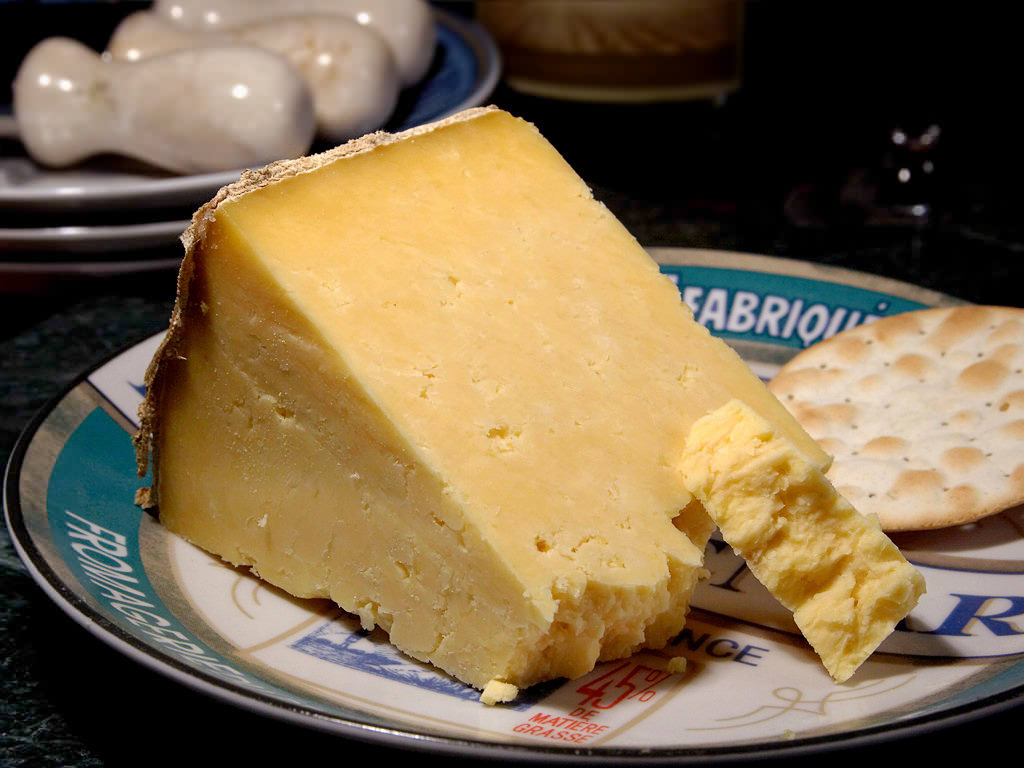 🇬🇧 United Kingdom and 1 moreCheshire
A dense, crumbly cow's-milk cheese from the English county of Cheshire.Cow · Hard · Salty
🇬🇧 United Kingdom and 1 moreCheshire
A dense, crumbly cow's-milk cheese from the English county of Cheshire.Cow · Hard · Salty
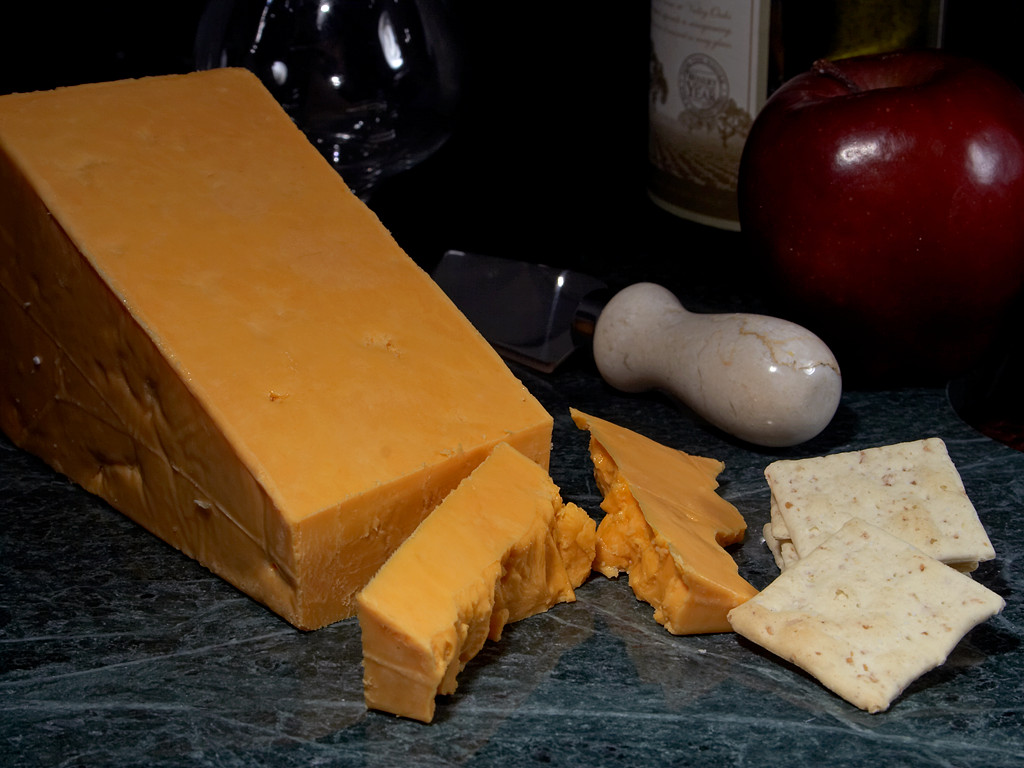 🇬🇧 United KingdomRed Leicester
A hard, crumbly cow's-milk cheese from England, aged for months and coloured with annatto.Cow · Hard · Sweet and caramel
🇬🇧 United KingdomRed Leicester
A hard, crumbly cow's-milk cheese from England, aged for months and coloured with annatto.Cow · Hard · Sweet and caramel
Its cousins elsewhere
All hard cheeses 🇲🇽 MexicoPanela cheeseQueso panela
A fresh, white Mexican cow's-milk cheese that holds its shape when fried.Cow · Fresh · Milky and fresh
🇵🇰 Pakistan and 1 moreKadchgall
A hard, sweet and salty cylindrical cheese made from sheep or camel milk by Pashtun communities.Sheep · Hard · Sweet and caramel
🇻🇪 VenezuelaPalmitaqueso palmita
A fresh, salty cow's milk cheese from Venezuela's Zulia state, made in large wooden vats.Cow · Fresh · Salty
🇲🇽 MexicoPanela cheeseQueso panela
A fresh, white Mexican cow's-milk cheese that holds its shape when fried.Cow · Fresh · Milky and fresh
🇵🇰 Pakistan and 1 moreKadchgall
A hard, sweet and salty cylindrical cheese made from sheep or camel milk by Pashtun communities.Sheep · Hard · Sweet and caramel
🇻🇪 VenezuelaPalmitaqueso palmita
A fresh, salty cow's milk cheese from Venezuela's Zulia state, made in large wooden vats.Cow · Fresh · Salty
 🇪🇬 EgyptMishمش (meš)
A fermented Egyptian salty cheese aged in buttermilk brine until sharp and pungent.Mixed · Bloomy rind · Salty
🇪🇬 EgyptMishمش (meš)
A fermented Egyptian salty cheese aged in buttermilk brine until sharp and pungent.Mixed · Bloomy rind · Salty