Chevington cheese
A semi-soft cow's milk cheese from Northumberland with a mould-ripened rind.
Chevington is a semi-soft British cheese made from Jersey cow's milk. It originates in Northumberland, England, where it was first created in 1895 and later revived in 2003 based on historical records.
- Made from Jersey cow's milk
- First developed in 1895 by John W. Annett
- Revived in 2003 by Northumberland Cheese Company
- Semi-soft style with mould-ripened rind
- Originates in Northumberland, England
What is Chevington cheese?
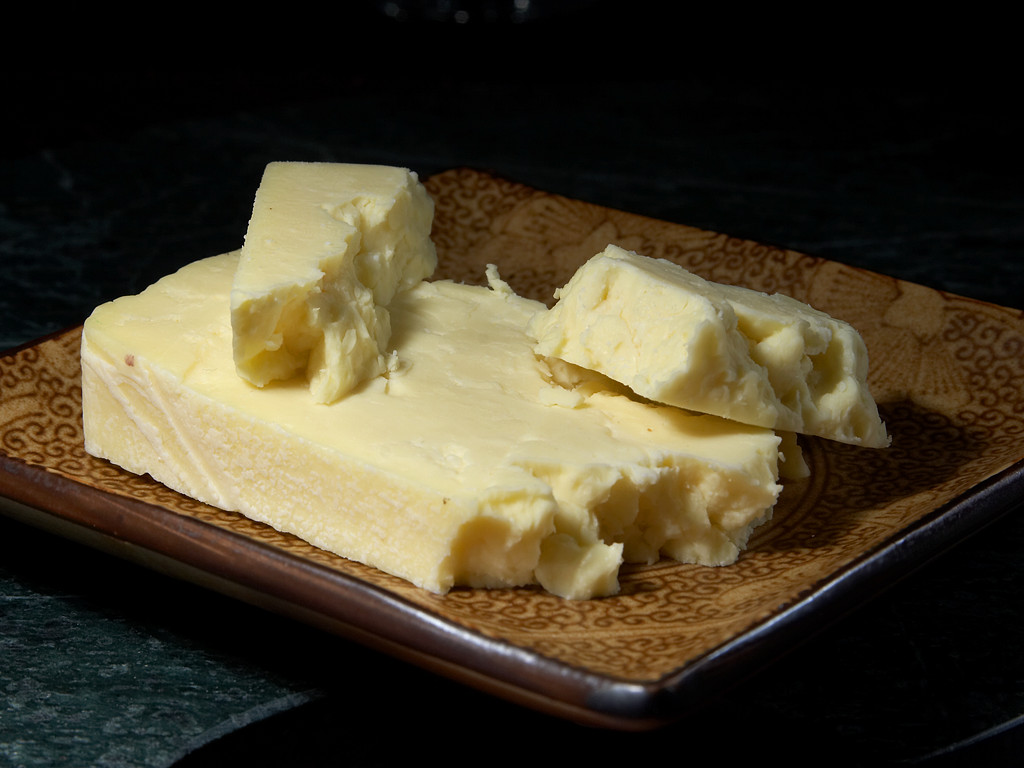
Chevington is a semi-soft cheese crafted from the milk of Jersey cows. It hails from Northumberland in England. The cheese features a distinctive mould-ripened exterior. Its texture is soft yet firm enough to hold its shape. The paste inside is creamy and smooth. The flavour profile is mild and characteristic of its region. It is produced by the Northumberland Cheese Company today.
Where does Chevington cheese come from?
The cheese has deep roots in Northumberland. John W. Annett of Chevington West Farm first developed it in 1895. The original recipe was lost for many years. In 2003, the Northumberland Cheese Company revived the cheese. They used public records to recreate the formula. The modern version is a slight modification of the original. This revival brought a historic product back to the market.
What does Chevington cheese taste like?
Specific flavour notes are not detailed in the available records. The cheese is described as semi-soft. The mould ripening process influences its taste. Jersey milk contributes to its richness. The texture is smooth and approachable. Tasters would likely find it mild and creamy. The rind adds a subtle earthy element.
How Chevington cheese is made
The cheese is made using Jersey cow's milk. The milk is set to form curds. These curds are then processed into a semi-soft consistency. The cheese undergoes a mould-ripening stage. This involves allowing specific moulds to grow on the surface. The Northumberland Cheese Company handles production. They follow the revived recipe from 2003.
Chevington cheese, drawn
How Chevington cheese is eaten and cooked
Details on specific culinary uses are not provided. As a semi-soft cheese, it can be eaten fresh. It may be served on a cheese board. Its mild nature suits simple pairings. It could be used in sandwiches or light meals.
Chevington cheese through the day
No specific meal occasions are listed. It fits generally into everyday eating. It could appear at lunch or dinner. Its versatility allows for various settings. However, no traditional meal times are attached to it.
Chevington cheese in the world's kitchens
It belongs to British cuisine. Specifically, it represents the dairy traditions of Northumberland. English consumers are the primary audience. The cheese reflects local farming practices. No other national cuisines are mentioned.
At a glance: where it turns up
Cuisines
Faith and ritual
There is no religious significance attached to this cheese. It is not tied to any faith tradition. No special dietary laws apply to its production. It is a secular food product.
Chevington cheese at celebrations
The cheese is not linked to specific festivals. It does not feature in holiday celebrations. There are no traditional events associated with it. It is produced year-round rather than seasonally.
Custom and folk tradition
The history of Chevington is rooted in local farming. John W. Annett established its legacy in 1895. The revival in 2003 honored this heritage. The use of public records preserved the method. This story highlights the resilience of local dairy traditions.
Buying, keeping and serving Chevington cheese
Storage instructions are not provided. Generally, semi-soft cheeses should be kept cool. Wrapping in wax paper is common practice. However, specific advice for Chevington is unavailable.
What to use instead of Chevington cheese
No alternative cheeses are suggested. It is a unique product from Northumberland. Cooks seeking similar textures might look elsewhere.
Protection and trade
Production is handled by the Northumberland Cheese Company. The company revived the recipe in 2003. It is sold within the United Kingdom. No export figures or international trade data are available. It remains a regional specialty.
Questions people ask about Chevington cheese
What kind of milk is used to make Chevington cheese?
Chevington cheese is made exclusively from the milk of Jersey cows. This specific breed contributes to its semi-soft texture and rich character.
Where does Chevington cheese come from?
It comes from Northumberland in England. It is produced by the Northumberland Cheese Company, continuing a tradition started in 1895.
Is Chevington cheese old or new?
The recipe dates back to 1895, but the cheese was revived in 2003. It is a modern recreation of a historic local product.
What type of cheese is Chevington?
It is a semi-soft cheese. It features a mould-ripened exterior, giving it a distinct appearance and mild flavour.
Good reading and sources
The facts on this page come from the Wikipedia article "Chevington cheese", written by its contributors and used under the CC BY-SA 4.0 licence, and from its Wikidata record (CC0). EveryCheese rewrote the text in its own words, with AI assistance, and compares every page with the article to make sure no passage is copied. It may be reused under the same CC BY-SA 4.0 licence with a link back.
It may contain mistakes. Recipes, ageing and customs differ from one dairy, valley or kitchen to the next. Folk beliefs are described as tradition, never as advice. If something is wrong, tell us. Last refreshed 2026-10-15.
More from the United Kingdom
All the cheeses of the United Kingdom 🇬🇧 United KingdomStinking Bishop
A washed-rind cow's-milk cheese from Gloucestershire, ripened in perry.Cow · Semi-soft · Savoury and brothy
🇬🇧 United KingdomStinking Bishop
A washed-rind cow's-milk cheese from Gloucestershire, ripened in perry.Cow · Semi-soft · Savoury and brothy
 🇬🇧 United KingdomLancashire cheese
A cow's-milk cheese from England with creamy, nutty, or crumbly varieties.Cow · Semi-hard · Nutty
🇬🇧 United KingdomLancashire cheese
A cow's-milk cheese from England with creamy, nutty, or crumbly varieties.Cow · Semi-hard · Nutty
 🇬🇧 United KingdomDunlopcàise Dhùn Lùib
A mild Scottish cheese from Ayrshire made with unskimmed cow's milk.Cow · Semi-soft · Sweet and caramel
🇬🇧 United KingdomDunlopcàise Dhùn Lùib
A mild Scottish cheese from Ayrshire made with unskimmed cow's milk.Cow · Semi-soft · Sweet and caramel
 🇬🇧 United KingdomWensleydale
A medium, crumbly British cheese originally from sheep's milk in North Yorkshire.Cow · Semi-soft · Sweet and caramel
🇬🇧 United KingdomWensleydale
A medium, crumbly British cheese originally from sheep's milk in North Yorkshire.Cow · Semi-soft · Sweet and caramel
Its cousins elsewhere
All semi-soft cheeses 🇾🇪 YemenYemeni cheeseجبنة تعز
A smoked semi-hard sheep or goat milk cheese from Taiz Governorate in Yemen.Sheep · Semi-soft · Savoury and brothy
🇾🇪 YemenYemeni cheeseجبنة تعز
A smoked semi-hard sheep or goat milk cheese from Taiz Governorate in Yemen.Sheep · Semi-soft · Savoury and brothy
 🇮🇳 IndiaKalari
A semi-soft cow or buffalo milk cheese from Jammu and Kashmir, dried and sautéed until gooey.Cow · Semi-soft · Savoury and brothy
🇮🇳 IndiaKalari
A semi-soft cow or buffalo milk cheese from Jammu and Kashmir, dried and sautéed until gooey.Cow · Semi-soft · Savoury and brothy
 🇸🇾 SyriaTresseجبنة مشللة
A braided Syrian string cheese with a nutty aroma and springy texture.Cow · Semi-soft · Nutty
🇸🇾 SyriaTresseجبنة مشللة
A braided Syrian string cheese with a nutty aroma and springy texture.Cow · Semi-soft · Nutty