
Lancashire cheese
A cow's-milk cheese from England with three main styles: creamy, tasty, and crumbly.
This English cheese comes from the county of Lancashire and is made entirely from cow's milk. It exists in three distinct forms: a young creamy version, an aged nutty version, and a modern crumbly type. The traditional varieties blend curds from different days, while the newer style uses single-day milk for a fresh, high-acid result.
- Three distinct varieties: Creamy, Tasty, and Crumbly.
- Traditional methods blend curds from multiple days.
- Beacon Fell version has PDO status since registration.
- Joseph Gornall standardized the traditional recipe in the 1890s.
- Pairs traditionally with Eccles and Chorley cakes.
What is Lancashire cheese?
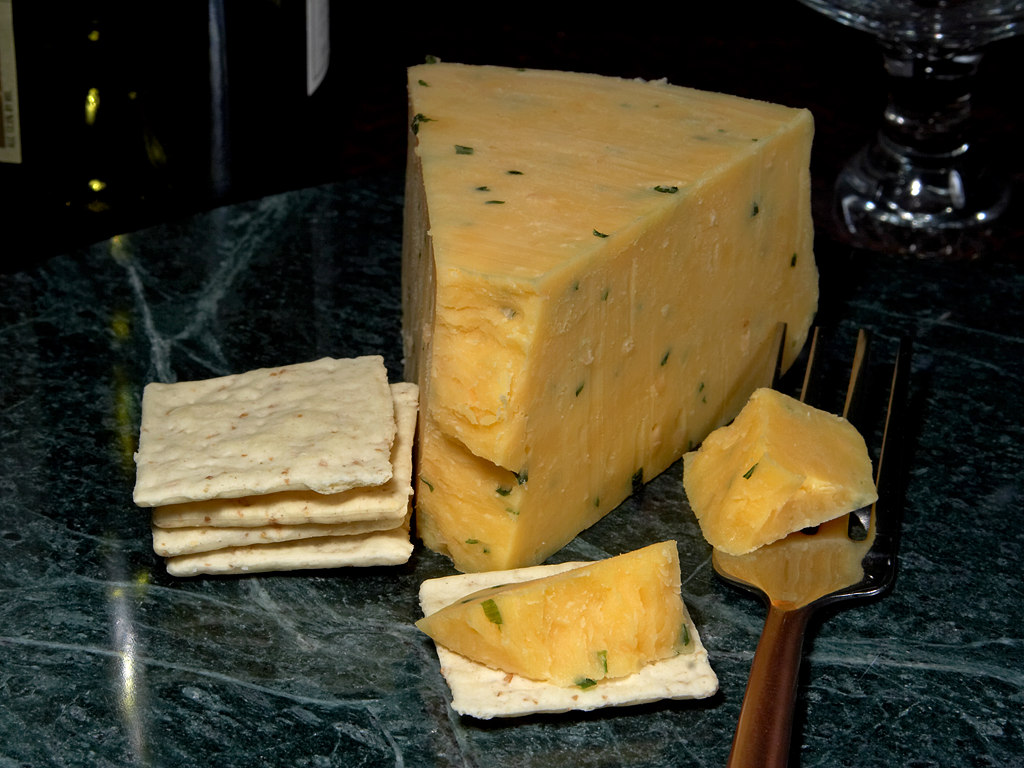
Lancashire cheese originates from the English county of Lancashire and is produced using cow's milk. It presents itself in three primary textures and flavour profiles. The first is a soft, fluffy variety known as Creamy Lancashire, which offers a mild dairy taste. The second is a harder, more developed Tasty Lancashire that develops a nutty character over time. The third is Crumbly Lancashire, a modern invention that breaks apart easily and has a sharper, higher acidity. Traditionally, the cheese appears in pale white or cream hues, though older wheels may take on a deeper yellow tone. The rind is typically natural and unadorned. Its texture ranges from spreadable and moist in the young versions to firm and granular in the matured wheels.
Where does Lancashire cheese come from?
The history of this cheese dates back centuries to small farms in Lancashire. Dairy farmers' wives originally created it from surplus milk that accumulated over several days because a single day's yield was too small to form a wheel. This practice of blending curds of varying ages became unique among British cheeses. In the 1890s, Joseph Gornall, a local official, visited numerous farms to standardize the production process. He established a recipe and technique, now called the Gornall method, which remains the foundation for traditional varieties today. A specific protected designation, Beacon Fell Traditional Lancashire Cheese, restricts PDO status to milk sourced north of the River Ribble, including areas like Fylde, Preston, and Blackpool.
What does Lancashire cheese taste like?
The taste profile shifts significantly depending on the variety and age. Creamy Lancashire delivers a gentle, milky richness with a smooth mouthfeel. As the cheese matures into the Tasty variety, the flavour deepens into distinct nutty notes and becomes more pronounced. The Crumbly version offers a brighter, tangier experience due to its shorter aging period and higher acid content. Aroma is generally clean and dairy-forward, lacking strong pungency. Texture plays a major role in the eating experience: the traditional styles are cohesive yet tender, while the crumbly style fractures easily under pressure, providing a dry, refreshing bite.
How Lancashire cheese is made
Production begins with cow's milk collected from local herds. For traditional Creamy and Tasty Lancashire, curds from two or three different days are blended together. This step creates a unique complexity not found in other British cheeses. The mixture is then processed using the standardized Gornall method. After formation, the cheese is salted and placed to ripen. Creamy Lancashire matures for four to twelve weeks. Tasty Lancashire continues aging for up to twenty-four months. Crumbly Lancashire, introduced in the 1950s, uses only one day's milk. It is pressed differently to achieve a loose structure and is aged for just six to eight weeks, resulting in a fresh, acidic product.
Lancashire cheese, drawn
How Lancashire cheese is eaten and cooked
Lancashire cheese is versatile in the kitchen. It serves well as a standalone snack or part of a light lunch. The creamy variety melts without becoming stringy, making it excellent for toasting or simple gratins. Tasty Lancashire can be grated over dishes or enjoyed on its own. Crumbly Lancashire is often used in sandwiches or salads where its sharpness adds contrast. Traditionally, it is paired with savory pastries such as Eccles cakes and Chorley cakes, creating a balanced combination of sweet pastry and salty cheese. It does not typically feature in complex cooking recipes but shines in simple preparations that highlight its natural dairy qualities.
Lancashire cheese through the day
This cheese fits comfortably into daily eating routines. It is commonly served as a midday snack or alongside bread for lunch. The pairing with Eccles and Chorley cakes suggests a role in afternoon tea or casual supper settings. Because of its mild nature, the creamy version works well for quick bites. The sharper crumbly type adds interest to packed lunches. It is not typically associated with formal dinner parties or festive feasts, remaining instead a staple of everyday domestic consumption in its region of origin.
Lancashire cheese in the world's kitchens
Lancashire cheese is firmly rooted in English culinary tradition. It reflects the agricultural practices of the Lancashire county, where dairy farming has long been central to local life. The traditional methods preserve historical techniques passed down through generations of farmwives. Modern variations like Crumbly Lancashire show adaptation to industrial food production while maintaining regional identity. The cheese is primarily consumed within the United Kingdom, particularly in the North West, where it complements local baked goods. It represents a straightforward, honest approach to cheesemaking that values simplicity and quality ingredients over elaborate processing.
At a glance: where it turns up

Faith and ritual
There are no specific religious associations or ritual uses documented for Lancashire cheese. It is not tied to monastic traditions, fasting periods, or specific faith-based dietary laws beyond general vegetarian considerations. The production relies on secular agricultural practices rather than spiritual observance. While some traditional methods may have been preserved by communities with strong cultural identities, the cheese itself does not hold symbolic meaning in religious contexts. It is viewed purely as a food product derived from local livestock and farmland.
Lancashire cheese at celebrations
Lancashire cheese is not linked to specific festivals, weddings, or holiday celebrations. It is considered an everyday food item rather than a ceremonial dish. The traditional pairing with Eccles and Chorley cakes might appear at local gatherings or community events, but these are not exclusive to particular occasions. The cheese lacks the prestige or rarity that would place it on special tables. Instead, it remains a reliable, accessible option for regular meals and informal socializing throughout the year.
Custom and folk tradition
The legacy of Lancashire cheese lies in its historical production methods. For centuries, rural households relied on blending curds to overcome small milk yields. This resourceful practice defined the cheese's character and distinguished it from others. The standardization by Joseph Gornall in the late nineteenth century helped preserve these techniques against changing industrial trends. Local knowledge and farm-based expertise continue to influence traditional varieties. The cheese stands as a testament to agrarian ingenuity and the importance of preserving regional food heritage through consistent, time-honored processes.
Buying, keeping and serving Lancashire cheese
To maintain quality, store Lancashire cheese in the refrigerator wrapped in wax paper or cheese cloth. This allows the cheese to breathe while preventing it from drying out. Consume creamy varieties within a few weeks of purchase for best results. Mature wheels can last longer but should be checked regularly for mold or excessive dryness. Bring the cheese to room temperature before serving to enhance its flavour and texture. Avoid freezing, as this can alter the crumbly structure and affect the melting properties of the creamy types.
What to use instead of Lancashire cheese
When Lancashire cheese is unavailable, similar textures and flavours can be sought elsewhere. For creamy varieties, mild cheddar or young goat cheese may provide comparable richness. For the crumbly style, Cheshire or Wensleydale offer similar breakaway textures and tangy profiles. Tasty Lancashire can sometimes be replaced with aged cheddar or manchego for nuttier notes. However, none perfectly replicate the unique blended-curd character of traditional Creamy or Tasty Lancashire. The distinction lies in the specific fermentation and aging processes used in Lancashire.
Protection and trade
The market for Lancashire cheese includes both traditional artisanal producers and large-scale manufacturers. Beacon Fell Traditional Lancashire Cheese holds Protected Designation of Origin status, restricting its use to specific geographic areas north of the River Ribble. This protection ensures adherence to designated methods and local sourcing. Other varieties, particularly Crumbly Lancashire, are produced more widely and exported beyond the UK. Production figures vary, with traditional methods yielding smaller batches compared to mass-produced alternatives. The industry balances heritage preservation with commercial demand, ensuring the cheese remains available to consumers worldwide.
Dishes with Lancashire cheese
Questions people ask about Lancashire cheese
What kind of milk is used to make Lancashire cheese?
Lancashire cheese is made exclusively from cow's milk. The milk source is local to the county of Lancashire in England, contributing to the cheese's characteristic dairy flavour and texture.
Where does Lancashire cheese come from?
It originates from the county of Lancashire in England. Specific protected varieties must be made from milk sourced north of the River Ribble, including areas like Fylde, Preston, and Blackpool.
How does Lancashire cheese taste?
Flavour depends on the variety. Creamy Lancashire is mild and rich. Tasty Lancashire develops a nutty depth with age. Crumbly Lancashire offers a sharper, tangier profile due to its shorter maturation period.
What are the different types of Lancashire cheese?
There are three main types: Creamy Lancashire (young and soft), Tasty Lancashire (aged and nutty), and Crumbly Lancashire (modern, single-day milk, and sharp). Each has a distinct texture and flavour profile.
Is there a protected version of Lancashire cheese?
Yes, Beacon Fell Traditional Lancashire Cheese holds Protected Designation of Origin status. It must be made from milk produced in a specific area north of the River Ribble using traditional methods.
Good reading and sources
The facts on this page come from the Wikipedia article "Lancashire cheese", written by its contributors and used under the CC BY-SA 4.0 licence, and from its Wikidata record (CC0). EveryCheese rewrote the text in its own words, with AI assistance, and compares every page with the article to make sure no passage is copied. It may be reused under the same CC BY-SA 4.0 licence with a link back.
It may contain mistakes. Recipes, ageing and customs differ from one dairy, valley or kitchen to the next. Folk beliefs are described as tradition, never as advice. If something is wrong, tell us. Last refreshed 2026-10-15.
More from the United Kingdom
All the cheeses of the United Kingdom 🇬🇧 United Kingdom and 1 moreMarble cheese
A processed cow's milk cheese with distinct colored marbling patterns.Cow · Hard · Savoury and brothy
🇬🇧 United Kingdom and 1 moreMarble cheese
A processed cow's milk cheese with distinct colored marbling patterns.Cow · Hard · Savoury and brothy
 🇬🇧 United KingdomDouble Gloucester
A semi-hard cow's-milk cheese from England with a savoury flavour and natural rind.Cow · Semi-hard · Savoury and brothy
🇬🇧 United KingdomDouble Gloucester
A semi-hard cow's-milk cheese from England with a savoury flavour and natural rind.Cow · Semi-hard · Savoury and brothy
 🇬🇧 United KingdomCaerphilly
A hard, crumbly cow's-milk cheese from South Wales with a mild lemony taste.Cow · Hard · Tangy and lactic
🇬🇧 United KingdomCaerphilly
A hard, crumbly cow's-milk cheese from South Wales with a mild lemony taste.Cow · Hard · Tangy and lactic
Its cousins elsewhere
All semi-hard cheeses 🇮🇳 IndiaKalimpong cheese
A mild, crumbly cow's-milk cheese from a West Bengal hill station, started by a Jesuit priest.Cow · Semi-hard · Tangy and lactic
🇺🇸 United StatesCold-pack cheese
A chilled blend of natural cheeses mixed with flavorings without cooking.Mixed · Bloomy rind · Savoury and brothy
🇮🇳 IndiaKalimpong cheese
A mild, crumbly cow's-milk cheese from a West Bengal hill station, started by a Jesuit priest.Cow · Semi-hard · Tangy and lactic
🇺🇸 United StatesCold-pack cheese
A chilled blend of natural cheeses mixed with flavorings without cooking.Mixed · Bloomy rind · Savoury and brothy
 🇮🇳 IndiaKalari
A semi-soft cow or buffalo milk cheese from Jammu and Kashmir, dried and sautéed until gooey.Cow · Semi-soft · Savoury and brothy
🇮🇱 Israel and 1 moreGvina levanaגבינה לבנה
A soft, unripened cow's-milk cheese spread on bread in Israel.Cow · Fresh · Tangy and lactic
🇮🇳 IndiaKalari
A semi-soft cow or buffalo milk cheese from Jammu and Kashmir, dried and sautéed until gooey.Cow · Semi-soft · Savoury and brothy
🇮🇱 Israel and 1 moreGvina levanaגבינה לבנה
A soft, unripened cow's-milk cheese spread on bread in Israel.Cow · Fresh · Tangy and lactic