Soft and bloomy-rind
Brie, Camembert and Chaource: a white mould coat and a centre that softens as it ripens.
Soft-ripened, or bloomy-rind, cheeses ripen from the outside in. A coat of white mould, chiefly Penicillium camemberti, grows over the surface in the first week or two, and its enzymes soften the paste beneath until a chalky young centre turns smooth and spreading. Brie and Camembert are the models, with Coulommiers, Chaource, Neufchâtel, Brillat-Savarin and many new farm cheeses around the world made in their image.
How they are made
Milk is set gently and the curd is ladled into tall moulds with as little handling as possible, so it keeps its moisture. The cheeses drain under their own weight, are salted, and are sprayed with or already carry white mould spores before they go into humid ripening rooms. Within days a soft white down appears, and the cheeses are turned so it grows evenly. Brie de Meaux is ladled with a perforated shovel called a pelle à brie, and Camembert de Normandie is still ladled by hand under its protected rules.
Ripeness
A young bloomy cheese has a firm, chalky core inside a soft rim. Over the following weeks the softening reaches the centre. A ripe Brie bulges when cut but should not run like water, and it smells of mushroom and cream rather than ammonia. Double- and triple-cream cheeses, such as Brillat-Savarin, have cream added to the milk, which makes them richer and denser and gives them a taste close to butter. Ripeness is a matter of taste: some people like the chalky centre, others wait for it to vanish.
Beyond France
The style has travelled widely. England has Tunworth from Hampshire and Baron Bigod from Suffolk, the United States and Canada have a strong farmstead tradition of bloomy cheeses, and Australia and New Zealand make Brie and Camembert in volume. In India, a young generation of artisan cheesemakers has taken up bloomy rinds alongside paneer and Gouda-type cheeses, and Camembert-style cheeses are now made in small batches for city tables.
Worth knowing
- Brie de Meaux: Large, flat raw-milk Brie from east of Paris
- Camembert de Normandie: Hand-ladled raw-milk Camembert of Normandy
- Coulommiers: A smaller, thicker cousin of Brie
- Chaource: Tall, lightly tangy bloomy cheese of Champagne
- Neufchâtel: Normandy cheese often shaped as a heart
- Brillat-Savarin: Triple-cream cheese, rich and buttery
- Tunworth: English Camembert-style cheese from Hampshire
Good to know
- Take soft-ripened cheese out of the fridge about an hour before serving.
- Wrap it in waxed or cheese paper rather than cling film, which traps moisture and brings out ammonia.
- Cut a round into wedges from the centre so that everyone gets both rind and core.
- The white rind is edible and part of the flavour.
Sources and further reading
Original text by the EveryCheese desk, written with AI assistance and checked against the sources above. Customs are described as tradition, not as advice. If we have something wrong, tell us.
Bloomy rind on EveryCheese
The cheeses written up so far, best known first.
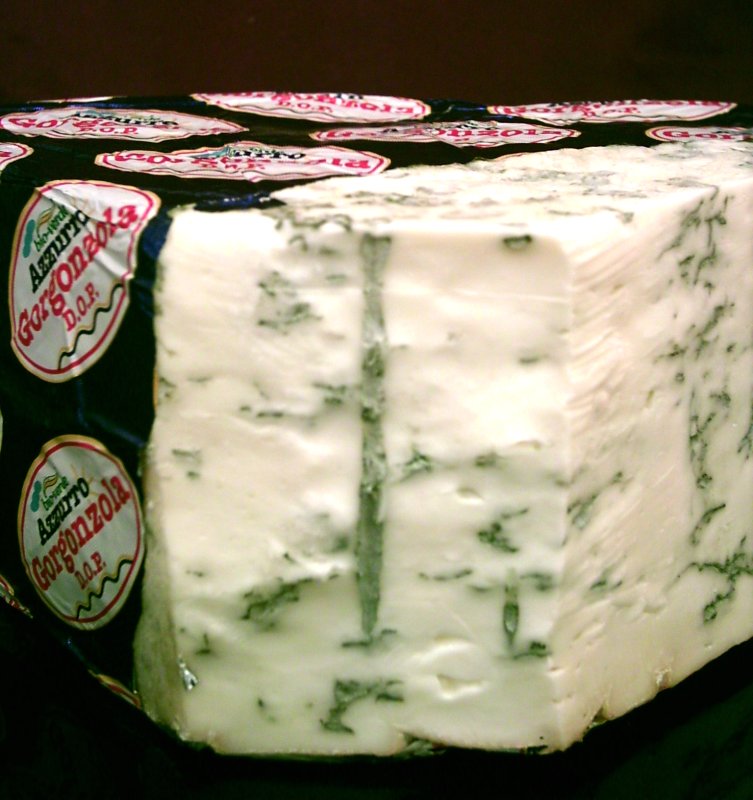 🇮🇹 Italy and 2 moreGorgonzola
A creamy Italian blue cheese from Lombardy with two distinct styles.Cow · Bloomy rind · Salty
🇮🇹 Italy and 2 moreGorgonzola
A creamy Italian blue cheese from Lombardy with two distinct styles.Cow · Bloomy rind · Salty
 🇫🇷 FranceCoulommiers
A soft cow's-milk cheese with a bloomy rind from the Seine-et-Marne department of France.Cow · Bloomy rind · Nutty
🇫🇷 FranceCoulommiers
A soft cow's-milk cheese with a bloomy rind from the Seine-et-Marne department of France.Cow · Bloomy rind · Nutty
 🇩🇪 GermanyCambozola
A mild German cow's-milk blue cheese with a creamy texture and white rind.Cow · Bloomy rind · Buttery and creamy
🇩🇪 GermanyCambozola
A mild German cow's-milk blue cheese with a creamy texture and white rind.Cow · Bloomy rind · Buttery and creamy
 🇪🇸 SpainTetillaQueixo Tetilla
A soft, conical cow's-milk cheese from Galicia with a distinctive nipple-like peak.Cow · Bloomy rind · Buttery and creamy
🇪🇸 SpainTetillaQueixo Tetilla
A soft, conical cow's-milk cheese from Galicia with a distinctive nipple-like peak.Cow · Bloomy rind · Buttery and creamy
 🇫🇷 France and 1 moreVacherin Mont d'Or
A soft, seasonal cow's milk cheese wrapped in spruce bark from the Jura mountains.Cow · Bloomy rind · Earthy and cellar
🇫🇷 France and 1 moreVacherin Mont d'Or
A soft, seasonal cow's milk cheese wrapped in spruce bark from the Jura mountains.Cow · Bloomy rind · Earthy and cellar
 🇫🇷 FranceBrie de Meaux
A soft-ripened cow's milk cheese with a white rind from the Brie region of France.Cow · Bloomy rind · Milky and fresh
🇫🇷 FranceBrie de Meaux
A soft-ripened cow's milk cheese with a white rind from the Brie region of France.Cow · Bloomy rind · Milky and fresh
 🇵🇹 PortugalSerra da EstrelaQueijo Serra da Estrela
A soft Portuguese sheep's milk cheese coagulated with thistle and aged for at least a month.Sheep · Bloomy rind · Buttery and creamy
🇵🇹 PortugalSerra da EstrelaQueijo Serra da Estrela
A soft Portuguese sheep's milk cheese coagulated with thistle and aged for at least a month.Sheep · Bloomy rind · Buttery and creamy
 🇫🇷 FranceGaperon
A dome-shaped Auvergne cheese with a white mold rind and garlic-pepper filling.Cow · Bloomy rind · Buttery and creamy
🇫🇷 FranceGaperon
A dome-shaped Auvergne cheese with a white mold rind and garlic-pepper filling.Cow · Bloomy rind · Buttery and creamy
 🇫🇷 FranceAbbaye de Tamié
A soft cow's-milk cheese aged in the cellars of a Savoyard abbey by monks.Cow · Bloomy rind · Milky and fresh
🇫🇷 FranceAbbaye de Tamié
A soft cow's-milk cheese aged in the cellars of a Savoyard abbey by monks.Cow · Bloomy rind · Milky and fresh
 🇫🇷 FranceChaumesPalhas
A soft, washed-rind cow's milk cheese from the Périgord with a tangerine-orange rind.Cow · Bloomy rind · Savoury and brothy
🇫🇷 FranceChaumesPalhas
A soft, washed-rind cow's milk cheese from the Périgord with a tangerine-orange rind.Cow · Bloomy rind · Savoury and brothy
 🇫🇷 FranceSaint-Félicien
A creamy cow's milk cheese from France with a flower-patterned rindCow · Bloomy rind · Milky and fresh
🇫🇷 FranceSaint-Félicien
A creamy cow's milk cheese from France with a flower-patterned rindCow · Bloomy rind · Milky and fresh
 🇫🇷 FranceMottin charentais
A cylindrical French soft cheese made from pasteurized cow's milk with a creamy taste.Cow · Bloomy rind · Buttery and creamy
🇫🇷 FranceMottin charentais
A cylindrical French soft cheese made from pasteurized cow's milk with a creamy taste.Cow · Bloomy rind · Buttery and creamy
 🇫🇷 FranceDélice de Bourgogne
A soft triple-cream cow's milk cheese from Burgundy with a bloomy rind.Cow · Bloomy rind · Tangy and lactic
🇫🇷 FranceExplorateur
A soft-ripened triple cream cow's milk cheese from France with a squat cylindrical shape.Cow · Bloomy rind · Buttery and creamy
🇫🇷 FranceDélice de Bourgogne
A soft triple-cream cow's milk cheese from Burgundy with a bloomy rind.Cow · Bloomy rind · Tangy and lactic
🇫🇷 FranceExplorateur
A soft-ripened triple cream cow's milk cheese from France with a squat cylindrical shape.Cow · Bloomy rind · Buttery and creamy
 🇨🇦 CanadaLe Riopelle de l'Isle
A soft triple-cream cow's milk cheese from Isle-aux-Grues in Quebec.Cow · Bloomy rind · Buttery and creamy
🇨🇦 CanadaLe Riopelle de l'Isle
A soft triple-cream cow's milk cheese from Isle-aux-Grues in Quebec.Cow · Bloomy rind · Buttery and creamy
 🇫🇮 FinlandReindeer cheese
A rare Scandinavian cheese made from the high-fat milk of reindeer.Other · Bloomy rind · Milky and fresh
🇫🇮 FinlandReindeer cheese
A rare Scandinavian cheese made from the high-fat milk of reindeer.Other · Bloomy rind · Milky and fresh
 🇫🇷 FranceCouronne lochoise
A soft, ash-coated goat cheese from the Loire Valley shaped like a ring.Goat · Bloomy rind · Buttery and creamy
🇫🇷 FranceCouronne lochoise
A soft, ash-coated goat cheese from the Loire Valley shaped like a ring.Goat · Bloomy rind · Buttery and creamy
 🇫🇷 FranceFromager d'Affinois
A hexagonal industrial soft cheese with a bloomy rind made in France.Mixed · Bloomy rind · Buttery and creamy
🇫🇷 FranceFromager d'Affinois
A hexagonal industrial soft cheese with a bloomy rind made in France.Mixed · Bloomy rind · Buttery and creamy
Photo credits on this page
The small pictures above come from Wikimedia Commons under free licences. Some are cropped to fit.
- Brie de Meaux: Coyau, CC BY-SA 3.0, source
- Coulommiers: Myrabella, CC BY-SA 3.0, source
- Tetilla: Tamorlan, CC BY 3.0, source
- Vacherin Mont d'Or: Zubro, CC BY-SA 3.0, source
- Chaumes: Robin dubois, CC BY-SA 3.0, source
- Serra da Estrela: Adriao, Public domain, source
- Fromager d'Affinois: Eugene Peretz, CC BY-SA 2.0, source
- Gaperon: Pymouss, CC BY-SA 4.0, source
- Gorgonzola: Unknown author, CC BY-SA 3.0, source
- Cambozola: Jorchr, CC BY-SA 3.0, source
- Abbaye de Tamié: Tangopaso, Public domain, source
- Saint-Félicien: Coyau, CC BY-SA 3.0, source
- Mottin charentais: Cobber17, CC BY 3.0, source
- Délice de Bourgogne: Beprost, CC BY-SA 4.0, source
- Le Riopelle de l'Isle: Lëa-Kim Châteauneuf, CC BY-SA 4.0, source
- Reindeer cheese: Jennifer Woodard Maderazo, CC BY 2.0, source
- Couronne lochoise: Thomon, CC BY-SA 4.0, source