Saga
A mild Danish blue-veined cheese with a white mould rind and creamy texture.
Saga is a soft, creamy cheese from Denmark that blends the characteristics of brie and blue cheese. It features delicate blue veins and a white mould rind, offering a very mild flavour. The cheese is aged for over sixty days before it is ready to eat.
- Originated in Denmark by major producer Arla Foods.
- Combines brie and blue cheese characteristics.
- Features a white mould rind and delicate blue veins.
- Aged for more than 60 days before sale.
- Widely sold in the United States alongside Denmark.
What is Saga?
Saga is a soft cheese produced in Denmark. It combines elements of brie and blue cheese into a single product. The paste is creamy and contains delicate blue veins. A white mould covers the exterior rind. The flavour is notably mild compared to other blue cheeses. This variety may lack the strong blue mold presence found in similar products. It presents as a gentle option for those who find traditional blues too sharp.
Where does Saga come from?
The cheese originated in Denmark. Arla Foods is one of the largest producers of Saga in its home country. The brand has expanded significantly beyond Europe. It is largely produced and sold in the United States. The name applies to a family of cheeses including blue, blue brie, camembert, creamy brie, and Gorgonzola varieties.
What does Saga taste like?
Saga offers a very mild taste profile. It avoids the pungent bite typical of many blue cheeses. The texture is soft and creamy throughout. The blue veins are present but subtle. The white mould rind adds a slight earthy note. The overall experience is smooth and approachable rather than aggressive or salty.
How Saga is made
Producers use milk, sodium chloride, cheese culture, and rennet to make Saga. The process involves setting the curd and aging the wheels. Ripening takes place for more than sixty days. This duration allows the white mould to develop on the surface. The internal blue veining forms during this maturation period. The result is a unified soft cheese with distinct visual features.
Saga, drawn
How Saga is eaten and cooked
Saga can be eaten on its own as a snack. It works well on a cheese board alongside fruits or crackers. The cheese pairs nicely with white Riesling wines. Hearty red wines also complement its mild character. It does not require cooking to be enjoyed. Its soft texture makes it suitable for spreading on bread.
Saga through the day
This cheese fits comfortably into casual dining settings. It serves as an afternoon snack or light lunch item. It is appropriate for social gatherings and cheese boards. The mild nature makes it accessible for dinner tables as well. It is not typically associated with breakfast or dessert courses.
Saga in the world's kitchens
Saga belongs to Danish cuisine. It is a domestic product made in Denmark. The cheese is also widely available in American markets. Producers sell it extensively across the United States. It represents a modern Danish interpretation of classic European styles.
At a glance: where it turns up
By meal and use
Cuisines
Protection and trade
Arla Foods produces much of the Saga cheese in Denmark. The brand operates internationally with strong sales in America. The Saga name covers multiple cheese types like Gorgonzola and Camembert. These variations share the brand identity while differing in style. Production focuses on meeting demand in both European and North American markets.
Questions people ask about Saga
Where does Saga cheese come from?
Saga cheese originated in Denmark. It is produced there by manufacturers such as Arla Foods. The brand has also expanded its distribution to the United States, where it is widely sold.
What kind of milk is used to make Saga?
Saga is made from cow's milk. The production process includes adding rennet, cheese culture, and sodium chloride to create its specific soft texture and mild flavour.
How would you describe the taste of Saga?
Saga is a very mild blue cheese. It lacks the sharp punch of traditional blues. The texture is creamy, and the blue veins are delicate. It offers a gentle, approachable flavour profile.
What wine pairs best with Saga cheese?
Saga pairs nicely with white Riesling wines. Hearty red wines are also recommended. Its mild character allows it to complement these beverage choices without overwhelming them.
Good reading and sources
The facts on this page come from the Wikipedia article "Saga (cheese)", written by its contributors and used under the CC BY-SA 4.0 licence, and from its Wikidata record (CC0). EveryCheese rewrote the text in its own words, with AI assistance, and compares every page with the article to make sure no passage is copied. It may be reused under the same CC BY-SA 4.0 licence with a link back.
It may contain mistakes. Recipes, ageing and customs differ from one dairy, valley or kitchen to the next. Folk beliefs are described as tradition, never as advice. If something is wrong, tell us. Last refreshed 2026-10-15.
More from the United States
All the cheeses of the United States 🇬🇷 Greece and 5 moreFetaφέτα
A crumbly Greek brined cheese made from sheep and goat milk.Sheep · Brined · Tangy and lactic
🇬🇷 Greece and 5 moreFetaφέτα
A crumbly Greek brined cheese made from sheep and goat milk.Sheep · Brined · Tangy and lactic
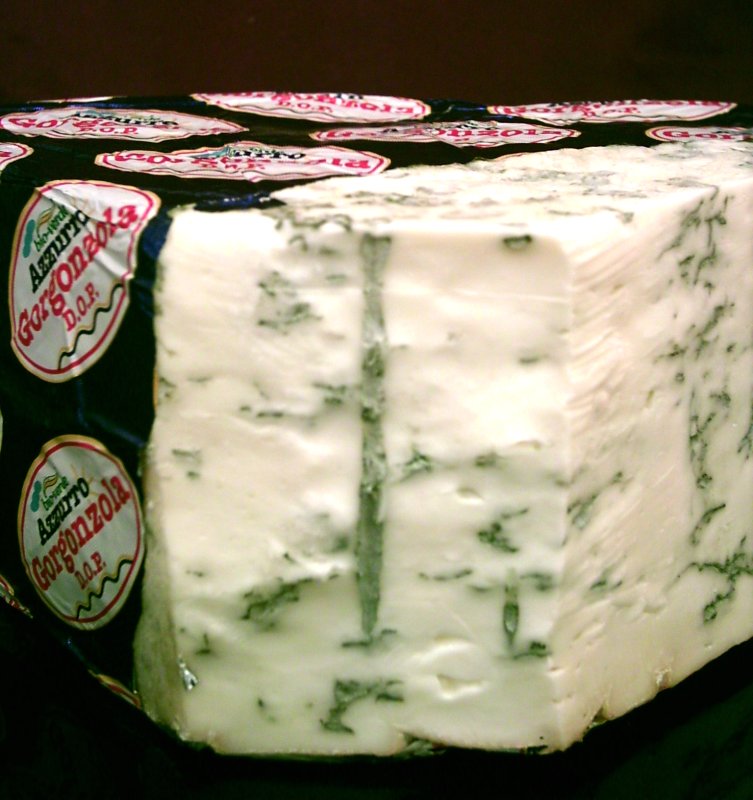 🇮🇹 Italy and 2 moreGorgonzola
A creamy Italian blue cheese from Lombardy with two distinct styles.Cow · Bloomy rind · Salty
🇮🇹 Italy and 2 moreGorgonzola
A creamy Italian blue cheese from Lombardy with two distinct styles.Cow · Bloomy rind · Salty
 🇫🇷 France and 1 moreMunsterMunster-géromé
A washed-rind cow's-milk cheese from the Vosges mountains of eastern France.Cow · Bloomy rind · Pungent and funky
🇫🇷 France and 1 moreMunsterMunster-géromé
A washed-rind cow's-milk cheese from the Vosges mountains of eastern France.Cow · Bloomy rind · Pungent and funky
 🇮🇹 Italy and 3 moreParmesanParmigiano Reggiano
A hard, granular cow's-milk cheese aged at least a year in northern Italy.Cow · Hard · Sharp and tangy-aged
🇮🇹 Italy and 3 moreParmesanParmigiano Reggiano
A hard, granular cow's-milk cheese aged at least a year in northern Italy.Cow · Hard · Sharp and tangy-aged
Its cousins elsewhere
All bloomy rind cheeses 🇪🇬 EgyptMishمش (meš)
A fermented Egyptian salty cheese aged in buttermilk brine until sharp and pungent.Mixed · Bloomy rind · Salty
🇺🇸 United StatesCup cheese
A pungent, spreadable Pennsylvania Dutch cheese sold in cupsCow · Bloomy rind · Pungent and funky
🇪🇬 EgyptMishمش (meš)
A fermented Egyptian salty cheese aged in buttermilk brine until sharp and pungent.Mixed · Bloomy rind · Salty
🇺🇸 United StatesCup cheese
A pungent, spreadable Pennsylvania Dutch cheese sold in cupsCow · Bloomy rind · Pungent and funky