
Munster
In its own language: Munster-géromé
A washed-rind cow's-milk cheese from the Vosges mountains of eastern France.
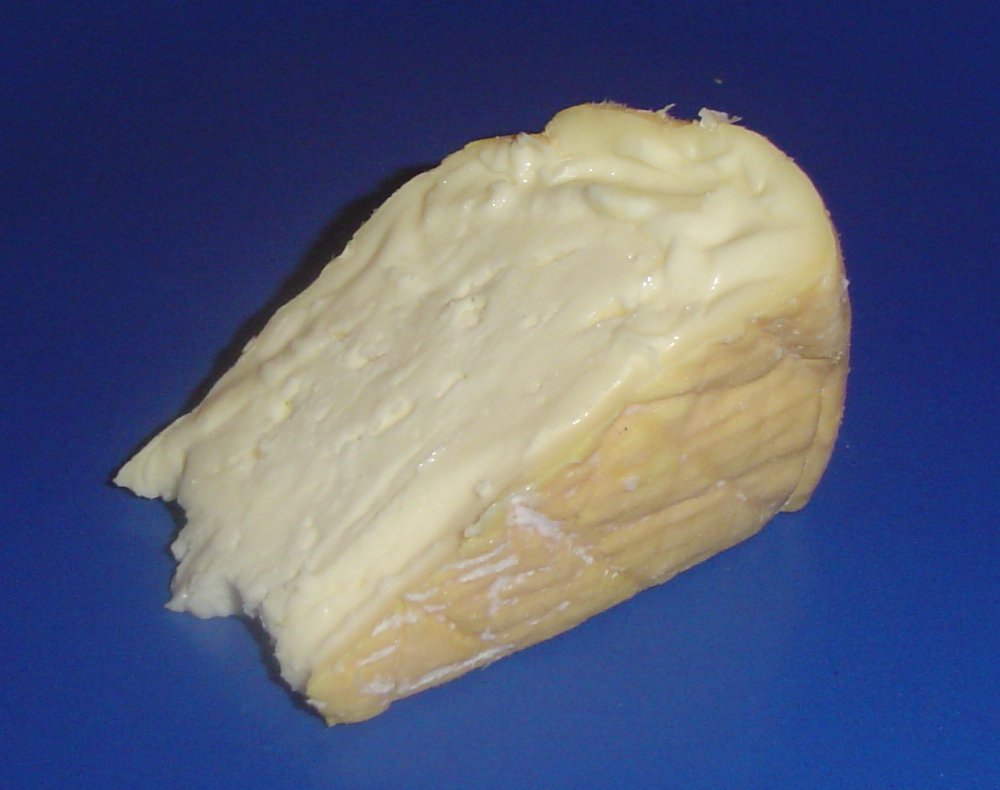
Munster is a soft, washed-rind cheese made from raw cow's milk in the Vosges region of France. It has a strong aroma and taste, with an orange rind and semi-soft paste. Traditionally eaten fresh in summer or autumn, it pairs well with local wines and breads.
- Washed-rind soft cheese from the Vosges mountains of France.
- Made from raw cow's milk with a strong, pungent aroma.
- Protected by AOC status since 1978.
- Traditionally aged in damp cellars for five weeks to three months.
- Best enjoyed in summer and autumn from high-altitude pastures.
What is Munster?
Munster is a soft cheese with a distinctively pungent character. Made from raw cow's milk, it forms flat cylinders ranging from seven to twenty centimeters in diameter. The paste is semi-soft and white, while the rind is washed regularly during aging to develop a slick, shiny surface that turns brick-red or orange. It carries a very strong, penetrating odor and a sharp, tangy flavor that intensifies with age.
Where does Munster come from?
The cheese originates in the Vosges mountains of eastern France, specifically between Alsace, Lorraine, and Franche-Comté. Its name comes from the town of Munster, where monks in local abbeys matured the cheese in their cellars. A variant called Géromé derives from Gérardmer on the Lorrain side. Historically, herders paid tithes to monasteries and nobles with this cheese, establishing its deep roots in the region's feudal past.
What does Munster taste like?
The profile is bold and assertive. Expect a sharp, salty tang that evolves into a deeper savory richness as the cheese ages. The aroma is heavy and musky, typical of washed-rind varieties. The texture remains creamy and yielding, offering a smooth mouthfeel that contrasts with the intense bite of the flavor. Smaller wheels tend to be milder, while larger ones pack more punch.
How Munster is made
Producers use raw cow's milk from the designated Vosges area. The curds are formed into flat wheels and placed in damp cellars for ripening. During this period, which lasts five weeks to three months, workers wash the rinds with brine. This washing encourages bacterial growth, creating the characteristic orange color and strong smell. Quality control ensures the final product meets strict size and fat content standards.
Munster, drawn
How Munster is eaten and cooked
Munster is often served on cheese boards alongside crusty bread and pickles. Its melting quality makes it suitable for hot dishes like tarts or grilled sandwiches. In its home region, it is commonly eaten as a snack or light lunch. The strong flavor stands up well to robust local wines, particularly those from the Alsace vineyards nearby.
Munster through the day
It fits comfortably into daily meals, particularly as a midday snack or part of a casual lunch. On cheese boards, it serves as a centerpiece for dinner gatherings. While not typically a breakfast item, its versatility allows it to appear in various settings, from rustic farm tables to formal dining occasions where bold flavors are appreciated.
Munster in the world's kitchens
French cuisine, especially Alsatian and Lorrainer traditions, embraces Munster as a staple. In these regions, it is prepared simply to highlight its natural intensity. Outside France, particularly in the United States, the term 'munster' has become genericized, often referring to a milder, smoother cheese that differs significantly from the original French product.
At a glance: where it turns up
By meal and use
Celebrations
Faith and ritual
Monastic communities played a crucial role in the cheese's history. Benedictine monks in Munster, Senones, and Moyenmoutier preserved and aged the cheese in their cellars. These religious establishments were key patrons of the dairy trade, receiving the cheese as payment for pasture rights and tithes from local herders.
Munster at celebrations
The cheese is closely tied to the pastoral calendar. It is considered best when made in summer and autumn, using milk from cows grazing on high mountain pastures after the hay harvest. This seasonal production connects the cheese to the transhumance traditions of the Vosges, celebrating the return of herds from the chaumes.
Custom and folk tradition
Local lore holds that the finest Munster comes from the Haute Vallée de Munster itself. However, opinions vary widely among villagers in Lapoutroie, Sainte-Marie-aux-Mines, and Villé. The tradition of washing the rind is a meticulous craft passed down through generations, ensuring the distinctive bacterial bloom that defines the cheese's identity.
Buying, keeping and serving Munster
Keep the cheese wrapped in wax paper or foil in the refrigerator to allow it to breathe. Consume it within a few days of purchase for the best texture and flavor. If the rind dries out, lightly brush it with water to restore moisture. Avoid freezing, as this damages the semi-soft paste structure.
Protection and trade
The Appellation d'Origine Contrôlée (AOC) protects the name and production methods. Only cheese made in specific departments like Haut-Rhin, Bas-Rhin, and Moselle can bear the label. Strict rules govern milk sourcing, aging conditions, and physical dimensions. Export packaging may differ from domestic sales, but the core quality standards remain enforced.
Questions people ask about Munster
Where does Munster cheese come from?
It originates in the Vosges mountains of eastern France, specifically around the towns of Munster and Gérardmer. The name reflects these locations, with 'Géromé' coming from the local pronunciation of Gérardmer.
What kind of milk is used to make Munster?
Authentic Munster is made exclusively from raw cow's milk sourced from the designated AOC region in the Vosges. This unpasteurized milk contributes to its complex flavor and strong aroma.
How would you describe the taste of Munster?
It has a very strong, penetrating odor and a sharp, tangy flavor. The taste is savory and salty, becoming more intense as the cheese ages. The texture is semi-soft and creamy.
Is American Muenster the same as French Munster?
No. American Muenster is typically a mild, smooth cheese without the washed-rind process. The French original is much stronger, pungent, and has a distinct orange rind due to regular brine washing.
When is the best time to eat Munster?
It is traditionally considered best in summer and autumn. During these seasons, cows graze on high mountain pastures, producing milk that gives the cheese its richest flavor and most desirable texture.
Good reading and sources
- Munster cheese on WikipediaEncyclopedia
- More photos on Wikimedia CommonsPhotos and video
- Wikidata recordOpen data
The facts on this page come from the Wikipedia article "Munster cheese", written by its contributors and used under the CC BY-SA 4.0 licence, and from its Wikidata record (CC0). EveryCheese rewrote the text in its own words, with AI assistance, and compares every page with the article to make sure no passage is copied. It may be reused under the same CC BY-SA 4.0 licence with a link back.
It may contain mistakes. Recipes, ageing and customs differ from one dairy, valley or kitchen to the next. Folk beliefs are described as tradition, never as advice. If something is wrong, tell us. Last refreshed 2026-10-15.
More from France
All the cheeses of France 🇫🇷 FranceCamembert
A soft-ripened cow's milk cheese from Normandy with a white mould rindCow · Bloomy rind · Earthy and cellar
🇫🇷 FranceCamembert
A soft-ripened cow's milk cheese from Normandy with a white mould rindCow · Bloomy rind · Earthy and cellar
 🇬🇷 Greece and 5 moreFetaφέτα
A crumbly Greek brined cheese made from sheep and goat milk.Sheep · Brined · Tangy and lactic
🇫🇷 FranceBaguette laonnaise
A soft, washed-rind cow's milk cheese from northern France shaped like a small loaf.Cow · Washed rind · Savoury and brothy
🇫🇷 FranceRoule cheese
A soft, herb and garlic flavoured cow's milk cheese rolled into a spiral shape.Cow · Bloomy rind · Herbal and grassy
🇬🇷 Greece and 5 moreFetaφέτα
A crumbly Greek brined cheese made from sheep and goat milk.Sheep · Brined · Tangy and lactic
🇫🇷 FranceBaguette laonnaise
A soft, washed-rind cow's milk cheese from northern France shaped like a small loaf.Cow · Washed rind · Savoury and brothy
🇫🇷 FranceRoule cheese
A soft, herb and garlic flavoured cow's milk cheese rolled into a spiral shape.Cow · Bloomy rind · Herbal and grassy
Its cousins elsewhere
All bloomy rind cheeses 🇮🇳 IndiaKalari
A semi-soft cow or buffalo milk cheese from Jammu and Kashmir, dried and sautéed until gooey.Cow · Semi-soft · Savoury and brothy
🇺🇸 United StatesCold-pack cheese
A chilled blend of natural cheeses mixed with flavorings without cooking.Mixed · Bloomy rind · Savoury and brothy
🇮🇳 IndiaKalari
A semi-soft cow or buffalo milk cheese from Jammu and Kashmir, dried and sautéed until gooey.Cow · Semi-soft · Savoury and brothy
🇺🇸 United StatesCold-pack cheese
A chilled blend of natural cheeses mixed with flavorings without cooking.Mixed · Bloomy rind · Savoury and brothy
 🇮🇳 IndiaKalimpong cheese
A mild, crumbly cow's-milk cheese from a West Bengal hill station, started by a Jesuit priest.Cow · Semi-hard · Tangy and lactic
🇮🇳 IndiaKalimpong cheese
A mild, crumbly cow's-milk cheese from a West Bengal hill station, started by a Jesuit priest.Cow · Semi-hard · Tangy and lactic