Liederkranz
A pungent American smear-ripened cow's milk cheese created in 1891 as a Limburger variant.
Liederkranz is an American semisoft cheese made from cow's milk. It features a tan-orange rind and a pale interior with a strong aroma that can turn ammonia-like if aged too long. The cheese was invented in New York in 1891 by Emil Frey.
- Created in 1891 by Swiss cheesemaker Emil Frey in Monroe, New York.
- Named after a local singing society called the Liederkranz Club.
- Similar in flavor to the French cheese Époisses.
- Discontinued from 1985 to 2010 due to contamination and ownership changes.
- Favorite cheese of poet W. H. Auden.
What is Liederkranz?
Liederkranz is a semisoft cow's milk cheese produced in the United States. It has an edible crust that ranges from pale yellow to orange-tan. The paste inside is pale and soft. The flavor is mildly pungent, while the aroma is distinct and strong. If the cheese ages incorrectly, the smell can become unpleasantly like ammonia. It is often compared to the French cheese Époisses due to its similar flavor profile. The cheese is known for its sticky rind, which is characteristic of smear-ripened varieties.
Where does Liederkranz come from?
The cheese was created in 1891 by Emil Frey, a Swiss cheesemaker living in Monroe, New York. Frey named it after a local singing society called the Liederkranz Club, likely for its Germanic sound. He later moved production to Van Wert, Ohio, in 1926. The Monroe Cheese Company sold the brand to Borden in 1929. After Borden stopped natural cheese production in 1981, Fisher Cheese took over briefly. A contamination issue led to its withdrawal in 1985. The trademark and cultures were eventually acquired by DCI Cheese Company, which reintroduced the cheese in 2010.
What does Liederkranz taste like?
The taste is described as mildly pungent with tangy notes. The texture is semisoft and creamy. The aroma is the most defining feature, being quite strong. Proper aging maintains the balance, but over-aging or incorrect conditions cause the development of sharp ammonia flavors. This intensity makes it a polarizing cheese for some palates. It shares sensory similarities with other washed-rind cheeses like Époisses.
How Liederkranz is made
Emil Frey developed the recipe using a different bacterial culture than traditional Limburger. The milk is cow's milk. The cheese undergoes smear-ripening, where the rind is regularly washed or brushed to encourage specific bacteria. This process creates the distinctive sticky, orange-tan crust. The curds are pressed into a semisoft form. Historically, it was sold in small boxes with perforations. Modern versions use aroma-proof foil wrapping to contain the strong scent during storage and transport.
Liederkranz, drawn
How Liederkranz is eaten and cooked
Liederkranz is typically eaten on its own or served on a cheese board. Its strong flavor and aroma make it suitable for pairing with robust wines or dark breads. It is not commonly used for melting due to its texture and intense smell. Some enthusiasts enjoy it as a snack. Poet W. H. Auden favored this cheese, recommending it for direct consumption rather than cooking.
Liederkranz through the day
It is primarily consumed as a snack or part of a cheese board. The strong aroma and flavor make it less suitable for light breakfasts or delicate lunches. It fits well into dinner settings where bold flavors are appreciated. It is not typically associated with desserts or street food. The cheese is best enjoyed when served at room temperature to allow the full aroma to develop.
Liederkranz in the world's kitchens
Liederkranz is an American cheese with Swiss influences due to its creator. It reflects the immigrant cheesemaking traditions in New York and Ohio. The style is reminiscent of European washed-rind cheeses but adapted for American tastes. It does not belong to a specific regional cuisine but stands as a unique national product. Its history ties it to the dairy industries of the Midwest and Northeast.
At a glance: where it turns up
By meal and use
Cuisines
Faith and ritual
There are no specific religious associations with Liederkranz cheese. It is not tied to any particular faith or ritual. The name comes from a secular singing society, not a religious group. It is not considered kosher or halal by default, though ingredients may vary. It is simply a commercial product without spiritual significance.
Liederkranz at celebrations
The cheese is not linked to specific festivals or holidays. It is not traditionally served at weddings or new year celebrations. Its production history involves corporate changes rather than community events. The Monroe Cheese Festival mentions cheesemaking history but does not specifically celebrate Liederkranz. It remains a standard commercial product rather than a celebratory item.
Custom and folk tradition
The cheese represents the tradition of immigrant cheesemakers in America. Emil Frey brought Swiss techniques to New York and Ohio. The naming after a singing club shows the cultural blend of German-American communities. The long period of absence from the market (1985-2010) highlights the fragility of such specialized products. Its revival by DCI Cheese Company preserves this historical recipe.
Buying, keeping and serving Liederkranz
Modern Liederkranz is wrapped in aroma-proof foil to prevent the strong smell from escaping. It should be stored in the refrigerator. The original packaging involved small boxes with perforations. Proper storage prevents the ammonia flavor from developing too quickly. Consumers should check the expiration date as the cheese continues to age in the package.
What to use instead of Liederkranz
Époisses is often cited as a similar cheese due to comparable flavor and aroma. Limburger is the original inspiration for Liederkranz, making it a close relative. Other washed-rind cheeses may serve as alternatives for those seeking similar pungency. However, the specific bacterial culture used in Liederkranz gives it a unique character that is hard to replicate exactly.
Protection and trade
The cheese was originally produced by the Monroe Cheese Company. It passed to Borden in 1929, then to Fisher Cheese in 1981. A batch contamination in 1985 led to its discontinuation. The rights were sold to Beatrice Foods and the New Zealand Dairy Board. DCI Cheese Company acquired the trademark and cultures in 2010, restarting production. The brand has changed hands multiple times, reflecting the volatile nature of the cheese industry.
Questions people ask about Liederkranz
What kind of milk is used to make Liederkranz?
Liederkranz is made entirely from cow's milk. The specific bacterial culture used for smear-ripening gives it its distinctive pungent flavor and aroma.
Where did Liederkranz cheese originate?
It originated in Monroe, New York, in 1891. It was created by Emil Frey, a Swiss cheesemaker who later moved production to Ohio before the brand changed hands several times.
How would you describe the taste of Liederkranz?
It has a mildly pungent flavor with tangy notes. The aroma is strong and can become ammonia-like if aged incorrectly. It is often compared to Époisses.
Why was Liederkranz discontinued for so long?
After being bought by Borden, a fire damaged the plant in 1981. Fisher Cheese took over but withdrew the product in 1985 due to bacterial contamination. It returned in 2010 under new ownership.
Is Liederkranz similar to Limburger?
Yes, it is an American recreation of Limburger. It uses a different bacterial culture for smear-ripening, resulting in a subtly different but still pungent profile.
Good reading and sources
The facts on this page come from the Wikipedia article "Liederkranz cheese", written by its contributors and used under the CC BY-SA 4.0 licence, and from its Wikidata record (CC0). EveryCheese rewrote the text in its own words, with AI assistance, and compares every page with the article to make sure no passage is copied. It may be reused under the same CC BY-SA 4.0 licence with a link back.
It may contain mistakes. Recipes, ageing and customs differ from one dairy, valley or kitchen to the next. Folk beliefs are described as tradition, never as advice. If something is wrong, tell us. Last refreshed 2026-10-15.
More from the United States
All the cheeses of the United States 🇺🇸 United StatesBergenost
A triple-cream Norwegian-style butter cheese from New York with green wax.Mixed · Semi-soft · Buttery and creamy
🇺🇸 United StatesBergenost
A triple-cream Norwegian-style butter cheese from New York with green wax.Mixed · Semi-soft · Buttery and creamy
 🇺🇸 United StatesMuenster
A semi-soft American cow's-milk cheese with a smooth texture and an orange rind dyed with annatto.Cow · Semi-soft · Nutty
🇺🇸 United States and 1 morePot cheese
A soft, crumbly, unaged cow's-milk cheese popular in North America and Austria.Cow · Fresh · Milky and fresh
🇺🇸 United StatesMuenster
A semi-soft American cow's-milk cheese with a smooth texture and an orange rind dyed with annatto.Cow · Semi-soft · Nutty
🇺🇸 United States and 1 morePot cheese
A soft, crumbly, unaged cow's-milk cheese popular in North America and Austria.Cow · Fresh · Milky and fresh
Its cousins elsewhere
All semi-soft cheeses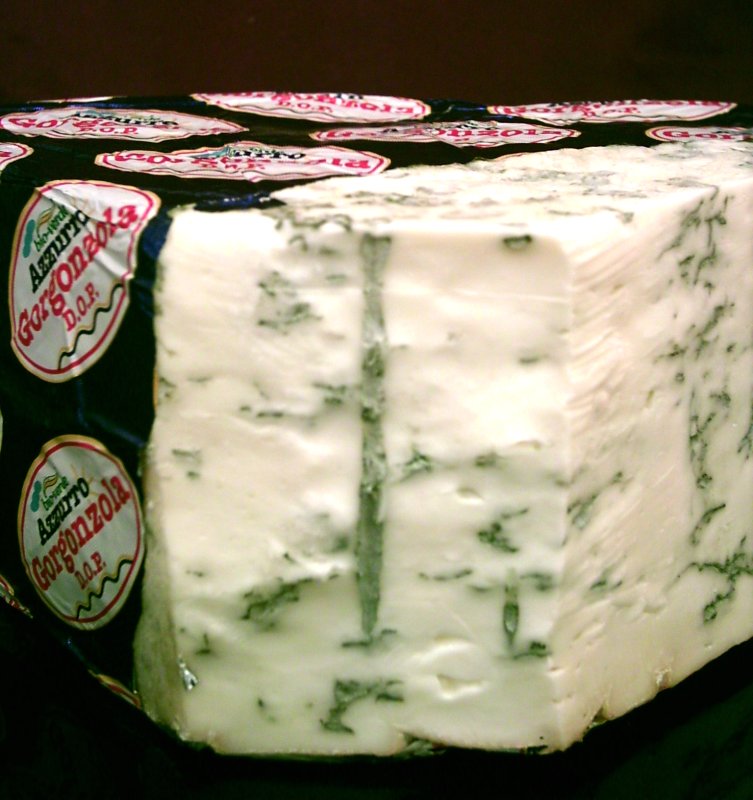 🇮🇹 Italy and 2 moreGorgonzola
A creamy Italian blue cheese from Lombardy with two distinct styles.Cow · Bloomy rind · Salty
🇮🇹 Italy and 2 moreGorgonzola
A creamy Italian blue cheese from Lombardy with two distinct styles.Cow · Bloomy rind · Salty
 🇫🇷 France and 1 moreMunsterMunster-géromé
A washed-rind cow's-milk cheese from the Vosges mountains of eastern France.Cow · Bloomy rind · Pungent and funky
🇫🇷 France and 1 moreMunsterMunster-géromé
A washed-rind cow's-milk cheese from the Vosges mountains of eastern France.Cow · Bloomy rind · Pungent and funky
 🇨🇿 Czech RepublicOlomouc curd cheeseOlomoucké tvarůžky
A pungent, low-fat ripened soft cheese from the Czech Republic made from quark.Cow · Bloomy rind · Pungent and funky
🇨🇿 Czech RepublicOlomouc curd cheeseOlomoucké tvarůžky
A pungent, low-fat ripened soft cheese from the Czech Republic made from quark.Cow · Bloomy rind · Pungent and funky
 🇹🇷 TurkeyTulumtulum peyniri
A traditional Turkish goat's milk cheese ripened inside a goatskin casing.Goat · Bloomy rind · Tangy and lactic
🇹🇷 TurkeyTulumtulum peyniri
A traditional Turkish goat's milk cheese ripened inside a goatskin casing.Goat · Bloomy rind · Tangy and lactic