
Monterey Jack
A mild, semi-hard cow's milk cheese from California with a creamy texture and slight sweetness.
Monterey Jack is a white, semi-hard cheese made from pasteurized cow's milk in California. It has a mild flavor with a touch of sweetness and melts well. The cheese originated in Monterey during the Spanish colonial period and is now used in many American dishes.
- Originated with Franciscan friars in 18th-century Monterey.
- Named after David Jacks who commercialized the cheese.
- Dry Jack is aged up to 24 months for a harder texture.
- Pepper Jack includes chili peppers and herbs for spice.
- Low tyramine content makes it safe for migraine sufferers.
What is Monterey Jack?
Monterey Jack is a semi-hard cheese made from pasteurized cow's milk. It has a smooth, white paste that is creamy to the touch. The flavor is mild with a hint of sweetness. Some versions are marbled with other cheeses or flavored with peppers. Dry Jack is a harder, aged version. The cheese is known for its good melting quality and versatility in cooking.
Where does Monterey Jack come from?
The cheese began as a Franciscan monastic farmer's cheese in 18th-century Monterey, Alta California. In the 19th century, Doña Juana Cota de Boronda sold Queso del País using a handmade jack to press curds. David Jacks later commercialized the mild white cheese, which became known as Jacks' Cheese. Ranchers like Andrew Molera also produced it in Big Sur.
What does Monterey Jack taste like?
The taste is mild and slightly sweet. The texture is semi-hard and creamy. Dry Jack develops a sharper, harder profile after long aging. Pepper Jack adds spicy notes from chili peppers and herbs. The cheese melts smoothly, making it ideal for hot dishes.
How Monterey Jack is made
Cow's milk is pasteurized and set into curds. Curds are pressed using a jack, a traditional tool. The cheese is then aged. Standard Jack is aged for one to six months. Dry Jack is aged for up to 24 months. Variants like Pepper Jack include added spices and herbs during production.
Monterey Jack, drawn
How Monterey Jack is eaten and cooked
It is eaten on its own or melted in quesadillas and burritos. It works well on cheeseburgers and in grilled cheese sandwiches. The cheese is also used in pasta dishes due to its melting properties. Dry Jack can substitute for hard grating cheeses like Parmesan.
Monterey Jack through the day
Monterey Jack fits into lunch and dinner meals. It is common in snacks and as a melting cheese in hot dishes. It appears in Mexican-style burritos and quesadillas. The cheese is also suitable for casual boards or simple sandwiches.
Monterey Jack in the world's kitchens
It is a staple in American cuisine, especially in California. It is widely used in Mexican-style dishes like burritos and quesadillas. The cheese bridges American comfort food and Mexican-inspired recipes. Its mild flavor makes it adaptable to various culinary traditions.
At a glance: where it turns up
By meal and use
Cuisines
Faith and tradition


Faith and ritual
The cheese traces its roots to Franciscan friars in Monterey. These Christian monks originally made a farmer's cheese style product. This monastic origin links the cheese to early religious communities in Alta California.
Monterey Jack at celebrations
No specific festivals or celebrations are tied to Monterey Jack. It is an everyday cheese rather than a holiday-specific item. Its history is tied to daily life and trade in 19th-century California.
Custom and folk tradition
The name may come from the wooden jack used to press curds. Doña Juana Cota de Boronda’s use of this tool influenced the cheese’s identity. David Jacks’ commercial success helped spread the name. Local ranchers maintained traditional dairy practices in the region.
Buying, keeping and serving Monterey Jack
Store in the refrigerator to maintain freshness. Wrap tightly to prevent drying out. For best melting results, keep refrigerated until use. Dry Jack can be stored longer due to its extended aging.
What to use instead of Monterey Jack
Pepper Jack can replace plain Jack for spicy dishes. Dry Jack substitutes for hard grating cheeses. Colby-Jack offers a marbled alternative. Cheddar-Jack provides a sharper taste. No direct single substitute exists for all variants.
Protection and trade
David Jacks played a key role in commercializing the cheese. It is widely available in American supermarkets. Variants like Pepper Jack and Dry Jack expand its market. The cheese remains a popular domestic product with no protected status.
Dishes with Monterey Jack
Questions people ask about Monterey Jack
Where does Monterey Jack come from?
It originates from Monterey, California, with roots in Franciscan monastic farming practices from the 18th century.
What milk is used to make Monterey Jack?
Monterey Jack is made exclusively from pasteurized cow's milk.
How does Monterey Jack taste?
It has a mild, creamy flavor with a slight sweetness and a semi-hard texture that melts well.
What are the different types of Monterey Jack?
Common variants include Dry Jack (aged longer), Pepper Jack (spiced with chilies), and marbled versions like Colby-Jack.
Good reading and sources
- Monterey Jack on WikipediaEncyclopedia
- More photos on Wikimedia CommonsPhotos and video
- Wikidata recordOpen data
The facts on this page come from the Wikipedia article "Monterey Jack", written by its contributors and used under the CC BY-SA 4.0 licence, and from its Wikidata record (CC0). EveryCheese rewrote the text in its own words, with AI assistance, and compares every page with the article to make sure no passage is copied. It may be reused under the same CC BY-SA 4.0 licence with a link back.
It may contain mistakes. Recipes, ageing and customs differ from one dairy, valley or kitchen to the next. Folk beliefs are described as tradition, never as advice. If something is wrong, tell us. Last refreshed 2026-10-15.
More from the United States
All the cheeses of the United States 🇺🇸 United States and 1 moreMonterey Jack
A mild, semi-hard cow's-milk cheese from California with a creamy texture and slight sweetness.Cow · Semi-hard · Sweet and caramel
🇺🇸 United States and 1 moreMonterey Jack
A mild, semi-hard cow's-milk cheese from California with a creamy texture and slight sweetness.Cow · Semi-hard · Sweet and caramel
 🇺🇸 United StatesColby
A semi-hard American cow's-milk cheese with a mild flavor and orange hue from annatto.Cow · Semi-hard · Milky and fresh
🇺🇸 United StatesColby
A semi-hard American cow's-milk cheese with a mild flavor and orange hue from annatto.Cow · Semi-hard · Milky and fresh
 🇺🇸 United StatesColby-Jack
A mild American semi-hard cheese made by blending Colby and Monterey Jack curds.Cow · Semi-hard
🇺🇸 United StatesColby-Jack
A mild American semi-hard cheese made by blending Colby and Monterey Jack curds.Cow · Semi-hard
Its cousins elsewhere
All semi-hard cheeses 🇺🇸 United States and 1 moreHavartiflødehavarti
A semi-soft Danish cow's-milk cheese with a buttery taste and small irregular eyes.Cow · Semi-soft · Buttery and creamy
🇺🇸 United States and 1 moreHavartiflødehavarti
A semi-soft Danish cow's-milk cheese with a buttery taste and small irregular eyes.Cow · Semi-soft · Buttery and creamy
 🇬🇧 United KingdomDunlopcàise Dhùn Lùib
A mild Scottish cheese from Ayrshire made with unskimmed cow's milk.Cow · Semi-soft · Sweet and caramel
🇬🇧 United KingdomDunlopcàise Dhùn Lùib
A mild Scottish cheese from Ayrshire made with unskimmed cow's milk.Cow · Semi-soft · Sweet and caramel
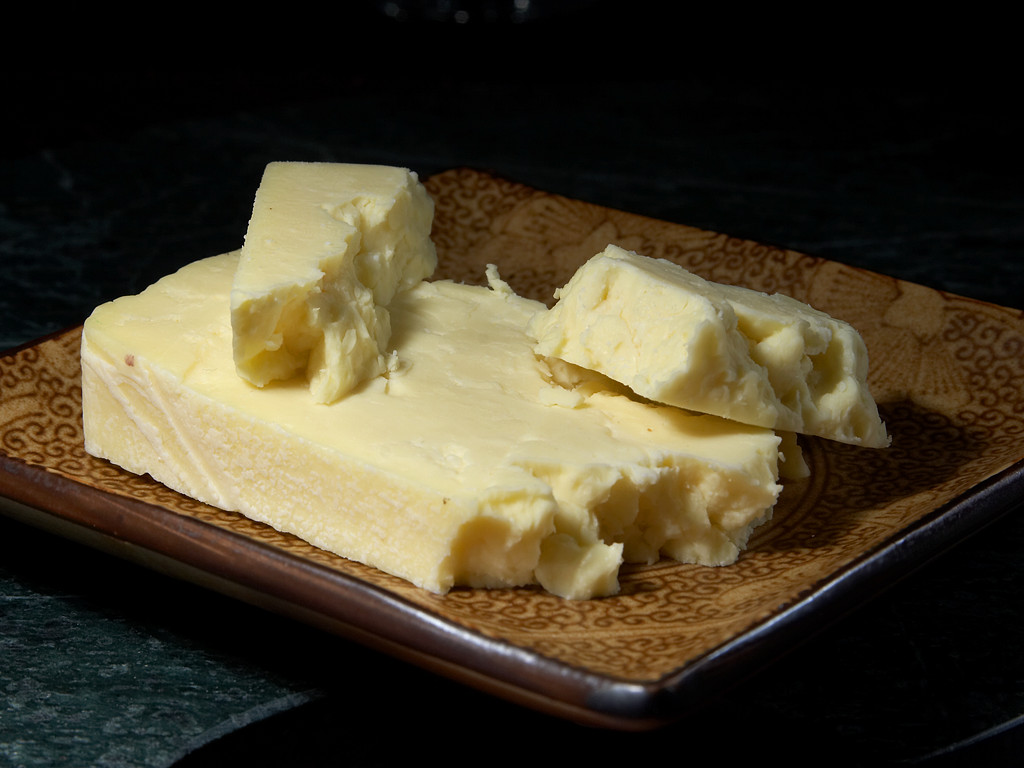 🇬🇧 United KingdomWensleydale
A medium, crumbly British cheese originally from sheep's milk in North Yorkshire.Cow · Semi-soft · Sweet and caramel
🇬🇧 United KingdomWensleydale
A medium, crumbly British cheese originally from sheep's milk in North Yorkshire.Cow · Semi-soft · Sweet and caramel
 🇫🇷 FranceSaint-PaulinSaint Paulin
A semi-soft French cow's milk cheese with a washed orange rind and buttery flavour.Cow · Semi-soft · Buttery and creamy
🇫🇷 FranceSaint-PaulinSaint Paulin
A semi-soft French cow's milk cheese with a washed orange rind and buttery flavour.Cow · Semi-soft · Buttery and creamy