
Ricotta
A fresh Italian whey cheese made by reheating leftover proteins from other cheesemaking batches.
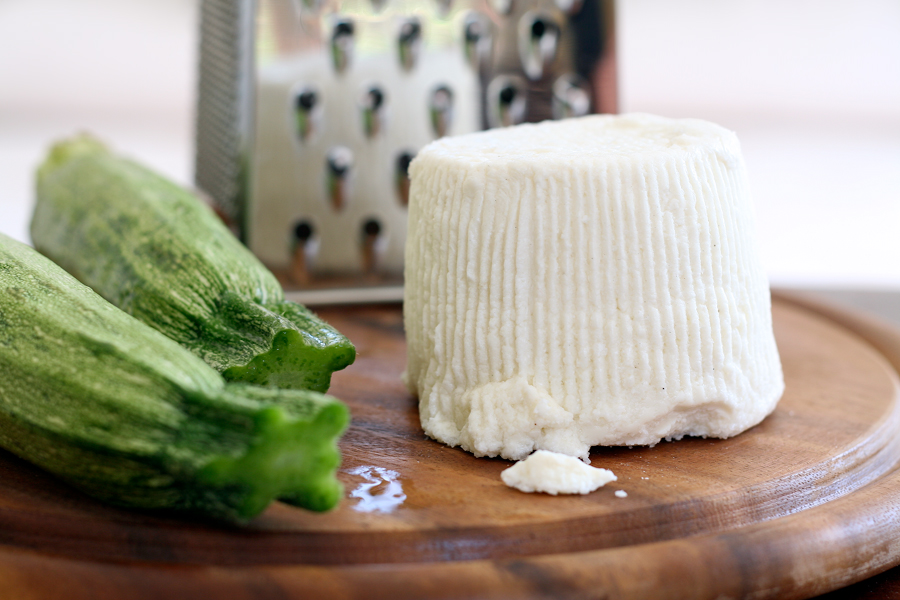
Ricotta is an Italian whey cheese traditionally made from sheep or buffalo milk whey, though modern versions often use cow or goat milk. It has a creamy white color and a slightly sweet taste. The cheese is eaten fresh in desserts like cannoli or cooked in savory pasta dishes.
- Ricotta means 'recooked' in Italian, describing the reheating of whey.
- Traditional ricotta uses whey from sheep or buffalo cheese production.
- Bronze Age ceramic milk boilers originated in the Italian peninsula.
- Ricotta di bufala campana and Ricotta romana have EU protection.
- Ricotta forte ages for a year into a pungent, spicy brown paste.
What is Ricotta?
Ricotta is an Italian whey cheese defined by its method of production rather than a single milk source. Traditionally, it uses the leftover liquid from making sheep or buffalo cheese, but today cow and goat milks are common. The name means 'recooked,' referring to the process of heating the whey again. Fresh ricotta appears as a soft, creamy white mass with a light texture. It tastes mildly sweet and milky. Aged versions exist, such as the firm, salted ricotta salata, which can be grated or sliced. The fat content shifts based on the original milk used.
Where does Ricotta come from?
Cheese production in Italy traces back to the Bronze Age, with ceramic milk boilers appearing in the second millennium BC. These vessels boiled milk without spilling over. As rennet-coagulated cheeses became popular, surplus whey led to the creation of ricotta. Ancient Roman writers like Cato did not mention it, likely because its short shelf life prevented urban trade. Herders consumed it locally. Evidence suggests aristocrats also ate it. Production methods remain largely unchanged since ancient times, though metal boilers now replace ceramic ones.
What does Ricotta taste like?
Fresh ricotta offers a delicate, slightly sweet flavor with a soft, moist texture that is lighter than many fresh cheeses. The taste depends heavily on the milk source. Aged varieties change significantly. Ricotta salata becomes firm, salty, and dry, suitable for grating. Ricotta forte ages for about a year into a pungent, piquant brown paste. Baked or smoked versions develop charred crusts and woody, smoky notes. The flavor profile ranges from mild dairy sweetness to intense sharpness depending on the variety.
How Ricotta is made
Producers harvest whey proteins by allowing the liquid to ferment for twelve to twenty-four hours, increasing acidity. They then heat the whey near boiling. This combination denatures albumin and globulin, causing them to flocculate into fine curds. The mixture cools before being strained through cloth to separate the curds. For aged types, producers may salt, bake, smoke, or further ferment the curds. Protected varieties like Ricotta romana use sheep whey, while Ricotta di bufala campana uses buffalo whey from mozzarella production.
Ricotta, drawn
How Ricotta is eaten and cooked
Ricotta serves as a key ingredient in both sweet and savory Italian cooking. In desserts, it fills cannoli, layers cassata cake, and bakes into pastiera, an Easter pie. It mixes with sugar, cinnamon, or fruit for simple sweets. Savory applications include fillings for ravioli, lasagne, calzone, and pizza. It acts as a thickener for sauces or a substitute for mayonnaise in salads. Aged ricotta salata shaves well over fresh pasta. Smoked or baked variants add depth to vegetable dishes and bread spreads.
Ricotta through the day
This cheese fits into various meals throughout the day. It features prominently in dessert courses, especially in Sicily and Naples, where it fills pastries and cakes. It also appears in lunch and dinner settings as a pasta filling or pizza topping. Ricotta forte spreads onto bread or mixes with tomato sauces for hearty meals. In Malta, it fills pastizz, a savory snack. The fresh version works as a light component, while aged types provide substance for main dishes.
Ricotta in the world's kitchens
Italian cuisine relies on ricotta for iconic sweets and pasta fillings. Neapolitan and Sicilian traditions highlight it in Easter pies and cannoli. Maltese cooking uses irkotta, a similar cow's milk variant, in pies and savory snacks. Tunisian rigouta, made from sheep whey, forms the base of local preparations. Romanian urdă and Bulgarian izvara follow similar whey-reprocessing methods. Swiss mascarpa and French recuite represent regional adaptations. American ricotta tends to be saltier and moister due to different milk sources.
At a glance: where it turns up
By meal and use
Celebrations


Faith and ritual
Ricotta holds no specific religious dietary restrictions in the provided sources. However, its traditional production by herders connects it to pastoral life. Some aged varieties might involve vegetarian rennet practices implicitly, but this is not explicitly stated. The cheese appears in Easter celebrations, linking it to Christian festival tables, particularly in Neapolitan pastiera. No kosher or halal certification details are mentioned.
Ricotta at celebrations
The cheese plays a role in Easter celebrations, notably in Neapolitan pastiera, a baked pie combining ricotta with grains and eggs. It also features in general festive baking across Italy, filling holiday pastries and cakes. While not tied to a single specific holy day beyond Easter references, its presence in traditional sweets marks it as part of celebratory culinary customs in southern Europe.
Custom and folk tradition
Herders in the Apennines have used milk boilers for centuries to make ricotta. This practice dates to the Bronze Age, reflecting a long-standing pastoral tradition. The cheese was originally a way to utilize waste products from hard cheese making. Local lore preserves these methods, even as tools modernized. In regions like Sardinia and Sicily, baked ricotta remains a popular local specialty, connecting contemporary eaters to ancient preservation techniques.
Buying, keeping and serving Ricotta
Fresh ricotta is highly perishable and should be consumed quickly. Aged varieties like ricotta salata last much longer due to salting and drying. Producers preserve aged types through smoking or baking. Storage conditions are not detailed, but freshness implies refrigeration for the soft varieties.
What to use instead of Ricotta
American ricotta differs from Italian versions, being saltier and moister due to cow's milk whey usage. French recuite and Swiss mascarpa serve as regional equivalents. Maltese irkotta offers a firmer, crumblier alternative made from fresh milk. Romanian urdă provides a similar fresh whey cheese experience. These substitutes vary in texture and saltiness but share the basic whey protein coagulation method.
Protection and trade
Ricotta di bufala campana and Ricotta romana hold protected designation of origin status in the European Union. Production spans from ancient times to modern industrial scales. While traditional herder methods persist, commercial production often uses cow or goat milk instead of whey. Export markets include the United States, where the product adapts to local dairy preferences. The cheese remains a staple in Mediterranean cuisines.
Dishes with Ricotta
Days Ricotta belongs to
Questions people ask about Ricotta
What is ricotta cheese?
Ricotta is an Italian whey cheese made by reheating the liquid left over from making other cheeses. It typically uses sheep, cow, goat, or buffalo milk whey. The name translates to 'recooked,' reflecting the double-heating process that coagulates remaining proteins into soft curds.
Where does ricotta come from?
Ricotta originates from Italy, with production dating back to the Bronze Age. It is deeply embedded in Italian culinary traditions, particularly in regions like Lazio, Campania, Sicily, and Sardinia. Similar whey cheeses exist in France, Switzerland, Malta, and Tunisia.
What milk is used to make ricotta?
Traditional ricotta uses whey from sheep or Italian water buffalo milk. Modern versions frequently incorporate cow or goat milk whey. The fat content varies depending on the specific milk source used in the original cheese production that generated the whey.
How does ricotta taste?
Fresh ricotta has a creamy white appearance and a slightly sweet, milky flavor. Its texture is soft and light. Aged varieties like ricotta salata become firm and salty, while ricotta forte develops a strong, piquant taste after aging for about a year.
Good reading and sources
- Ricotta on WikipediaEncyclopedia
- More photos on Wikimedia CommonsPhotos and video
- Wikidata recordOpen data
The facts on this page come from the Wikipedia article "Ricotta", written by its contributors and used under the CC BY-SA 4.0 licence, and from its Wikidata record (CC0). EveryCheese rewrote the text in its own words, with AI assistance, and compares every page with the article to make sure no passage is copied. It may be reused under the same CC BY-SA 4.0 licence with a link back.
It may contain mistakes. Recipes, ageing and customs differ from one dairy, valley or kitchen to the next. Folk beliefs are described as tradition, never as advice. If something is wrong, tell us. Last refreshed 2026-10-15.
More from Italy
All the cheeses of Italy 🇹🇷 Turkey and 1 moreBasket cheesesepet peyniri
A fresh, unsalted or lightly salted whey and curd cheese shaped in reed baskets from the Aegean coast.Goat · Fresh · Milky and fresh
🇹🇷 Turkey and 1 moreBasket cheesesepet peyniri
A fresh, unsalted or lightly salted whey and curd cheese shaped in reed baskets from the Aegean coast.Goat · Fresh · Milky and fresh
 🇦🇹 Austria and 1 moreTyrolean grey cheeseTiroler Graukäse
A low-fat cow's milk acid-curd quark from the Tyrolean Alps with a moulded rind.Cow · Fresh · Tangy and lactic
🇦🇹 Austria and 1 moreTyrolean grey cheeseTiroler Graukäse
A low-fat cow's milk acid-curd quark from the Tyrolean Alps with a moulded rind.Cow · Fresh · Tangy and lactic
 🇮🇹 ItalyMascarpone
A soft, unripened Italian cream cheese made by acid-set coagulation of heavy cream.Cow · Fresh
🇮🇹 ItalyMascarpone
A soft, unripened Italian cream cheese made by acid-set coagulation of heavy cream.Cow · Fresh
 🇮🇹 ItalyBurrata
A fresh Italian cheese with a solid mozzarella pouch filled with cream and stracciatella.Cow · Fresh · Milky and fresh
🇮🇹 ItalyBurrata
A fresh Italian cheese with a solid mozzarella pouch filled with cream and stracciatella.Cow · Fresh · Milky and fresh
Its cousins elsewhere
All fresh cheeses 🇮🇳 India and 2 moreKhoa
A soft South Asian cheese made by simmering whole milk until thick and dry.Cow · Fresh · Milky and fresh
🇮🇳 India and 2 moreKhoa
A soft South Asian cheese made by simmering whole milk until thick and dry.Cow · Fresh · Milky and fresh
 🇷🇴 Romania and 4 moreUrdaurdă
A fresh whey cheese from Southeast Europe and Hungary, made by boiling leftover milk liquid.Mixed · Fresh · Milky and fresh
🇺🇸 United StatesD'Isigny
A soft American cheese modeled on French Brie and Camembert styles.Cow · Bloomy rind · Milky and fresh
🇺🇸 United States and 1 morePot cheese
A soft, crumbly, unaged cow's-milk cheese popular in North America and Austria.Cow · Fresh · Milky and fresh
🇷🇴 Romania and 4 moreUrdaurdă
A fresh whey cheese from Southeast Europe and Hungary, made by boiling leftover milk liquid.Mixed · Fresh · Milky and fresh
🇺🇸 United StatesD'Isigny
A soft American cheese modeled on French Brie and Camembert styles.Cow · Bloomy rind · Milky and fresh
🇺🇸 United States and 1 morePot cheese
A soft, crumbly, unaged cow's-milk cheese popular in North America and Austria.Cow · Fresh · Milky and fresh