
Dambalkhacho
In its own language: დამბალხაჭო
A pungent, semi-soft Georgian cheese aged in clay pots with sour buttermilk curds
Dambalkhacho is a spicy, aromatic cheese from the Tianeti and Pshavi regions of Georgia. It is crafted from sour buttermilk curds that are dried over fire and then ripened for months in sealed clay vessels to develop their distinctive mold and flavor.
- Made from sour buttermilk cottage cheese curds
- Dried over fire before aging in clay pots
- Aged for two to three months in sealed vessels
- Develops special mold for pungent flavor
- Awarded national landmark status in Georgia
What is Dambalkhacho?
Dambalkhacho is a distinctively pungent cheese originating from the mountainous areas of Georgia. The paste presents a semi-soft and uniform consistency, often described as crumbly yet cohesive. Its appearance is marked by the development of special molds during the aging process, giving it a unique visual character. The cheese offers an intense aroma and a spicy flavor profile that stands out among other regional varieties. It is recognized for being low in fat while providing high protein content, making it a substantial food item. The texture remains consistent throughout, differing from harder grating cheeses or fresh soft varieties.
Where does Dambalkhacho come from?
This cheese is traditionally produced in the Tianeti and Pshavi regions of Georgia, located in the country's mountainous terrain. The practice involves using sour buttermilk cottage cheese as the base material. Historically, local producers salted and shaped these curds into balls before drying them over open fires. This method has been established long enough for the cheese to be awarded national landmark status within Georgia, highlighting its cultural significance. The specific environmental conditions of these highland regions contribute to the traditional production methods that have persisted over time.
What does Dambalkhacho taste like?
The sensory experience of Dambalkhacho is defined by its strong, specific aroma and spicy taste notes. As the cheese ages in clay pots, the introduction of special molds enhances its pungency. The texture is semi-soft and uniform, providing a pleasant mouthfeel that complements the sharp flavors. The spice element is prominent, distinguishing it from milder dairy products. The intensity of the aroma increases with the duration of the aging period, creating a robust profile that appeals to those who enjoy bold tastes. The combination of mold development and dried curds results in a complex and savory palate.
How Dambalkhacho is made
Producers begin with sour buttermilk cottage cheese, which serves as the foundation for this variety. The curds are first salted and then formed into small balls. These balls are dried over a fire to remove moisture before being placed into clay pots. The pots are sealed tightly, and the cheese is left inside for two to three months. This sealed environment allows special molds to develop on the curds, which is crucial for achieving the final texture and flavor. The process transforms the initial dry lumps into a semi-soft, aromatic cheese with a distinct spicy character.
Dambalkhacho, drawn
How Dambalkhacho is eaten and cooked
Dambalkhacho is typically enjoyed as a snack or served on a cheese board alongside other items. Its strong flavor makes it a standalone treat rather than an ingredient for cooking. It pairs exceptionally well with Georgian Rkatsiteli wine, enhancing the drinking experience through complementary taste profiles. The cheese is not commonly used in melted dishes or baked recipes due to its specific texture and intense aroma. Instead, it is appreciated for its direct consumption, where its pungency and spice can be fully experienced without dilution.
Dambalkhacho through the day
This cheese fits comfortably into daily eating routines, particularly as a snack or part of a casual meal. It is suitable for serving on a board with bread or fruits, offering a savory option between main courses. The intensity of the flavor means it is often consumed in smaller portions rather than as a primary dish component. It does not have a specific association with breakfast or dessert traditions. Its role is primarily that of a flavorful accompaniment or a solitary tasting item, enjoyed at any time of day when a bold dairy product is desired.
Dambalkhacho in the world's kitchens
Dambalkhacho is a staple of Georgian cuisine, reflecting the culinary traditions of the Tianeti and Pshavi regions. Within Georgia, it is celebrated for its unique production method and distinct taste. The cheese is often paired with local wines, such as Rkatsiteli, showcasing the integration of dairy and viticulture in Georgian food culture. Outside of its region of origin, it remains a representative example of highland Georgian dairy products. The preparation methods highlight the resourcefulness of mountain communities in preserving milk through drying and molding techniques.
At a glance: where it turns up
Faith and ritual
There are no specific religious rituals or faith-based associations tied directly to the production or consumption of Dambalkhacho mentioned in the available records. It is not linked to monastic practices or specific fasting rules in the provided information. The cheese is viewed primarily as a culinary product of regional heritage rather than a sacred item. Its recognition as a national landmark emphasizes its cultural value rather than any spiritual significance. Therefore, it does not hold a designated place in religious ceremonies or dietary laws beyond general culinary enjoyment.
Dambalkhacho at celebrations
The cheese is not specifically tied to weddings, festivals, or new year celebrations in the documented sources. It is considered a part of everyday life in its region of origin rather than a special occasion item. While it holds national landmark status, this designation relates to its cultural importance rather than festive usage. Its consumption is regular and integrated into the daily diet of locals, reflecting its role as a common yet cherished food source.
Custom and folk tradition
The production of Dambalkhacho reflects the traditional lifestyle of mountain communities in Georgia. The use of sour buttermilk and fire-drying techniques demonstrates historical methods of preservation adapted to the local climate. Sealing curds in clay pots is a customary practice that has been passed down, ensuring the development of the characteristic mold. This method highlights the ingenuity of local producers in utilizing available materials like clay and fire. The cheese stands as a testament to the enduring culinary heritage of the Tianeti and Pshavi areas, preserving ancient dairy processing skills.
Buying, keeping and serving Dambalkhacho
The aging process occurs in sealed clay pots, suggesting that protection from air is key during production. However, guidance on how consumers should handle the cheese once acquired is absent. It is recommended to consult local vendors or experts for proper storage conditions to maintain its quality.
What to use instead of Dambalkhacho
No alternative cheeses or substitutes for Dambalkhacho are mentioned in the provided materials. Its unique combination of sour buttermilk base, fire-drying, and clay pot aging creates a flavor profile that is difficult to replicate exactly. Sulguni is listed in related topics, but no direct comparison or substitution advice is given. Cooks seeking a similar experience may need to experiment with other pungent, semi-soft cheeses, though none are explicitly suggested. The distinctiveness of Dambalkhacho lies in its specific regional production methods.
Protection and trade
Dambalkhacho has been awarded national landmark status in Georgia, indicating official recognition of its cultural and culinary value. This status likely supports its production and preservation as a traditional product. The focus remains on its regional origins in Tianeti and Pshavi. The landmark designation helps maintain the integrity of the traditional methods, ensuring that the cheese continues to be produced according to established customs.
Questions people ask about Dambalkhacho
Where does Dambalkhacho come from?
It originates from the Tianeti and Pshavi regions in the mountains of Georgia, where it is traditionally produced using local dairy methods.
What kind of milk is used to make it?
The cheese is made from cow's milk, specifically using sour buttermilk cottage cheese as the starting material for the curds.
How is Dambalkhacho flavored?
It has a spicy and pungent flavor with an intense aroma, developed through the aging process in sealed clay pots that encourages mold growth.
What is the texture of this cheese?
The texture is semi-soft and uniform, often described as crumbly yet cohesive, resulting from the drying and molding of the curds.
Is there a protected status for this cheese?
Yes, Dambalkhacho has been awarded national landmark status in Georgia, recognizing its importance to the country's culinary heritage.
Good reading and sources
The facts on this page come from the Wikipedia article "Dambalkhacho", written by its contributors and used under the CC BY-SA 4.0 licence, and from its Wikidata record (CC0). EveryCheese rewrote the text in its own words, with AI assistance, and compares every page with the article to make sure no passage is copied. It may be reused under the same CC BY-SA 4.0 licence with a link back.
It may contain mistakes. Recipes, ageing and customs differ from one dairy, valley or kitchen to the next. Folk beliefs are described as tradition, never as advice. If something is wrong, tell us. Last refreshed 2026-10-15.
More from Georgia
All the cheeses of Georgia 🇬🇪 GeorgiaChkintiჭყინტი ყველი
A fresh, hand-squeezed cow's milk cheese from Georgia's Imereti region.Cow · Fresh
🇬🇪 GeorgiaChkintiჭყინტი ყველი
A fresh, hand-squeezed cow's milk cheese from Georgia's Imereti region.Cow · Fresh
 🇬🇪 GeorgiaGuda cheeseგუდის ყველი
A salted sheep's-milk cheese ripened inside a leather wineskin in the Georgian mountains.Sheep · Semi-hard · Salty
🇬🇪 GeorgiaGuda cheeseგუდის ყველი
A salted sheep's-milk cheese ripened inside a leather wineskin in the Georgian mountains.Sheep · Semi-hard · Salty
 🇬🇪 Georgia and 1 moreSulguniსულგუნი
A brined, elastic Georgian cheese from Samegrelo, often deep-fried.Cow · Brined · Salty
🇬🇪 Georgia and 1 moreSulguniსულგუნი
A brined, elastic Georgian cheese from Samegrelo, often deep-fried.Cow · Brined · Salty
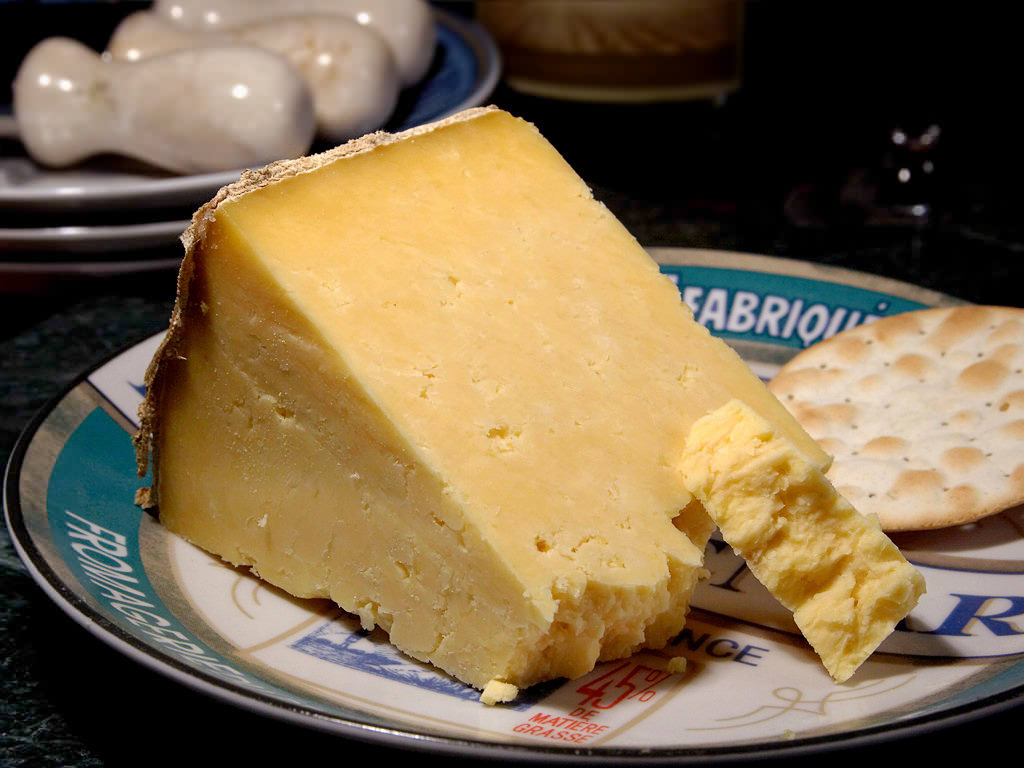 🇬🇧 United Kingdom and 1 moreCheshire
A dense, crumbly cow's-milk cheese from the English county of Cheshire.Cow · Hard · Salty
🇬🇧 United Kingdom and 1 moreCheshire
A dense, crumbly cow's-milk cheese from the English county of Cheshire.Cow · Hard · Salty
Its cousins elsewhere
All semi-soft cheeses 🇳🇵 NepalTibetan cheese
A family of dairy products from Tibet, ranging from fresh curds to extra-hard aged blocks.Mixed · Fresh · Savoury and brothy
🇳🇵 NepalTibetan cheese
A family of dairy products from Tibet, ranging from fresh curds to extra-hard aged blocks.Mixed · Fresh · Savoury and brothy
 🇮🇳 IndiaKalari
A semi-soft cow or buffalo milk cheese from Jammu and Kashmir, dried and sautéed until gooey.Cow · Semi-soft · Savoury and brothy
🇺🇸 United StatesCold-pack cheese
A chilled blend of natural cheeses mixed with flavorings without cooking.Mixed · Bloomy rind · Savoury and brothy
🇮🇳 IndiaKalari
A semi-soft cow or buffalo milk cheese from Jammu and Kashmir, dried and sautéed until gooey.Cow · Semi-soft · Savoury and brothy
🇺🇸 United StatesCold-pack cheese
A chilled blend of natural cheeses mixed with flavorings without cooking.Mixed · Bloomy rind · Savoury and brothy