Cheeses of La Mancha
Don Quixote's high plain of windmills and Manchega sheep, home of Manchego cheese with its basket-weave rind.
Made, aged and sold here
Best time: April to June and September to October.
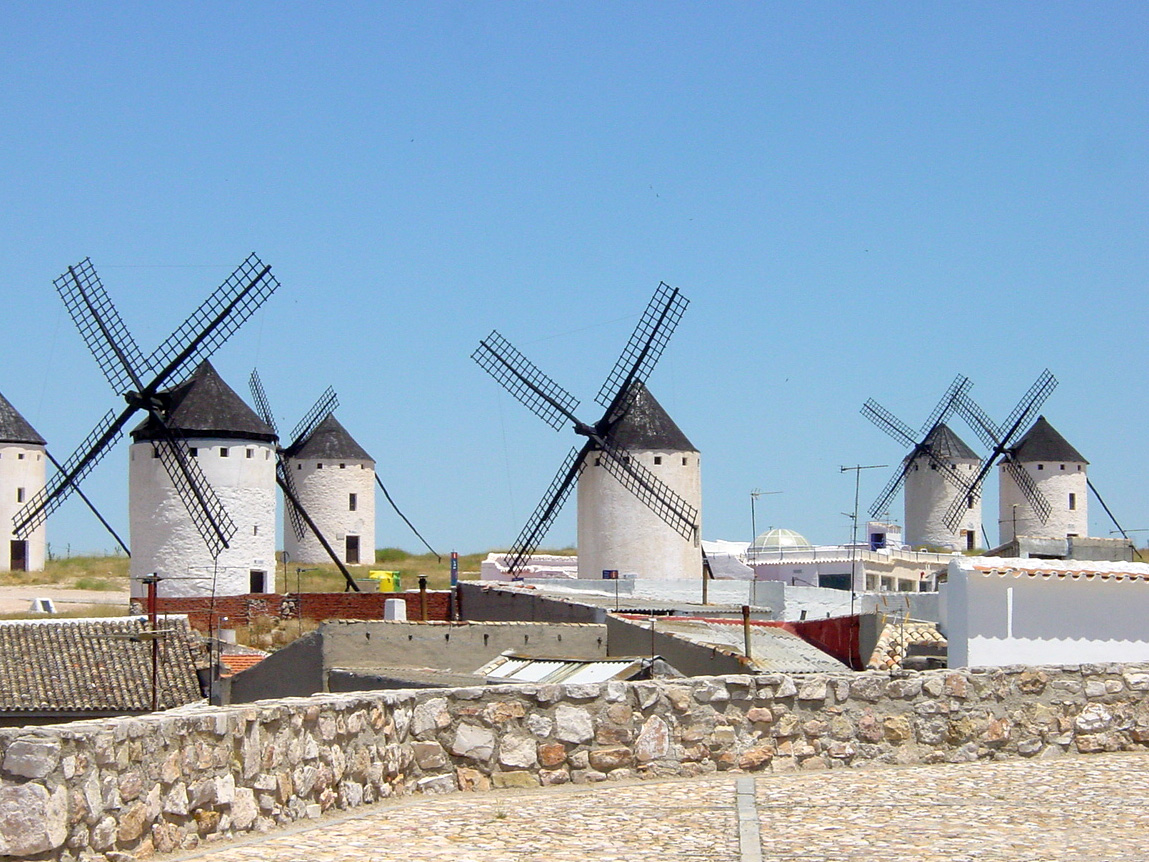
La Mancha is the high, dry plain of central Spain, a land of wheat, vineyards, saffron and windmills made famous by Don Quixote. Its native Manchega sheep graze the stubble and scrub, and their milk makes Manchego, Spain's best-known cheese. Towns such as Campo de Criptana and Consuegra keep their white windmills on the ridges above the plain.
Manchego
Manchego is made only from the milk of Manchega sheep in La Mancha. The curd is pressed into moulds that once were bands of plaited esparto grass, and the zigzag pattern is still pressed onto the rind. It is aged from about two months to two years. Young, it is mild and milky; old, it is firm, nutty and peppery. Farmhouse Manchego is made from raw milk.
The plain and its towns
The Campo de Criptana windmills stand in a row on a hill above the town, some of them restored with old machinery. Consuegra has a row of mills beside a castle. Almagro has a theatre courtyard from the seventeenth century. Saffron is harvested in late October, when crocus flowers carpet some fields.
A trail idea for La Mancha
- Campo de Criptana windmills The ridge of white mills above the town.
- Consuegra Windmills beside a castle on the ridge.
- A sheep farm Taste farmhouse Manchego where visits are offered.
- Almagro The old town and its seventeenth-century theatre.
Written by the EveryCheese desk with AI assistance. Background: "La Mancha" on Wikipedia. Opening hours, markets, caves and tours change; check locally before travelling. If something is wrong, tell us.