Hard and grating cheeses
Parmigiano Reggiano, Grana Padano, Pecorino Romano and Sbrinz: long-aged, crystalline and grated.
Hard cheeses are the long-aged, low-moisture wheels made to be grated or broken into shards. Parmigiano Reggiano, Grana Padano, Pecorino Romano, Sbrinz and kefalotyri are the best known. Their curd is cut very fine and cooked, then pressed and aged for a year or more, until the paste is crumbly, granular and full of crystals. A little goes a long way, and many kitchens treat them as a seasoning as much as a cheese.
Grana and the long age
Grana means grain, after the granular texture of Parmigiano Reggiano and Grana Padano. Both are made from cow's milk in large copper vats, cut into rice-sized grains, cooked and moulded into wheels of around 40 kilograms. Parmigiano Reggiano must age at least 12 months, with 24 and 36 months common, and comes from a defined area around Parma, Reggio Emilia, Modena, part of Bologna and part of Mantua. Its rind is marked with dotted lettering that names the cheese, the dairy and the month it was made.
Sheep and goat
Pecorino Romano, linked by tradition to the rations of Roman soldiers, is a salty sheep's milk cheese now made mostly in Sardinia, and it is the cheese of cacio e pepe. Greece's kefalotyri, Switzerland's Sbrinz, old Dutch Gouda and aged Manchego play similar roles in their own kitchens. In Latin America, aged cotija is grated over Mexican dishes, and Argentina's reggianito is a small grana-style wheel first made by Italian migrants.
Crystals and the rind
The crunch in an old hard cheese comes from crystals of tyrosine, an amino acid, and in some cheeses calcium lactate, which form as the proteins break down. They are a sign of age, not of salt. The rinds of grana cheeses are edible but very hard: Italian cooks drop them into minestrone and bean soups, where they soften and season the broth. Hard cheeses are low in moisture, so they keep for a long time once cut.
Worth knowing
- Parmigiano Reggiano: Italy's great grana, aged at least a year
- Grana Padano: Grana of the Po valley, made over a wider area
- Pecorino Romano: Salty sheep's milk grating cheese
- Sbrinz: Hard Swiss cheese of central Switzerland
- Kefalotyri: Hard Greek sheep's and goat's milk cheese
- Cotija: Mexican cheese, crumbled young and grated aged
- Reggianito: Argentina's small grana-style wheel
Good to know
- Keep hard cheese in paper or a cheese bag; it lasts for weeks once cut.
- Break Parmigiano into chunks with a short, almond-shaped knife rather than slicing it.
- Grate it just before using, since ready-grated cheese loses its aroma.
- Save the rinds in the freezer for soups and stocks.
Sources and further reading
Original text by the EveryCheese desk, written with AI assistance and checked against the sources above. Customs are described as tradition, not as advice. If we have something wrong, tell us.
Hard on EveryCheese
The cheeses written up so far, best known first.
 🇪🇸 SpainPata de mulo cheese
A tubular, hard ewe's-milk cheese from Spain, shaped like a mule's leg.Sheep · Hard · Salty
🇪🇸 SpainPata de mulo cheese
A tubular, hard ewe's-milk cheese from Spain, shaped like a mule's leg.Sheep · Hard · Salty
 🇫🇷 France and 2 moreBlue cheese
A family of cheeses defined by blue-green mold veins created through deliberate inoculation and piercing.Cow · Semi-soft · Sharp and tangy-aged
🇫🇷 France and 2 moreBlue cheese
A family of cheeses defined by blue-green mold veins created through deliberate inoculation and piercing.Cow · Semi-soft · Sharp and tangy-aged
 🇮🇹 ItalyPecorino
A family of Italian hard sheep's-milk cheeses with protected status.Sheep · Hard · Buttery and creamy
🇮🇹 ItalyPecorino
A family of Italian hard sheep's-milk cheeses with protected status.Sheep · Hard · Buttery and creamy
 🇮🇹 Italy and 4 moreCaciocavallo
A stretched-curd cheese from southern Italy shaped like a teardrop and aged to develop a hard rind.Cow · Stretched curd · Nutty
🇮🇹 Italy and 4 moreCaciocavallo
A stretched-curd cheese from southern Italy shaped like a teardrop and aged to develop a hard rind.Cow · Stretched curd · Nutty
 🇮🇹 Italy and 1 morePecorino Romano
A hard, salty sheep's-milk cheese from Italy, aged at least five months and protected by EU law.Sheep · Hard · Salty
🇮🇹 Italy and 1 morePecorino Romano
A hard, salty sheep's-milk cheese from Italy, aged at least five months and protected by EU law.Sheep · Hard · Salty
 🇬🇷 Greece and 1 moreKefalotyriκεφαλοτύρι
A hard, salty Greek cheese made from sheep or goat milk, aged for grating or frying.Sheep · Hard · Salty
🇬🇷 Greece and 1 moreKefalotyriκεφαλοτύρι
A hard, salty Greek cheese made from sheep or goat milk, aged for grating or frying.Sheep · Hard · Salty
 🇪🇸 SpainIdiazabalIdiazabal gazta
A hard, pressed sheep's milk cheese from the Basque Country with a dark rind and optional smoke.Sheep · Hard · Nutty
🇪🇸 SpainIdiazabalIdiazabal gazta
A hard, pressed sheep's milk cheese from the Basque Country with a dark rind and optional smoke.Sheep · Hard · Nutty
 🇬🇷 GreeceGravieraγραβιέρα
A hard Greek cheese made from sheep or cow milk, aged for months and marked with a crisscross rind.Sheep · Hard · Sweet and caramel
🇬🇷 GreeceGravieraγραβιέρα
A hard Greek cheese made from sheep or cow milk, aged for months and marked with a crisscross rind.Sheep · Hard · Sweet and caramel
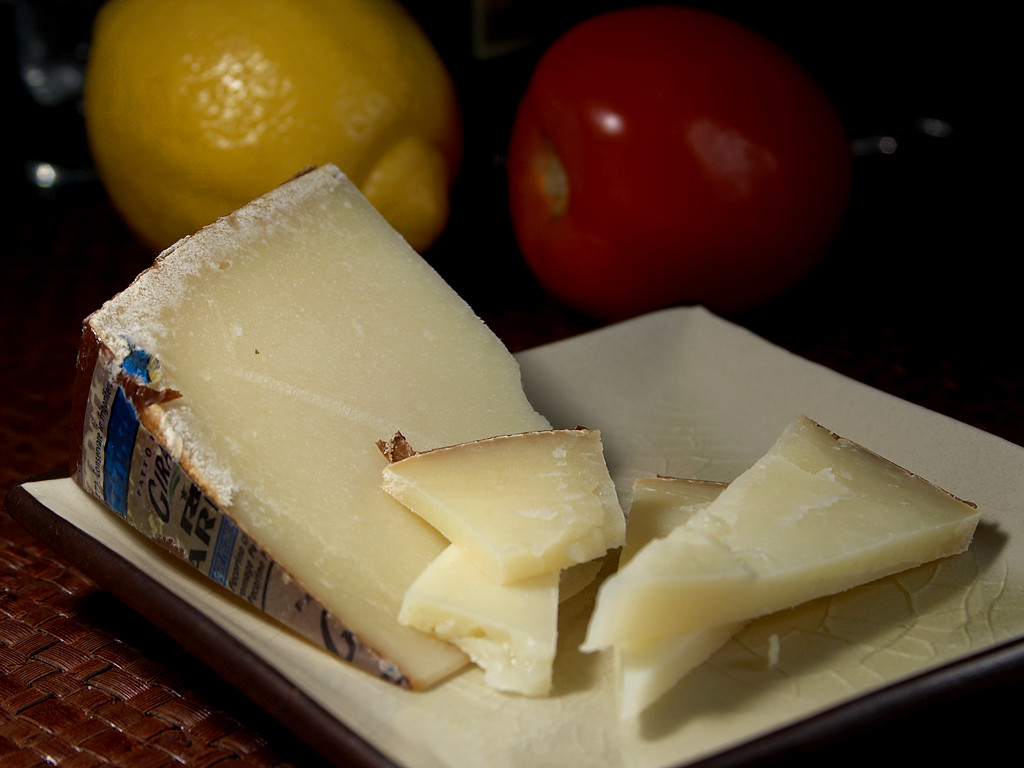 🇮🇹 ItalyPecorino Sardoberveghinu sardu
A hard, pressed sheep's milk cheese from Sardinia with two distinct age profiles.Sheep · Hard · Sharp and tangy-aged
🇮🇹 ItalyPecorino Sardoberveghinu sardu
A hard, pressed sheep's milk cheese from Sardinia with two distinct age profiles.Sheep · Hard · Sharp and tangy-aged
 🇭🇷 CroatiaPag cheesePaški sir
A hard sheep's-milk cheese from Croatia's Pag island, aged up to eighteen months.Sheep · Hard · Salty
🇭🇷 CroatiaPag cheesePaški sir
A hard sheep's-milk cheese from Croatia's Pag island, aged up to eighteen months.Sheep · Hard · Salty
 🇮🇹 ItalyBra
A Piedmontese cow's-milk cheese made soft or hard depending on age.Cow · Hard
🇮🇹 ItalyBra
A Piedmontese cow's-milk cheese made soft or hard depending on age.Cow · Hard
 🇪🇸 SpainZamoranoQueso zamorano
A hard, dark-rinded sheep's milk cheese from the province of Zamora in Spain.Sheep · Hard · Nutty
🇪🇸 SpainZamoranoQueso zamorano
A hard, dark-rinded sheep's milk cheese from the province of Zamora in Spain.Sheep · Hard · Nutty
 🇫🇷 FranceTomme des PyrénéesToma de Pirenèus
A rustic pressed cheese from the French Pyrenees, made from cow, sheep or goat milk.Cow · Semi-hard · Salty
🇫🇷 FranceTomme des PyrénéesToma de Pirenèus
A rustic pressed cheese from the French Pyrenees, made from cow, sheep or goat milk.Cow · Semi-hard · Salty
 🇮🇹 ItalyPecorino Toscano
A firm Tuscan sheep's milk cheese with PDO status since 1996.Sheep · Hard · Salty
🇮🇹 ItalyPecorino Toscano
A firm Tuscan sheep's milk cheese with PDO status since 1996.Sheep · Hard · Salty
 🇺🇸 United States and 2 moreRomano cheese
A hard, salty American grating cheese made from cow, goat, or sheep milk.Cow · Hard · Salty
🇺🇸 United States and 2 moreRomano cheese
A hard, salty American grating cheese made from cow, goat, or sheep milk.Cow · Hard · Salty
 🇬🇷 GreeceLadotyri MytilinisΛαδοτύρι Μυτιλήνης
A hard Greek cheese from Lesbos preserved in olive oil since ancient times.Sheep · Hard · Savoury and brothy
🇬🇷 GreeceLadotyri MytilinisΛαδοτύρι Μυτιλήνης
A hard Greek cheese from Lesbos preserved in olive oil since ancient times.Sheep · Hard · Savoury and brothy
 🇮🇹 ItalyPecorino di Filiano
A firm sheep's milk cheese from Basilicata with PDO status since 2007.Sheep · Hard · Salty
🇬🇷 GreeceFormaelaΦορμαέλα
A hard, pungent sheep or goat milk cheese from Arachova, Greece.Sheep · Hard · Pungent and funky
🇨🇿 Czech RepublicAbertam cheese
A hard, pressed sheep's-milk cheese from the Bohemian mountains of the Czech Republic.Sheep · Hard
🇮🇹 ItalyPecorino di Filiano
A firm sheep's milk cheese from Basilicata with PDO status since 2007.Sheep · Hard · Salty
🇬🇷 GreeceFormaelaΦορμαέλα
A hard, pungent sheep or goat milk cheese from Arachova, Greece.Sheep · Hard · Pungent and funky
🇨🇿 Czech RepublicAbertam cheese
A hard, pressed sheep's-milk cheese from the Bohemian mountains of the Czech Republic.Sheep · Hard
 🇽🇰 Kosovo and 2 moreSharr cheeseDjathë i Sharrit / Шарски сир
A hard, salty cow and sheep milk cheese from the Šar Mountains of Kosovo.Cow · Hard · Salty
🇹🇷 TurkeyMihaliç Peyniri
A hard, brined sheep’s milk cheese shaped into rounds or slices for Turkish cookingSheep · Hard
🇽🇰 Kosovo and 2 moreSharr cheeseDjathë i Sharrit / Шарски сир
A hard, salty cow and sheep milk cheese from the Šar Mountains of Kosovo.Cow · Hard · Salty
🇹🇷 TurkeyMihaliç Peyniri
A hard, brined sheep’s milk cheese shaped into rounds or slices for Turkish cookingSheep · Hard
 🇮🇹 ItalyMoliternoMulitiernu
A stretched-curd cheese from Basilicata, made with cow or sheep milk and aged into a firm wheel.Cow · Stretched curd
🇮🇹 ItalyMoliternoMulitiernu
A stretched-curd cheese from Basilicata, made with cow or sheep milk and aged into a firm wheel.Cow · Stretched curd
Photo credits on this page
The small pictures above come from Wikimedia Commons under free licences. Some are cropped to fit.
- Bra: F. D. Richards, CC BY-SA 2.0, source
- Pecorino Romano: Jon Sullivan, Public domain, source
- Zamorano: Jon Sullivan, Public domain, source
- Pecorino Sardo: The original uploader was Frankie816 at English Wikipedia ., Public domain, source
- Pecorino: Ji-Elle, CC BY-SA 3.0, source
- Pag cheese: Silverije, CC BY-SA 4.0, source
- Romano cheese: Brian Boucheron, CC BY 2.0, source
- Pecorino Toscano: Dan, CC BY-SA 2.0, source
- Sharr cheese: ThinkTank123, CC BY-SA 3.0, source
- Tomme des Pyrénées: Julie333411, CC BY-SA 4.0, source
- Pata de mulo cheese: Triplecaña, CC BY-SA 4.0, source
- Idiazabal: Xavigivax, CC BY-SA 3.0, source
- Blue cheese: No machine-readable author provided. Brookie assumed (based on copyrig, CC BY-SA 3.0, source
- Graviera: Catlemur, CC BY-SA 4.0, source
- Caciocavallo: Peachyeung316, CC BY-SA 4.0, source
- Kefalotyri: J.P.Lon, CC BY-SA 4.0, source
- Ladotyri Mytilinis: C messier, CC BY-SA 4.0, source
- Pecorino di Filiano: Rlucia, CC BY 3.0, source
- Moliterno: Mx. Granger, CC0, source