Sharp and tangy-aged
The bite of long-aged cheddar, Provolone piccante and old Pecorino.
Sharp is the bite at the back of the mouth that comes with age: the tang of extra-mature cheddar, provolone piccante, old pecorino and aged Gouda. It is a mix of acidity, salt and the products of protein and fat breakdown, and it grows stronger the longer a cheese ripens. In North America, cheddar is even sold by sharpness, from mild through sharp to extra sharp.
What makes a cheese sharp
As cheese ripens, enzymes cut proteins into shorter pieces. Some of these peptides taste bitter or biting, and amino acids, fatty acids and sulphur compounds add their own edges. In cheddar, acidity, salt and these breakdown products together give the familiar tang. Provolone piccante is made with rennet paste from kids or lambs, whose fat-splitting enzymes release sharp, peppery fatty acids. Similar traditional rennets give Pecorino Romano and some other southern Italian cheeses their bite.
Cheddar by age
British cheddar is labelled mild, medium, mature, extra mature and vintage, ranging from a few months old to well over a year. American cheddars run from mild to sharp and extra sharp, and some makers in Wisconsin, Vermont and Canada age blocks for many years. The sharpest are often crumbly, with small white crystals. Clothbound farmhouse cheddars tend to be deep and savoury rather than simply sharp, since the cloth lets the cheese breathe and mellow.
Using sharp cheese
A little sharp cheese goes far. It seasons macaroni cheese, Welsh rarebit, cheese scones and gratins, and stands up to pickles and chutney in a ploughman's lunch. Mixed with a milder melting cheese, it adds depth without turning a sauce grainy. Apples, pears, oatcakes and fruit cake suit it on a board, and strong ale, dry cider and port are classic partners. Very old Gouda and pecorino are good with a drizzle of honey.
Worth knowing
- Cheddar: From mild to vintage and extra sharp
- Provolone: The piccante kind, made with kid or lamb rennet
- Pecorino Romano: Salty and biting
- Gouda: Sharp and sweet when very old
- Asiago: Sharp when aged as stravecchio
- Dry Jack: Aged Monterey Jack of California
Sources and further reading
Original text by the EveryCheese desk, written with AI assistance and checked against the sources above. Customs are described as tradition, not as advice. If we have something wrong, tell us.
Sharp and tangy-aged on EveryCheese
The cheeses written up so far, best known first.
 🇬🇷 Greece and 5 moreFetaφέτα
A crumbly Greek brined cheese made from sheep and goat milk.Sheep · Brined · Tangy and lactic
🇬🇷 Greece and 5 moreFetaφέτα
A crumbly Greek brined cheese made from sheep and goat milk.Sheep · Brined · Tangy and lactic
 🇦🇱 AlbaniaMishavin
A soft, crumbly Albanian cheese aged in skins and wood from sheep or cow milk.Sheep · Buttery and creamy
🇦🇱 AlbaniaMishavin
A soft, crumbly Albanian cheese aged in skins and wood from sheep or cow milk.Sheep · Buttery and creamy
 🇫🇷 FranceRoquefortRòcafòrt
A raw sheep's milk blue cheese aged in the Combalou caves of southern France.Sheep · Semi-hard · Tangy and lactic
🇫🇷 FranceRoquefortRòcafòrt
A raw sheep's milk blue cheese aged in the Combalou caves of southern France.Sheep · Semi-hard · Tangy and lactic
 🇫🇷 France and 2 moreBlue cheese
A family of cheeses defined by blue-green mold veins created through deliberate inoculation and piercing.Cow · Semi-soft · Sharp and tangy-aged
🇫🇷 France and 2 moreBlue cheese
A family of cheeses defined by blue-green mold veins created through deliberate inoculation and piercing.Cow · Semi-soft · Sharp and tangy-aged
 🇸🇰 Slovakia and 5 moreBryndza
A tangy, crumbly sheep's milk cheese from Central and Eastern Europe.Sheep · Fresh · Tangy and lactic
🇸🇰 Slovakia and 5 moreBryndza
A tangy, crumbly sheep's milk cheese from Central and Eastern Europe.Sheep · Fresh · Tangy and lactic
 🇮🇹 Italy and 1 morePecorino Romano
A hard, salty sheep's-milk cheese from Italy, aged at least five months and protected by EU law.Sheep · Hard · Salty
🇮🇹 Italy and 1 morePecorino Romano
A hard, salty sheep's-milk cheese from Italy, aged at least five months and protected by EU law.Sheep · Hard · Salty
 🇬🇷 Greece and 1 moreKefalotyriκεφαλοτύρι
A hard, salty Greek cheese made from sheep or goat milk, aged for grating or frying.Sheep · Hard · Salty
🇬🇷 Greece and 1 moreKefalotyriκεφαλοτύρι
A hard, salty Greek cheese made from sheep or goat milk, aged for grating or frying.Sheep · Hard · Salty
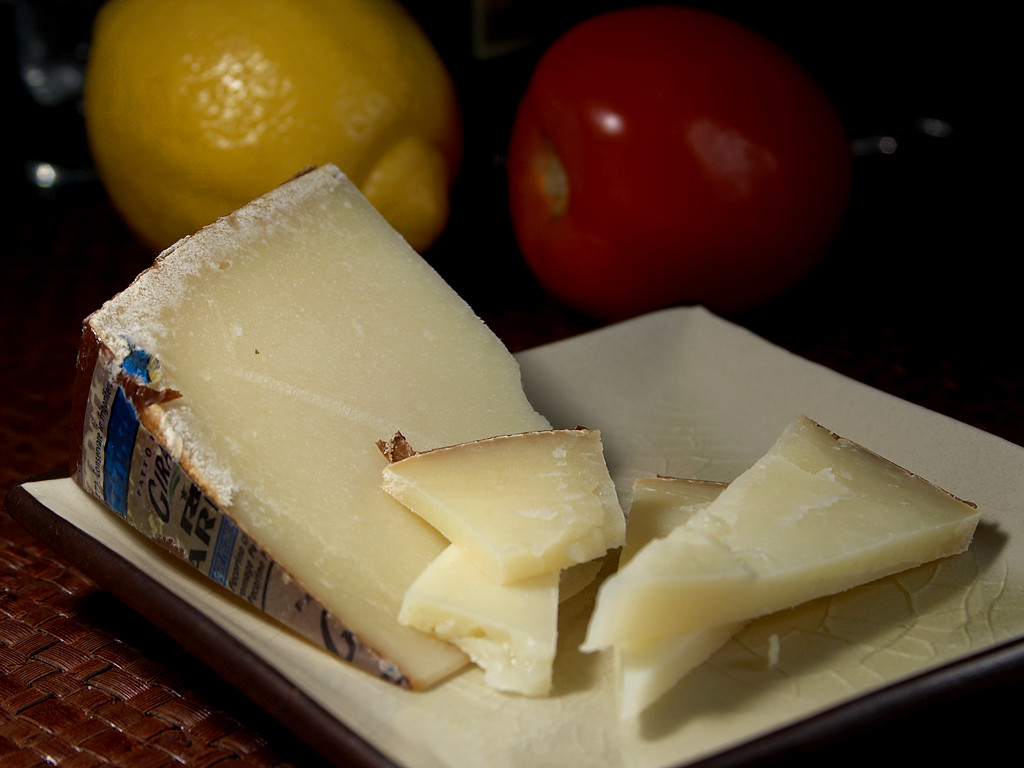 🇮🇹 ItalyPecorino Sardoberveghinu sardu
A hard, pressed sheep's milk cheese from Sardinia with two distinct age profiles.Sheep · Hard · Sharp and tangy-aged
🇮🇹 ItalyPecorino Sardoberveghinu sardu
A hard, pressed sheep's milk cheese from Sardinia with two distinct age profiles.Sheep · Hard · Sharp and tangy-aged
 🇪🇸 SpainValdeónQueso de Valdeón
A Spanish blue cheese from León wrapped in sycamore or chestnut leavesCow · Semi-soft · Sharp and tangy-aged
🇪🇸 SpainValdeónQueso de Valdeón
A Spanish blue cheese from León wrapped in sycamore or chestnut leavesCow · Semi-soft · Sharp and tangy-aged
 🇮🇹 ItalyFormaggio di fossa
A sharp Italian cheese aged in sealed underground pits for a distinct anaerobic fermentation.Cow · Semi-hard · Sharp and tangy-aged
🇮🇹 ItalyFormaggio di fossa
A sharp Italian cheese aged in sealed underground pits for a distinct anaerobic fermentation.Cow · Semi-hard · Sharp and tangy-aged
 🇪🇬 EgyptEgyptian cheeseجبنة (gebna)
A broad category of cheeses central to Egyptian cuisine, ranging from fresh white types to aged blue varieties.Cow · Fresh · Salty
🇪🇬 EgyptEgyptian cheeseجبنة (gebna)
A broad category of cheeses central to Egyptian cuisine, ranging from fresh white types to aged blue varieties.Cow · Fresh · Salty
Photo credits on this page
The small pictures above come from Wikimedia Commons under free licences. Some are cropped to fit.
- Pecorino Romano: Jon Sullivan, Public domain, source
- Formaggio di fossa: Zeugma fr ( talk ) (Antoine FLEURY-GOBERT), CC BY-SA 3.0, source
- Pecorino Sardo: The original uploader was Frankie816 at English Wikipedia ., Public domain, source
- Feta: Unknown author, CC BY-SA 3.0, source
- Valdeón: Tamorlan, CC BY 3.0, source
- Mishavin: Tizilohja25, CC BY-SA 4.0, source
- Roquefort: Thesupermat, CC BY-SA 4.0, source
- Blue cheese: No machine-readable author provided. Brookie assumed (based on copyrig, CC BY-SA 3.0, source
- Bryndza: Kagor, GFDL, source
- Kefalotyri: J.P.Lon, CC BY-SA 4.0, source
- Egyptian cheese: Tour d'Afrique, CC BY 2.0, source