
Hutsul sheep bryndzya
In its own language: гуцульська овеча бриндзя
A soft, crumbly sheep's-milk cheese from the Ukrainian Carpathians, ripened and salted by hand.
This traditional table cheese comes from the Hutsul region of the Ukrainian Carpathians. It is made primarily from sheep's milk, with a small allowance for cow or goat milk, and is known for its soft, crumbly texture and salty, tangy flavor.
- Made from at least 80% sheep's milk.
- First Ukrainian product with EU-standard GI status.
- Filtered through spruce branches for purity.
- Traditionally unpasteurized.
- Associated with Hutsul cultural heritage.
What is Hutsul sheep bryndzya?
Hutsul sheep bryndzya is a traditional table cheese originating from the Ukrainian Carpathians. It is closely tied to the culture of the Hutsul people. The cheese is made from at least eighty percent sheep's milk, though up to twenty percent cow or goat milk may be added. Its texture is soft and crumbly. The paste is typically white or cream-colored. The rind is natural and not waxed. The cheese has a distinct salty and tangy taste. It is often served as a snack or on a cheese board.
Where does Hutsul sheep bryndzya come from?
The cheese dates back to the fifteenth century. It was created by shepherds in the mountain pastures of the Ukrainian Carpathians. The Hutsuls developed this method over generations. It serves as a symbol of regional identity and heritage. Production remains concentrated in Zakarpattia, Ivano-Frankivsk, and Chernivtsi oblasts. The traditions have been preserved through manual labor and local knowledge.
What does Hutsul sheep bryndzya taste like?
The taste is predominantly salty due to the mixing process. The tanginess comes from the ripening stage. The milky notes are strong because of the high sheep's milk content. The texture is soft and easily crumbles when touched. As it ages, the saltiness becomes more pronounced. The aroma is fresh and dairy-forward. There are no smoky or earthy undertones unless influenced by the spruce branches used during filtration.
How Hutsul sheep bryndzya is made
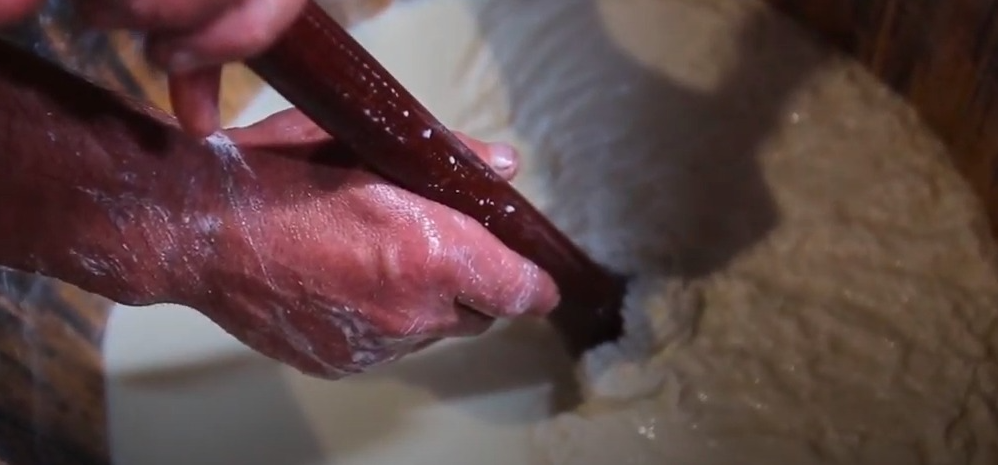
Fresh milk is filtered through cheesecloth layered with spruce branches. This removes impurities and adds subtle pine notes. Rennet is added to coagulate the milk. The resulting curd forms a cheese called budz. This budz is then allowed to ripen. After ripening, it is ground down. Salt is mixed thoroughly into the ground curd. This creates the final bryndzya consistency. All steps are performed by hand without machines.
Hutsul sheep bryndzya, drawn
How Hutsul sheep bryndzya is eaten and cooked
The cheese is eaten as a standalone snack. It is also served on cheese boards. Its crumbly texture makes it easy to spread. It pairs well with dark bread. Some cooks use it in simple dishes where a salty kick is needed. It is not typically melted for fondue. The cheese is best enjoyed fresh after preparation.
Hutsul sheep bryndzya through the day
It is commonly eaten as a daily snack. Shepherds consume it during work hours. It is also suitable for casual meals. The cheese fits well into lunch settings. It can be part of a dinner board. It is not typically associated with breakfast or dessert. Its salty profile makes it a good accompaniment to other foods.
Hutsul sheep bryndzya in the world's kitchens
Ukrainian cuisine features this cheese prominently. The Hutsul people are the primary producers. The cheese reflects the pastoral lifestyle of the Carpathians. It is recognized as a key element of regional food culture. Other Ukrainian regions may import it, but it is most authentic in its place of origin. It represents the culinary traditions of mountain communities.
At a glance: where it turns up


Faith and ritual
There are no specific religious rituals attached to this cheese. It is not designated for kosher or halal diets specifically. The production relies on traditional methods passed down through families. The Hutsul culture values the cheese as a cultural artifact rather than a spiritual offering. It is part of the daily life of herders rather than a ceremonial item.
Hutsul sheep bryndzya at celebrations
The cheese is not tied to specific festivals like weddings or new year. It is a staple of everyday life. However, it is celebrated as part of the broader cultural heritage. Local events may showcase the cheese as a product of tradition. The geographical indication status highlights its importance to national identity. It is a source of pride for the Hutsul community.
Custom and folk tradition
The making of bryndzya is a deeply rooted tradition. Shepherds use spruce branches to filter milk, a practice linked to the forest environment. The manual grinding of ripened budz is a skill learned by experience. The cheese represents the resilience of mountain communities. It connects modern consumers to fifteenth-century practices. The Hutsul identity is intertwined with the care of their sheep and the production of this dairy product.
Buying, keeping and serving Hutsul sheep bryndzya
The cheese should be kept refrigerated due to its soft texture. It is best consumed shortly after production. Long-term storage may alter its crumbly consistency. Wrap it in breathable material to prevent drying out. It does not age further once processed into bryndzya. Freshness is key to enjoying its full flavor.
What to use instead of Hutsul sheep bryndzya
Other sheep's milk cheeses like feta or pecorino can be used in similar ways. However, they lack the specific tang and crumbly texture of bryndzya. Cow's milk cheeses are too mild and firm. Goat cheese may offer a similar tang but differs in mouthfeel. No direct substitute captures the unique spruce-filtered nuance.
Protection and trade
In 2022, the cheese received a geographical indication in Ukraine. This was the first Ukrainian product to meet European registration standards. The application was filed by an association of producers in 2018. The protection helps preserve traditional methods. It allows for recognition in the European Union market. This status supports local producers and prevents imitation.
Questions people ask about Hutsul sheep bryndzya
Where does Hutsul sheep bryndzya come from?
It originates from the Ukrainian Carpathians, specifically in the Zakarpattia, Ivano-Frankivsk, and Chernivtsi oblasts. It is a traditional product of the Hutsul people.
What kind of milk is used to make this cheese?
The cheese is made primarily from sheep's milk. The recipe allows for up to twenty percent cow or goat milk to be added to the mixture.
How is the milk processed before adding rennet?
Fresh milk is filtered through multiple layers of cheesecloth. Spruce branches are placed on top of the cloth to remove impurities and add a subtle pine aroma.
What is the difference between budz and bryndzya?
Bud is the initial cheese formed after adding rennet to the milk. Bryndzya is created when the ripened bud is ground down and mixed with salt.
Is this cheese protected by any geographical indications?
Yes, it received a geographical indication in Ukraine in 2022. It was the first Ukrainian product to meet all European requirements for such registration.
Good reading and sources
- Hutsul sheep bryndzya on WikipediaEncyclopedia
- More photos on Wikimedia CommonsPhotos and video
- Wikidata recordOpen data
The facts on this page come from the Wikipedia article "Hutsul sheep bryndzya", written by its contributors and used under the CC BY-SA 4.0 licence, and from its Wikidata record (CC0). EveryCheese rewrote the text in its own words, with AI assistance, and compares every page with the article to make sure no passage is copied. It may be reused under the same CC BY-SA 4.0 licence with a link back.
It may contain mistakes. Recipes, ageing and customs differ from one dairy, valley or kitchen to the next. Folk beliefs are described as tradition, never as advice. If something is wrong, tell us. Last refreshed 2026-10-15.
More from Ukraine
All the cheeses of Ukraine 🇷🇺 Russia and 4 moreTvorogтворог
A soft, white fermented cow's milk curd from Central and Eastern Europe.Cow · Fresh · Milky and fresh
🇷🇺 Russia and 4 moreTvorogтворог
A soft, white fermented cow's milk curd from Central and Eastern Europe.Cow · Fresh · Milky and fresh
 🇩🇪 Germany and 5 moreQuarkTvorog
A fresh, acid-set cow's milk cheese with a smooth texture and mild taste.Cow · Fresh · Milky and fresh
🇩🇪 Germany and 5 moreQuarkTvorog
A fresh, acid-set cow's milk cheese with a smooth texture and mild taste.Cow · Fresh · Milky and fresh
 🇸🇰 Slovakia and 5 moreBryndza
A tangy, crumbly sheep's milk cheese from Central and Eastern Europe.Sheep · Fresh · Tangy and lactic
🇸🇰 Slovakia and 5 moreBryndza
A tangy, crumbly sheep's milk cheese from Central and Eastern Europe.Sheep · Fresh · Tangy and lactic
 🇧🇬 Bulgaria and 5 moreSireneбяло саламурено сирене
A crumbly, brined white cheese from Bulgaria made with sheep or goat milk.Mixed · Brined · Salty
🇧🇬 Bulgaria and 5 moreSireneбяло саламурено сирене
A crumbly, brined white cheese from Bulgaria made with sheep or goat milk.Mixed · Brined · Salty
Its cousins elsewhere
All bloomy rind cheeses 🇦🇲 ArmeniaMotalմոթալ
A soft, brined Armenian cheese aged in leather bags with wild thyme.Sheep · Brined · Milky and fresh
🇦🇲 ArmeniaMotalմոթալ
A soft, brined Armenian cheese aged in leather bags with wild thyme.Sheep · Brined · Milky and fresh
 🇨🇳 ChinaRubing乳饼
A firm, acid-set fresh goat cheese from Yunnan that holds its shape when cooked.Goat · Fresh · Salty
🇨🇳 ChinaRubing乳饼
A firm, acid-set fresh goat cheese from Yunnan that holds its shape when cooked.Goat · Fresh · Salty
 🇪🇬 EgyptEgyptian cheeseجبنة (gebna)
A broad category of cheeses central to Egyptian cuisine, ranging from fresh white types to aged blue varieties.Cow · Fresh · Salty
🇮🇱 Israel and 1 moreGvina levanaגבינה לבנה
A soft, unripened cow's-milk cheese spread on bread in Israel.Cow · Fresh · Tangy and lactic
🇪🇬 EgyptEgyptian cheeseجبنة (gebna)
A broad category of cheeses central to Egyptian cuisine, ranging from fresh white types to aged blue varieties.Cow · Fresh · Salty
🇮🇱 Israel and 1 moreGvina levanaגבינה לבנה
A soft, unripened cow's-milk cheese spread on bread in Israel.Cow · Fresh · Tangy and lactic