
Chhena Poda
In its own language: ଛେନାପୋଡ଼
A baked Odisha dessert of caramelised cottage cheese and sugar
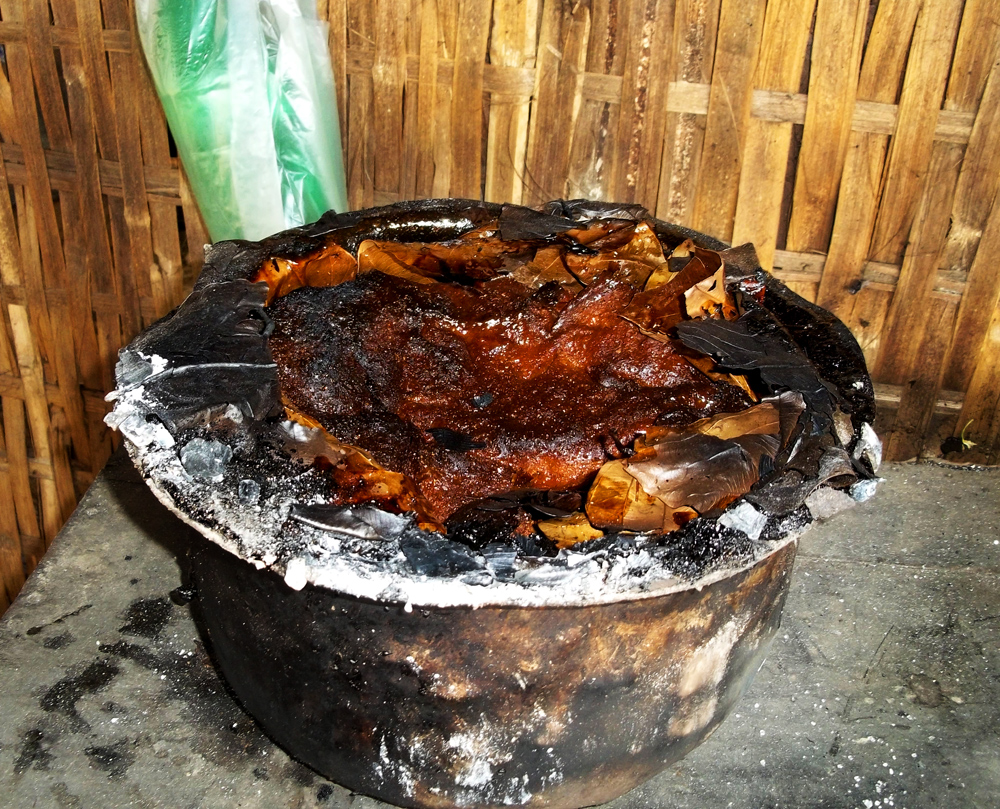
Chhena Poda is a baked cheese dessert from the Indian state of Odisha. It uses fresh chhena kneaded with sugar and semolina, then cooked slowly until the surface browns through caramelisation.
- Created by Sudarsan Sahu after 1947 in Dashapalla
- Made from fresh chhena, sugar, and semolina
- Baked for hours until sugar caramelises and browns
- Celebrated annually on Chhenapoda Dibasa since 2022
- Traditional staple for Durga Puja festivals in Odisha
What is Chhena Poda?
Chhena Poda is a sweet dish made from chhena, a fresh Indian cottage cheese. The name translates directly to burnt cheese in the local Odia language. Cooks knead the soft curds by hand with sugar and fine semolina. They shape the mixture into blocks or rounds. These are placed in an oven or over low heat for several hours. The long cooking time allows the sugar to melt and turn dark brown on the outside. The inside stays moist while the exterior becomes firm and deeply coloured. It serves as a rich dessert rather than a savoury table cheese.
Where does Chhena Poda come from?
The recipe was created after 1947 by Sudarsan Sahu. He ran a hotel in the village of Dashapalla in Odisha. Sahu began experimenting with leftover cottage cheese that would otherwise go to waste. He discovered that baking the cheese with sugar produced a unique flavour. The dish has since become a signature sweet of the region. In 2022, locals established Chhenapoda Dibasa to mark his birthday on April 11. This day celebrates the invention and its cultural importance.
What does Chhena Poda taste like?
The taste relies heavily on the caramelisation of sugar. As the cheese bakes for hours, the sweetness turns complex and slightly bitter on the crust. The texture shifts from soft curds to a dense, chewy block. Semolina adds a subtle grittiness that contrasts with the smooth cheese. The aroma is warm and toasted. It does not taste sharp or acidic like aged cheeses. The flavour is primarily sweet with deep roasted notes.
How Chhena Poda is made
Makers start with homemade fresh chhena. They drain the whey completely before use. The curds are kneaded thoroughly to remove lumps. Sugar and semolina are mixed into the cheese mass. The combined dough is formed into shapes. It is then baked slowly for many hours. The heat cooks the interior while browning the surface. The process requires constant attention to prevent burning too quickly. Traditional home cooks prepare it during festivals.
Chhena Poda, drawn
How Chhena Poda is eaten and cooked
This item is served strictly as a dessert. It is eaten plain after meals. Families often prepare it for traditional festivals like Durga Puja. Since the mid-1980s, restaurants across Odisha have added it to their menus. It is also sold by the Odisha Milk Federation for wider distribution. People eat it as a sweet treat rather than an ingredient in other dishes.
Chhena Poda through the day
Chhena Poda belongs firmly in the dessert category. It appears at the end of meals. Festive tables feature it alongside other sweets. It is not used for breakfast or lunch. Street vendors and hotels serve it as a sweet snack. The portion size is small due to its density and sweetness.
Chhena Poda in the world's kitchens
The dish is central to Oriya cuisine. It represents the culinary traditions of Odisha. Other Indian states do not claim this specific preparation. It stands apart from Bengali sweets despite geographical proximity. The method reflects local dairy practices. The reliance on chhena distinguishes it from milk-based puddles found elsewhere.
At a glance: where it turns up
Faith and ritual
No religious rules govern the making of this cheese. It is not tied to specific dietary laws. However, families often make it during Hindu festivals. Durga Puja is a key occasion for its preparation. The dish is offered as part of festive celebrations. It holds cultural value rather than spiritual significance.
Chhena Poda at celebrations
The sweet is linked to festival celebrations in Odisha. Durga Puja sees homes baking large batches. The government-backed federation promotes it for general consumption. A dedicated day marks the inventor's birthday. This celebration highlights the dish's role in local identity.
Custom and folk tradition
Sudarsan Sahu's invention turned waste into a delicacy. This tradition of resourceful cooking persists today. Home cooks still follow the original kneading and baking steps. The dish connects modern Odisha to its post-1947 culinary history. It remains a point of local pride.
Buying, keeping and serving Chhena Poda
They do not specify shelf life or serving temperatures. Therefore, no storage advice can be given here.
What to use instead of Chhena Poda
They do not list alternative ingredients for those who cannot find chhena.
Protection and trade
The Odisha Milk Federation invests in mass production. They aim to popularise the delicacy beyond local homes. Restaurant menus now feature it regularly. The federation ensures consistent quality for wider markets. No protected status or export figures are mentioned.
Days Chhena Poda belongs to
Questions people ask about Chhena Poda
Where does Chhena Poda come from?
It originates from the Indian state of Odisha. The specific village of Dashapalla is credited with its invention by Sudarsan Sahu after 1947.
What kind of milk is used?
It is made from chhena, which is a fresh Indian cottage cheese typically derived from cow or buffalo milk. The exact animal source is not specified in the sources.
How is it different from other cheeses?
It is a dessert, not a savoury cheese. It is baked with sugar and semolina until the sugar caramelises, creating a browned, sweet crust.
When is it traditionally eaten?
It is served as a dessert. Families traditionally prepare it during festivals like Durga Puja, though it is now available in restaurants year-round.
Good reading and sources
- Chhena poda on WikipediaEncyclopedia
- More photos on Wikimedia CommonsPhotos and video
- Wikidata recordOpen data
The facts on this page come from the Wikipedia article "Chhena poda", written by its contributors and used under the CC BY-SA 4.0 licence, and from its Wikidata record (CC0). EveryCheese rewrote the text in its own words, with AI assistance, and compares every page with the article to make sure no passage is copied. It may be reused under the same CC BY-SA 4.0 licence with a link back.
It may contain mistakes. Recipes, ageing and customs differ from one dairy, valley or kitchen to the next. Folk beliefs are described as tradition, never as advice. If something is wrong, tell us. Last refreshed 2026-10-15.
More from India
All the cheeses of India 🇮🇳 India and 4 morePaneer
A fresh, non-melting acid-set cheese made from cow or buffalo milk in South Asia.Cow · Fresh · Milky and fresh
🇮🇳 India and 4 morePaneer
A fresh, non-melting acid-set cheese made from cow or buffalo milk in South Asia.Cow · Fresh · Milky and fresh
 🇮🇳 India and 2 moreKhoa
A soft South Asian cheese made by simmering whole milk until thick and dry.Cow · Fresh · Milky and fresh
🇮🇳 India and 2 moreKhoa
A soft South Asian cheese made by simmering whole milk until thick and dry.Cow · Fresh · Milky and fresh
 🇳🇵 Nepal and 2 moreChhurpiछुर्पी
A smoked yak and cow milk cheese from the Himalayas, available in soft or hard forms.Yak · Smoked · Tangy and lactic
🇳🇵 Nepal and 2 moreChhurpiछुर्पी
A smoked yak and cow milk cheese from the Himalayas, available in soft or hard forms.Yak · Smoked · Tangy and lactic
 🇮🇳 India and 1 moreChhenaଛେନ୍ନା / ছানা
A fresh, acid-set cow or buffalo milk cheese from eastern India and Bangladesh.Cow · Fresh · Milky and fresh
🇮🇳 India and 1 moreChhenaଛେନ୍ନା / ছানা
A fresh, acid-set cow or buffalo milk cheese from eastern India and Bangladesh.Cow · Fresh · Milky and fresh
Its cousins elsewhere
All fresh cheeses 🇮🇪 IrelandCoolea
A wax-rinded cow's milk cheese from County Cork with sweet, caramelly notes.Cow · Hard · Sweet and caramel
🇮🇪 IrelandCoolea
A wax-rinded cow's milk cheese from County Cork with sweet, caramelly notes.Cow · Hard · Sweet and caramel
 🇬🇷 GreeceGravieraγραβιέρα
A hard Greek cheese made from sheep or cow milk, aged for months and marked with a crisscross rind.Sheep · Hard · Sweet and caramel
🇬🇷 GreeceGravieraγραβιέρα
A hard Greek cheese made from sheep or cow milk, aged for months and marked with a crisscross rind.Sheep · Hard · Sweet and caramel
 🇬🇷 Greece and 5 moreWhey cheese
A dairy product made from the liquid remaining after curds are separated during cheesemaking.Mixed · Whey · Sweet and caramel
🇬🇷 Greece and 5 moreWhey cheese
A dairy product made from the liquid remaining after curds are separated during cheesemaking.Mixed · Whey · Sweet and caramel
 🇮🇹 ItalyMonte Veronese
A semi-hard cow's-milk cheese from Verona with fresh and aged varieties.Cow · Semi-hard · Sweet and caramel
🇮🇹 ItalyMonte Veronese
A semi-hard cow's-milk cheese from Verona with fresh and aged varieties.Cow · Semi-hard · Sweet and caramel